Lesson Plan March 31, 2026
Voices for the Heat: Writing Op-Eds on Climate and Delivery Workers
Country:
Grades:

This lesson was created by Danielle Jo White-Yelito, a high school teacher in Boston, MA, as part of the fall 2025 Pulitzer Center Teacher Fellowship program. It is designed for facilitation across approximately three 90-minute class periods.
For more lessons created by Pulitzer Center Teacher Fellows in this cohort, click here.
This unit was created to connect environmental science content with civic responsibility, ensuring that students at Greater Lowell Technical High School see how global climate challenges intersect with local labor realities. By focusing on delivery workers—individuals whose daily lives are shaped by extreme heat and gig-economy structures—the lesson invites students to analyze scientific data alongside human stories of vulnerability and resilience.
Danielle Jo White-Yelito
Lesson Overview
This unit invites students to investigate the intersection of climate change, labor rights, and civic advocacy by examining how extreme heat impacts delivery workers, particularly those in gig-economy roles. Drawing on Pulitzer Center reporting and local community connections, students analyze real-world data, interpret personal narratives, and engage in empathetic dialogue. They then craft persuasive op-eds for authentic audiences, raising awareness and proposing solutions that connect global challenges to local realities.
The design emphasizes student voice, equity, and accessibility. Lessons incorporate multiple modalities of instruction and expression, including structured routines, visual supports, scaffolded writing tools, and opportunities for peer feedback. Students engage through graphic organizers, sentence starters, oral discussions, movement-based activities, and collaborative projects, ensuring that diverse learners can process and express ideas in ways that work best for them.
Writing serves as the bridge between science and society. By embedding writing as a central practice, the unit elevates environmental science beyond content mastery into civic reasoning and advocacy. The op-ed format encourages students to connect scientific concepts to systemic issues, empowering them to advocate for change while showcasing their unique perspectives and strengths. Through multimodal differentiation—visual, verbal, kinesthetic, written, and creative artistic options—students build confidence, strengthen disciplinary literacy, deepen their understanding of climate justice, and develop the skills to contribute meaningfully to a more inclusive and resilient future.
Objectives
- Analyze how climate change intensifies extreme heat risks for delivery workers locally and globally.
- Investigate how gig-economy structures contribute to worker vulnerability and inequity.
- Use evidence from journalism, scientific resources, and community observations to craft persuasive op-eds.
- Advocate for climate and labor justice through structured writing and complementary visual or artistic products.
Essential Questions
- How does climate change affect delivery workers in our community and around the world?
- Why are gig workers especially vulnerable to extreme heat?
- What actions can we take to raise awareness and advocate for change?
- How can writing an op-ed or creating visual art help us communicate ideas and influence others?
Performance Task
Writing a Persuasive Op-ed on Climate and Worker Justice
Students synthesize what they’ve learned about climate change, labor conditions, and civic advocacy by writing a persuasive op-ed. Their op-ed focuses on the impact of extreme heat on delivery workers—locally or globally—and proposes solutions to raise awareness or influence policy. Students use evidence from the Pulitzer Center article, supplemental resources, and community observations to support their claims.
Voices for the Heat Writing_Worksheet
The op-ed format allows students to express their voice, advocate for justice, and apply interdisciplinary skills in a real-world context. Students practice critical reading of journalism and data while developing empathetic reasoning through discussion and reflection. They strengthen structured writing with organizers, sentence starters, and peer feedback, and apply civic engagement by writing for authentic audiences such as the school newspaper, local officials, or community bulletins.
Performance Task Extension: Creative Advocacy Product
Students extend their op-ed argument by creating a complementary creative advocacy product that translates their message into a visual, artistic, or public-facing format. They select one option that reinforces the problem, evidence, and solution presented in their op-ed while communicating to a broader audience.
Students choose one of the following products:
- Sketch & Solve: Climate Change Comic Challenge
Students illustrate a short comic that depicts the heat-related problem facing workers, who is affected, and how their proposed solution improves conditions. Rubric
- PSA Poster Creation
Students design a public-service announcement poster that raises awareness about worker heat risks and encourages community or policy action aligned with their op-ed. Rubric - Heat Safety and Worker Issues Summary Table Art
Students transform essential data and key points into a visually organized infographic that highlights causes, impacts, and actionable solutions. Student Self-Assessment Checklist - Social Media Awareness Post (Paraguay’s Delivery Drivers Face the Heat)
Students produce a social-media style message or multi-slide post that connects insights from the Pulitzer Center article to their own perspective and calls the public to action. Rubric
This creative component allows students to deepen their understanding by communicating complex climate and labor issues through accessible, audience-centered media. It reinforces their advocacy skills, strengthens multimodal literacy, and provides an authentic outlet for students to amplify their message beyond the written op-ed.
Assessment
How does excessive heat impact the health of labourers | Burnt to Build
Throughout the project, students complete various graphic organizers that track their understanding of the issue, evidence from the article, and proposed solutions. These are reviewed for completion and used to guide feedback. Informal reflections (e.g., “What did you learn today?” or “What questions do you still have?”) are incorporated into class activities, with teacher feedback provided on student responses, visuals, and group work to monitor engagement and understanding throughout the unit.
Summative Assessment/Common MidPoint Assessment (PDF)
Students exchange drafts and use a structured peer feedback form to assess clarity, empathy, and effectiveness of their writing. This builds collaboration and revision skills. Students are assessed using a rubric that evaluates clarity of argument, use of evidence, organization, voice, and civic relevance. These tools ensure that assessment is ongoing, supportive, and aligned with both content knowledge and communication skills.
Notes on Context & Content Advisory
This lesson includes references to heat-related illness and labor conditions that may be sensitive for some students.
Students at Greater Lowell Technical High School (GLTHS) engage in Environmental Science to understand the interrelationships of the natural world and evaluate solutions to human-made and natural environmental problems. In this course, learning emphasizes real-world relevance, scientific inquiry, and civic responsibility, with structured routines and accessible supports to ensure all learners can participate meaningfully.
This lesson builds on the syllabus goals by connecting climate change impacts to issues of labor rights and community health, using current reporting and data analysis. By integrating writing through the op-ed format, students practice disciplinary literacy while advocating for solutions to environmental challenges. The approach reflects GLTHS’s mission of preparing students for both technical careers and civic engagement, ensuring they can apply science knowledge to pressing global and local issues.
Three-day lesson plan, including warm-up, texts and video resources, discussion questions, activities, and performance tasks for the lesson. Download below to read the complete lesson plan.
Lesson Resources
Current Curriculum Frameworks - Massachusetts Department of Elementary and Secondary Education
High School Earth and Space Science Standards
HS-ESS2-4: Use a model to describe how variations in the flow of energy into and out of Earth’s systems result in changes in climate.
HS-ESS3-5: Communicate solutions that will reduce the impact of humans on the land, water, air, and/or other living things in the local environment.
High School Live Sciences Standards
HS-LS1-3: Plan and conduct an investigation to provide evidence that feedback mechanisms maintain homeostasis.
HS-LS2-7: Design, evaluate, and refine a solution for reducing the impacts of human activities on the environment and biodiversity.
Writing Standards
W.9-10.1: Write arguments (e.g., essays, letters to the editor, advocacy speeches) to support claims in an analysis of substantive topics or texts, using valid reasoning and relevant and sufficient evidence.
W.9-10.4: Produce clear and coherent writing in which the development, organization, and style are appropriate to task, purpose, and audience.
W.9-10.5: Develop and strengthen writing as needed by planning, revising, editing, rewriting, or trying a new approach, focusing on addressing what is most significant for a specific purpose and audience.
During this lesson, used Pulitzer reporting to study the effects of climate change and the dangers it present to workers in the gig economy.
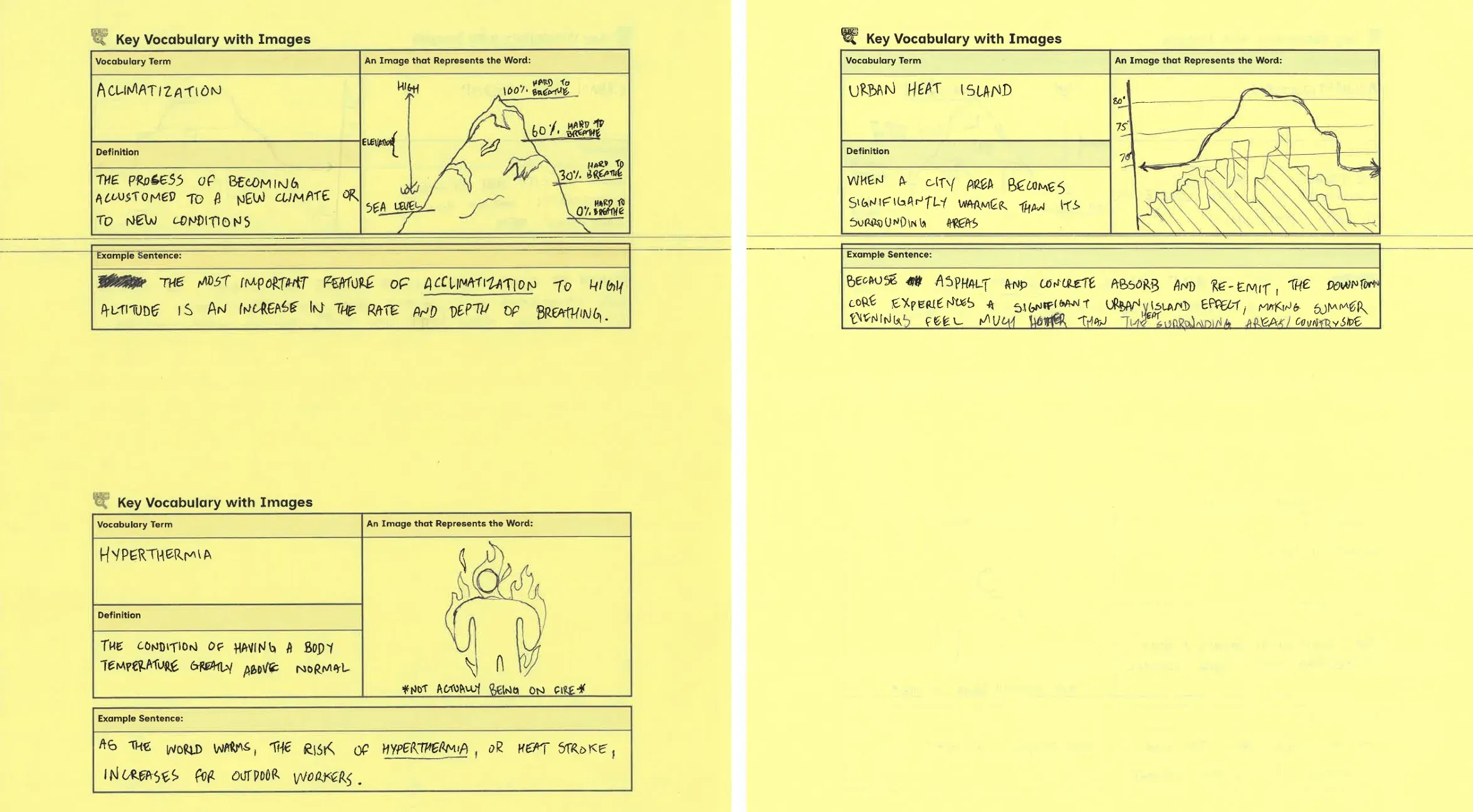
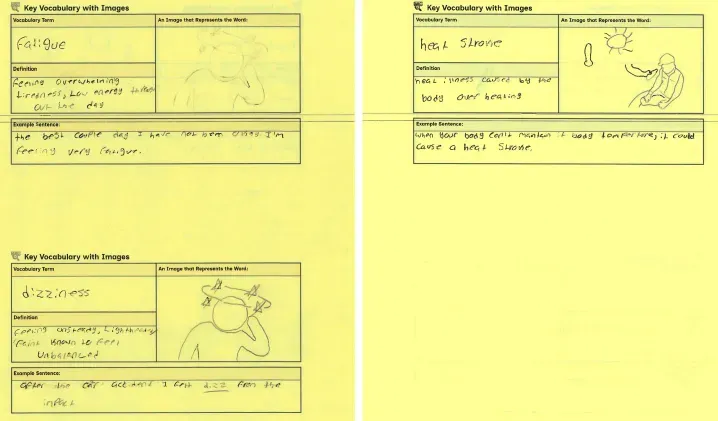
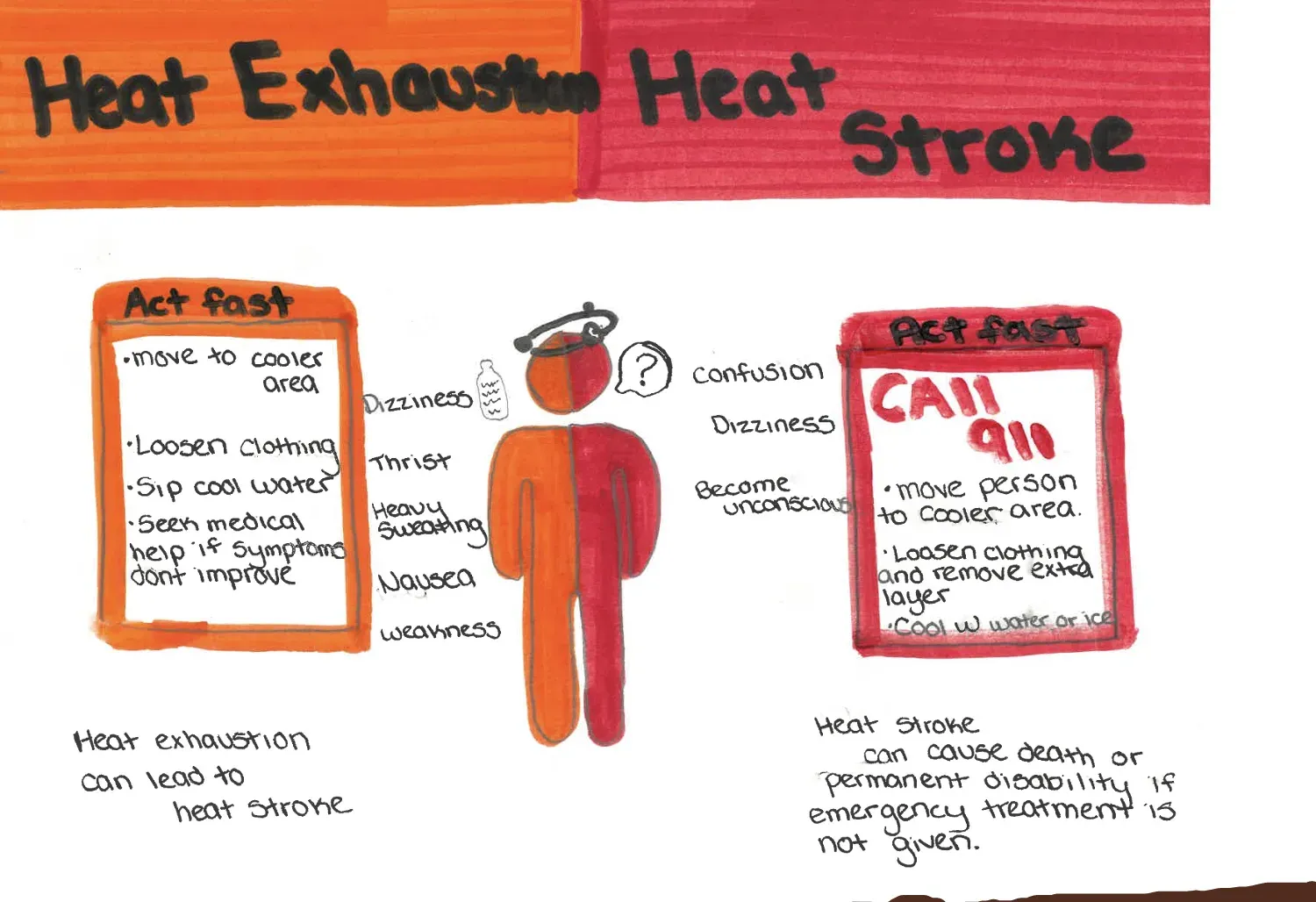
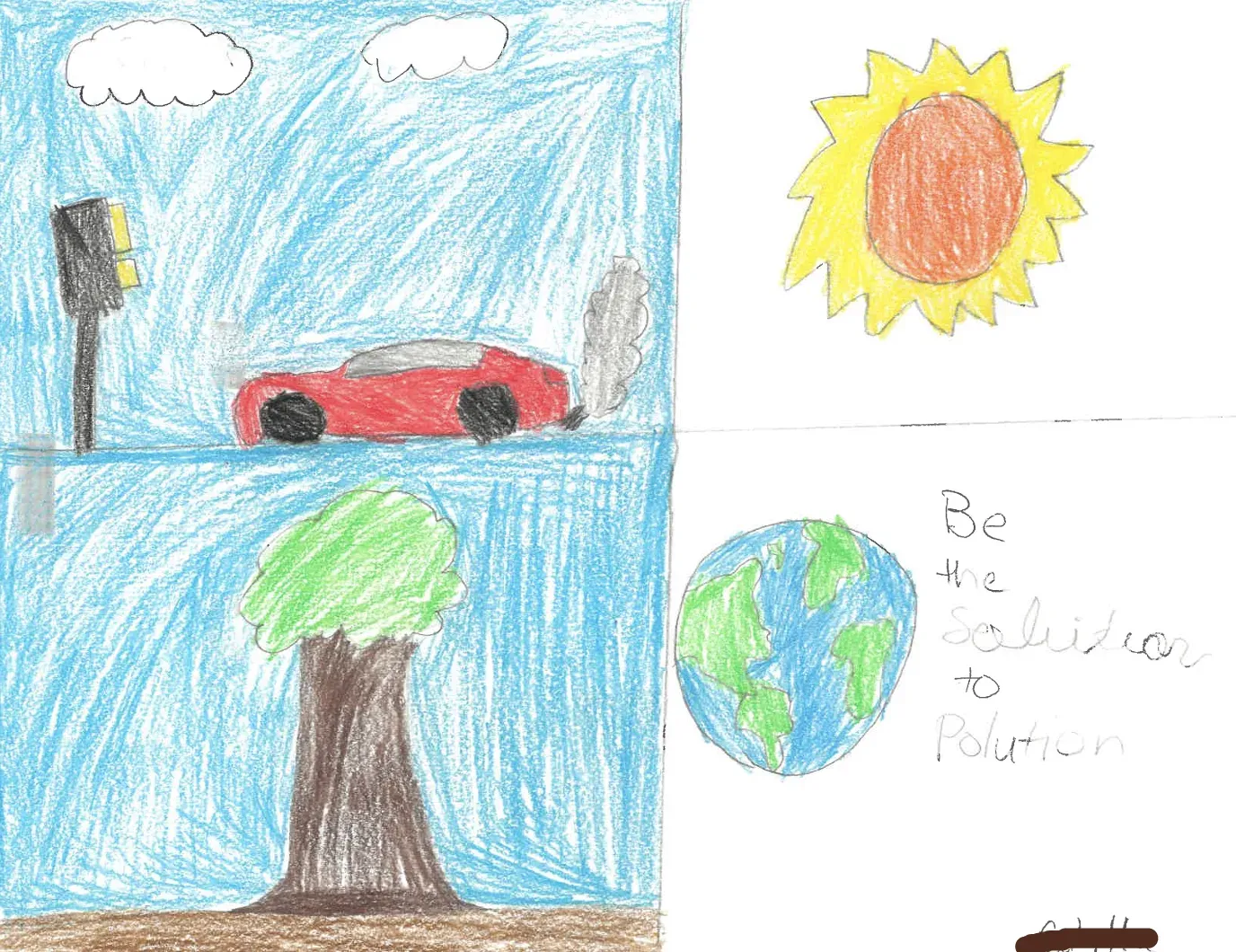
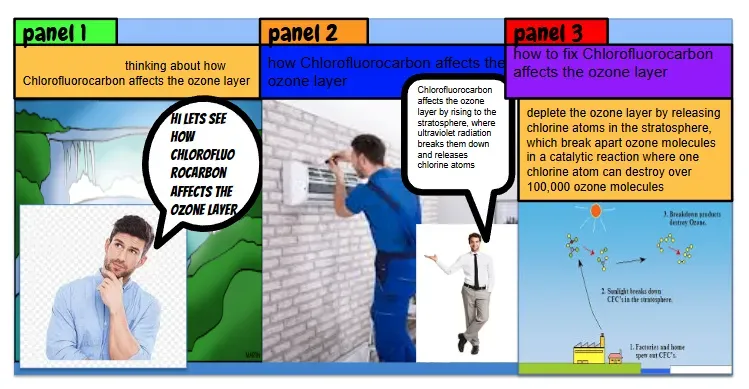
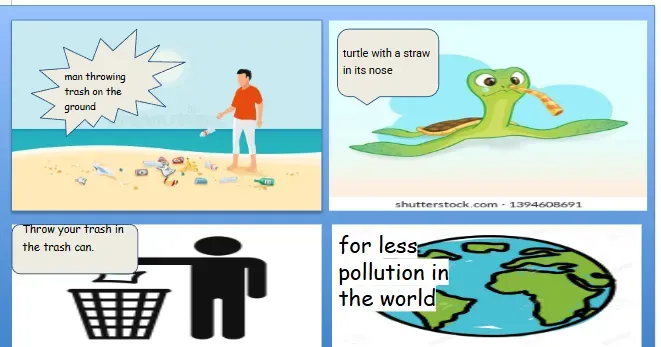
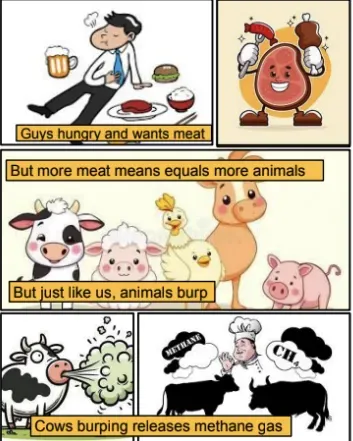
For their final activity, students chose to make a comic, PSA poster, infographic, or mixed-media art piece sharing information about heat-related illness and the importance of protecting the planet.
Teacher Reflection
What is the focus of your lesson plan, and why did you write this lesson for your community?
It is an honor to share about my students and community at Greater Lowell Technical High School, where I teach upperclassmen enrolled in a two-year environmental science cycle. These juniors and seniors bring with them not only the prerequisite foundation of biology, but also the resilience and creativity that comes from being part of our Special Education Department. Under IDEA and Massachusetts General Law c.71B/CMR 603 28.00, our school provides comprehensive programming through Individualized Education Plans, ensuring that each student receives the support they need to thrive. Many of my students alternate weeks between environmental science and Study Skills, where they strengthen organization, note-taking, and self-advocacy—skills that directly inform their success in the lab and classroom.
When I design lessons, I keep in mind that these students are not simply mastering content; they are learning how to connect scientific theory to the pressing dilemmas of our world. Whether we are studying climate change, pollution, or Earth’s scarce resources, I see them rise to the challenge with curiosity and determination. They benefit from scaffolded activities, visual supports, and opportunities to collaborate, yet they also shine when given the chance to take ownership of their learning. This is not a group that half-heartedly engages. They meet each challenge with persistence, and they remind me daily that equity, rigor, and creativity must go hand in hand.
How did you build this lesson with your community in mind?
It is a privilege to describe the lesson I wrote, Voices for the Heat: Writing Op-Eds on Climate and Delivery Workers. This unit was created to connect environmental science content with civic responsibility, ensuring that students at Greater Lowell Technical High School see how global climate challenges intersect with local labor realities. By focusing on delivery workers—individuals whose daily lives are shaped by extreme heat and gig-economy structures—the lesson invites students to analyze scientific data alongside human stories of vulnerability and resilience.
“Students not only master content but also practice empathy, advocacy, and creativity. They leave the unit with confidence that their ideas can influence others, and with the skills to contribute meaningfully to a more equitable and resilient future.”
Danielle Jo White-Yelito, Massachusetts Educator and Teacher Fellow
I wrote this lesson for my community because our students deserve opportunities to see themselves as advocates, not just learners. Many of them balance school with jobs, and they understand firsthand the pressures of work and environment. Giving them the chance to write persuasive op-eds allows them to elevate their voices, apply disciplinary literacy, and propose solutions that matter to their families and neighborhoods.
The focus of the lesson is twofold: to deepen scientific understanding of climate change impacts and to empower students to communicate those insights through structured, authentic writing. Its value lies in the way it bridges science and society. Students not only master content but also practice empathy, advocacy, and creativity. They leave the unit with confidence that their ideas can influence others, and with the skills to contribute meaningfully to a more equitable and resilient future.
What did your students learn while engaging with this lesson?
While engaging with Voices for the Heat, students demonstrated powerful interdisciplinary learning—connecting environmental science, journalism, and civic advocacy through structured writing and creative expression. Their op-eds and comics revealed a deep understanding of climate change’s impact on vulnerable workers, especially delivery drivers facing extreme heat.
Students used graphic organizers to scaffold their arguments, citing evidence like “Heat waves are becoming more frequent and intense” and proposing solutions such as “Cities should require water breaks and cooling stations.” One comic showed a character overwhelmed by fossil fuel pollution and rising sea levels, ending with a hopeful message about solar energy and reforestation. Another visual PSA warned, “Heat exhaustion can lead to heat stroke,” and offered actionable safety tips like hydration, cooling pads, and schedule adjustments.
Their Instagram-style captions reflected empathy and insight. One wrote, “It is burning hot out here… I almost had a heat stroke once while working. We need better schedules to keep track of our health.” Another shared, “I didn’t even notice until now that I can very well die from this job—the more you know I guess.”
Through these multimodal products, students showed they could synthesize scientific data, personal narratives, and policy analysis into persuasive, audience-centered advocacy. Their work was not only academically rigorous—it was emotionally resonant and socially urgent. They proved that when given the tools and trust, they can speak truth to power and envision a safer, more just future.
What did you learn by creating and teaching this lesson?
“Treat student feedback as a design tool. When learners feel heard, they invest more deeply, and the lesson becomes not just about climate change, but about equity, agency, and advocacy.”
Danielle Jo White-Yelito
One of my biggest takeaways from teaching this lesson was the importance of listening to student feedback and adjusting the design accordingly. Initially, I embedded multiple creative projects throughout the unit—comics, PSAs, infographics, social media posts—but students expressed that it felt overwhelming. In response, I restructured the final product into a choice board, allowing them to select one creative advocacy piece to complement their op‑ed. This shift gave students ownership over their learning, reduced cognitive overload, and increased engagement.
I also learned that pacing and scaffolding matter as much as content. Some groups needed direct guided instruction for reading and annotation, while others thrived with independent digital work. By offering flexible entry points—guided notes, podcasts, or graphic organizers—I was able to support diverse learners while keeping the focus on climate and labor justice.
For other educators, my advice is to build adaptability into your lesson plan. Provide multiple modalities, but don’t require all of them—let students choose the format that best showcases their strengths. Pair scientific rigor with civic voice, and use authentic products like op‑eds to connect classroom learning to real-world issues. Most importantly, treat student feedback as a design tool. When learners feel heard, they invest more deeply, and the lesson becomes not just about climate change, but about equity, agency, and advocacy.
About Danielle Jo White-Yelito
Dani Jo White-Yelito is a multidisciplinary educator, curriculum designer, and flutist based in Greater Boston, licensed in General Science, Biology, Music, and Sheltered English Immersion. She teaches Environmental Science and Physics at Greater Lowell Technical High School, where she leads sustainability-focused curriculum and MLL professional development initiatives. A former Teach Plus Massachusetts Policy Fellow (2024–2025) and current DESE Science Performance Assessment (SPA) Trainer, she supports equitable, inquiry-based science instruction statewide.
REPORTING FEATURED IN THIS LESSON PLAN
-

Pulitzer Center Update
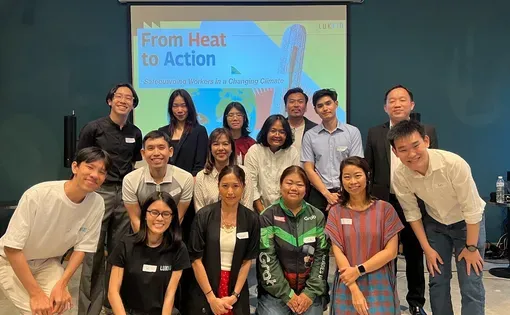
From Heat to Action: Pulitzer Center Reporting Sparks Dialogue on Worker Protection
Rising temperatures are impacting economies worldwide and affecting how people work. Those who are...
June 16, 2025 -
El Surtidor, un medio de comunicación independiente de Paraguay, documentará las experiencias...
-
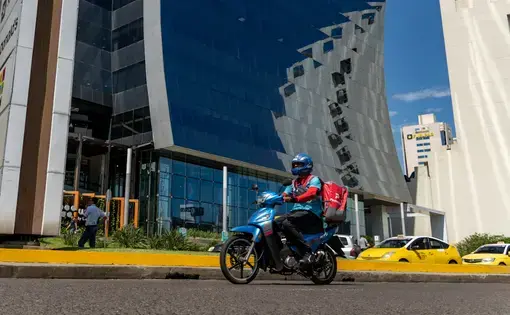
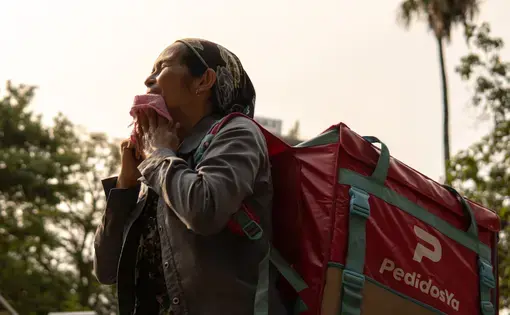
El Surtidor examines how delivery app workers have to deal with extreme heat.