Lesson Plan August 7, 2026
The Impact of Local Voices: A Voting Rights Inquiry
Country:
Grades:

This lesson was created by Veronica Pitts, a high school Government and Economics teacher in Selma, AL, as part of the 2025 Pulitzer Center Teacher Fellowship program. It is designed for facilitation across approximately three class periods.
For more lessons created by Pulitzer Center Teacher Fellows in this cohort, click here.
Lesson Overview
This lesson centers on the power of journalism to expose barriers to voting and elevate voices often left out of the democratic process. Using “Do Wisconsin’s Black Voters Have an Equal Voice?,” students will investigate modern voting challenges and connect them to similar issues in their community. By analyzing the news stories, comparing local and national contexts, and creating social media content, students build critical thinking, media literacy, and civic engagement skills.
Objectives
Students will learn how news stories show problems with voting access and will create a social media post to raise awareness about voting issues in their own community.
Performance Task
Students will create a social media campaign to help raise awareness about voting access in their community. Using the checklist, students will design a post for Instagram that includes a short but powerful caption, a picture or graphic (something they make or find and give credit for), and a message that connects what they learned from both the Wisconsin article and a local news story. Along with their post, students will write a short explanation describing the issue they are focusing on, why it’s important, and how their post encourages people to care and get involved. This project helps students practice media skills, understand local and national voting issues, and use their voice to make a difference in their community. It shows them how journalism and action can come together to create change. Students will use the hashtag #EveryVoteMatters.
Assessment
Students will be assessed based off of the completion of their graphic organizer, t-chart, group summary, and social media post.
Notes on Context
My students come from a community with family roots connected to the history of civil rights activism. The Selma Voting Rights movement is always mentioned in connection to the passage of the Voting Rights Act of 1965. While most are aware of this legacy, they may not always see its connection to current voting issues. This lesson is designed to bridge that gap by helping students see how historical struggles for voting rights are still relevant today. Comparing a national (Wisconsin story) to a local story will help them make that connection. The use of social media also meets students where they are, encouraging authentic engagement and empowering them to use their voices for civic change.
Three-day lesson plan, including warm-up, Pulitzer Center reporting, discussion questions, and performance task for the lesson. Download below to read the complete lesson plan.
Lesson Resources
| Pulitzer Reporting | “Do Wisconsin’s Black Voters Have an Equal Voice?” by Molly Beck and Eva Wen |
| Teacher-created Resources | The Impact of Local Voices - Local & National Inquiry Organizer (.pdf) (.docx) The Impact of Local Voices - Then & Now, Here & There T-Chart (.pdf) (.docx) The Impact of Local Voices_ Social Media Campaign_ #EveryVoteMatters (.pdf) (.docx) |
| Video | Rep. John Lewis on the Right to Vote |
Alabama American Government Standards
- SS10.USG.6 Analyze the expansion of suffrage for its effect on the political system of the United States, including suffrage for non-property owners, women, African Americans, and persons eighteen years of age.
- SS10.USG.7 Describe the process of local, state, and national elections, including the organization, role, and constituency of political parties
REPORTING FEATURED IN THIS LESSON PLAN
-

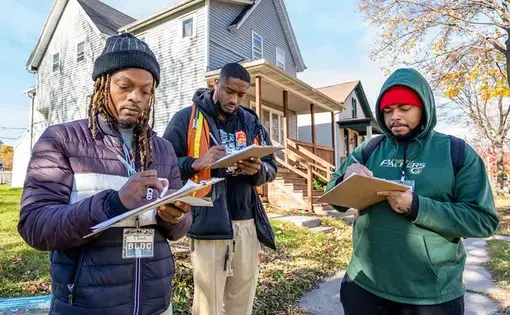
This project examines whether Black voters have equal voting power in the key battleground state.
-
This project examines whether Black voters have equal voting power in the key battleground state.