Pulitzer Center Update September 18, 2026
Three Academics Win Op-Ed Contest To Explore Climate Issues Through a Journalism Lens
Country:


The Journalist-Academia Dialogue (JAD) serves as a space to bring together knowledge, perspectives, and insights from significant developments related to environmental and climate issues. At its core, the program seeks to explore opportunities for synergy between two professions that play an important role in shaping public understanding: journalism and academia.
The program model has evolved over the years, and in 2026 JAD introduced a new approach through a call for write-ups following a series of thematic webinars, in collaboration with The Conversation Indonesia. The opportunity was designed for academics and researchers to reflect on the issues discussed during the webinars through their own empirical and disciplinary perspectives, bringing more dimension and contextual understanding of the issues. The idea was that these pieces would not only enrich the insights presented by Pulitzer Center grantees and Fellows, but also offer critical analysis and surface new questions that could contribute to meaningful solutions.
The process became particularly interesting because academics and researchers first participated in thematic webinar discussions that brought journalistic perspectives to a range of topics, including:
- Oceans: Why Are Modern Pirates Still Ruling Our Seas?
- Transparency and Governance: The Dirty Business Trail Destroying Indigenous Homes and Forests in the Amazon & Halmahera
- Climate and Labor: Who Protects Workers When the Planet Heats Up?
At the Pulitzer Center, the process of reviewing these submissions was valuable for our team because it allowed us to see how in-depth and investigative journalism can prompt further critical inquiry among academics. Each piece demonstrated how journalistic findings can be revisited through different disciplinary lenses and developed into new reflections, analyses, and ideas. Reading these pieces also left us with a simple hope: Some of these ideas and recommendations emerging from the exchange could extend beyond this forum—informing wider conversations and inspiring others to develop them into practice.
Transparency and Governance
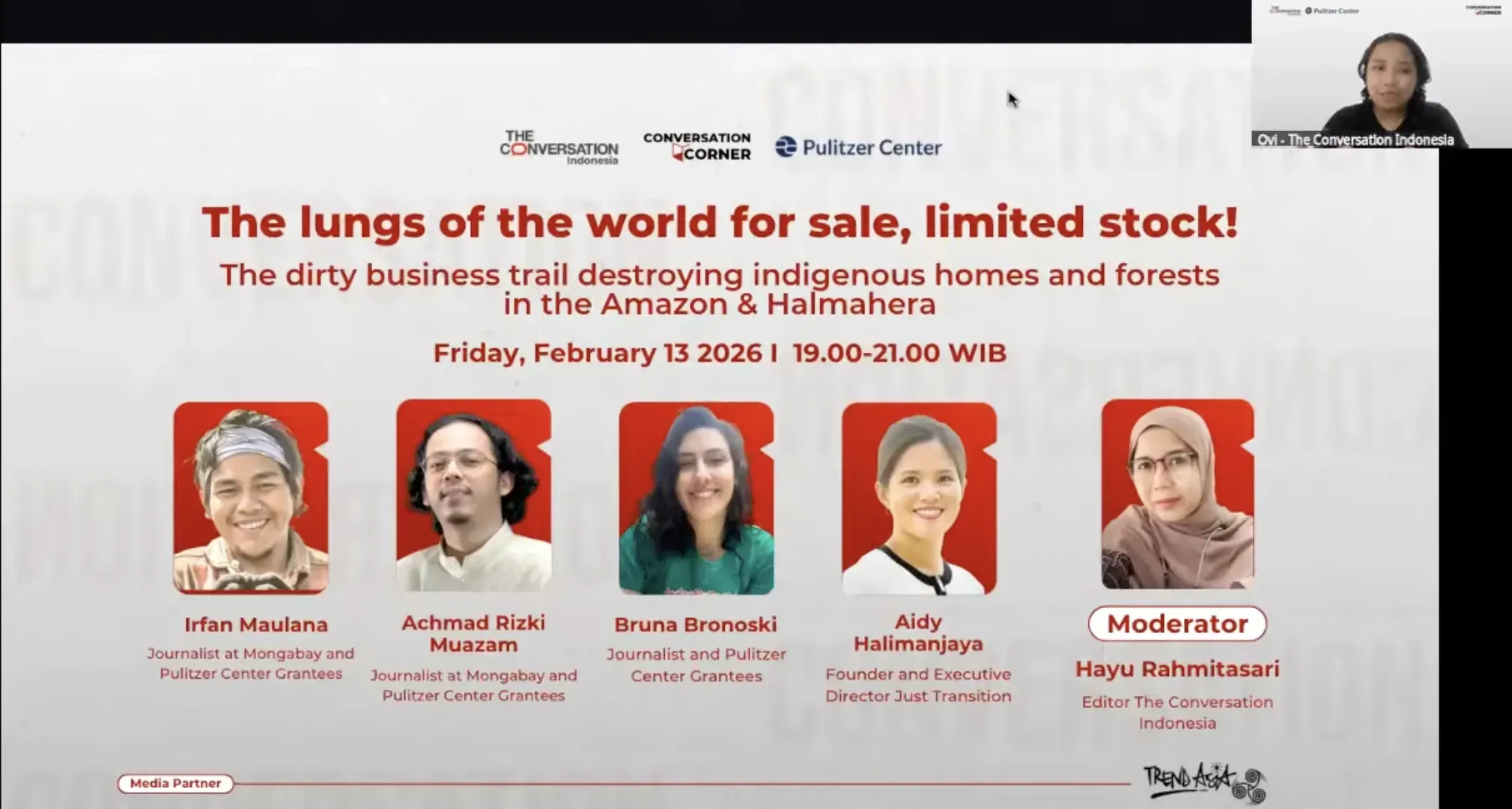
The winning op-ed for the Transparency and Governance category in the Call for Write-Ups was by Geger Riyanto, titled “Living in Concession Zones: When Communities Become Like Mosquitoes in Indonesia’s Natural Resource-Based Economy.” The article, published by The Conversation Indonesia, offers important reflections on how communities living in or around concession zones can feel as though they are forced to coexist with “giants,” in this case, corporations. Geger also examines how the legacy of colonial-era Dutch economic structures and land-tenure laws continues to influence realities today.
The piece was inspired by Pulitzer Center grantee Irfan Maulana’s reporting, "Halmahera Forest Guardians Displaced by Nickel Industry." Focused on the O’Hongana Manyawa, one of Indonesia’s last remaining forest-dwelling nomadic communities, the story covers how they face continued pressure to leave their forest territories and relocate toward coastal areas.
Oceans
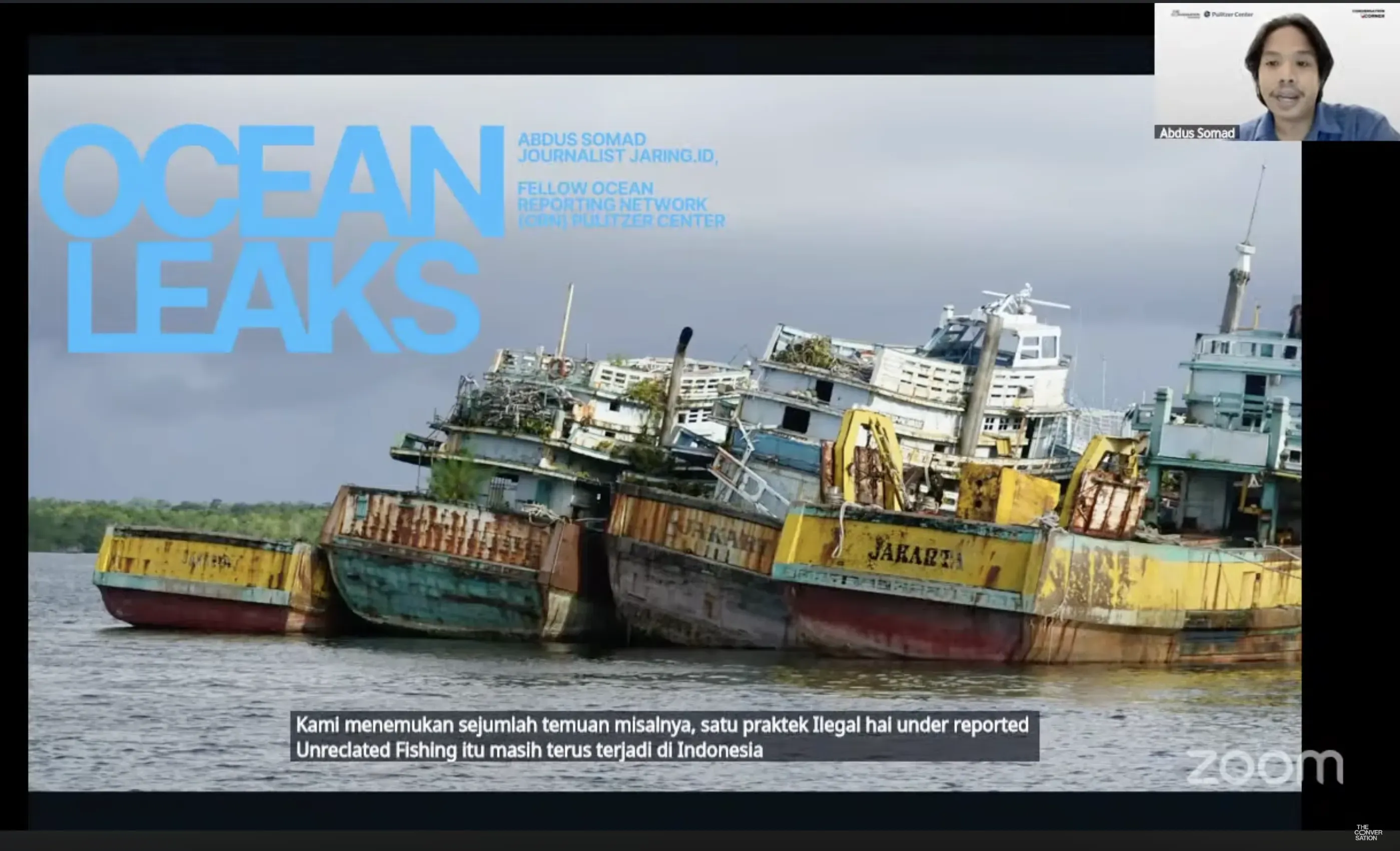
Following a JAD discussion on Illegal, Unreported and Unregulated Fishing (IUUF) in the Arafura Sea, Widhya Nugroho’s piece, “Dark Ships in the Arafura Sea: Why Is Illegal Fishing Still So Difficult to Eradicate?”, was selected as the best opinion piece for the Oceans category. This was based on Pulitzer Center reporting, Chasing Dark Ships to the Arafura Sea, by ORN Fellow Abdus Somad.
The op-ed highlights the complexity of implementing IUUF monitoring in Indonesian waters, while also raising an important point about protecting the livelihoods of small-scale fishers. The piece demonstrates that efforts to strengthen ocean governance cannot be separated from understanding how policies affect communities whose livelihoods depend directly on marine resources.
Climate and Labor

For the Climate and Labor category, Cristiar Samosir, through her piece “Redefining Force Majeure: Excluding Climate Extremes to Protect Indonesian Workers,” highlights an important issue concerning climate change and how the concept of force majeure is understood in the context of worker protection.
The piece is particularly interesting for its exploration of good practices from India and other countries in protecting workers from the impacts of climate change. These reflections were inspired by the Pulitzer Center reporting project, Climate Change Impacts Workers in Java's Coastal Areas, by Asnil Bambani on the struggles faced by workers in industrial areas affected by coastal flooding disasters across Indonesia.
We are incredibly proud and inspired to see how the synergy between two worlds, journalism and academia, is able to generate new ideas and perspectives with the potential to create real-world impact. Journalism and academia offer complementary approaches to make sense of complex issues. When the two come together, they create space for deeper understanding and for imagining solutions that are grounded in context and evidence.
Through JAD, we hope this space for exchange will continue to grow—not only as a platform for sharing knowledge, but also as a collaborative process for turning insights that can be explored and developed into practice that, ultimately, contribute to real world impact for communities and the environment.
RELATED INITIATIVES
Initiative
Southeast Asia Education Program