Winning article for the Oceans theme under ‘Call to Write-Ups’ as a part of the Journalist-Academic Dialogue (JAD) initiative in collaboration with The Conversation Indonesia.
This article is inspired by the webinar, "Why Are Modern Pirates Still Ruling Our Seas?" and the Pulitzer Center-supported reporting project Chasing Dark Ships to the Arafura Sea by ORN Fellow Abdus Somad
By Widhya Nugroho Satrioajie
Illegal, unreported and unregulated fishing (IUUF) remains a persistent challenge in Indonesian waters. In the Arafura Sea, part of Fisheries Management Area 718 or Measured Fishing Zone 03, the issue is not only about fish theft. For years this region has also been associated with serious abuses, including modern slavery and human trafficking. Many Indonesians still remember the 2015 Benjina case under Minister Susi, when it was revealed how crew members both Indonesian and foreign were forced to work on fishing vessels and at processing facilities under highly exploitative and inhumane conditions. The case shattered public assumptions about the dark underbelly of the fishing industry.
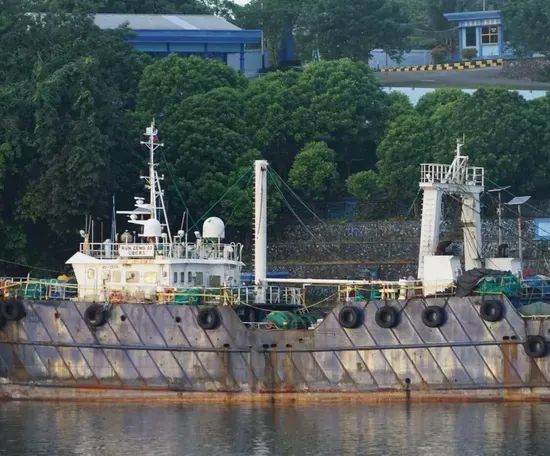
A decade has passed, yet a recent investigation by the Pulitzer Center and Jaring.id titled "Chasing Dark Ships to the Arafura Sea" by reporter Abdus Somad shows that these practices have not disappeared. The investigation followed the movements of illegal foreign vessels such as Run Zeng and Fu Yuan Yu F77, which deliberately shut off their Automatic Identification System (AIS) or Vessel Monitoring System (VMS) to move undetected through Indonesian waters. The report also highlights the troubling involvement of certain Indonesian fishing operators who acted as feeders to supply Indonesian crew members into exploitative working conditions embedded in IUUF networks.
The most distressing accounts come from Indonesian crew members themselves: excessive working hours, inadequate food and drinking water, and physical abuse. Some were forced to jump into the sea to escape; others lost their lives. Many were pressured into signing resignation letters that stripped them of their rights and wages. These realities raise a fundamental question: Why does IUUF continue to thrive despite stronger patrols and increasingly strict regulations?
Based on my own experience accompanying Indonesian fishing trips in North Sulawesi and Maluku, it is not easy for a vessel to obtain a Port Clearance Letter (SPB). A vessel must secure documents such as a fishing license (SIPI), pass a physical inspection (HPK), and obtain a seaworthiness certificate (SLO). The SPB also includes a full manifest of crew members with identity documents attached.
This makes it puzzling how Indonesian fishing vessels can end up acting as feeders within IUUF networks. Where does the regulatory gap lie? And why does this practice continue? The Ministry of Marine Affairs and Fisheries (MMAF), through its Marine and Fisheries Resources Surveillance (PSDKP), has identified twelve IUUF modus operandi.
The finding that some Indonesian vessels are transferring crew members to foreign vessels indicates that IUUF continues to evolve, making detection even more challenging. The investigative report also describes how illegal foreign vessels enter Indonesian waters and evade pursuit by switching off AIS or VMS. This tactic makes them nearly impossible to track, even by patrol vessels. Identity manipulation is not new, and findings from the Indonesian Ocean Justice Initiative (IOJI) show that satellite-based monitoring and high-resolution imagery can in fact identify illegal vessels.
Equally concerning is the re-entry of former foreign vessels into Indonesia under new names, new ownership, and new paint. These practices underscore that IUUF is not a simple regulatory violation. It is driven by planning, economic incentives, and cross-border networks, intertwined with political and economic factors.
The Arafura Sea has long been a major fishing ground for shrimp and demersal species. Because of its ecological characteristics, trawl-type gear has traditionally been used. Although the MMAF banned tiger trawls under Regulation No. 36/2023 and replaced them with a different type of trawl, namely the bottom shrimp net coded 03.12.2, known as as OTB JHUB, this gear remains vulnerable to misuse.
Operationally, it is very similar to tiger trawls: an active, bag-shaped net dragged along the seabed. The main differences are the requirement to install a Turtle Excluder Device (TED), shock chains, and the prohibition of the trawl’s wooden frame. Despite technical regulations such as the minimum net mesh size of two inches, field observations indicate that certain modifications can render this fishing gear unselective and harmful to the marine ecosystem.
These alterations may result in the capture of various species, including those of conservation importance. The gear is allowed to operate only in Zone III, more than twelve nautical miles offshore. Yet, given ongoing IUUF findings in the region, questions remain about whether trawl-like practices are still occurring under different names.
Unraveling IUUF Practices in Indonesia: Why They Persist and How to Address Them
Dark vessels operating without identity signals are not merely a technological issue. Indonesia has ratified several international agreements to combat IUUF, yet implementation challenges on the ground are far more complex than intercepting vessels at sea.
Several key factors help explain why IUUF persists.
1. Powerful economic incentives
For many foreign or former foreign vessels, entering Indonesian waters is an economically rational decision. Operational costs are lower, catch potential is high, and the risk of arrest remains relatively small. As long as economic disparities between countries persist and enforcement lacks a deterrent effect, these incentives will continue to drive IUUF.
2. Fragmented maritime enforcement
One study indicated that at least ten institutions share authority over Indonesia’s maritime domain. This fragmentation leads to overlapping mandates and weak coordination. A dual claim over coast guard functions by more than one institution further complicates the situation. While many agencies reflect strong government attention, the fragmented structure often reduces enforcement efficiency, creating loopholes exploited by IUUF actors.
3. IUUF increasingly resembles transnational organized crime
Shell companies, former foreign vessels disguised under new ownership, at-sea transshipment, and the use of informal ports all point to IUUF adopting the characteristics of organized crime. In this context, sea patrols tackle only the surface of the problem—not the networks behind it. Stronger maritime intelligence and regional cooperation are essential.
4. Human rights impacts: the fate of crew members and local fishers
IUUF is also a human rights issue. For small-scale fishers, declining catches push them farther offshore, raising operational costs and increasing safety risks. Competition with large illegal vessels exacerbates their vulnerability, threatening the sustainability of coastal livelihoods. Meanwhile, cases of modern slavery on former foreign vessels demonstrate how IUUF endangers not only marine resources, but also the dignity and safety of workers at sea.
IUUF is not just an enforcement problem; it is a governance problem. As long as economic incentives remain high, markets imbalanced, and institutions fragmented, dark ships will continue to find ways to operate.
Reforming Indonesia’s ocean governance is not only about protecting fish stocks. It is also about safeguarding the future of millions of coastal families who depend on the sea for their lives and livelihoods.
Widhya Nugroho Satrioajie is a maritime policy researcher specializing in fisheries governance, illegal fishing, and maritime security. He is currently a junior researcher at the National Research and Innovation Agency (BRIN) and a graduate student at Hokkaido University, Japan.
Article submissions reflect the authors’ views. The Pulitzer Center is a nonpartisan 501(c)(3) organization that does not endorse candidates, parties, or specific legislation.