Winning article for the Climate and Labour theme under ‘Call to Write-ups’ as a part of the Journalist-Academic Dialogue (JAD) initiative in collaboration with The Conversation Indonesia.
This article is inspired by the webinar "Who Protects Workers When the Planet Heats Up?" and the Pulitzer Center-supported reporting project, Climate Change Impacts Workers in Java's Coastal Areas by Asnil Bambani.
By Cristiar Samosir
Suffocating heat in an unventilated factory leaves workers dehydrated. Flooding closes factories for a week, leading to mass layoffs. For Indonesia’s blue-collar workers (who make up 38.74% of the workforce), climate change is a daily threat to health and job security. This reality is part of an economic threat, as global labor productivity could plummet by 18% if global temperatures keep rising.
Yet in Indonesia, the impacts of the climate crisis are exacerbated by a perverse legal logic. Floods and droughts are still listed as natural disasters under Law No. 13/2003, which can be justified as force majeure by employers to shed labor costs. Thus, a systemic gap in addressing the climate crisis will leave workers more vulnerable to poverty and health insecurity, while such events are predictable and manageable. To halt this injustice, Indonesia must redefine force majeure to explicitly exclude climate extremes from its legal definition, thereby mainstreaming a climate-risk adaptation system as an obligation.
Why force majeure fails in the climate era
In the Indonesian Civil Code (KUHPerdata), force majeure is situated within the principle of “freedom to contract” under Articles 1244 and 1245. While the code does not explicitly define which events qualify, it establishes three criteria: unforeseeable, no-fault, and good faith. This legal concept is operationalized in the Law No. 13/2003 on Manpower, which allows termination under force majeure while Law No. 24/2007 on Disaster Management categorizes climate-related events like floods, droughts, and landslides as natural disasters. Although no single law provides an exhaustive definition of force majeure, this interlinked legal framework allows employers to build a persuasive argument that a climate extreme constitutes an unforeseeable, external event, thereby justifying termination.
However, this argument is fundamentally flawed in the climate era. First, the “foreseeability” clause is invalid. Climate extremes, including extreme temperatures, intense rainfall, floods, droughts, and storms, can no longer be deemed purely natural but predictable consequences of anthropogenic change. For example, the catastrophic floods in Aceh, North Sumatra, and West Sumatra in 2025—which impacted over 3 million people—were caused by a combination of retention loss from deforestation and Cyclone Senyar, which had been predicted early on open-access platforms such as NOAA, RAMBB, GDACS, and BMKG.
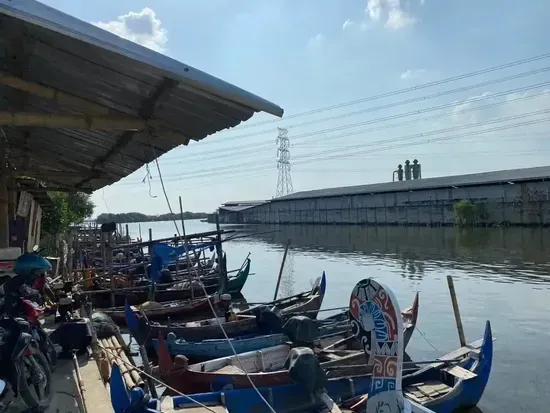
Second, the law institutionalizes the unfair distribution of climate risk. Climate disasters disproportionately impact lower-income communities who are more likely to live in risk prone areas. This forces them to absorb catastrophic costs that institutions avoid. The 15,000 laborers in Semarang’s flood-prone Tanjung Emas Port that were impacted by tidal flooding in 2022, for instance, were left to bear the cost of repairing their damaged private vehicles which was not covered by government nor company. Force majeure thus left behind those with the least capacity to adapt.
Lastly, the "irresistible" criterion is undermined by adaptation science. Climate risks are increasingly manageable. One example is India’s Varanasi Heat Action Plan that integrates passive cooling techniques, public health protocols, and heat vulnerability mapping to increase social resilience. Businesses that choose not to implement available measures should not be permitted to claim force majeure. Unclear force majeure in Indonesian law, therefore, not only fails but actively obstructs the system to apply the transition to a resilient and just workforce.
How redefining force majeure can transform worker protection
To transform worker protection, the legal redefinition of force majeure must create a new system of accountable climate adaptation through three explicit, evidence-based principles.
1. Redefine foreseeability with open access-data
The law must explicitly state that an event is not unforeseeable if it falls within the scope of publicly available climate projections. This makes open-access hazard risk mapping, such as flood models and future heat projections, the legal baseline for determining foreseeable risk. One example is the American FEMA system that integrates flood risk mapping with risk management, disaster assistance, and insurance programs. Employers in mapped high-risk zones would thus be presumed to have foreseen climate disruptions, nullifying the force majeure defense.
2. Establish a “duty to adapt” to uphold “no-fault” requirement
The redefinition must tie employers directly to proactive risk management. If a predicted extreme weather event occurs and an employer has not implemented sector-standards adaptations, they should be considered at fault. The government’s role is to define this “duty to adapt” by mandating comprehensive firm-level climate risk planning. For example, failing to provide cooling protections for workers despite the National Cooling Action Plan, or ignoring flood-proofing protocols when located in a mapped flood zone, would constitute a failure of this duty.
3. Demonstrate “good faith” as investment in resilience
“Good faith” must be legally interpreted as a demonstrable climate adaptation program in a long-term work plan. Legislation should require businesses to report on adaptation measures, such as implementing heat stress management under EHS protocols, retrofitting infrastructure, social insurance covering climate risks, as part of their compliance. This creates a tangible link between legal protection (force majeure) and corporate responsibility, incentivizing the upgrades needed to protect both enterprise continuity and worker welfare.
Instead of force majeure being an easy excuse for layoffs, it should become a high-bar legal defense for workers and establish a climate adaptation system in business operations. Ultimately, explicitly excluding climate extremes from force majeure is the foundational reform for protecting workers and leveraging the legal framework to build a climate-resilient workforce.
Cristiar Samosir is a landscape researcher specializing in climate resilience, environmental policy, and labor protection. She is currently a landscape research manager at Sangga Bumi Lestari in Jakarta.
Article submissions reflect the authors’ views. The Pulitzer Center is a nonpartisan 501(c)(3) organization that does not endorse candidates, parties, or specific legislation.
Banner image: A view of an industrial area in Tanjung Emas Port, Semarang, Central Java. Image by Adi Renaldi/Ekuatorial. Indonesia, 2023.