Main Menu Navigation
Pulitzer Center Logo
View Primary Menu
Search
  • ABOUT
    Our Mission and Model Staff Board of Directors Impact Annual Reports Donors Ethics and Standards Diversity, Equity, and Inclusion Employment
  • UPDATES
  • EVENTS
    Upcoming Events Conferences
  • WEBINARS ON-DEMAND
  • COMMUNITY
  • IMPACT
DONATE
  • JOURNALISM
      • PULITZER CENTER JOURNALISM
      • STORIES
      • Stories by Pulitzer Center Grantees
      • Stories by Student Reporting Fellows
      • PROJECTS
      • FIELD NOTES
      • APPLY FOR JOURNALISM GRANTS
      • FOCUS AREAS
      • Climate and Environment
      • Global Health
      • Peace and Conflict
      • Human Rights
      • Information and Artificial Intelligence
      • INITIATIVES
      • AI Accountability Network
      • AI Spotlight Series
      • StoryReach U.S.
      • U.S. Local News Reporting
      • Ocean Reporting Network
      • Rainforest Investigations Network
      • Rainforest Reporting
      • Transparency and Governance
      • Our Work/Environment
      • NEWSLETTER ARCHIVE
  • EDUCATION
      • CAMPUS CONSORTIUM PROGRAM & PARTNERS
      • Campus Consortium Program
      • Campus Consortium News
      • Campus Consortium Partners
      • Reporting Fellowships
      • Reporting Fellow Bios
      • Stories by Reporting Fellows
      • Resources for Reporting Fellows
      • Campus Consortium Advisory Council
      • Join the Campus Consortium Network
      • INTERNATIONAL EDUCATION AND OUTREACH
      • K-12 PROGRAMS AND RESOURCES
      • Programs for Teachers and Students
      • Lesson Plans
      • Journalist Visits to Classrooms
      • The 1619 Project Education Portal
      • Student Contests
      • Professional Development for Educators
      • Journalism Skillbuilder Lesson Series
      • K-12 Education News
  • GRANTS & FELLOWSHIPS
      • GRANTS & FELLOWSHIPS
      • Tips for a Successful Grant Application
      • Pulitzer Center Crediting Requirements
      • OPPORTUNITIES FOR JOURNALISTS
      • Global Reporting Grants
      • AI Reporting Grants
      • Global Health Inequities, Risks and Solutions
      • Transparency & Governance Reporting Grants
      • U.S. Civil Society Microgrants 2026
      • Rainforest Reporting Grants
      • Conflict Reporting
      • Ocean and Fisheries Reporting Grants
      • Climate and Labor Reporting Grants
      • Africa Reporting Grants
      • U.S. Local Reporting Grants
      • Machine Learning Reporting Grants
      • OPPORTUNITIES FOR EDUCATORS & CIVIL SOCIETY ORGS
      • The 1619 Project Education Impact Grants
      • Pulitzer Center Teacher Fellowship
      • Impact Seed Funding
      • U.S. Civil Society Microgrants 2026
      • OPPORTUNITIES FOR CAMPUS CONSORTIUM MEMBERS
      • Campus Consortium Reporting Fellowships
      • Post-Grad Reporting Fellowships
  • IMPACT
  • RESOURCES
  • COMMUNITY
  • EVENTS
  • WEBINARS ON-DEMAND
  • ABOUT
    Our Mission and Model Staff Board of Directors Impact Annual Reports Donors Ethics and Standards Diversity, Equity, and Inclusion Employment
  • UPDATES
  • EVENTS
    Upcoming Events Conferences
  • WEBINARS ON-DEMAND
  • COMMUNITY
  • IMPACT
DONATE

Brazil

Use the Pulitzer Center Lesson Builder to find and create lesson plans on this country.


  • ×
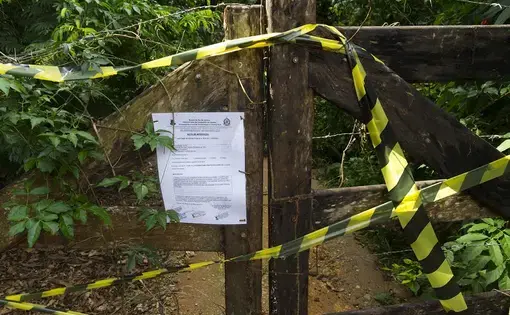
    A notice posted to a gate in the village of Córrego da Luz, Brazil, lets visitors know that a trail leading to a waterfall is closed because mosquitoes carrying the yellow fever virus have been detected. The remains of a monkey that died of yellow fever was found near the trail. Image by Mark Hoffman. Brazil, 2017.
    English
    PART OF: Outbreak: How Humans Are Driving the Rise of Diseases

    Infectious Disease Collides with Changing Climate

    author #1 image author #2 image
    Multiple Authors
    May 25, 2017
    Publication logo
  • ×
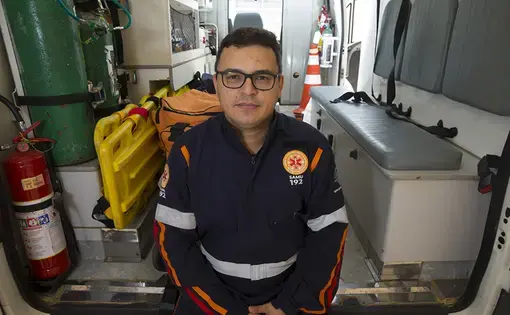
    Emergency care physician Rodrigo Lobo was the first to suspect a yellow fever outbreak in the area around Teófilo Otoni, Brazil. The city is about 460 miles north of Rio de Janeiro. Image by Mark Hoffman. Brazil, 2017.
    English
    PART OF: Outbreak: How Humans Are Driving the Rise of Diseases

    Faces Behind Brazil's Yellow Fever Outbreak

    author image
    Mark Hoffman
    Grantee
    May 25, 2017
    Publication logo
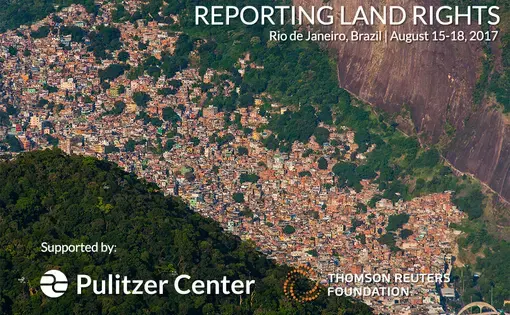
  • Media file: brazil_workshop_postcard_small.png
    English

    Pulitzer Center Update

    Brazilian Journalists Invited to Apply for 4-Day "Reporting Land Rights" Course

    The Pulitzer Center on Crisis Reporting and the Thomson Reuters Foundation announce a special...

    author image
    Steve Sapienza
    Pulitzer Center Staff
    May 23, 2017
  • ×
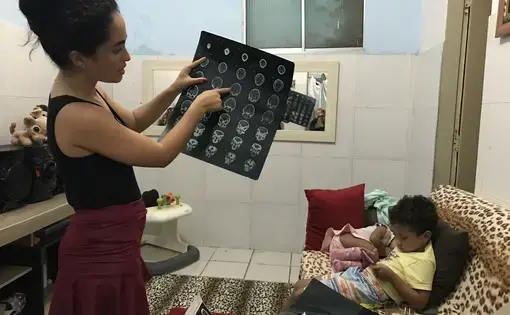
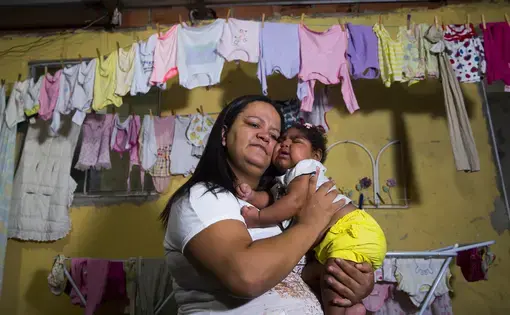
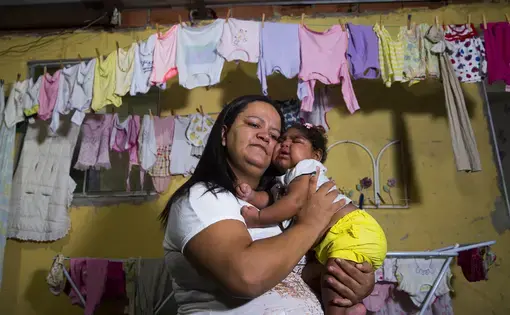
    Fabiane Lopes holds her daughter, Valentina at their home in Duque de Caxias, a suburb of Rio de Janeiro in southeastern Brazil. Valentina's mother was pregnant when she became infected with the Zika virus and her daughter was born with microcephaly—a congenital malformation with smaller than normal head size for age and sex as well as other profound birth defects. Brazil has confirmed far more malformations of the brain in babies born to mothers who were infected with Zika than any other country. After…
    English
    PART OF: Outbreak: How Humans Are Driving the Rise of Diseases

    Trying for Instant Rapport

    author image
    Mark Hoffman
    Grantee
    April 24, 2017
    Publication logo
  • ×
    This 128-horsepower Fiat Doblo was the largest vehicle available for rent at Rio de Janeiro's international airport. The five-speed manual transmission might be unfamiliar to many Americans, and cars with automatic transmission are rare in Brazil. This grossly under-powered vehicle had a difficult time climbing steep hills. Image by Mark Hoffman. Brazil, 2017.
    English
    PART OF: Outbreak: How Humans Are Driving the Rise of Diseases

    Life Skills on the Road

    author image
    Mark Hoffman
    Grantee
    April 24, 2017
    Publication logo
  • ×
    Construction on the Olympic Green in Rio is far behind schedule and corners are being cut to save time and money. Image by Matthew Niederhauser. Brazil, 2016.
    English
    PART OF: The Megacity Initiative

    Rio's Olympic Inequality Problem, in Pictures

    author image
    Matthew Niederhauser
    Grantee
    March 21, 2017
    Publication logo
  • 12 hours into an eventual 17-hour childbirth, my girlfriend was definitely feeling the pain. I looked on helplessly as nothing compared to the moments of pain and the respite between. Gas, drugs, and a hand to hold only had so much effect. This day I found out how truly strong she is… Image by Sam Williams, National Geographic Your Shot.
    English

    Pulitzer Center Update

    Last Week to Submit Photos of Strong Women to NatGeo Your Shot

    The National Geographic Your Shot assignment, "Strong Women," is entering it's final week for...

    author image
    Jordan Roth
    Pulitzer Center Alum
    March 20, 2017
  • ×
    English
    PART OF: Life Inside: Art in Brazil Prisons

    Brazil: Taking Arts Behind Bars

    author image
    Kate Toporski
    2016 Reporting Fellow
    December 22, 2016
    Publication logo
  • English

    Project

    Laboratory Earth

    An unintended planet-wide experiment is underway–leading to warming temperatures and an acidifying...

    author image
    Daniel Grossman
    Southeast Asia RJF Advisory Committee Member
    READ MORE ABOUT THIS PROJECT - Laboratory Earth
  • ×
    University of Michigan students gather at the Bangu Women's Complex in Rio de Janeiro
    English
    PART OF: Life Inside: Art in Brazil Prisons

    Childhood Behind Bars: How Families Navigate the Brazilian Prison System

    author image
    Kate Toporski
    2016 Reporting Fellow
    October 17, 2016
    Publication logo
  • ×
    A prisoner at the Evarisio se Moraes Prison Complex in Rio de Janiero
    English
    PART OF: Life Inside: Art in Brazil Prisons

    Prison and Theater in Brazil: Where Community, Art, and Change Come Together Globally

    author image
    Kate Toporski
    2016 Reporting Fellow
    October 11, 2016
    Publication logo
  • A prisoner at the Evarisio se Moraes Prison Complex in Rio de Janiero
    English

    Project

    Life Inside: Art in Brazil Prisons

    What happens when you send 20 University of Michigan students into Brazilian prisons to facilitate...

    author image
    Kate Toporski
    2016 Reporting Fellow
    READ MORE ABOUT THIS PROJECT - Life Inside: Art in Brazil Prisons

Pagination

  • « First
  • ‹‹
  • 87
  • 88
  • 89
  • 90
  • 91
  • ››
  • Last »

Contact

2000 Pennsylvania Ave NW
Suite #7000
Washington, DC 20006
(202) 332-0982
[email protected]

Follow us on Facebook
Follow us on Twitter
  Follow us on Instagram
  Subscribe to us on YouTube

Media Requests

[email protected]

Privacy Policy


Sign up for our newsletter