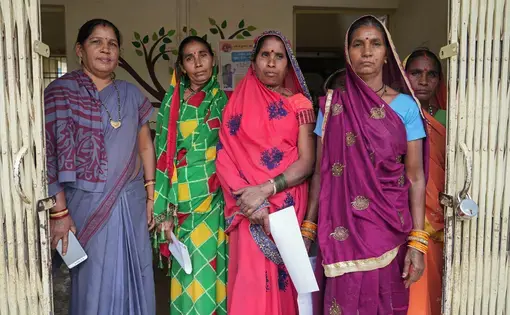
Lesson Plan August 26, 2025
Cervical Cancer in India Is Not a Problem, It’s a System
Grades:

This lesson plan was created by Seth Brady, a high school social studies educator in Naperville, Illinois, as part of the 2024 Pulitzer Center Global Health Teacher Fellowship program. It is designed for facilitation across one to two days.
For more lessons created by Pulitzer Center Teacher Fellows in this cohort, click here.
"I’d like teachers to know that even though the focus of this lesson in terms of content is cervical cancer, what it really does is develop a skill that can be used to address any global issue, as it provides a new perspective on how to understand global issues within a specific cultural context."
Seth Brady, Social Studies Teacher, Illinois
Lesson Overview
Although the word “systemic” has become commonplace in our language and may even be used by students in classroom contexts, beyond simple definitions, it is unclear whether students truly understand what the term means or how to understand issues systemically.
After first considering the obvious cause of cervical cancer in India (i.e., the HPV virus), students learn to identify the numerous factors that create high rates of cervical cancer in India, consider how these factors are produced and maintained, and consider which of these factors need to be addressed to mitigate the high incidence of cervical cancer in India.
Essential Questions:
- What does it mean for an issue or problem to be systemic?
- How does context contribute to global health issues?
Performance Task:
Performance Tasks:
Answer any of the following questions in a reflective essay:
- What does it mean to say that “problems are systems?”
- How has your understanding of cervical cancer changed by reading the article and considering it as the result of a system rather than only the result of a pathogen like HPV?
- Propose what a solution would need to accomplish to address the high rate of cervical cancer in India.
Extension:
Students choose a new article from the Global Health Reporting Round-up handout. Students should be able to name the problem discussed in the article and explain how it is a system. Instruct students to use these questions to guide the exploration:
- What problem or issue does the source discuss?
- List and describe each of the factors that contribute to the problem.
- Explain how these factors relate to one another or draw a concept map to illustrate the relationship.
- Which of these factors is most important to address in order to address the problem as a whole? Defend your answer
Assessment:
Provide students with detailed, written feedback and offer the opportunity for revision.
Content Advisory & Notes on Context:
References are made to sexually transmitted diseases.
This lesson is valuable in virtually any high school because it centers on understanding issues as systems.
This lesson was designed for a 10th-12th grade Social Studies class. Facilitation is suggested across one to two days This lesson plan includes pacing, texts , teacher-created resources, suggestions for implementation, and rubrics for assessment.
| Reporting | “Ignorance and Apathy: Why One Indian Woman Dies of Cervical Cancer Every Seven Minutes,” by Swagata Yadavar for Behan Box |
| Teacher-created resources | Warm-up Activity Handout [.pdf][.docx] 7-minute Full Lesson Handout [.pdf][.docx] Full Article divided into sections [.pdf][.docx] Extension Assignment: Global Health Reporting Round-up [.pdf][.docx] |
Illinois State Social Science Standards
SS.9-12.IS.11. Use interdisciplinary lenses to identify local, regional, or natural, or global concerns and anticipate the outcome possible solutions might have on all impacted communities, including marginalized communities
SS.9-12.IS.12. Analyze existing structures, systems, and methodologies to determine what types of interventions or informed action will lead to increased equity, inclusion, and community and civic good.
Illinois Students Connect Issues and Systems by Examining Cervical Cancer in India
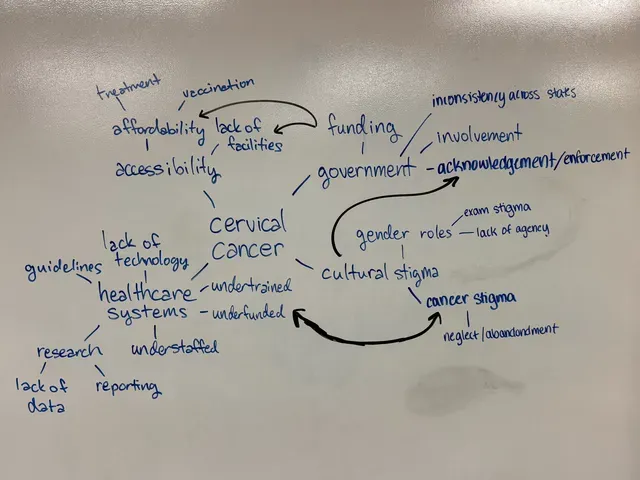
Throughout this lesson plan, students explored the systems that perpetuate high rates of cervical cancer in India by completing a deep text analysis and discussion of “Ignorance and Apathy: Why One Indian Woman Dies of Cervical Cancer Every Seven Minutes,” by Swagata Yadavar. Students processed the reporting by mapping the causal factors of cervical cancer, identifying political, social, economic and cultural elements that influence the high rates of the disease in woman.
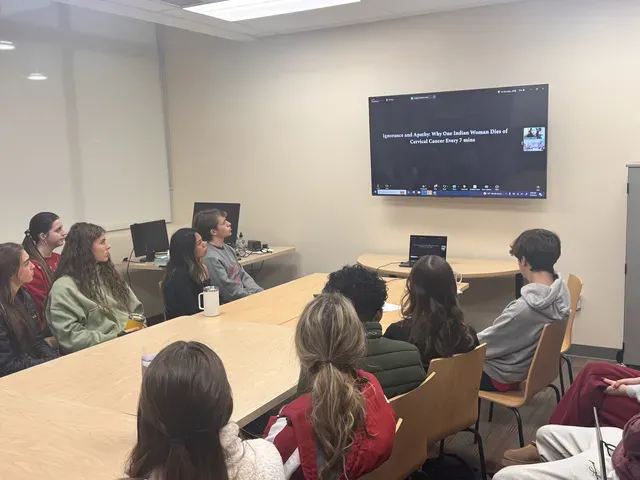
Brady leveraged the Pulitzer Center's virtual journalist visit program to invite journalist Swagata Yadavar to discuss her reporting further, answering student questions and highlighting her experience reporting the story in India.
Ultimately, students wrote essays responding to one of the following questions:
- What does it mean to say that “problems are systems?”
- How has your understanding of cervical cancer changed by reading the article and considering it as the result of a system rather than only the result of a pathogen like HPV?
- Propose what a solution would need to accomplish to address the high rate of cervical cancer in India.
“I think it’s a really interesting problem because lots of the issues are embedded in pre-existing systems. The government is male-dominated, and it’s already in the existing system that you’ll have to change and integrate things into, and there’s also the cultural stuff like women have a fear of abandonment, which is a much harder thing to tackle because it’s built into culture…. It’s not just an outward issue that you can fix."
Student, Naperville Central High School, Illinois
Teacher Reflection
Tell us about you, your students, and your community.
One of the courses I teach is called Illinois, Global Scholar, Capstone. This course is for juniors and seniors. Each student must develop a question related to a global issue that is actionable, conduct comprehensive research on the issue, create an artifact to effect change, seek input from experts, and then deploy the artifact. A crucial aspect of conducting this research is understanding problems as systems. This means that they must understand the array of factors that contribute to a particular issue. For this reason, the article provided an outstanding example of a problem that has manufacturers nested in a complex system.
"I suspect in the beginning, if I had asked them why the rates were so high, they would say very general things like poverty or lack of awareness, but these types of answers actually reveal biases towards India rather than an understanding of India as a cultural system. I want educators to know how valuable it is to understand problems in this way, and that doing so is a skill that can be developed in a fairly short period of time."
Seth Brady, HS Social Studies Teacher
Tell us about your lesson.
I chose this article to help students understand in a very short period of time the complexity of a global health issue, and how that issue could be profoundly different based on context. The focus of this particular lesson was cervical cancer, and it has dozens of factors within its context: India. The cervical cancer is essentially preventable. Vaccine access, significant gender bias, lack of healthcare infrastructure, failed political will, and a myriad of other factors contribute to a net failure in the world‘s highest rate of cervical cancer. Students assume that the reason has to do only with factors such as poverty, but that is not the case as India does not lack the resources, but rather the attention and desire to address the issue. This was extremely valuable to my students because it helped them see not only how complex and layered a problem can be, but how this complexity makes the problem persist.
Tell us about what your students learned while engaging with the lesson
As stated, students learn not only about cervical cancer but also about the complexity of the context in which cervical cancer exists. Yadavar’s reporting explores how despite globally average rates of cervical and breast cancer, more girls and women in India suffer with and die from preventable cancers largely because of a system rooted in patriarchy, and an unwillingness to prioritize women’s health issues. One student said, “I think it’s a really interesting problem because lots of the issues are embedded in pre-existing systems. The government is male-dominated, and it’s already in the existing system that you’ll have to change and integrate things into, and there’s also the cultural stuff like women have a fear of abandonment, which is a much harder thing to tackle because it’s built into culture…. It’s not just an outward issue that you can fix. “
Following up this lesson with an opportunity to speak and interact with the author added a layer of knowledge and understanding as the journalist described how difficult it was even to get basic facts on cervical cancer, get interviews in hospitals, or even find someone who was suffering from cervical cancer. There is widespread social denial and stigma against not just screening, but the cancer itself.
Tell us about what you learned by creating and teaching this lesson.
One of the most important things I’ve learned is that students had virtually no awareness of what cervical cancer was, let alone that it was caused by HPV. Despite the wide availability of the vaccine in the United States, it seemed highly unlikely that students themselves had been vaccinated or knew of the dangers of HPV or cervical cancer.
To their credit, students did understand and naturally gravitate towards understanding problems and systems, and I’m guessing this led to insights into the issues they themselves were wrestling with in class, with various global issues. That said, I suspect in the beginning, if I had asked them why the rates were so high, they would say very general things like poverty or lack of awareness, but these types of answers actually reveal biases towards India rather than an understanding of India as a cultural system. I want educators to know how valuable it is to understand problems in this way, and that doing so is a skill that can be developed in a fairly short period of time. Additionally, I’d like teachers to know that even though the focus of this lesson in terms of content is cervical cancer, what it really does is develop a skill that can be used to address any global issue, as it provides a new perspective on how to understand global issues within a specific cultural context.
About Seth Brady:
Seth Brady is a social studies teacher from Naperville Central High School. This lesson reached 75 students in Illinois.