Story
 April 30, 2026
What Consultation Looks Like on a Cambodian Carbon Offset Project
Country:


Despite international criticism, carbon offset projects push forward in Cambodia.
A REDD+ project in the country’s northeast aims to conserve forest and reduce carbon emissions, but many local residents say they know little about it and never gave their consent.
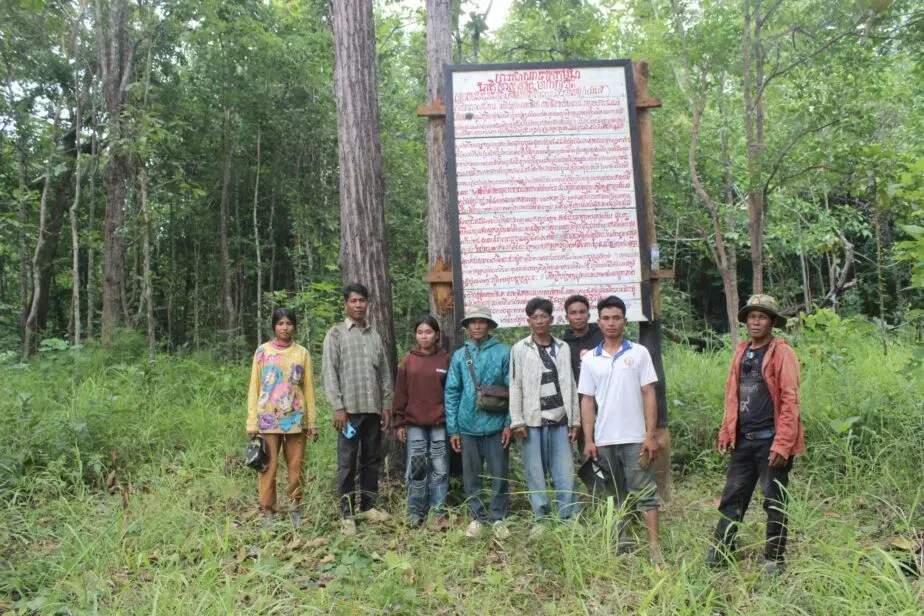
“Lumphat villagers consent to REDD+ project,” reads a 2023 headline in the Phnom Penh Post, above a photo of 10 villagers raising their hands and holding up informational banners about the forestry carbon offset project in northeast Cambodia. “They gave their consent with no coercion,” the NGO NatureLife, the organization implementing the project, is quoted as saying in the article.
But residents from the village tell a different story.
“That’s the village chief, that’s his wife. That’s an uncle. The rest are cousins or other relatives. They are all related to [the village chief],” said Lai Khammay, a resident of Lumphat village, looking at the published photo for the first time.

As a nonprofit journalism organization, we depend on your support to fund more than 170 reporting projects every year on critical global and local issues. Donate any amount today to become a Pulitzer Center Champion and receive exclusive benefits!
Major companies purchase carbon credits in order to offset their emissions. These credits fund projects that preserve forests, develop renewable energy, or reduce fuel consumption. REDD+ projects, which operate under a U.N.-developed framework, allow developing countries like Cambodia to receive payments for reducing deforestation.
The Lumphat Wildlife Sanctuary REDD+ project spans 130,000 hectares in Ratanakkiri and Mondulkiri provinces, and sits within one of the largest intact dry forests in the region. Cambodia’s Environment Ministry and NatureLife Cambodia, the in-country partner of global NGO BirdLife International, began the project in 2019. By halting illegal logging, preventing agricultural expansion, and engaging with local communities, the project sets out to prevent further deforestation and, in turn, reduce emissions.
The project is currently requesting registration from the world’s largest carbon certifier, Verra, before it can begin the verification process in order to then sell credits. Still, local residents like Khammay, who live in the project’s partner villages, say they know little about it and never gave their consent.
“How will we know where the money will be spent? If they got money [for the project], people in the village don’t know because everyone involved are relatives of the village chief,” Khammay said. Village chief Thon Banhchy confirmed over the phone that the photo published by the Phnom Penh Post included his relatives.
The Diplomat spoke with people from over 30 households in villages near the project area over the course of three trips in 2024 and 2025, as well as follow-up phone calls this year. Over 20 households were residents of REDD+ project partner villages that required consultation. More than half of the households in partner villages said they did not consent to the project and were not well informed about it.
The Diplomat also spoke with members of eight households from the Roya Leu Indigenous community in Mondulkiri’s Memom village. While not a REDD+ project partner village, a reforestation effort funded by the REDD+ project overlaps with land that this community is trying to gain legal ownership of through an Indigenous Communal Land Title. These villagers spoke of being blocked from attending REDD+ meetings by local officials, of project signs going up without consultation, and threats being made to those who did not support the initiative.
In a statement, BirdLife said that 53 percent of the nearly 4,000 households in the partner villages consented to the project, the minimum consent threshold set by village representatives.
“Participation and consent cleared the thresholds set by international standards and by the communities themselves. Two separate audits have confirmed that. Even so, unanimity across 16 villages is never going to happen, and we would not pretend it did,” the organization said in a statement. “It is entirely possible some of those people [who spoke to The Diplomat] did not give consent or did not feel as well informed as they should have.”
“Why Wasn’t I Invited?”
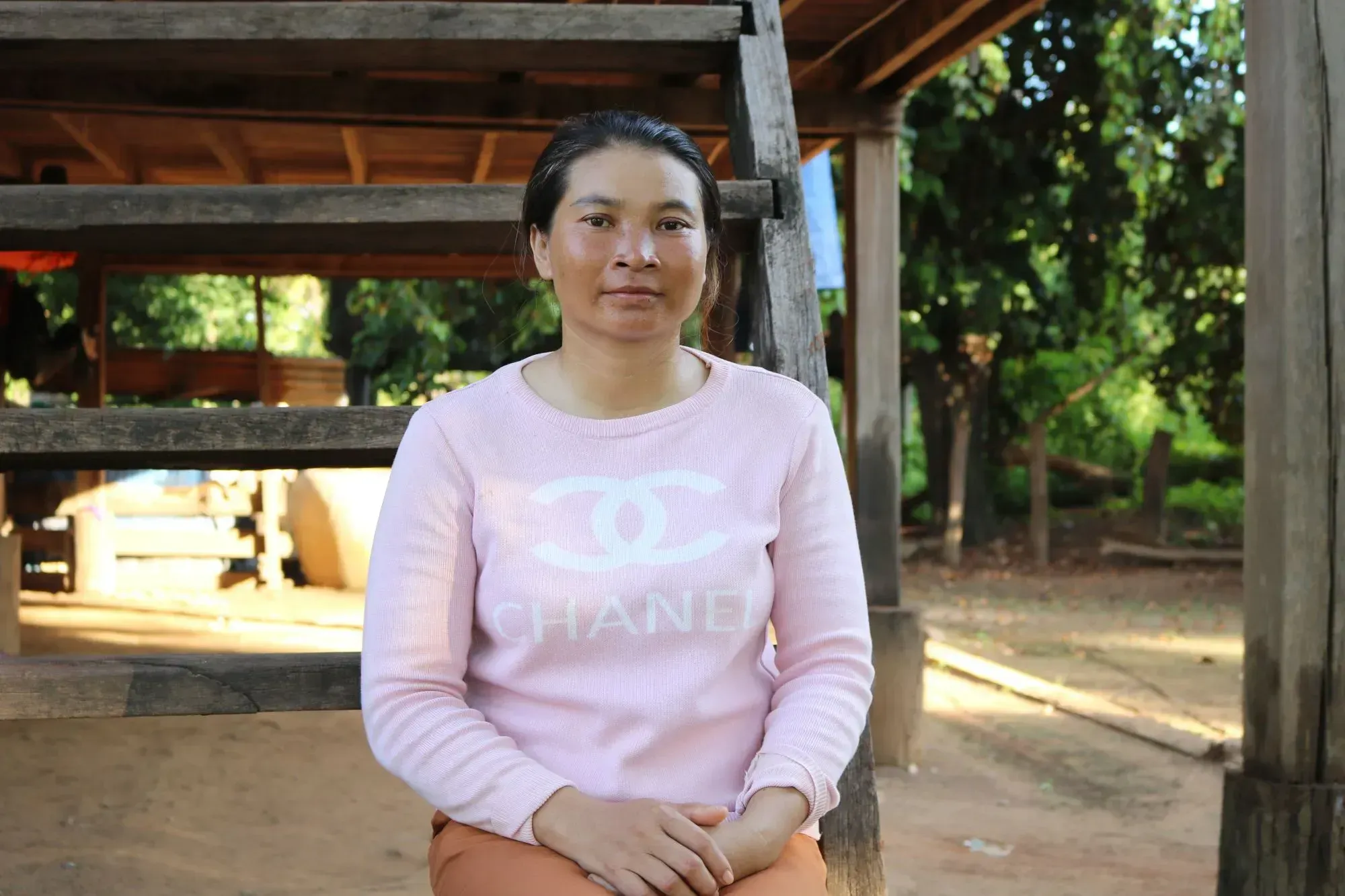
In all four partner villages that The Diplomat visited, residents said they were not well informed about the project, they were not asked for their consent, and they were not invited to attend meetings about the project.
“The NGO wanted the village chief to invite all of the households, but he didn’t,” commented Sara Sreymom, 28, in Rovak village. “Why wasn’t I invited?”
She knew that there had been meetings but most villagers were unable to attend because they had to farm, or they were not invited at all.
Carbon credit projects, and how they affect local and Indigenous communities, have become a subject of growing scrutiny in the last few years. A nine-month investigation by The Guardian found that the vast majority of rainforest carbon offsets, known as REDD+ projects, certified by Verra are “worthless.” A Berkeley study reported that the system inflates its environmental benefits and fails to protect Indigenous communities.
In Cambodia, Verra suspended sales of credits from a Southern Cardamom forestry project for over a year following reports of human rights abuses by Human Rights Watch. Cambodia’s Indigenous communities have experienced systematic loss of land and access to natural resources, and advocacy groups have documented a lack of safeguarding of Indigenous rights in carbon offset projects around the world.
But in the midst of controversy, new REDD+ projects, such as the one in Lumphat, are being approved by the Cambodian government.
One major criticism of multiple carbon offset projects in Cambodia already selling credits is that they allegedly failed to properly acquire free, prior, and informed consent from locals. Despite glowing reports in government-aligned Cambodian media outlets, many residents told The Diplomat they had little information about the project and had not agreed to its implementation in their community.
In Thmei village, rice and cattle farmer Hing Ping said he had attended a few project meetings but was never asked to give his consent. He said he did not understand what the project was for or what it had to do with his village.
“It’s difficult for people to understand what the project is about because they are illiterate; they just go to the meeting but do not really understand why they were invited or what the project is about,” he said.
BirdLife said in a statement that the consultation process was “designed to be inclusive and iterative” and included village assembly meetings across all 16 partner villages, focus group discussions, and participatory mapping. Additional household visits were made to reach people who could not attend initial meetings. Consent meetings were conducted using hand-raising and thumbprints, and the projects established ongoing feedback and grievance mechanisms.
One feedback mechanism involved installing grievance boxes throughout partner villages to get input and complaints from residents on the project. According to BirdLife, residents were informed in a number of ways on how to use the boxes, and the system has been audited and found to be in line with international best practice.
In Thmei village, several of the grievance boxes identified by the village chief were completely unmarked. At the end of the village, attached to a fence in front of a home was one of these blue unmarked boxes. During a visit in late 2025, the home owner called out, answering questions from reporters about the box.
“I have no idea what it’s for or who put it there,” he said.
Indigenous Villagers Say Reforestation Project Lacked Consultation
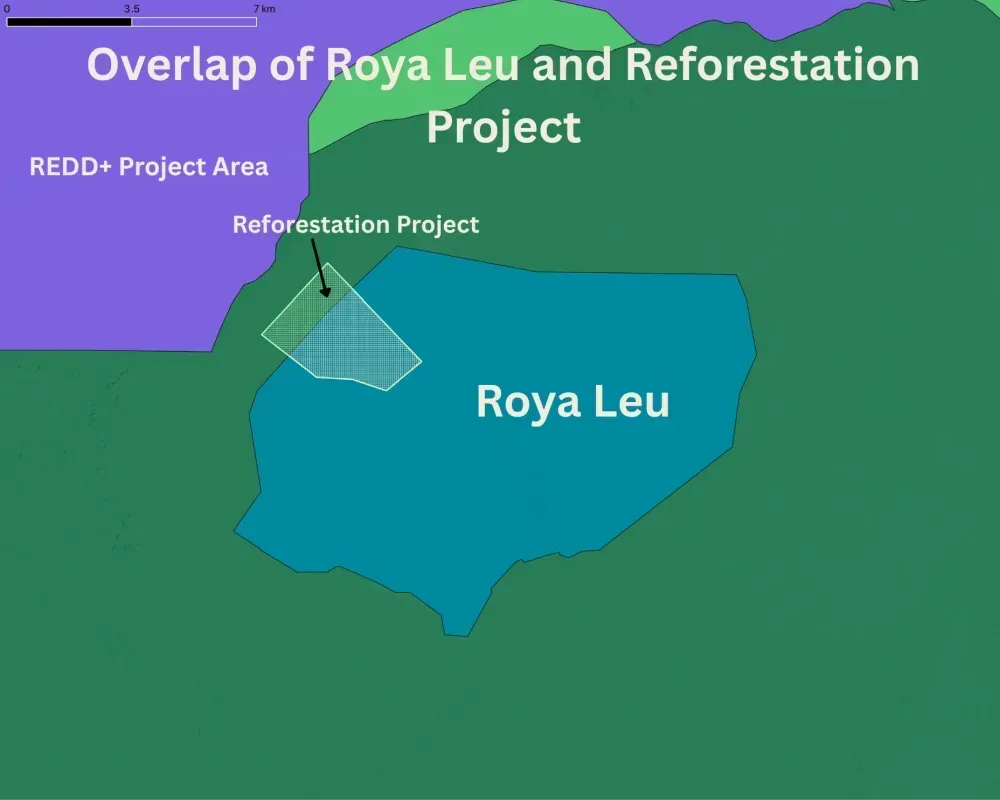
In a video from July 2025, 15 villagers with their motorbikes surrounded a newly installed welcome sign, videotaping on their phones. The sign, adorned with logos for the Lumphat Wildlife Sanctuary REDD+ Project and the Environment Ministry, was later torn down by residents, according to Roya Leu community members. When The Diplomat visited in August, the blank signboard was covered in mud.
Just two months earlier, NatureLife had announced plans to reforest 1,700 hectares of land in Mondulkiri Province, funded by the REDD+ project and at the request of the Environment Ministry. An analysis of the map of the project by The Diplomat found that the replanting project overlaps with a map the Roya Leu Indigenous community created, which depicted 10,000 hectares of sacred land, burial grounds, and residential areas.
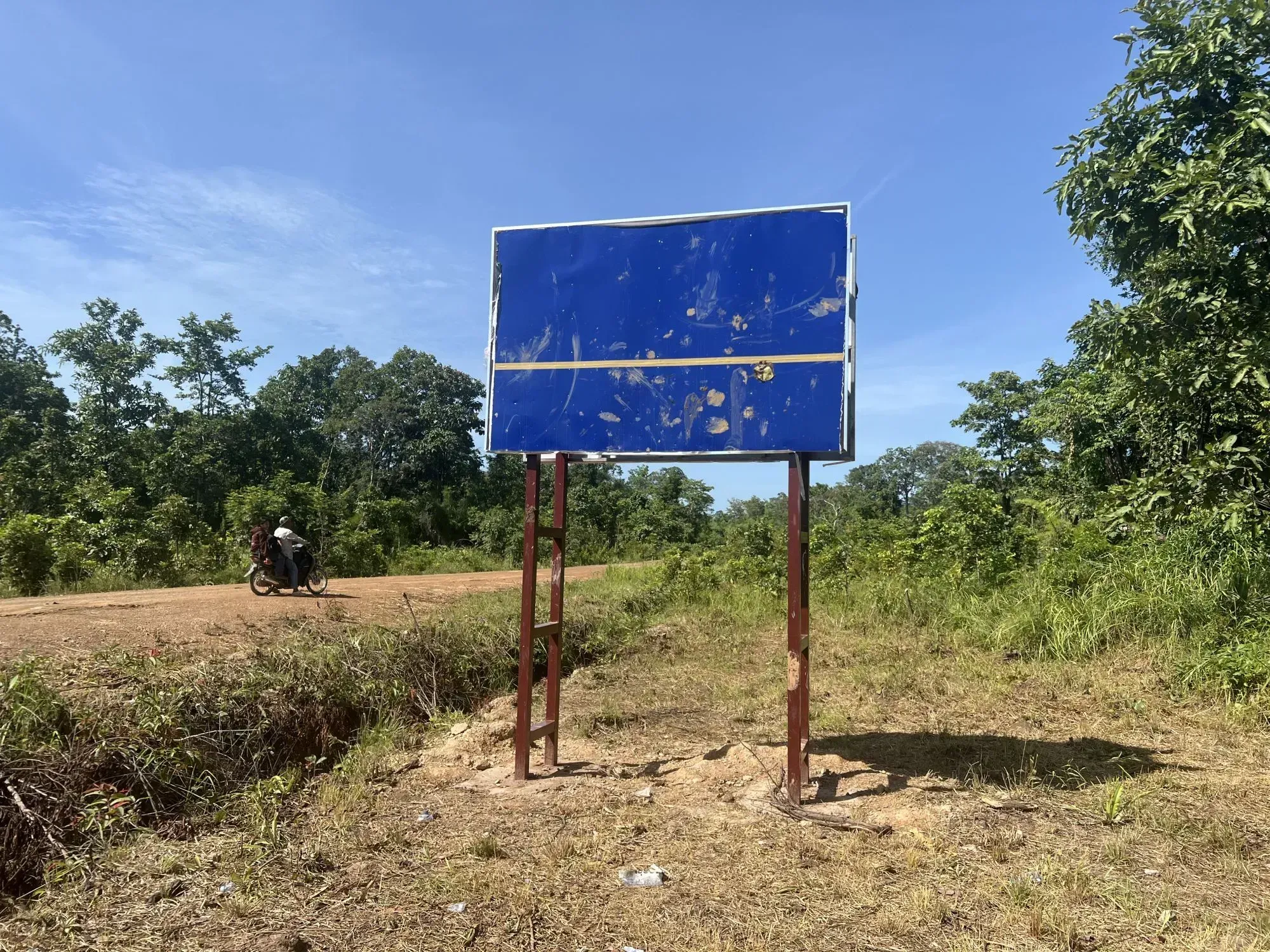
The Roya Leu community’s rendering is part of their application for an Indigenous Communal Land Title (ICLT), a legal provision that allows Indigenous communities to gain collective ownership over ancestral lands. But the process comes with many bureaucratic hurdles, and few communities have been successful in acquiring the designation.
Members of eight of these Indigenous Bunong households, who live in Memom village, said they were not properly informed or asked to give their consent regarding the REDD+-funded reforestation project. Two described residents being blocked from attending REDD+ meetings.
“I know very little about the REDD+ project,” said Teuk Kin, who was appointed as Roya Leu’s community leader in 2024.
“Environment ministry rangers installed REDD+ signs at the end of the village. They did not clarify how many hectares of forest were for the REDD+ project or how many hectares of the forest were for the community,” he said. “They acted on their own on where to install the signs. There was no consultation with people.”
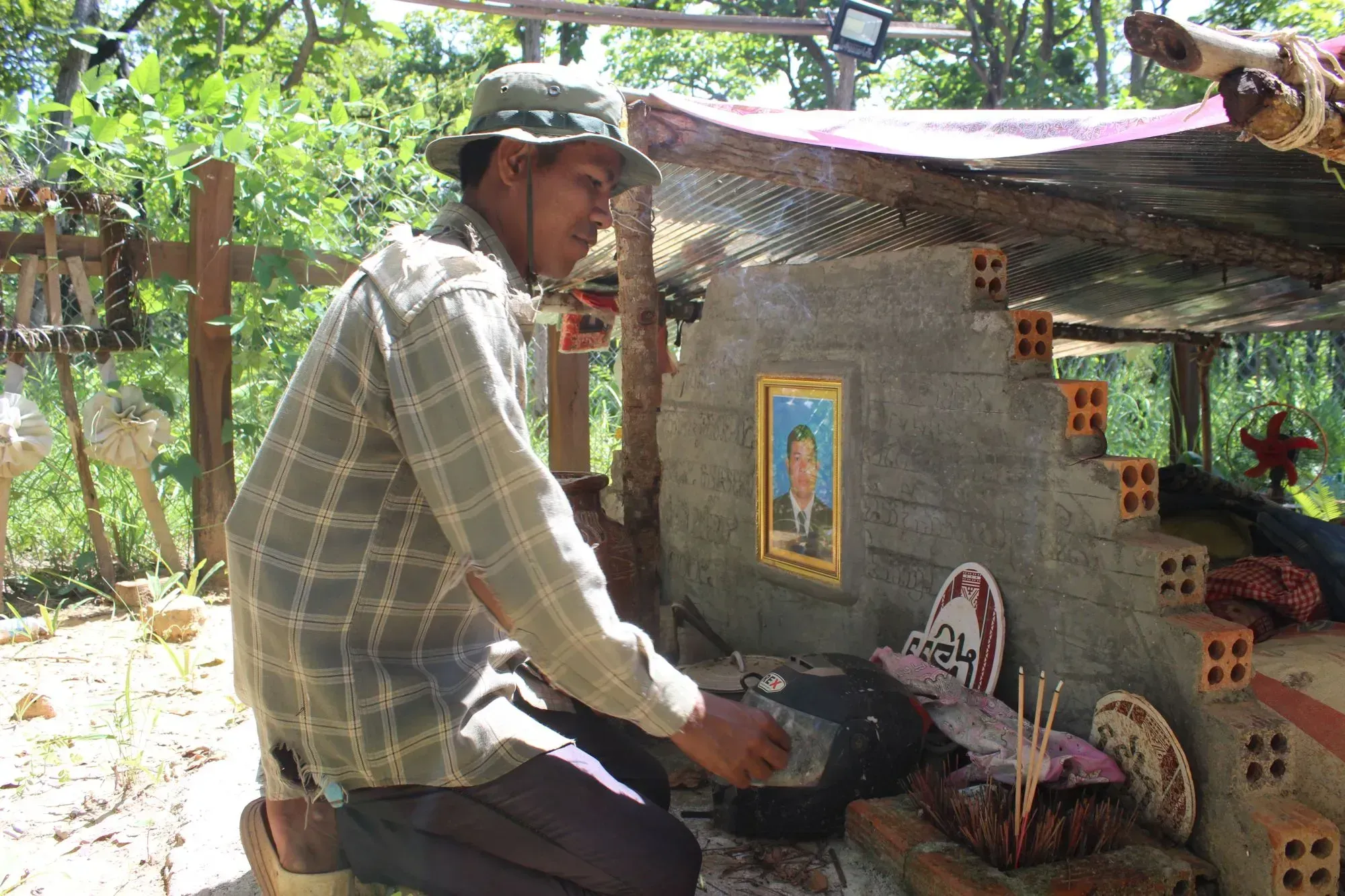
Standing by a community burial site, Tham Yan, 38, another Indigenous villager, said he had interacted with Environment Ministry and REDD+ officials at this sacred spot in 2024. Here, he said, the officials argued with him and other villagers, discouraging them from pursuing an ICLT and telling them that it would not benefit the community.
“We can sell our cattle but we do not want to sell our land. If we carve out the land for people into individual title deeds of five to 10 hectares, there will be nothing left for future generations” to carry out traditional rotational swidden farming, he said.
“We will preserve our forest and prevent deforestation in our own community,” he added.
Yan said he attended a REDD+ project meeting in neighboring Rovak village in 2024. There, he said, officials warned that opposing the REDD+ project would bear consequences. Villagers were told that if they cleared areas on their farmland they would be arrested and face jail time or fines, he said.
BirdLife said in a statement that allegations of people being blocked from meetings or threatened for not backing the project are “serious” and “troubling to read, because they don’t match our experience in the field” or complaints received through grievance channels. The organization said it plans to look into the allegations.
The organization is supporting the reforestation project because it aligns with its goals “to mitigate climate change and its impacts on local communities,” it said.
BirdLife did not directly respond when asked what consultation it had with the Roya Leu Indigenous community regarding the reforestation project.
“Roya Leu (Memom village) sits outside the REDD+ project area. It hasn’t been covered by the FPIC [free, prior, and informed consent] process, and it isn’t covered by REDD+ project activities,” it said in a statement.
The Lumphat Wildlife Sanctuary has had “an established royal decree in place since 1993, which designates the protected area (wildlife sanctuary). Therefore, any related claims should be directed to the government, as this designation is established by official royal decree,” the organization said.
The area in question, where the reforestation project overlaps with the map in the Roya Leu ICLT application, only became part of the protected area when the government expanded the boundaries in 2023, in a move criticized by conservationists for lacking consultation with local communities.
Cambodia’s Environment Ministry did not respond to specific questions sent by The Diplomat, but said in a statement that the ministry is “aggressively implementing law enforcement to protect forests,” using international collaboration for conservation through REDD+ programs, and promoting tree planting to support community livelihoods and biodiversity.
Roya Leu community members are wary of the REDD+ project and reforestation effort being jointly managed by Cambodia’s Environment Ministry, as there is ongoing tension between officials and residents.
In 2024, for example, a resident was charged with cutting down trees and clearing state land, and 11 villagers were summoned to court for questioning.
In another case, Phin Ngov, 31, was given a five-year suspended prison term for clearing state land.
“We have possessed this land for generations. My father-in-law left it to us [Ngov and his wife] in 2017,” he said, speaking from a small structure built on his farmland, the entrance decorated with drawings made by his daughter.
In 2024, he was summoned to the provincial court twice for clearing land.
“I cleared half a hectare of land before I was charged. It is our rotational land, which had undergrowth and small trees overgrowing that I needed to clear out,” he said. “When I appeared in court, they said I cleared state forest land.”
His experiences being summoned to court have made him fearful of future arrests for farming on land he says has been in his family for generations.
Why Is a REDD+ Project Needed on Protected Land?
The residents The Diplomat spoke to who understood the basics of the REDD+ project were supportive of protecting the community’s forestland, which is made up of dry deciduous forest with trees forming a sparse canopy. But this REDD+ project falls within an area already designated as protected by the Cambodian government since 1993.
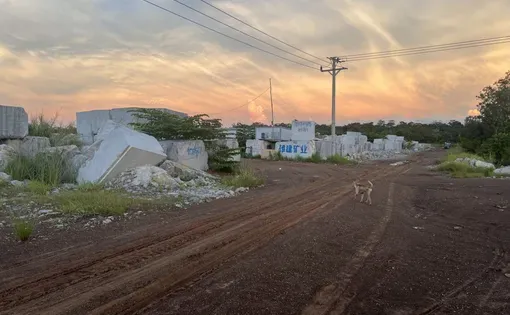
In the middle of the REDD+ project area map is a cutout, like the center of a donut, excluding mining concessions granted by the government. Data from Global Forest Watch reveals tree cover loss inside the cutout as well as along roads carved through the REDD+ project area to reach the mining operation. The Diplomat observed active mining operations in late 2025, with workers and trucks exiting one of the mining sites.
According to Mongabay, at least five mining companies have been granted hundreds of hectares in concessions since 2020 in community protected areas within the Lumphat Wildlife Sanctuary. Villagers told local media they were not consulted before their community land was handed over to private mining companies.
“These are governance problems,” said Marcus Hardtke, an environmentalist and activist who has worked in Cambodia for three decades. “And if the government does not accept the idea of a protected area that has to be protected, and that it’s not a kind of a feudal landholding where they can monetize and exploit [the land] as they please, then all these underlying projects are nonsense ultimately.”
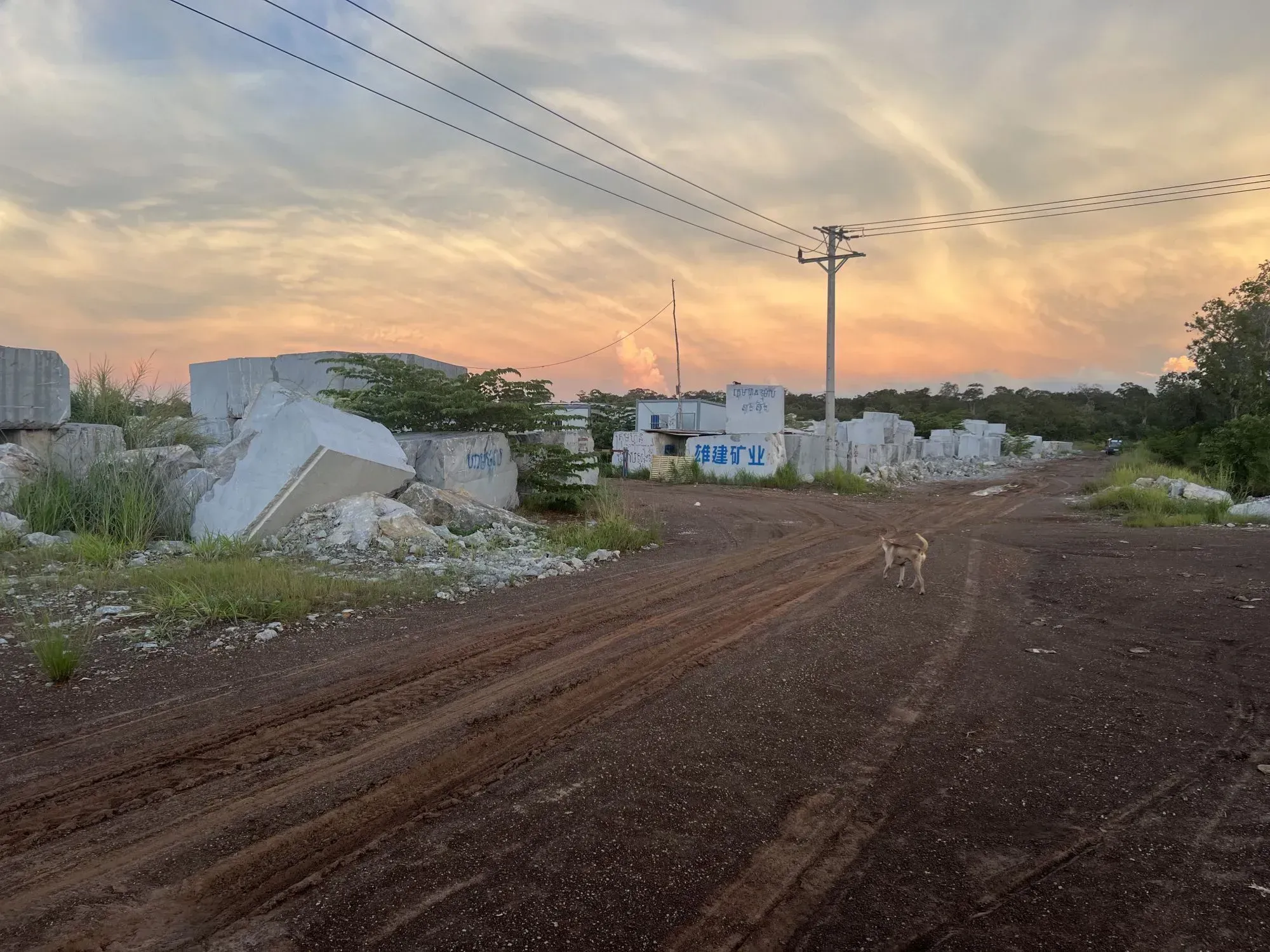
Mining operations lead to deforestation, habitat loss, illegal logging, and pollution, harming forest ecosystems, as documented in Cambodia’s Stung Treng, Kratie, and Mondulkiri provinces. The REDD+ project documents describe the mining operations as “a threat” to the project and one of the “underlying causes of deforestation and forest degradation.”
In a statement, BirdLife said the Cambodian government did not have enough resources to stop the significant forest loss Lumphat experienced in the 30 years before the REDD+ project.
“Take REDD+ out of this landscape and what replaces it? Less money for conservation. Faster biodiversity loss. Fewer livelihood options for the people living here. And a smaller contribution to climate change mitigation,” BirdLife stated. “These are all bad outcomes for the local people committed to delivering this project, and of course for climate and nature.”
A proposed hydropower dam on the Srepok River also leaves a large portion of the REDD+ project vulnerable to flooding. The dam is backed by companies chaired by Cambodian tycoon Kith Meng.
BirdLife said the REDD+ project has submitted comments to the Environment Ministry regarding the Environmental and Social Impact Assessment for the proposed dam.
For Sarah Milne, associate professor at the Australian National University in Canberra, one issue that REDD+ projects are up against is the “many hats” the Cambodian government wears.
“One ministry will approve the dam, another ministry will approve the mine, and another ministry is in charge of the protected area,” Milne said. “One of the biggest problems with REDD+ is that it assumes that the state is a coherent entity that is interested in the rule of law.”
BirdLife expects carbon credits will be issued for the project starting next year.
This story was supported by the Pulitzer Center and Newsroom Cambodia. Additional reporting by Tep Suokeany.