Story
 September 16, 2025
Tristan da Cunha: The Lobsters Keeping Earth’s Remotest Town Afloat
Country:


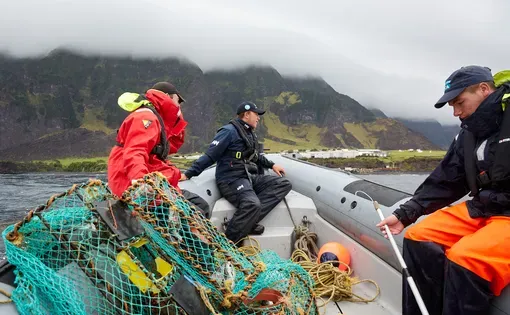
From subsistence hunters to conservation stewards: how the community on Tristan da Cunha, the world...
The most remote inhabited island is racing to protect its seas — and only source of income.
The fishing gong is calling. At 05:00 local time, the clang of a hammer on an old oxygen gas cylinder wakes me up. It's fishing day on Tristan da Cunha, a speck of land in the South Atlantic Ocean that is home to barely more than 200 people. Beyond the UK Overseas Territory, the nearest inhabited settlement lies more than 2,400km (1,491 miles) away.
As the gong fades, dogs bark, engines rev, and the scrape of rubber boots echoes through the air as fishermen head to Callshot Harbor, nicknamed "the Beach," to bait their traps and ready their boats. With just 18 to 72 fishing days per season, every opportunity counts.
They're after Tristan's most valuable commodity: the St Paul spiny lobster (Jasus paulensis), found only near remote islands in the world's southern oceans. Prized for their sweet, delicate meat, a single tail can fetch $39 (£29) on the US market. The lobsters are also sold in Japan and the UK. Here in the cool, temperate waters of the Tristan da Cunha archipelago, the crustaceans thrive close to shore, at depths of up to 200m (656 ft).

As a nonprofit journalism organization, we depend on your support to fund more than 170 reporting projects every year on critical global and local issues. Donate any amount today to become a Pulitzer Center Champion and receive exclusive benefits!
But Tristan has not always been able to depend on its lobster bounty. Decades ago, heavy fishing caused a significant reduction in lobster numbers here. Today, Tristanians depend on the catch — but they also know that, without proper protections, the lobsters are at risk.
"We have always relied on the ocean as a source of food, managing it to the best of our abilities. Which means not taking more than you need," says James Glass, head of Tristan da Cunha's Department of Fisheries. "This is a precious place, and we want it to stay that way."
"It's our livelihood. Without the ocean, our community wouldn't function," says fisherman Shane Green.
Now, as the world's oceans face mounting pressures, and climate change, invasive species and illegal industrial fishing threaten both the marine ecosystem and the island's main source of income, the people of Tristan da Cunha are determined to ensure the spiny lobsters', and their own, long-term survival.