
Jamaican and Southern self-taught artists emerged in their respective landscapes through collectors...
In reporting about Black self-taught artists, Reporting Fellow finds a lesson, a question, and a calling.
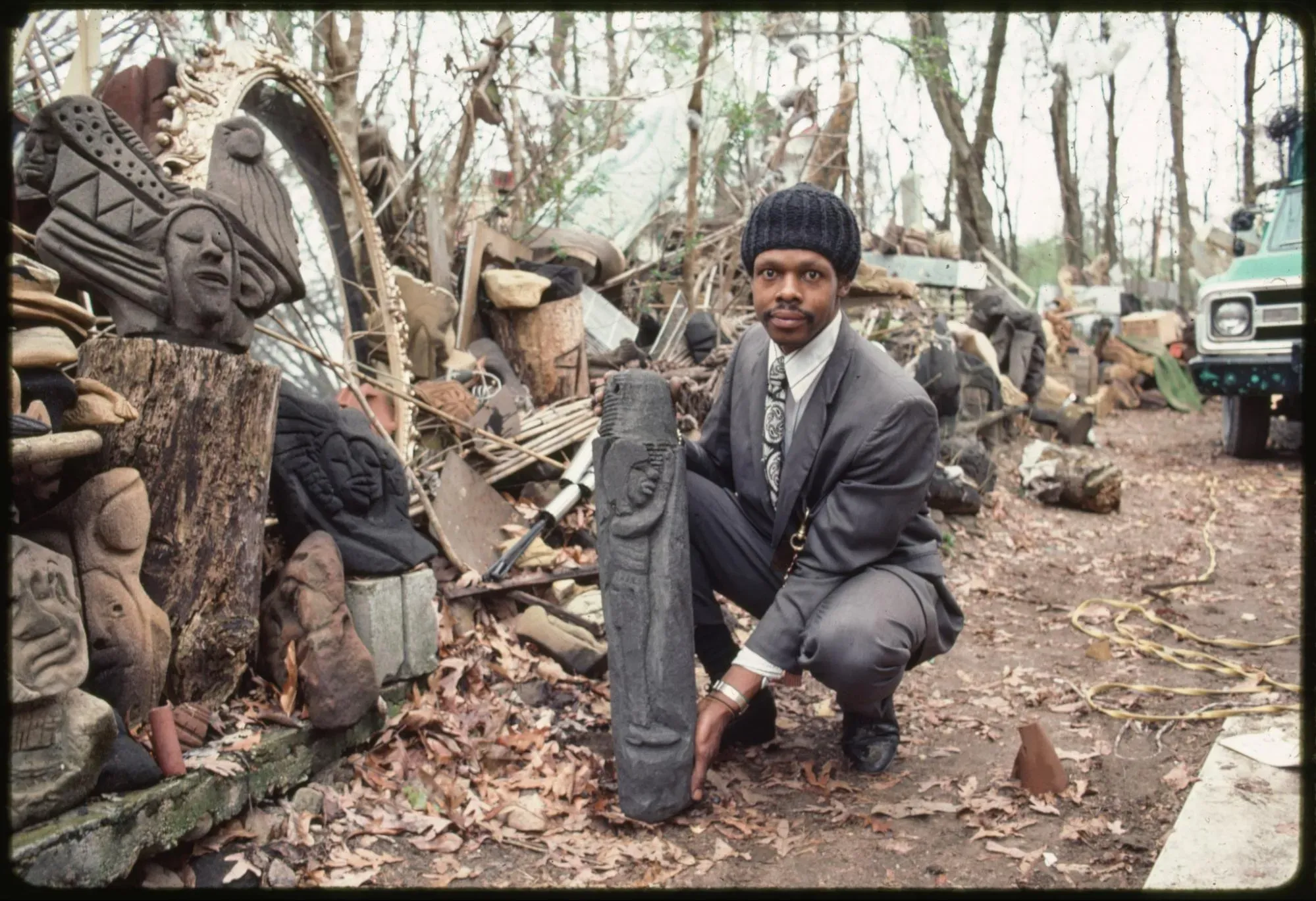
When I arrived in Atlanta in the fall of 2024 to conduct the Southern portion of my research on Black self-taught art, I wasn’t sure where it would lead me. But I knew one thing: I wanted to talk to an artist to expand my research beyond the collectors I’d been talking with.
Toward the end of my trip I was connected to Matt Arnett, who is the son of William Arnett, the founder of the Souls Grown Deep Foundation. When I arrived, Matt Arnett let me know Lonnie Holley was on his way.
“So you’re making an offering to your ancestors, and I’m making an offering to mine,” Holley, a Southern self-taught artist, said to me. “So in a sense, we collided together.”




As a nonprofit journalism organization, we depend on your support to fund more than 170 reporting projects every year on critical global and local issues. Donate any amount today to become a Pulitzer Center Champion and receive exclusive benefits!
This collision came to be one of the most memorable aspects of my research.
Having grown up in the Black church, I developed an early affinity for non-Christian pastoral-like figures who have a proclivity toward the profound.
I was first introduced to the field of self-taught artists through the works of Southern vernacular artists, such as Holley. The works of Holley, Thornton Dial, and the Gee’s Bend Quilters shaped my studies at Spelman College. This vast array of works birthed in backyards, on porches, and as elegies to loved ones came to be foundational to my understanding of art history.
But it was Holley’s work—his assemblage pieces— that worked as a channel to me, a portal to his ancestors, to my own, and to our shared devotion to both spirit and living.

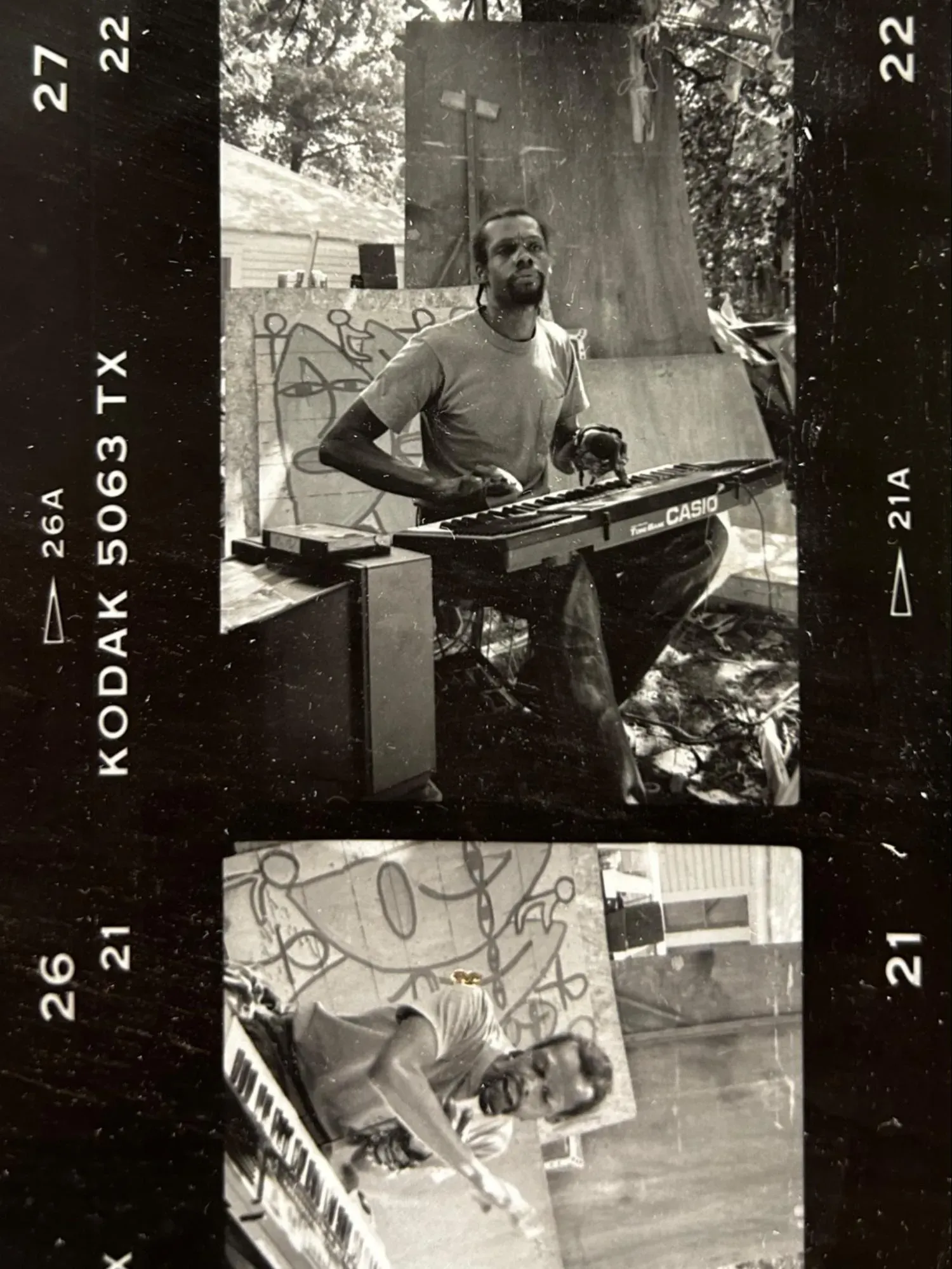
Sitting down to talk with Holley was less of an interview and more of an evocation of his memory, my memory, the present, and the future. To meet with Holley is to be open to time travel.
“We’re utilizing everything that our ancestors have done in order to do more within the space that has been allowed to us. But this gives us outer space,” he said to me.
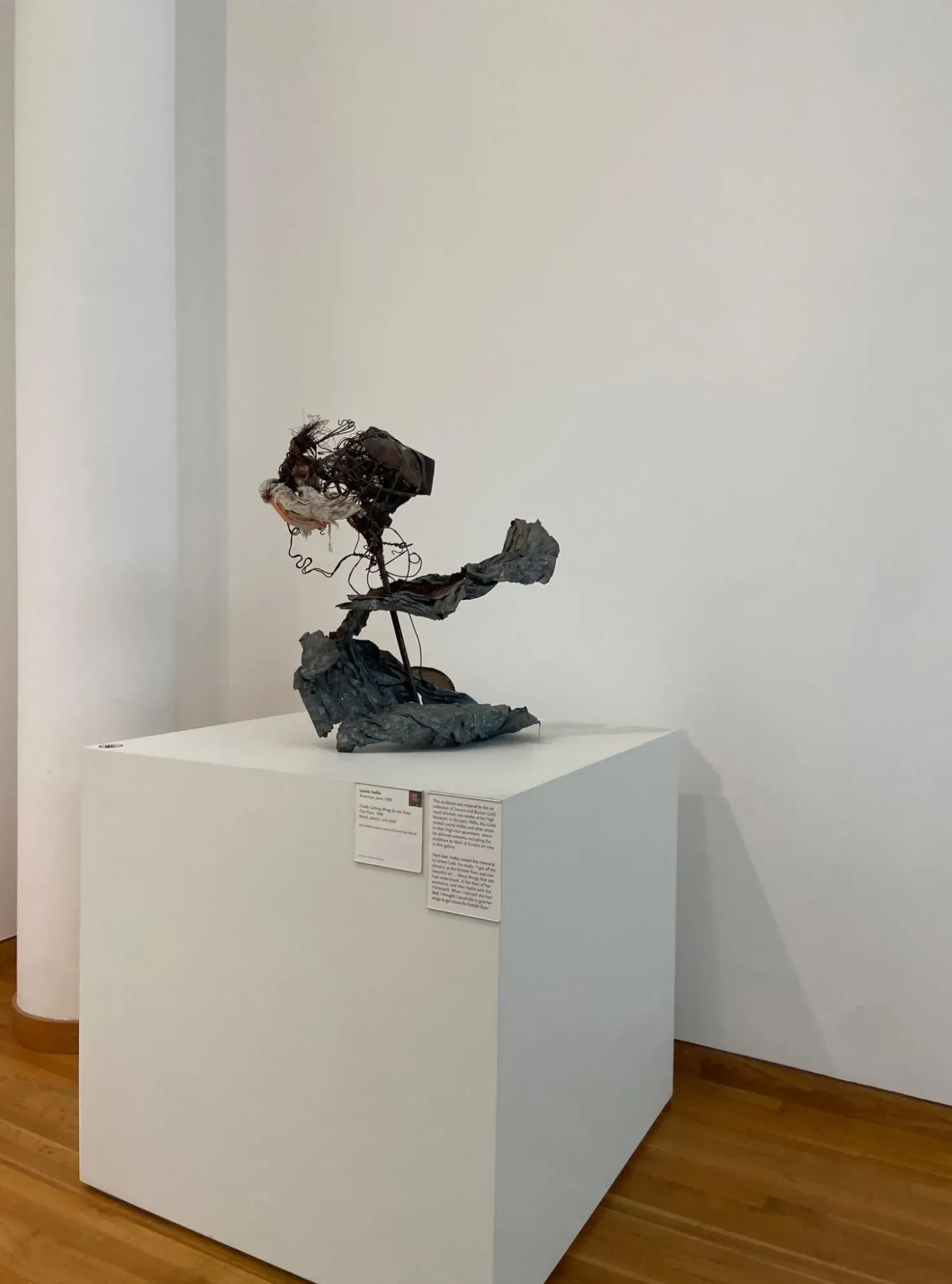
And his works do indeed function as a planetary system of their own. This system/studio is vast, and rows of small assemblages dot cabinets, each labeled. Upon approaching them brings forth an elegy from Holley. Scraps of metal, wire, and wood fold into one another, their original origins unrecognizable. His art is often non-representational, and instead reveal themselves as seemingly discordant hymnals.
I was in awe of the sheer amount of work in the space. As Holley walked me through, I could feel somatically the spirits floating between the works on the shelf, between him and I.


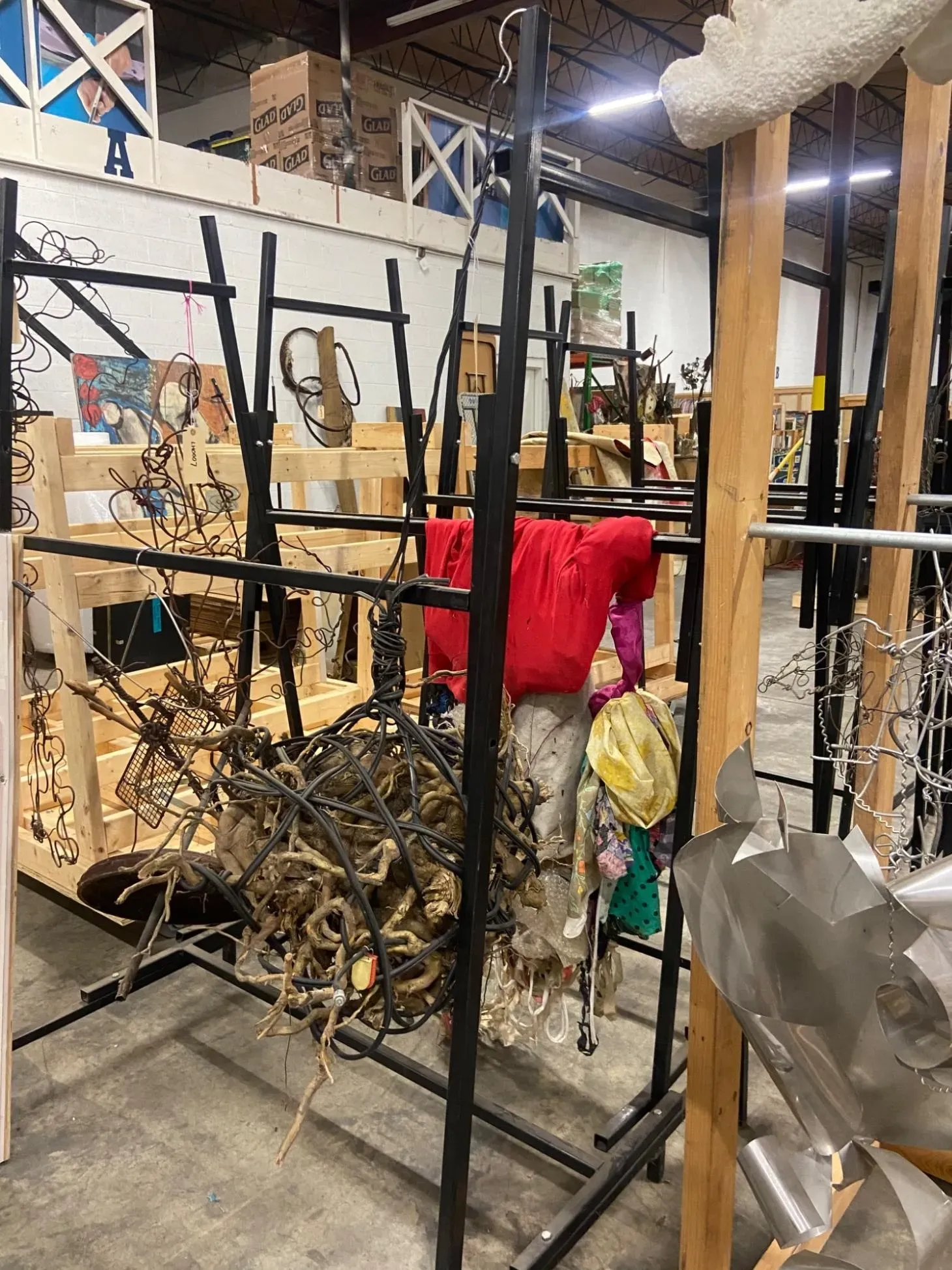
“This is something that I devised out of these pieces of material. I can’t help it. I can’t help it. But see, the spirit says, show her the truth,” Holley said.
In some ways this is the identity of the artist. A desire for alchemy, a fixation on realms beyond this one, and bringing them into form.
Born in Alabama, Holley endured a traumatic childhood. He was one of 27 siblings, was sold at the age of 5, and had a near-death experience shortly thereafter. Holley’s interest in making sparked after two of his sisters’ children died in a fire. His family was unable to afford gravestones, so Holley used sandstone blocks to pay his respects materially. Following that, Holley’s inclination to making began, and he surged forward, making assemblages with objects and materials he found around his home.
Holley has created works for nearly four decades, and his works have been featured in numerous exhibitions and collections across the world, including The Met, The National Gallery of Art, and The Studio Museum in Harlem. In addition to his material assemblages, Holley creates improvisational and spirited music, which has been life-sustaining for him.
Harmony Holiday calls this the “topography for Black Magic and Black Survival” in her monograph on Lonnie Holley. The academic field of Black geographies is and was shaped by the ways that Black people have occupied space, been relegated to space, been consumed by space.
Thus, Holley’s assemblage work is life-sustaining—the continuous conversation between one’s geography and spirit, and the constant ability to feed the spirit with what’s left of the environment.
During my visit, Holley emphasized how much we—Black diasporic peoples—should look at what we have, what we’ve been left with, asserting that what is ours has value. His sculptural practices come from that same ethic, an ethic that asserts those discarded, whether material or human, have a home and have inherent value.
As Black people continue to be faced with the web of love, loss, grief, and reverence that come with Black geographies, artists like Holley remind us that any material can be rendered with love. Any object can become an aesthetic of conjure.
“Why were you chosen to do this?” Holley asked me. And then he said: “We’re gonna work together until I’m dead. The spirit brought you here.” And I hope we do.