


Project
Her Body, Their Borders
Abortion limits and maternal-care deserts are reshaping pregnancy and birth for Latinas and...

The Pulitzer Center's support for this reporting was made possible through the Stavros Niarchos Foundation (SNF)
Florida and Texas have become testing grounds for reproductive health restrictions in the United States. In both states, abortion bans intersect with maternity care deserts, shortages of specialists, long travel distances, and financial, language, and immigration-related barriers that limit access to essential care.
For Latinas, many of whom are immigrants or uninsured, these policies shape not only whether they can end a pregnancy, but also the care they receive throughout pregnancy. In both states, access to reproductive justice increasingly depends on a person’s financial resources and immigration status.

As a nonprofit journalism organization, we depend on your support to fund more than 170 reporting projects every year on critical global and local issues. Donate any amount today to become a Pulitzer Center Champion and receive exclusive benefits!
Her Body, Their Borders: Florida.
(Audio is in Spanish.)
Since the Supreme Court overturned Roe v. Wade in 2022, abortion has been at the center of Florida’s political agenda. Since 2024, state law has banned the procedure after six weeks of pregnancy, with limited exceptions. According to official data, the number of abortions performed in the state has since fallen by nearly 50%.
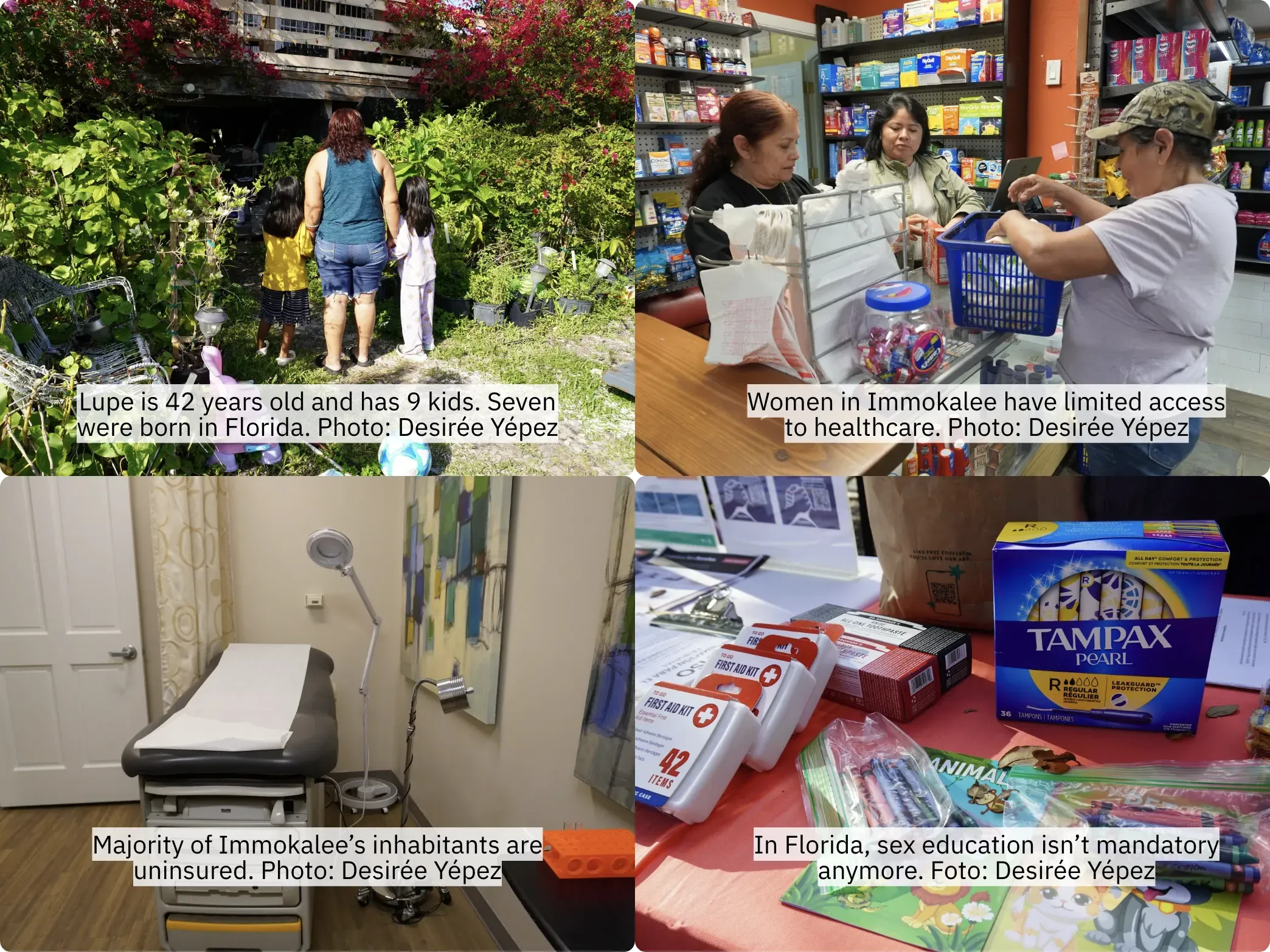
But these restrictions are part of a much broader problem. More than one million Latinas of reproductive age live in Florida; nearly half are mothers, 40% lack economic security, and 5% live with a disability. In nearly 20% of counties, it is difficult to find specialists who care for mothers and babies, and 91% of rural hospitals — the highest share in the country — do not offer obstetric or gynecological services.
In rural areas of South Florida, such as Immokalee, an agricultural community known as the “tomato capital of the United States,” only one clinic provides maternity care. It also lacks ultrasound equipment to monitor fetal development or detect complications.
Immigrants face yet another barrier. Since 2023, medical facilities have been allowed to ask patients about their immigration status, a policy that has heightened fears of detention, deportation, and family separation. As a result, many immigrants avoid seeking even basic medical care.
As these services disappear, Florida spends nearly $30 million a year on dozens of crisis pregnancy centers. Although they are not medical facilities, they operate with limited oversight and have been criticized for spreading misinformation about sexual and reproductive health.
Florida offers a window into a system in which, on the one hand, people face growing obstacles to making informed decisions and, on the other, encounter multiple barriers to accessing healthcare.
Credits:
Editorial Direction, Production & Reporting: Desirée Yépez
Field Production Assistance: Tamoa Calzadilla
Sound Mix: Rubén Tapia
Her Body, Their Borders: Texas.
(Audio is in Spanish.)
Texas has served for decades as a testing ground for how far restrictions on reproductive rights can go. Nearly twenty years before the U.S. Supreme Court eliminated the constitutional right to abortion in 2022, the state was already enforcing laws that steadily narrowed access to reproductive justice.
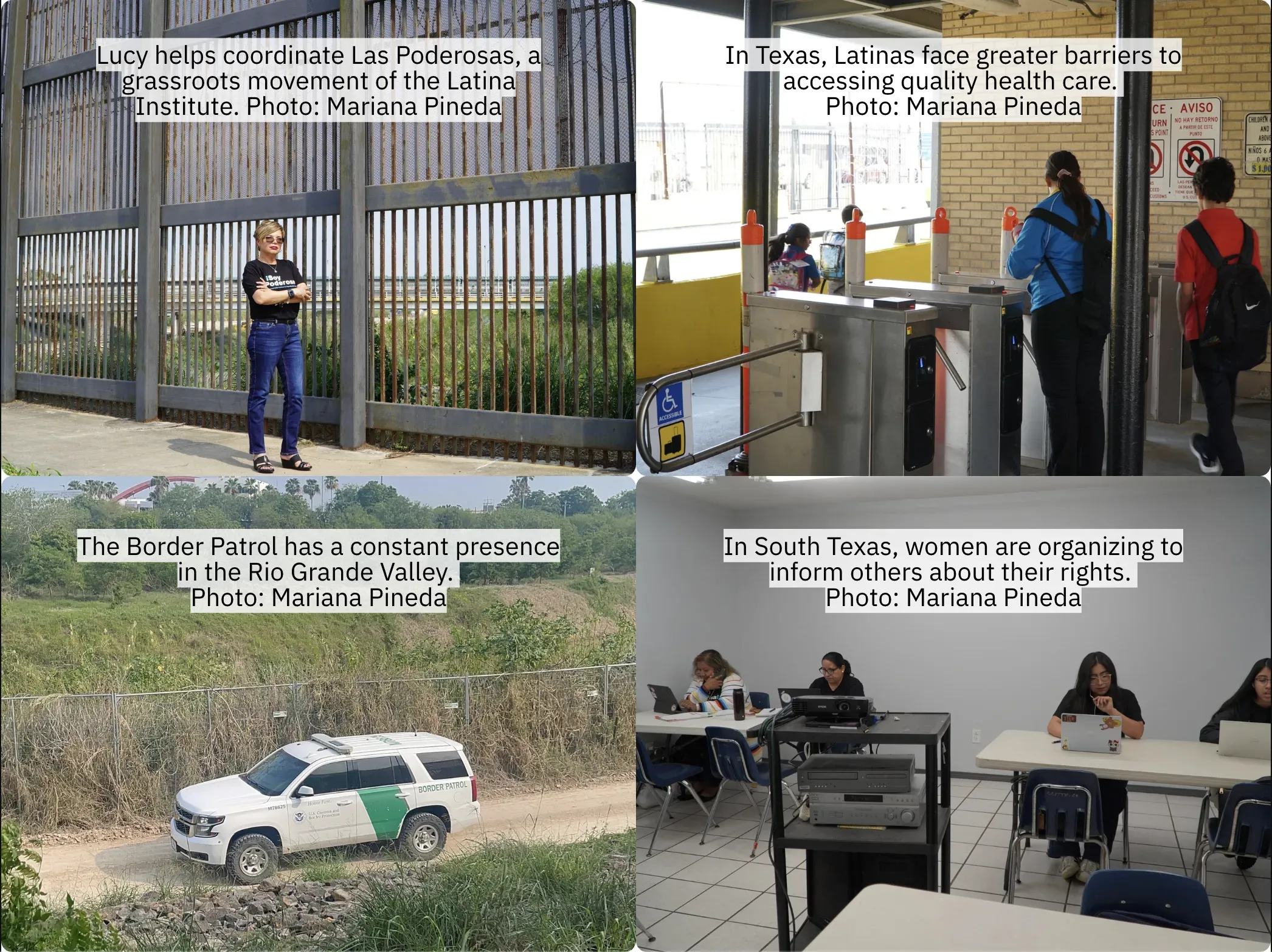
This border state, one of the largest in the country, is home to nearly three million Latinas of reproductive age. Many are immigrants, and paradoxically, leaving, traveling, or relocating may simply not be an option. Among immigrant women, an estimated four in ten are undocumented. In a climate of increased detentions, immigration raids, and deaths in immigration custody, seeking medical care can carry additional risks.
Since the Supreme Court overturned the constitutional right to abortion, doctors in the Rio Grande Valley have reported an increase in high-risk pregnancies. Before the state’s near-total ban took effect, Latinas accounted for the majority of abortions in Texas. After the restrictions were imposed, a University of Houston study found that their birth rate rose by more than 5%.
The situation is especially critical in the Rio Grande Valley, home to one of the busiest and most heavily monitored border-crossing corridors between the United States and Mexico. There, between 27% and 43% of women of reproductive age lack health insurance.
According to the National Women’s Law Center, more than 320,000 Latinas in Texas live in maternity care deserts, while more than 200,000 live in counties with limited access to abortion. In practice, these conditions restrict their ability to decide whether and when to have children and to receive safe care throughout pregnancy.


Credits:
Editorial Direction & Editing: Desirée Yépez
Production & Reporting: Mariana Pineda
Sound Mixing: Rubén Tapia