Pulitzer Center Update July 29, 2026
The Journalist Who Gave Me the Gift of Time
Country:

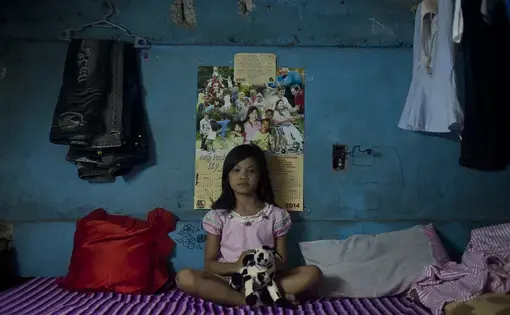
When a Filipino woman leaves her home to work overseas as a nanny, she knows that it will be years...
Journalist Persephone Miel never met me, but when she asked the Pulitzer Center and Internews to administer the Miel Fellowship, she had someone like me in mind. A female journalist of color, living in the Global South, and had yet to see her stories about her country published in international news outlets.
Persephone saw that countries like mine, the Philippines, often made the international headlines, but the byline was often by someone else—someone who did not know my motherland. Persephone wanted journalists from outside the U.S. and Western Europe to tell the stories of their own countries and bring them to an international audience, believing that the strongest stories are the ones that local journalists write about their own communities and “are given the opportunity to travel beyond borders.”
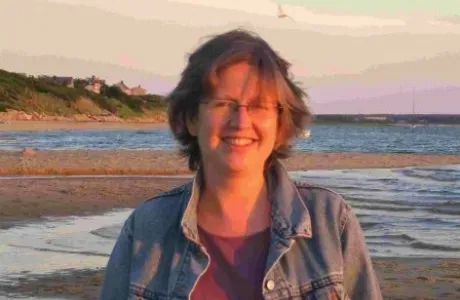
In 2014, I was named the Pulitzer Center’s Miel Fellow—my first-ever international reporting grant. I spent a year following migrant mothers who had left their families to work as domestic workers in Dubai and in Paris. In the Philippines, I meet their children and their partners, hoping to find the answer to the question: Who Takes Care of Nanny's Children?
I could tell you about the awards the reporting series won, how it is still discussed in classrooms in the Philippines, or about my surprise when my graduate school professor included one of my stories in her lecture on transnational motherhood. My mother is very proud of these accomplishments, but allow me to also tell you about the mothers that I met on assignment.
Mothers like me
There was Mrs. Maribeth Manguerra, whose family was the subject in Para kay Mama, one of the documentaries we shot in Manila. She had gone back to Lebanon by the time it was released. One day I received a call from an unknown number. It was Mrs. Manguerra. She had just watched the documentary and was grappling with her words.
“My story … I have a contribution to the world … I cannot express how that makes me feel … Thank you,” she said.
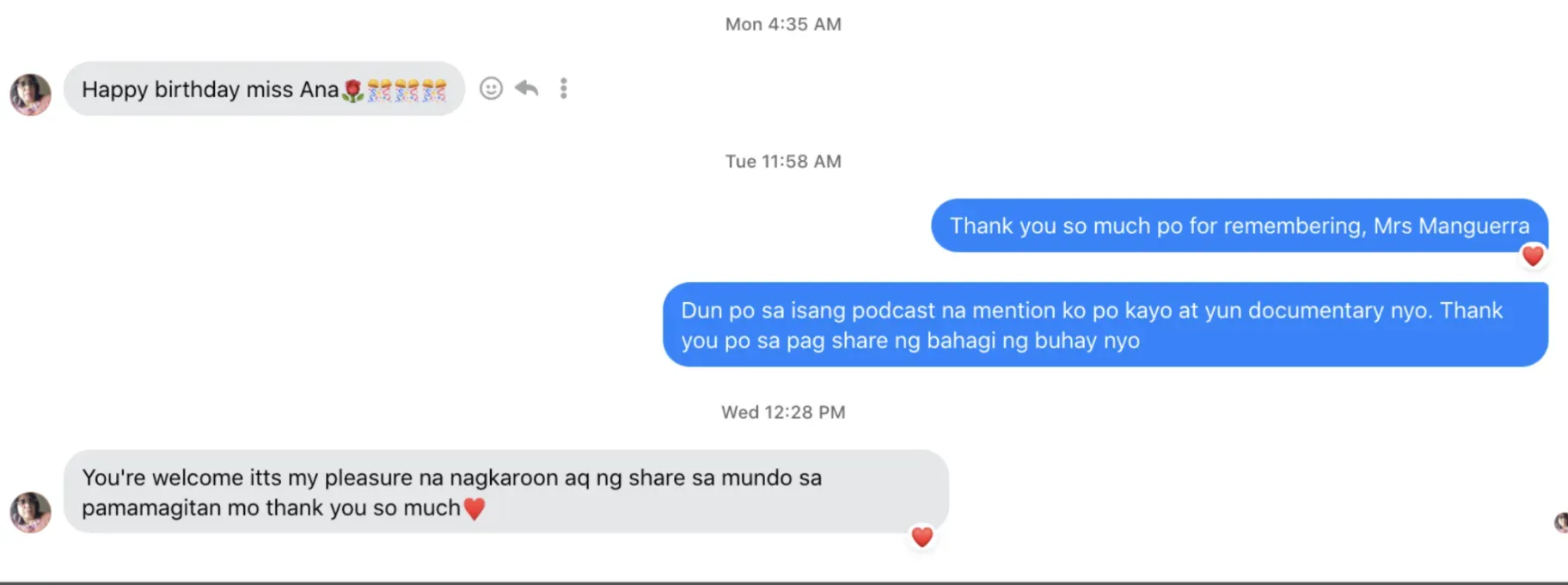
For years afterward, Mrs. Manguerra would drop into my DMs to wish me a happy birthday.
Then there was Ate G (the Filipino word for "big sister").
I first met her husband and son in a suburb just outside Manila and she graciously agreed to meet me in Paris. My reporting partner, Jeric Cruz, had taken photos of her husband and son and I gave copies of them to Ate G. She asked me—someone who had been a complete stranger only minutes before—“How tall is my son now?”
Ate G was once a teacher in the Philippines. She traded in her books and lesson plans for cleaning products and scrub brushes, living as an undocumented worker in Paris. It had been years since she had been home.
We kept in touch after my reporting, and years later she called me crying. Her husband had died in the Philippines, and because she was still undocumented, she could not go home.
She asked me to attend his funeral and pleaded, "Hug my son for me, Ana. Please."
Beyond borders and through time
The Miel Fellowship gave me financial support needed for these cross-border investigations, but more than that, it gave me the gift of time, time that allowed me to set aside my checklist of interview questions to invite a conversation. Time to immerse myself in these women’s lives so I could see them not as subjects but as mothers—just like me. Time that gave them permission to trust me enough to carry a piece of them home when they could not.
Professionally, the Miel Fellowship became the foundation on which I built the rest of my journalism career. The work led to other reporting grants from the Pulitzer Center and other organizations, including the International Women's Media Foundation and Journalismfund Europe.
My body of work on the intersections of gender, sexuality, and migrant rights strengthened my application for a Chevening Scholarship and a postgraduate degree in gender (sexuality) at the London School of Economics.
More than a decade later, I find myself coming back to Persephone.
My stories that started with Who Takes Care of Nanny's Children? will be part of a book title The Other Mary which will be serialized on Substack.
Persephone believed that local journalists should tell the stories of their own communities. She probably also understood that stories don’t end with a publication deadline.
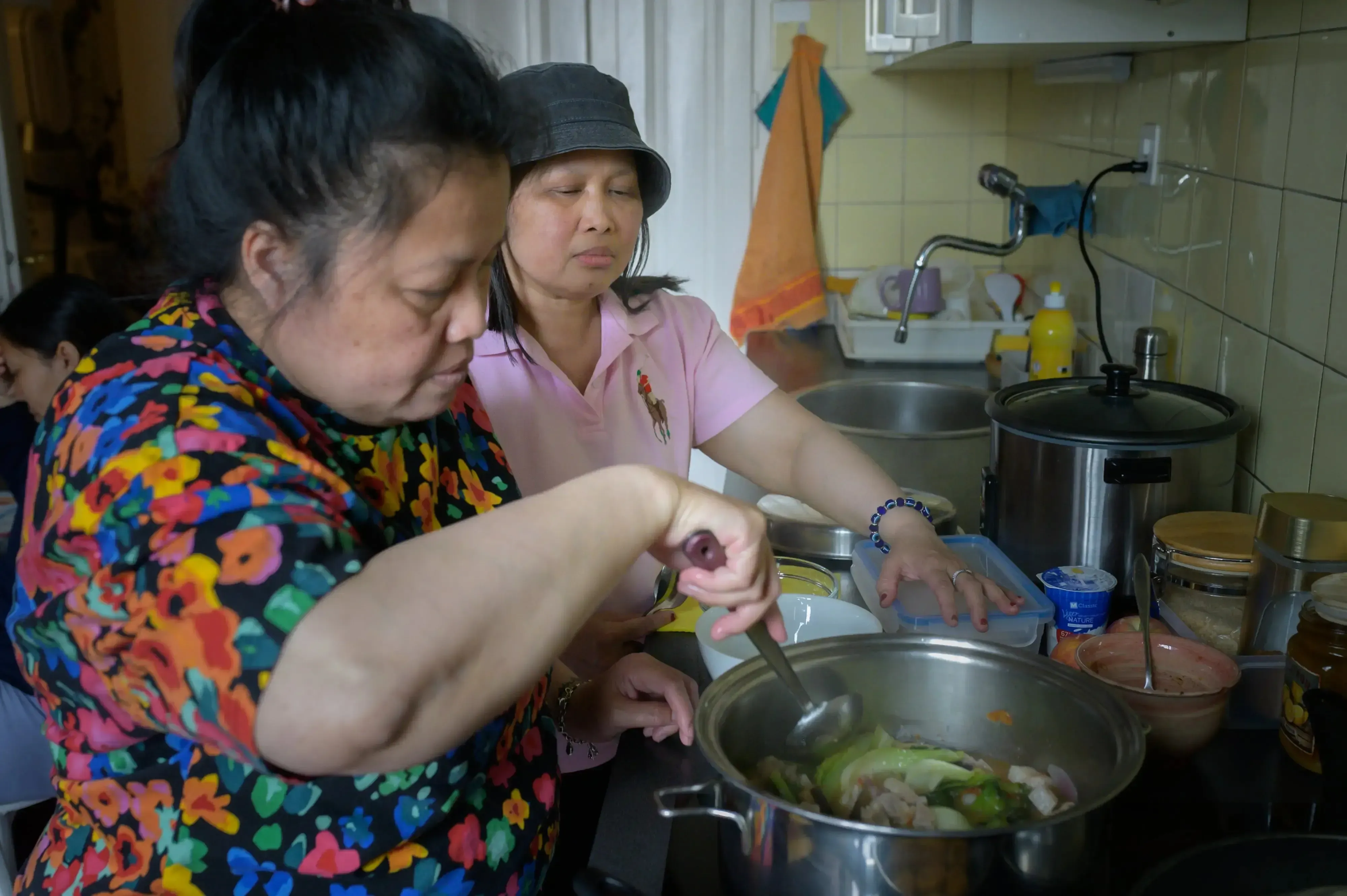
As I write this, I am preparing for a reporting trip to Switzerland to see Ate Binying and Ate Georgia. When I met them in 2022, they were embroiled in a legal battle with their diplomat employers, whom they sued for exploitation and non-payment of wages for nearly 20 years. Last year, a Swiss court ruled that diplomatic immunity could not be used as a defense in cases of domestic worker abuse, paving the way for better labor protections for all workers.
Persephone gave me the gift of time to transform an investigation into a career-long emotional inquiry. One that once started as tracing stories of pain. With the passage of time, it has now become a recording of triumph.