Lesson Plan April 5, 2026
United States Foreign Policy Case Study: USAID
Country:
Grades:

This lesson was created by Camila Valente Maia, a high school teacher in Porter, Texas, as part of the fall 2025 Pulitzer Center Teacher Fellowship program. It is designed for facilitation across approximately two 90 minute class periods.
For more lessons created by Pulitzer Center Teacher Fellows in this cohort, click here.
[This] lesson was written in the larger context of a rigorous reading and discussion-heavy course with the intent of engaging students with new ideas and creating opportunities for student critical thinking, reflection, and application. The goal is to prepare students to have civil and educated political conversations both inside and outside of the classroom.
Lesson Overview
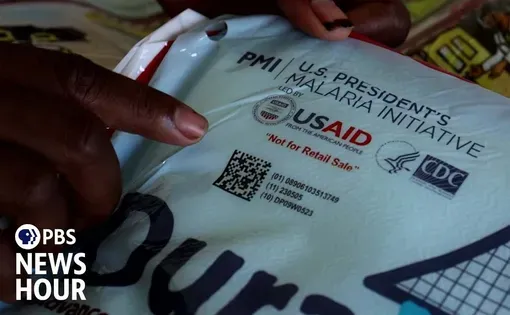
Students describe and evaluate the tools used in United States foreign policy by analyzing United States foreign policy and cuts to USAID.
Essential Question
- How does United States foreign policy impact global health?
Performance Task
Students will write reading reflections in a virtual class discussion board (in Canva)
- ALL students read the textbook’s Approaches to Foreign Policy
- Students choose one of the following to watch:
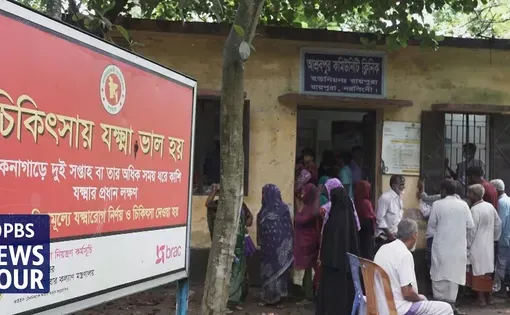
- “Fight Against Tuberculosis Stalls in Bangladesh As U.S. Cuts Aid” by Fred de Sam Lazaro and Simeon Lancaster
- “Ghana Struggles To Fight Disease and Poverty Without Vital U.S. Aid” by William Brangham and Molly Knight Raskin
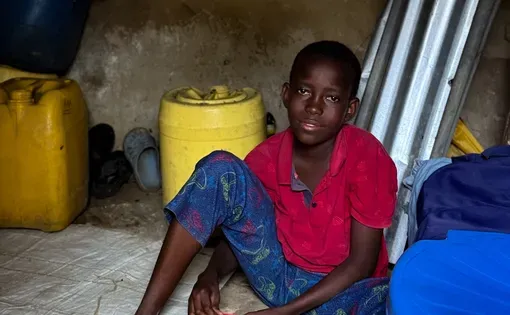
- “How USAID Cuts Are Impacting the Fight Against HIV in Kenya” by William Brangham and Molly Knight Raskin
- Students use evidence from both the textbook and their chosen clip to answer the question: How does the United States approach foreign policy?
- Students write a discussion question about what they read (to be used in the in-class discussion)
Students engage in a class discussion
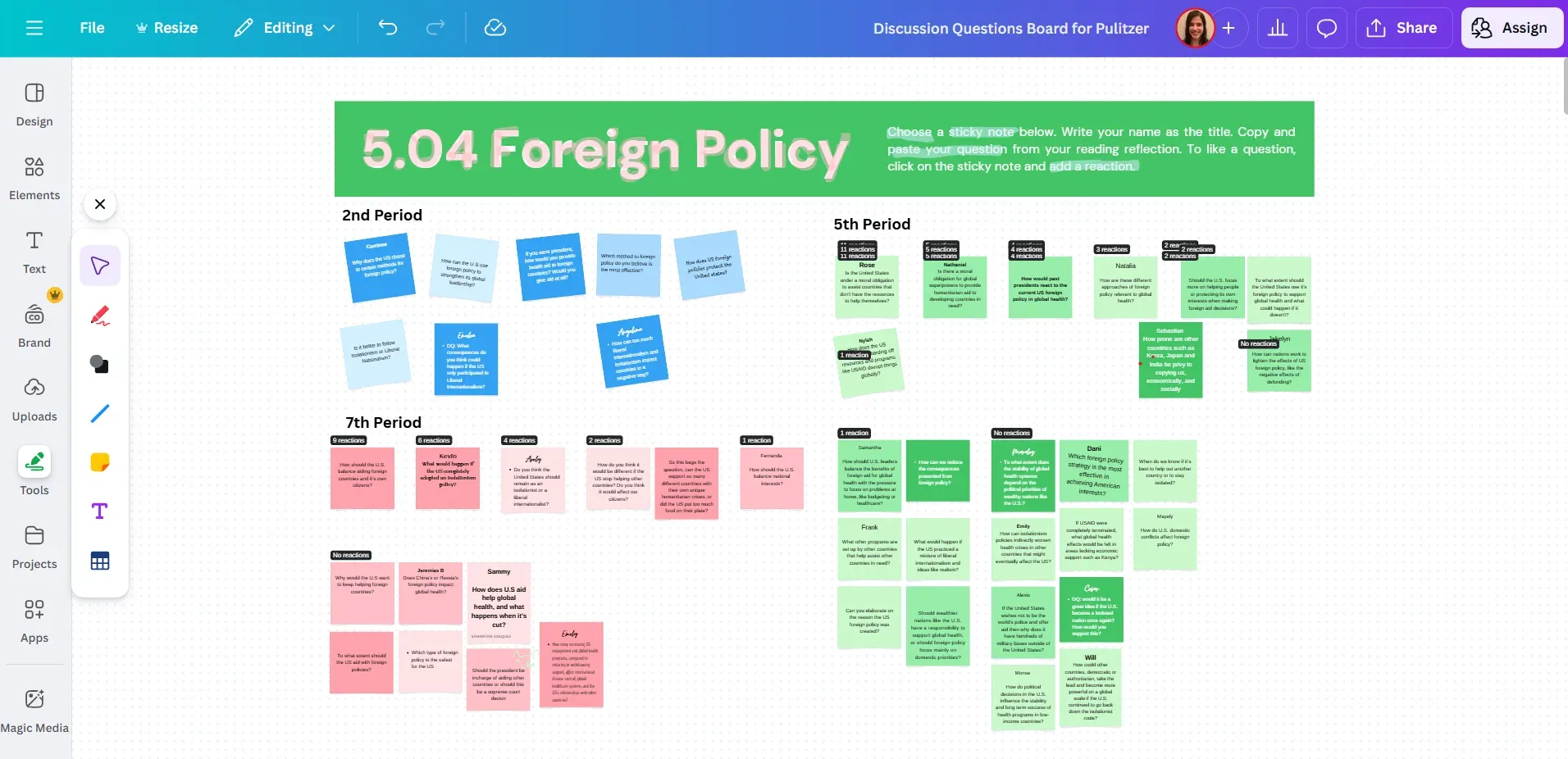
- Students post Discussion Question in collaboration board
- Students participate in ongoing conversations to break the ice and practice
- Students participate in a Socratic Seminar
- Students reflect on their seminar
Assessment
Notes on Context & Content Advisory
This is a dual credit United States Government class, so the rigor may need to be adjusted for other levels.
This lesson was created for the middle of our Executive Branch unit, so students were already familiar with the Executive Branch and how it functions domestically.
Our school has 90-minute class periods and an A/B Day schedule, so this lesson was planned to be a week-long lesson cycle (2 class periods).
Our class uses a 4-point grading scale, so the rubrics are all created as thus (4=A, 3=B, 2=C, 1=D, 0=F).
Two-day lesson plan, including warm-ups, texts and video resources, and discussion activity for the lesson. Download below to read the complete lesson plan.
Lesson Resources
| Pulitzer Reporting | “Cuts and Consequences: The End of USAID” by Molly Knight Raskin, Morgan Till, William Brangham, and Fred de Sam Lazaro for PBS NewsHour “Fight Against Tuberculosis Stalls in Bangladesh As U.S. Cuts Aid” by Fred de Sam Lazaro and Simeon Lancaster “Ghana Struggles To Fight Disease and Poverty Without Vital U.S. Aid” by William Brangham and Molly Knight Raskin “How USAID Cuts Are Impacting the Fight Against HIV in Kenya” by William Brangham and Molly Knight Raskin |
| Other Media | US Government OpexStax Textbook Chapter on Foreign Policy |
| Teacher-created Resources | Day One Foreign Policy Slides Day Two Foreign Policy Case Study Slides Foreign Policy Student Notes PDF (.docx) Ongoing Conversations PDF (.docx) Reading Reflection Rubric PDF Template of GOVT 2305 Discussion Grading.xlsx |
US Gov TEKS:
- (5)(A) analyze how economic and natural resources influence United States foreign policy
- (7)(G) explain the major responsibilities of the federal government for domestic and foreign policy such as national defense
In this lesson, students used Pulitzer Center reporting and a number of structured discussions, to study the global impact of United States foreign policy decisions.
- After reading the assigned articles, students reflected on what they learned:
Strengthening health systems not only prevents diseases from spreading and saves lives overseas but it also safeguards everyone at home”
Emily O., High School Student
Global health is not just a humanitarian issue but also a matter of international stability, economic development, and diplomatic relationships
Maraliz High School Student
The rapid withdrawal of aid illustrates how a shift toward isolationist or unilateral policies can reverse years of progress and pose broader risks to global health… infectious diseases cross borders easily, and weakened systems anywhere threaten health everywhere.
Monse, High School Student
When the U.S supports aid like USAID, it can prevent pandemics and save lives across the globe. However, if that aid is cut, vulnerable people, especially mothers and children, suffer immediately.
Mayely, High School Student
When the U.S. follows a liberal internationalist approach to work with other nations, it supports programs like USAID that provide healthcare in developing countries. This use of soft power helps build relations while also improving health conditions
Nate, High School Student
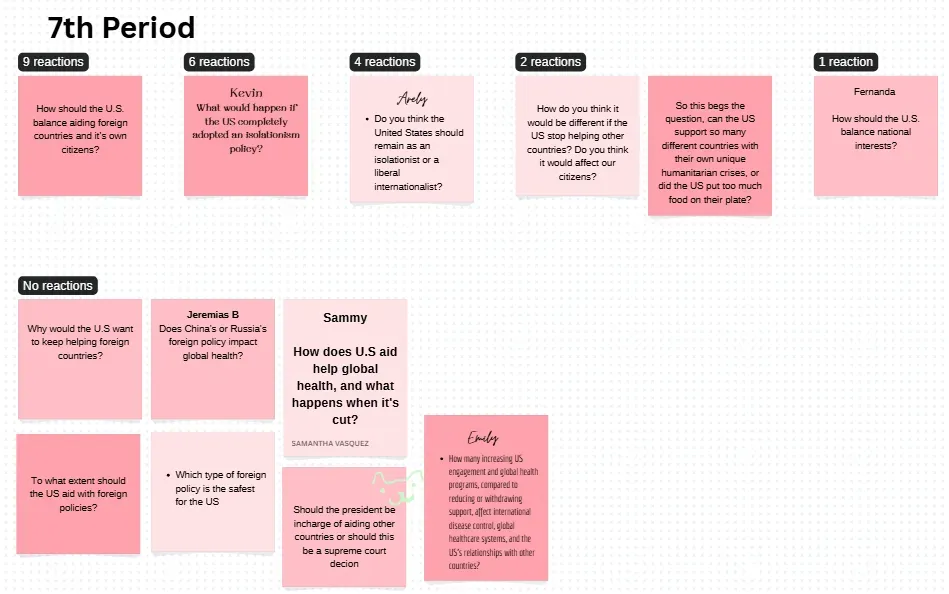
2. Before turning to their discussion groups, students created "question boards" inspired by the reading.
3. Students read and took notes on different approaches to foreign policy from the classroom textbook.
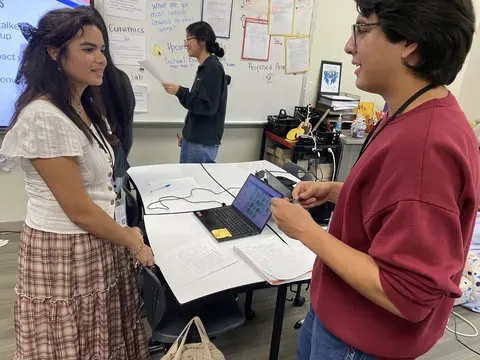
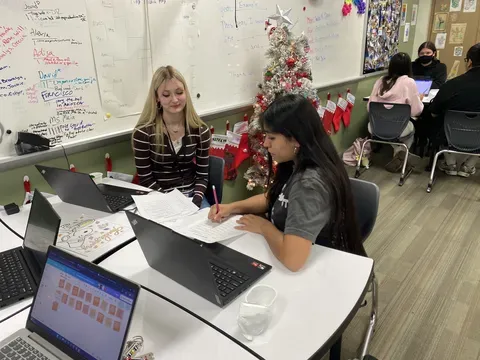
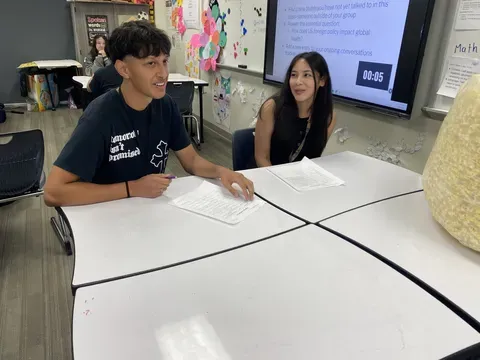
4. After processing the information, students engaged in structured discussions on the themes of the reading.
5. After the discussion groups, students again took time to reflect and process what they had heard. They then responded to the questions "How should the executive branch address foreign policy dealing with global health moving forward?" and "What can you do about this? "
I can advocate for improved US foreign policy that prioritizes global health by educating myself and others about these issues, participating in campaigns that promote funding for international health programs, and supporting organizations that work on global health initiatives. I can also engage with policymakers, encourage them to consider the health implications of their decisions, and push for a more sustainable approach to health diplomacy that recognizes the interconnectedness of global health challenges. Additionally, I can support local community health initiatives that align with global efforts, emphasizing the importance of health in all aspects of society.
As a world super power, the United States holds a moral obligation to provide aid to developing countries who require humanitarian aid.
As a citizen of this country, I am able to speak out about these issues through casual conversation, protests, social media and petitions when I believe that the US should deal with a global issue moving forward.
Teacher Reflection
I was continuously impressed by the depth of students' thinking, especially their nuance and open-mindedness. It is a strong reminder that students rise to expectations, so continue to push, believe, and support your students.
Camiilla Maia, Social Studies Teacher and Teacher Fellow
What is the focus of your lesson plan, and why did you write this lesson for your community?
I work at a small early college high school in the northern suburbs of Houston, Texas. Our school’s mission is to help students from underserved demographics to graduate high school with their diploma and an associate’s degree from the local community college. Students are bused from all over the district to our school, so we serve a wide range of demographics, including a large percentage of immigrants and children of immigrants. Most students have exited the English Language Learner program, but some are still emergent. This is a senior class, so all students are 12th graders. I am a sixth-year teacher and have been working at this school for all of my education career. I have been teaching dual-credit government since I finished my Master’s in Political Science three years ago.
How did you build this lesson with your community in mind?
After watching the Cuts and Consequences: The End of USAID video clips, I knew I wanted to bring it into the classroom for both its applicability to the course and its potential impact on students’ perspectives. It fit right in our week on foreign policy, allowing students to apply various political theories into actual foreign policy. Most importantly, it allows students to see the real-world impact of policy decisions, which is a big focus of this course.
“Reading about U.S. foreign policy and watching the clip about HIV in Kenya really made me realize how much U.S. decisions can affect people’s health around the world… What seemed like numbers and policies in the textbook became very real: people’s lives and communities are affected when foreign policy changes. It’s clear to me that U.S. foreign policy is more than just politics or military decisions, it has real consequences for global health.”
Student from Infiniti Early College High School
Additionally, this lesson was written in the larger context of a rigorous reading- and discussion-heavy course with the intent of engaging students with new ideas and creating opportunities for student critical thinking, reflection, and application. The goal is to prepare students to have civil and educated political conversations both inside and outside of the classroom. Hence, I create as many opportunities for students to discuss their thoughts with peers as possible, starting with low-stakes opportunities to make students comfortable and build up their confidence, all building up to the full class discussion.
What did your students learn while engaging with this lesson?
This lesson particularly helped students apply what they have been learning. One student wrote “reading about U.S. foreign policy and watching the clip about HIV in Kenya really made me realize how much U.S. decisions can affect people’s health around the world… What seemed like numbers and policies in the textbook became very real: people’s lives and communities are affected when foreign policy changes. It’s clear to me that U.S. foreign policy is more than just politics or military decisions, it has real consequences for global health.”
One striking moment in the students’ seminar was when students discussed whether the United States has an obligation to assist other countries. One student said, “as a world super power, the United States holds a moral obligation to provide aid to developing countries who require humanitarian aid.” Meanwhile, another stated, “Sometimes, the ‘help’ that other countries receive from the US is only to the US's benefit and not the country's, so I think it's important to know when the US is crossing the line between being genuinely helpful or doing it for greed.”
What did you learn by creating and teaching this lesson?
Over the course of this lesson cycle, I have learned that students really enjoy real-world problems. Giving them an opportunity to apply theory to something that is actually happening in the world is a great way to get them engaged while also learning the material.
In the future, I would give students post-discussion questions that are more reflective of the conversation they had in the classroom. Having a uniform reflection question gave students really narrow parameters that did not let them fully explore the new perspectives their classmates brought into the conversation. Since teaching this, I have transitioned into organically writing a reflection question with students at the end of their discussion, and this has helped tremendously.
I would also like to focus a bit more on the student action component. Even though students talked about what they could do to address the problem, it would be great to empower them to actually take action. This would asl help students since we have a semester-long civic engagement project in this class, so it would provide another opportunity for them to engage while also connecting that engagement to what they are learning.
Most importantly, I was continuously impressed by the depth of students' thinking, especially their nuance and open-mindedness. It is a strong reminder that students rise to expectations, so continue to push, believe, and support your students.
About Camila Valente Maia
Camila currently teaches government, economics, and math lab at her alma mater, Infinity Early College High School, a public school in Porter, Texas whose mission is to help at-risk students graduate high school with both their diploma and an associate’s degree. She has a Masters in Political Science and holds various leadership positions including: Interact Club Sponsor, Coordinator of Alumni Relations, and Sophomore Class Sponsor.
REPORTING FEATURED IN THIS LESSON PLAN
-

The impact of the Trump administration’s decision to shut down USAID