Lesson Plan August 7, 2026
Ink and Empathy: Bridging Borders Through Letters
Country:
Grades:

This lesson was created by Heather Ingram, an English Language Arts teacher in Chicago, Il, as part of the 2025 Pulitzer Center Teacher Fellowship program. It is designed for facilitation across approximately three class periods.
For more lessons created by Pulitzer Center Teacher Fellows in this cohort, click here.
While delivering [this lesson], I have learned to more fully trust in the brilliance and humanity of our young people. Given these precarious political times, we can find solace in our students. By cultivating both academic and socio-emotional skills, educators have an opportunity to shift the tide toward collective healing and progress.
Lesson Overview
In early spring of 2022, Texas Governor Greg Abbott began shipping busloads of asylum-seeking people to self-identified sanctuary cities such as Chicago, New York, Denver, and Philadelphia. This bold political act was made with the pretense of requiring all parts of the country to grapple equally with the surging population of immigrants to the United States. Aside from legal and humanitarian concerns with Abbott's actions, this maneuver begged a more pressing question —how would sanctuary cities respond to waves of newcomers, both bureaucratically and amongst the people? As with most governmental business, the solutions have been varied in both scope and effectiveness. As for the community conversation, there are a myriad of perspectives. Nonetheless, for the students that sit before us, issues of migration are not simply political or abstract. Be they Caribbean, of Latin American descent, from the continent of Africa, or Europe, young people deserve to engage in scholarly discourse that centers their lived reality, broadens their lens, and shapes solution-minded thinking.
Concerning the broader issue of immigration, this lesson does not purport to have an answer, but rather seeks to build critical context, empathy, and rhetorical comprehension/ skills (e.g. Ethos/Pathos/Logos, Author’s Purpose, Analysis). Toward this end, students will compose Open Letters to migrating peers after exploring the work of Chip Mitchell and Anthony Vazquez.
Essential Questions
- What socio-political factors drive human migration?
- What environmental factors drive human migration?
- What economic factors drive human migration?
- How do different government institutions (local and national) handle migration waves?
- What parallels can we make between various historic and contemporary migratory waves?
- In what healthy and humane ways can a general populous (the people) welcome migrant/refugee/immigrant populations?
Performance Task
Writing Workshop: Open Letters
Each student will compose a letter to a ‘newcomer’ with a similar identity.
- Begin the process with a whole class brainstorm session to compile a list of topics; possible topics include:
- School
- Getting around the city
- Friendships
- Weather
- Food
- Clothing
- Neighborhoods
- Cultural Opportunities
- Work Opportunities
- Learning English
- Dealing with negativity/trauma
- Feeling alone
- Identity
- Direct students to independently select three topics that they will expound upon in their letters.
- Provide direct instruction on the mechanics of letter-writing, relevant Rhetorical Devices, and the nuances of Open Letters.
- If students have not already explored notable/historic open letters (e.g. Letter from a Birmingham Jail by Dr. Martin Luther King, Letter to My Nephew by James Baldwin, Slavery and the Boston Riot by Angelina E. Grimke), that exploration should take place at this juncture.
- Hold space for students to compose their letters.
Supplemental Reading: Open Letters:
- James Baldwin’s Letter to Angela Davis
- Rachel Cory’s Letters to Her Mother
- A Letter to My Son by Ta’Nehisi Coates
- Dear Woke Brown Girl
- A Letter From Young Asian-Americans To Their Families About Black Lives Matter
Assessment
Create rubrics for the following activities:
Dialectical Journal Rubric
- Rhetorical Appeals
- Rhetorical Context (e.g., Author’s Purpose, Setting)
- Analysis
Letter Writing Rubric
- Mechanics (e.g., grammar, punctuation, sentence structure)
- Rhetorical Appeals
Notes on Context & Content Advisory
In preparation for lesson delivery, instructors should:
- Preview Media and abridge as necessary
- Read all texts, abridging or extending as necessary
- Prepare direct instruction lessons
- Ensure students have access to all instructions, texts, and media
It should also be noted that all student tasks can be modified to account for learning differences (e.g., the required number of Dialectical Journal readings/postings can be adjusted for developing, proficient, and gifted readers; readings may be completed independently, in small groups, or teacher-led).
Lastly, given the difficult nature of this subject matter, Ink and Empathy: Bridging Borders Through Letters inevitably broaches the uncomfortable. As an instructor, please be mindful of your social-emotional capacity to carry out any given lesson component, as well as your students’ social-emotional capacity to engage. Again, it is appropriate to abridge this unit plan as necessary.
Three-day lesson plan, including warm-ups, texts and video resources, discussion questions, activities, and performance tasks for the lesson. Download below to read the complete lesson plan.
Lesson Resources
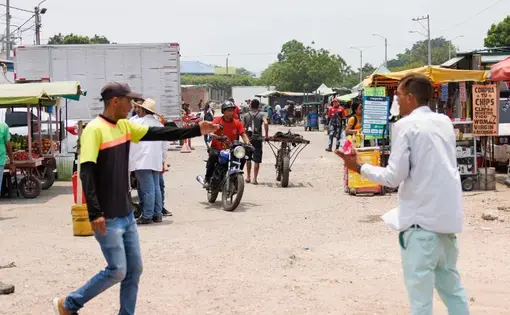
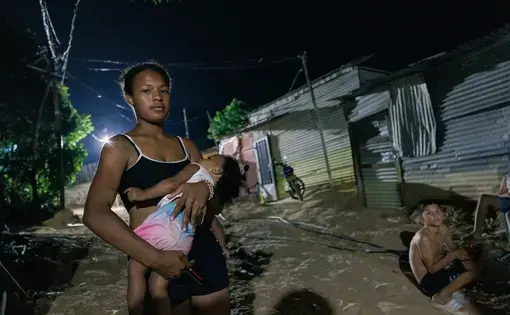
| Pulitzer Reporting | "Walking to the United States" by Chip Mitchell and Anthony Vazquez from Democracy Solutions for the Chicago Sun-Times "The Venezuelan Migrant Experience — in Colombia, in Chicago," by Chip Mitchell, Meha Ahmad, Sasha-Ann Simmons, and Anthony Vazquez from Democracy Solutions for WBEZ "What Colombia Can Teach Chicago About Managing a Migrant Wave," by Chip Mitchell and Anthony Vazquez from Democracy Solutions for WBEZ |
| Teacher-created Resources | [Template] Dialectical Journal - Ethos,Pathos,Logos (.pdf) (.docx) |
| Video Resources | “Chicago warns of humanitarian crisis as city struggles to house migrants” from PBS NewsHour (5:56) “Johnson: 51,000 migrants in Chicago stem from buses sent from Texas governor” from FOX 32 Chicago (3:24) “Texas has bused over 119,700 illegal immigrants to sanctuary cities across the country” from Greg Abbott (0:39) “Chicago struggles to house thousands of incoming migrants” from PBS News Weekend, PBS NewsHour (5:56) “Colombia - President Addresses United Nations General Debate, 77th Session (English) | #UNGA” from United Nations (21:07) “South of the Border,” a documentary by Oliver Stone |
| Additional Reading | “No, Armed Venezuelan Migrants Did Not Take Over A Chicago Apartment Building,” by Maxwell Evans for Block Club Chicago “Chicago’s Venezuelan Community In Limbo Amid Trump’s Push To End Deportation Protections,” by Fatema Hosseini” for Borderless Magazine and Block Club Chicago Supplemental Reading: Open Letters: James Baldwin’s Letter to Angela Davis Rachel Cory’s Letters to Her Mother A Letter to My Son by Ta’Nehisi Coates Dear Woke Brown Girl A Letter From Young Asian-Americans To Their Families About Black Lives Matter |
The New Illinois Learning Standards for English Language Arts: Threading the Common Core
- CC.11-12.W.4
Production and Distribution of Writing: Produce clear and coherent writing in which the development, organization, and style are appropriate to task, purpose, and audience - CC.11-12.R.I.6
Craft and Structure: Determine an author’s point of view or purpose in a text in which the rhetoric is particularly effective, analyzing how style and content contribute to the power, persuasiveness, or beauty of the text - CC.11-12.R.I.7
Integration of Knowledge and Ideas: Integrate and evaluate multiple sources of information presented in different media or formats (e.g., visually, quantitatively) as well as in words in order to address a question or solve a problem
In this lesson, students studied Pulitzer Center reporting and local journalism on the topics of immigration and migration. As a final project, students were tasked with writing open letters to "newcomers" in their region. Here are samples of their writing:
Teacher Reflection
Heather Ingram is a high school English teacher at Sarah E. Goode STEM Academy in Chicago, Illinois. Ingram created the lesson plan, “Ink and Empathy: Bridging Borders Through Letters” as a part of the Spring 2025 Teacher Fellowship for alumni, “Global Issues, Local Contexts: News for Civic Knowledge and Engagement.” Her lesson reached 90 students. At the conclusion of the fellowship, Ingram shared the following reflections on her experience developing and teaching the lesson.
How did you build this lesson with your community in mind?
As an African-American educator, mother, and Chicagoan, I was compelled to create this lesson through the lens of my layered identity markers, as well as those of my students; approximately half identify as Latinx, while the other half is of African ancestry. Throughout this school year, we have spent a substantial amount of time exploring matters of identity and the American Dream. While many of our readings stretch across time and place, our collective proximity to the Venezuelan migrant matter naturally compels us to consider this complex issue. Thus, the collection of Pulitzer Center-supported media made scholarly space for our students to lean into cross-cultural connection, historical context, and contemporary application.
What is the focus of your lesson plan, and why did you write this lesson for your community?
While literary devices and letter-writing mechanics play a pivotal role in this lesson, non-academic skills are equally important. Also of note, I situated this instruction in our American Dream unit. Thus, students brought a bit of prior knowledge to the topic. With that said, I wrote this plan because the whole of humanity benefits when our young people are critically aware, historically astute, compassionately empathetic, and solutions-minded. By framing a contemporary political conversation within the context of peer-to-peer friendly discourse, I tried to create space for scholarly and interpersonal bridge-building.
What did your students learn while engaging with this lesson?
Students gained more context about a humanitarian issue impacting their community and had the opportunity to engage in scholarly discourse centering their own lived reality and broadening their lens.
In early spring of 2022, Texas Governor Greg Abbott began shipping busloads of asylum-seeking people to self-identified sanctuary cities such as Chicago, New York, Denver, and Philadelphia. The bold political act was made with the pretense of requiring all parts of the country to grapple equally with the surging population of immigrants to the United States. Aside from legal and humanitarian concerns with Abbott’s actions, this maneuver begged another pressing question: How would sanctuary cities respond to waves of newcomers, both bureaucratically and amongst the people?
For my students, this question was not abstract, but part of an important community conversation in which there are a myriad of perspectives. Students developed their empathy and rhetorical comprehension skills (e.g. ethos/pathos/logos, author’s purpose, analysis) in order to compose open letters to migrating peers at the culmination of the lesson.
Here are some excerpts from student letters that demonstrate the impact of this lesson:
…Lastly, I’d like to acknowledge your journey. I recently read an article, ("What Colombia Can Teach Chicago About Managing a Migrant Wave"), listened to a podcast ("The Venezuelan Migrant Experience—in Colombia, in Chicago"), and explored a photo essay ("Walking to the United States") about a situation I knew little about. When the lesson ended, I came away with a singular thought—when you walked here, you must have been afraid. You must’ve wondered what was to come? What would you find in this new land? A lot, I promise you…both good and bad. I won’t say it’ll be easy because it definitely won’t be…but hopefully it’s worth it.
Justice
Dear newcomers,
I can’t exactly relate to what you're going through, but I want to understand…
Namiyah
…On another note, there is one thing I have been meaning to ask—when you came here, did you leave your family behind? You know…your mom…dad…siblings? Have they already come to the U.S.? Whatever the case, I hope all goes well and they are okay. Talk to them as much as you can. I know you may not be physically close, but I’m pretty sure they need support just like you do. Trust me, life will look up…just take it one step at a time…no need to jump. Also, try not to pay any mind to some of the people who are already here; many don’t like the fact that you are here, but you are just as important as everyone else here. People have no right to treat you like you don’t belong. You deserve to feel valued and safe…we all do.
Davina
Dear youthful and enduring souls,
Your tribulations are seen, your sorrows are heard, and your presence in a land that is foreign to you is so dearly welcomed. While as a second generation immigrant I can comprehend the events that have shaped you into the person you are today, I will never be able to understand the swallowed pain you have endured through the experiences that force you to stand where you are…
Emilia
What did you learn by creating and teaching this lesson?
“I have never encountered any children in any group who are not geniuses. There is no mystery on how to teach them. The first thing you do is treat them like human beings…”
~Dr. Asa Hilliard
While delivering Ink and Empathy, I have learned to more fully trust in the brilliance and humanity of our young people. Given these precarious political times, we can find solace in our students. By cultivating both academic and socio-emotional skills, educators have an opportunity to shift the tide toward collective healing and progress.
About Heather Ingram
Heather Renée Ingram is a creative and committed English Language Arts educator. Propelled by her grandfather’s unsung participation in the March on Washington and her mother’s efforts as a Black Power era community worker, Heather Renée Ingram began a life of scholarly activism. This spirit-shifting work, where the academic meets the personal, continues to inform both her pedagogy and sense of self.