Lesson Plan August 18, 2025
Babies Can’t Wait: Addressing Maternal Matters during War and Conflict in the Democratic Republic of Congo
Country:
Grades:

This lesson plan was created by Chantee Earl, a high school english educator in Ann Arbor, Michigan, as part of the 2024 Pulitzer Center Global Health Teacher Fellowship program. It is designed for facilitation over 1-2 day lesson or 2-90 minute blocks.
For more lessons created by Pulitzer Center Teacher Fellows in this cohort, click here.
"Students were able to synthesize their learning into a broader understanding of how conflict, geography, and resilience intersect. They expressed empathy for the people in the story and recognized how hope persists even in the most challenging circumstances. Through engaging activities, group collaboration, and guided analysis, students not only learned about the DRC but also developed critical thinking skills to analyze global issues. Ultimately, this lesson helped them connect the themes of struggle and resilience to their own lives, fostering a deeper appreciation for the strength of communities around the world."
Chantee Early, Clinical Associate Professor of Education, Georgia State University
Lesson Overview:
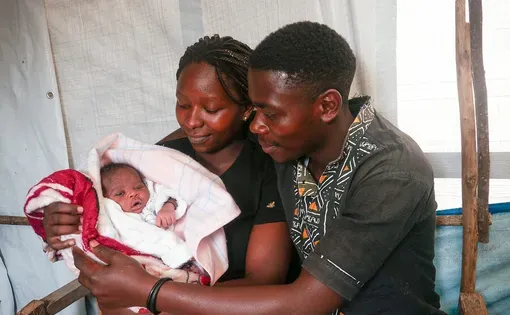
In this lesson, high school students will explore the impact of geography and conflict on healthcare access in the Democratic Republic of Congo (DRC), using the article In the Shadow of War, Life Begins Anew in a Congolese Maternity Ward as the focal resource. The lesson aims to deepen students' understanding of how geographic and socio-political factors shape daily life and resilience within communities in conflict zones. Through reading, discussions, and multimedia activities, students will examine the challenges faced by healthcare workers and patients, particularly in a maternity ward setting, and reflect on the theme of human resilience in the face of adversity - war and conflict.
This lesson aligns with World Geography standards, focusing on the Democratic Republic of the Congo’s physical and human systems and their impact on social and economic life. Students will build critical thinking skills, empathy, and global awareness as they analyze real-world issues and reflect on how individuals and communities adapt and support each other in difficult circumstances.
Lesson Objectives:
Students will…
- Analyze the impact of conflict on daily life and healthcare access in the Democratic Republic of Congo (DRC)
- Evaluate how geography influences socio-political conditions and healthcare needs in a war-torn region
- Reflect on human resilience and community support systems in conflict zones
Performance Task:
Option 1: Students will create a 5-8 minute multimedia presentation using PowerPoint, Google Slides, Prezi, Canva, or a short video titled “Resilience and Geography: Life in a Conflict Zone.” This assessment requires students to synthesize what they've learned by exploring how geography, conflict, and community resilience are interconnected in the DRC.
Option 2: Students will write a thoughtful and creative poem that reflects the themes, emotions, and imagery from the article. Use your own words to explore hope, struggle, and new beginnings.
Assessment
Formative Assessment:
Participation in discussions and group activities.
Summative Assessment:
The rubric below is for the multimedia presentation performance task. Share the rubric by using the following handout [.docx][.pdf]
Notes on Context & Content Advisory:
This lesson contains some graphic descriptions of violence.
This lesson was designed for 9th-12th grade World Geography & Global Studies class. Facilitation is suggested across 1-2 day lesson or 2-90 minute blocks. This lesson plan includes pacing, multimedia resources, suggestions for implementation, and rubrics for assessment.
| Pulitzer Center Reporting | “In the Shadow of War, Life Begins Anew in a Congolese Maternity Ward,” from Women and War in Eastern Congo by Sophie Neiman for The Christian Science Monitor |
| Teacher-created Resources | Babies Can’t Wait Slide Deck for Facilitation slide deck [.pptx][.pdf] Performance Task(s) Rubrics Multimedia Presentation Rubric [.docx][.pdf] |
Georgia Standards of Excellence
World Geography (Course Number 45.0711): The world geography course provides students with an analytical view of how geographic factors have and continue to influence human behavior on the earth. Students will examine how the physical and cultural geographic factors contribute to varying levels of cooperation within the major world regions. Additionally, students will examine the importance that political, environmental, and economic factors have in a region’s development.
SSWG7b: Explain how Sub-Saharan Africa’s physical geography and natural resources have shaped its population distribution and economic activities.
SSWG7c: Analyze how physical geography has impacted Sub-Saharan Africa’s social and economic characteristics.
6th Grade Students from Georgia Demonstrate Global Awareness, Empathy, and Resilience Through Poetry
Students in Earl's class wrote poems to process the reporting on the Congo. Review a selection of the poems below.
Teacher Reflection
Teaching complex topics like conflict, geography, and resilience to 6th graders requires thoughtful planning and intentional engagement. By implementing this lesson plan, I aimed to help students connect real-world issues to the themes of hope, struggle, and community resilience found in “In the Shadow of War, Life Begins Anew in a Congolese Maternity Ward.” Through a combination of vocabulary identification, guided analysis, and collaborative discussion, students explored the challenges faced by healthcare workers and mothers in the Democratic Republic of Congo (DRC), while considering how geography and conflict shape daily life.
Students identified resilience as “overcoming difficulties” and connected it to how healthcare workers and mothers persevered despite overwhelming odds. By actively engaging with the text through vocabulary, students were able to build confidence in tackling challenging topics while developing a deeper appreciation for the complexities faced by those in conflict zones.
Chantee Earl, Clinical Associate Professor
I began the lesson by emphasizing the importance of understanding key vocabulary within the article. Words related to healthcare, conflict, and geography—such as resilience, conflict zone, maternity ward, and natural resources—were highlighted by students as they read. I encouraged them to define each term in context and reflect on the importance of each term in understanding the broader themes of the article. For example, students identified resilience as “overcoming difficulties” and connected it to how healthcare workers and mothers persevered despite overwhelming odds. By actively engaging with the text through vocabulary, students were able to build confidence in tackling challenging topics while developing a deeper appreciation for the complexities faced by those in conflict zones.
The second activity focused on identifying voices and perspectives within the article. I provided students with a chart to record the role or title of individuals described (e.g., nurse, mother, doctor) along with key quotes that highlighted their struggles and strengths. Students quickly noticed themes of determination and support through quotes like, “We don’t stop working because of war. Babies don’t wait,” from a nurse in the maternity ward. They discussed how such insights revealed both the human impact of conflict and the vital role healthcare workers play in their communities. By connecting individual voices to the article’s themes, students were able to humanize the story and recognize the importance of community resilience.
To ensure collaborative learning, I divided students into small groups and assigned each a section of the article. Each group focused on different aspects of the challenges faced by healthcare workers and mothers in the maternity ward. Afterward, the class came together to analyze key excerpts and answer guiding questions. Through these discussions, students gained a clearer understanding of how geographic and socio-political factors shape life in the DRC. The final activity involved a class discussion to deepen students’ critical thinking. We examined how the DRC’s geography—rich in natural resources but plagued by conflict—shapes both opportunity and instability. Students reflected on the challenges posed by terrain, borders, and resource competition, linking these ideas to socio-political instability. We also explored how individuals and communities demonstrate resilience, focusing on the importance of support systems, like families and healthcare facilities. Students concluded that community support, even in conflict zones, provides stability and hope.
By connecting individual voices to the article's themes, students were able to humanize the story and recognize the importance of community resilience.
Chantee Earl
By the end of the lesson, students were able to synthesize their learning into a broader understanding of how conflict, geography, and resilience intersect. They expressed empathy for the people in the story and recognized how hope persists even in the most challenging circumstances. Through engaging activities, group collaboration, and guided analysis, students not only learned about the DRC but also developed critical thinking skills to analyze global issues. Ultimately, this lesson helped them connect the themes of struggle and resilience to their own lives, fostering a deeper appreciation for the strength of communities around the world.
About Chantee Earl:
Chantee Earl is a Clinical Associate Professor of Education at Georgia State University. Although designed for high school students, Ms. Earl facilitated this lesson in her students’ 6th-grade classroom.