

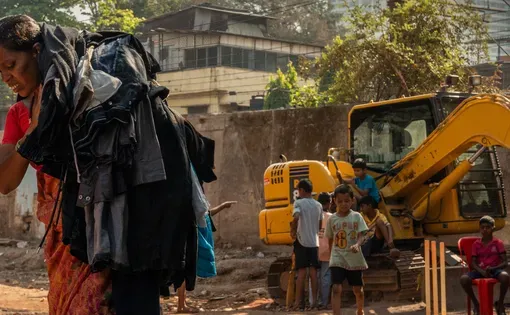
How an urban redevelopment project has become a vehicle for elite land capture
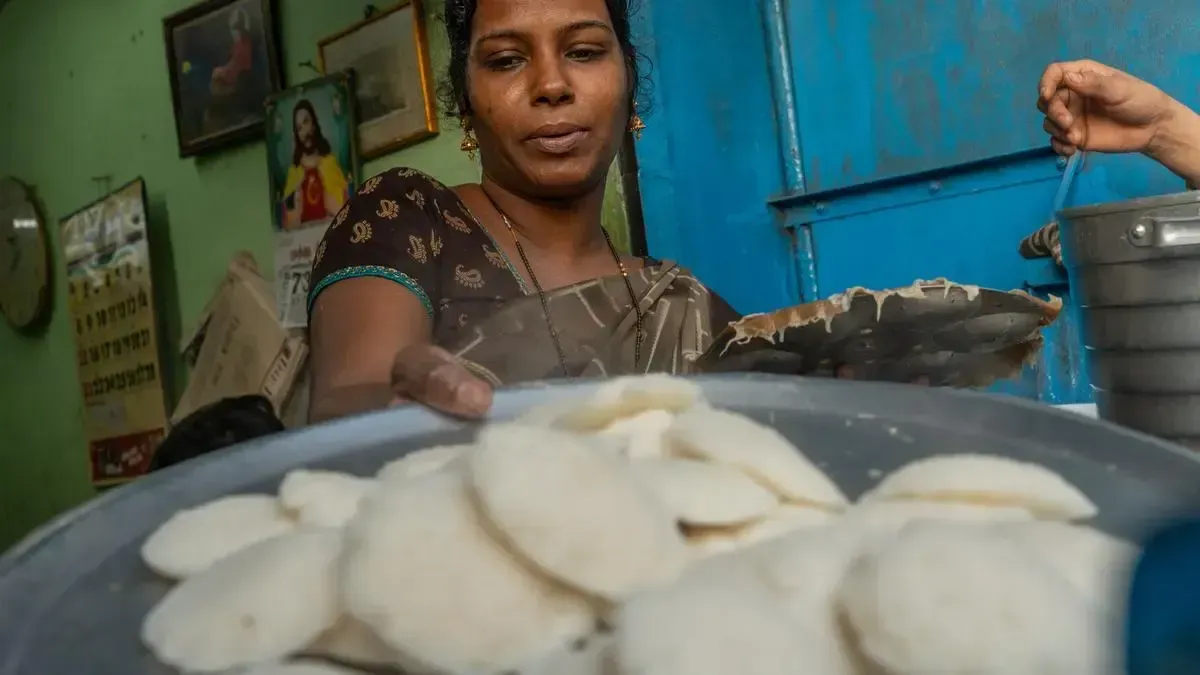
The proposed redevelopment promises shops in malls but ignores how idlis travel from a 250 sq ft vertical home to Mahim by dawn. Not everything fits a standard unit.
It is almost 2:30 am in the night, and 32-year-old Mahendra Chattethiraj is already awake. In the dim glow of two tubelights in his one-room kitchen in Dharavi, he stands with his brother and wife, checking the batter left to ferment in the city’s salty, humid air. He dips his fingers in, feeling for texture, gauging readiness. It is nearly time.
By now, the routine is fixed. “500 idlis, 500 meduvadas, 200 dosas, 300 appams—and a tangy tomato chutney with sambar,” he says, listing the morning’s production. The Tanjore ponni rice—sourced directly from their home State—was soaked the previous evening. Grinding takes about 30 minutes; fermentation happens overnight. By 4:30 am, the first batch is ready.
Across the dimly lit homes behind Kamaraj Memorial School, similar kitchens are already at work. Inside busy rooms, families bend over steaming vessels, lifting lids, stirring batter, frying vadas in hot oil. This is the hour when Dharavi quietly prepares to feed the city of Mumbai.
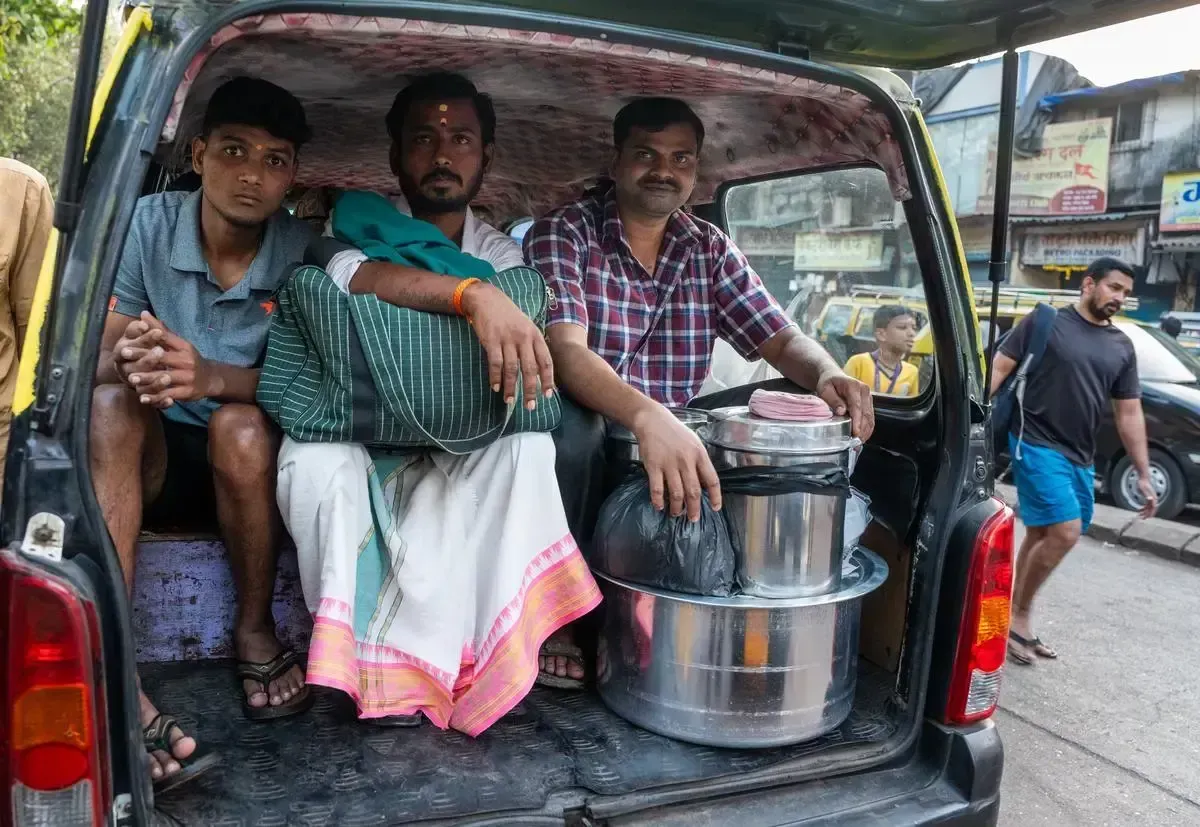
By 5 am, vendors begin to leave, each balancing a large aluminium container on their head. A steady stream pours onto the 90-foot road—men walking in the same direction, emerging every few minutes from the bylanes. Along the main road, shared taxis line up, ready to ferry them to the nearest railway stations or directly to their vending spots. Three or four vendors squeeze into each vehicle, their containers packed in alongside other early commuters headed to work.
More than 700 idli-vada vendors from Dharavi collectively serve an estimated 3,00,000 idlis and vadas across neighbourhoods as varied as Sion, Khar, Bandra, Matunga, Colaba, Andheri, and Mahalaxmi—reaching wherever there is demand for a clean, reliable breakfast.
Mahendra, who migrated to Mumbai from Madurai in 2001, found his way into the trade through his brother, who was already running a small idli-making unit from home. “In the first month itself, I began working with him,” he says. “Even after my marriage, we’ve continued working together—though now he sells in Matunga and I continue selling in Mahim.”
Like Mahendra, most idli vendors in Dharavi trace their origins to districts of Madurai and Tirunelveli in Tamil Nadu. Many of these families first arrived in Mumbai decades ago to work in Dharavi’s leather tanneries. As environmental regulations and court orders led to the gradual closure of these units, workers were pushed to find alternative livelihoods. Small-scale food production—particularly idli and vada, which required limited capital, family labour, and skills carried from home—emerged as a viable occupation, gradually shaping what is now an expansive, informal breakfast economy.
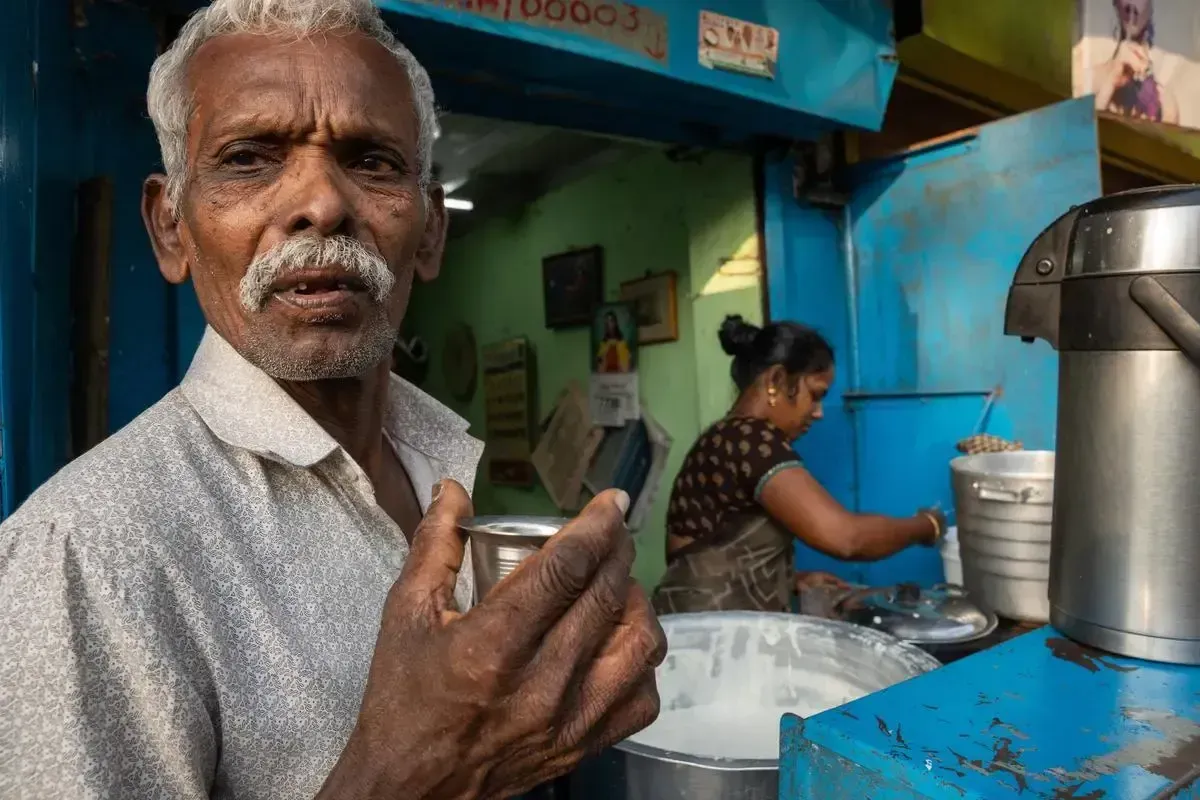
While many vendors head out to sell across the city, the lanes of Dharavi themselves are dotted with small eateries—idlis for Rs.5, vadas for Rs.6, dosas for Rs.10—feeding a steady stream of local customers.
Vimla Selva Satish, 36, has been running one such stall for nearly 12 years. “We keep it affordable so everyone can eat,” she says. The business, she adds, is inherited. “My father-in-law used to run this shop. Now I’m continuing the work.” Vimla migrated from Tirunelveli district after her marriage to her husband, a taxi driver in the city.
Feeding Mumbai before office hours
Affordability, she explains, is built into the ecosystem of Dharavi itself. “Everything we need is available within these lanes—we don’t have to step out for anything,” she says. From rice and lentils to grinding services and utensils, the dense, interdependent economy allows vendors to keep costs low while sustaining small-scale production.
But this tightly knit system now faces an uncertain future with the proposed redevelopment of Dharavi by the Adani Group. Vimla worries about what lies ahead. “We’ve been hearing many things—promises that we will get a shop in a mall or maybe right on a major road,” she says. “But I don’t know if people in those malls would even be interested in my idli-vada.”
Under the current framework, commercial and industrial units are capped at 225 sq ft or their existing recorded size—whichever is smaller. For many, this effectively means a reduction, as their operations often extend beyond documented limits, raising concerns over shrinking workspace and its impact on livelihoods.
For vendors like Mahendra, the uncertainty runs deeper. Production and residence are inseparable—idlis are made within the same rooms families live in, with kitchens doubling as small-scale production units. “If our homes change, how will we continue this work?” he asks. “This isn’t just a house but even our workspace.”
Mahendra’s 250 sq ft home rises across three makeshift floors, accommodating both his brothers and their families. The first floor is almost entirely taken up by the kitchen—large vessels, grinding equipment, stacks of utensils—while the upper floors serve as living spaces, one for his brother’s family and another for his own. It is this vertical arrangement that makes the business viable, allowing production and residence to coexist within the same structure.
But the redevelopment plan’s promise of a standard 350 sq ft unit will also be allocated only to the ground-floor occupant. “Who will get that house?” Mahendra asks. “And where will the others go?”
Even if multiple floors are allotted in high-rises, the logistics of the work itself become uncertain. “It will be very difficult to move things up and down”, he says, referring to the daily movement of heavy vessels and fuel that currently happens within arm’s reach.
“The economy of making idlis is home-based,” says Shweta Tambe Damle, founder of the Habitat & Livelihood Welfare Association and part of the Working Peoples’ Coalition. “If the government does not even have a substantive assessment of what these informal economies look like, how are they arriving at such eligibility criteria? It doesn’t account for how people actually live and work.”
Amid these uncertainties, Mahendra’s routine remains unchanged. By dawn, he has already left for Mahim, where he sells his first batch. “I earn around Rs.1,000 a day,” he says. “Within the first three hours, everything is finished.” There is little competition—most vendors sell out quickly, their routes and customers largely fixed. “We only serve what we ourselves eat at home,” he adds.
By early afternoon, between 1 pm and 2 pm, the same vendors begin returning to Dharavi—their containers now empty, stacked and balanced on their heads. The rush of the morning dissolves into a quieter rhythm. Mahendra washes up, rests briefly, and then begins again: rice and lentils are soaked, batter is set aside to ferment in the night air. In a few hours, the lights will come back on, vessels will be lifted, and the cycle will return to where it began—long before the city wakes.
Anuj Behal is an independent journalist and urban researcher primarily focussing on issues of housing rights, urban justice, gender, and sexuality.