

Rwanda runs a highly sophisticated disinformation and propaganda campaign
Rwandan officials are under sanctions for supporting rebels in the eastern Democratic Republic of the Congo. It is also accused of laundering conflict minerals, including gold and coltan, through its borders to help finance that conflict.
At the same time, Rwanda is celebrated as a poster child for development. It is sold as a destination for tourism, natural beauty, major sports franchises, and international tournaments.
How does it pull off both?
Part of the answer is a carefully curated influence operation. In this three-part package, we look at how Rwanda’s influence campaigns work, how they target decision-makers in Brussels and New York, and how the silencing of independent media at home created the space for them to operate largely unchallenged.
We know something about how this influence operation works because someone in the Rwandan state set the wrong sharing permissions on a spreadsheet.
That exposed who was being paid in a $85,000 campaign. To find out more, keep reading.

As a nonprofit journalism organization, we depend on your support to fund more than 170 reporting projects every year on critical global and local issues. Donate any amount today to become a Pulitzer Center Champion and receive exclusive benefits!
The Influence Operation We Aren’t Supposed To Know About
Rwanda has a playbook for responding to criticism of its involvement in eastern DRC. This investigation reveals how one core narrative team co-ordinates a layered response: challenging evidence, questioning credibility, amplifying official documents, introducing counternarratives, and flooding threads with competing claims.
RWANDA has carefully cultivated a strong international reputation. For years, critics have said that part of that reputation is actively shaped online by groups of people — or accounts — working together to promote the government’s messages and challenge its critics. Now, an administrative error offers a rare glimpse of how that system operates. A Google spreadsheet listing nine state-funded digital operatives was left as a publicly accessible link. That link was shared with journalists by sources, detailing the personnel, equipment, and budgets behind one influence operation.
Their task: shaping opinion about the conflict in the eastern Democratic Republic of the Congo (DRC), where March 23 Movement (M23) rebels — backed by Rwanda — now hold territory larger than Rwanda itself. None of the influencers disclose any government affiliation in their handles, presenting themselves instead as ordinary, patriotic Rwandan citizens.
This investigation examined 60,000 posts on X, published in English, French, Kinyarwanda, and Kiswahili. An analysis of the posts by the nine influencers reveals three main lines of attack: discrediting critics of Rwanda’s well-documented support for M23; promoting a narrative that casts the DRC army as interchangeable with a Hutu militia founded by the perpetrators of Rwanda’s 1994 genocide; and framing Rwanda simply as a protector of the persecuted Tutsi minority in eastern DRC.
The document was created in January 2024. At the time, Rwanda was under increasing international scrutiny over its alleged backing of M23. It was also gearing up for an election in July that year, which President Paul Kagame later won with over 99% of the vote.
Since the rebels seized large swathes of eastern DRC in January 2025, the United States, European Union, and the United Nations have sanctioned Rwanda’s military, top officials, and M23 commanders.
Kigali rejects accusations it is working with M23, saying it faces legitimate security threats from armed groups in eastern DRC and is acting to protect Congolese Tutsi communities.
The spreadsheet, still live this week, suggests another battle was being fought at the same time.
It documents only one team and does not establish the full extent of Rwanda’s online influence operations. But it offers a rare insight into digital propaganda: it puts names, budgets, equipment, and organisational structure to a system that usually operates behind anonymous accounts and patriotic slogans.
The spreadsheet lists nine individuals by name, phone numbers, and X handles, as well as payments for phones, computers, airtime, internet data, and monthly salaries of between 750,000 and 900,000 Rwandan francs (about $520 to $620).
The operation’s annual budget is listed as 124,124,000 Rwandan francs ($85,610). It is run from the Office of the Government Spokesperson (OGS), led by Yolande Makolo. The team, intelligence analysts say, prepares messaging, hashtags, photos, and videos for distribution through networks of activists and social-media users across Rwanda.
These networks are organised through student associations, genocide survivors’ organisations, and regional youth groups. Members are told which topics and hashtags to amplify. They are also mobilised to report opposing accounts to X’s moderators, attempting to trigger suspensions and silence critical voices.
Former sports journalist Prudence Nsengumukiza, who worked for digital news platform Kigali Today, says Rwanda’s civic-education programmes encourage young people to regard online activism as a patriotic responsibility.
“You are told as soon as you see someone criticise Kagame on social media, you have to go on the attack, to intimidate,” says Nsengumukiza, who fled Rwanda in 2021 and now works for Amnesty International in Brussels. “You’re told: ‘Try to have as many accounts as you can.’”
According to Nsengumukiza, incentives include free internet access and monthly stipends. Training sessions organised by the ruling Rwandan Patriotic Front’s youth wing also teach participants how to maximise the reach of their posts and top performers receive bicycles and smartphones.
The network
An analysis of the nine listed accounts shows that they do not simply repeat identical messages. Instead, they perform complementary roles.
One of the biggest accounts is Tito Harerimana (@harerimana_tito), who repackages official speeches, military statements, and government documents. Harerimana is one of Rwanda’s most successful social media influencers, with more than 117,000 followers. They are a sustained amplifier of pro-government narratives, particularly about the M23 conflict and Rwanda’s regional security posture.
A more combative group, including Janviere Akimanzi (@Manzi_patriote), responds rapidly to criticism from foreign governments, journalists, and organisations such as Human Rights Watch and Amnesty International.


These accounts question methodology, dispute evidence, and flood critical posts with replies intended to make them appear contested or discredited, regardless of their accuracy.
Accounts including Tuyisenge Epiphanie (@_TuyisengeEpiph, handle now defunct) focus on domestic audiences, translating international developments into Kinyarwanda and framing them through national security and patriotism.
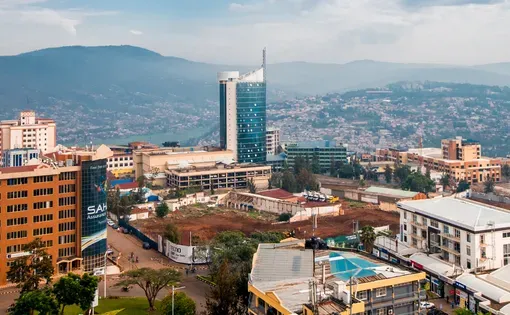
Others take an indirect approach. Liliane Umuhoza (@lilianeumuhoza5) rarely discusses the conflict. When eastern DRC dominates international headlines, she floods timelines with tourism campaigns, wildlife photography, and images of Kigali, helping to ensure that searches for “Rwanda” produce scenes of tranquil prosperity.
Researchers say such operations do not need to convince everyone to be effective. Their power lies in shaping the online environment. Rwanda has relatively low social-media penetration, with about 9% of its population active on social platforms. Co-ordinated activity can create an impression of overwhelming public consensus and make criticism appear isolated or contested.
When journalists or rights organisations publish allegations about Rwanda’s role in eastern DRC, the response unfolds in layers: the evidence is challenged; the author’s credibility questioned; official documents amplified; humanitarian counternarratives introduced; and reply threads filled with competing claims. At home, the same events are explained in Kinyarwanda.
Rwanda’s OGS did not respond to The Continent’s emailed questions by the time of publication. We also contacted eight of the individuals named in the influence operation via phone, text, email, and social media. The ninth was unreachable. Only Irizabimbuto Marchal replied, saying: “I believe you have reached the wrong person. I think you should direct your inquiry to the OGS office for assistance.”