Story
 November 4, 2026
Black Southern and Jamaican Self-Taught Artists and Their Collectors Reckon With Their Legacies
Country:

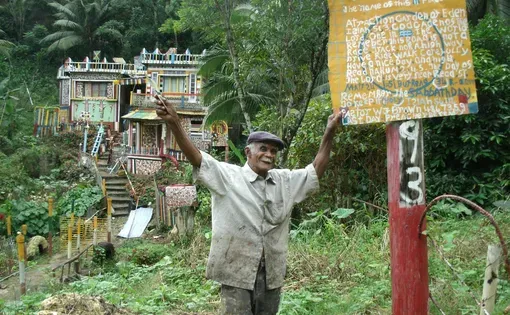
Jamaican and Southern self-taught artists emerged in their respective landscapes through collectors...
Aging collectors of Jamaican Intuitives’s work are left with vast collections and archives. So, how can these works’ connection to spirit and intuition be preserved, collected, and exhibited?
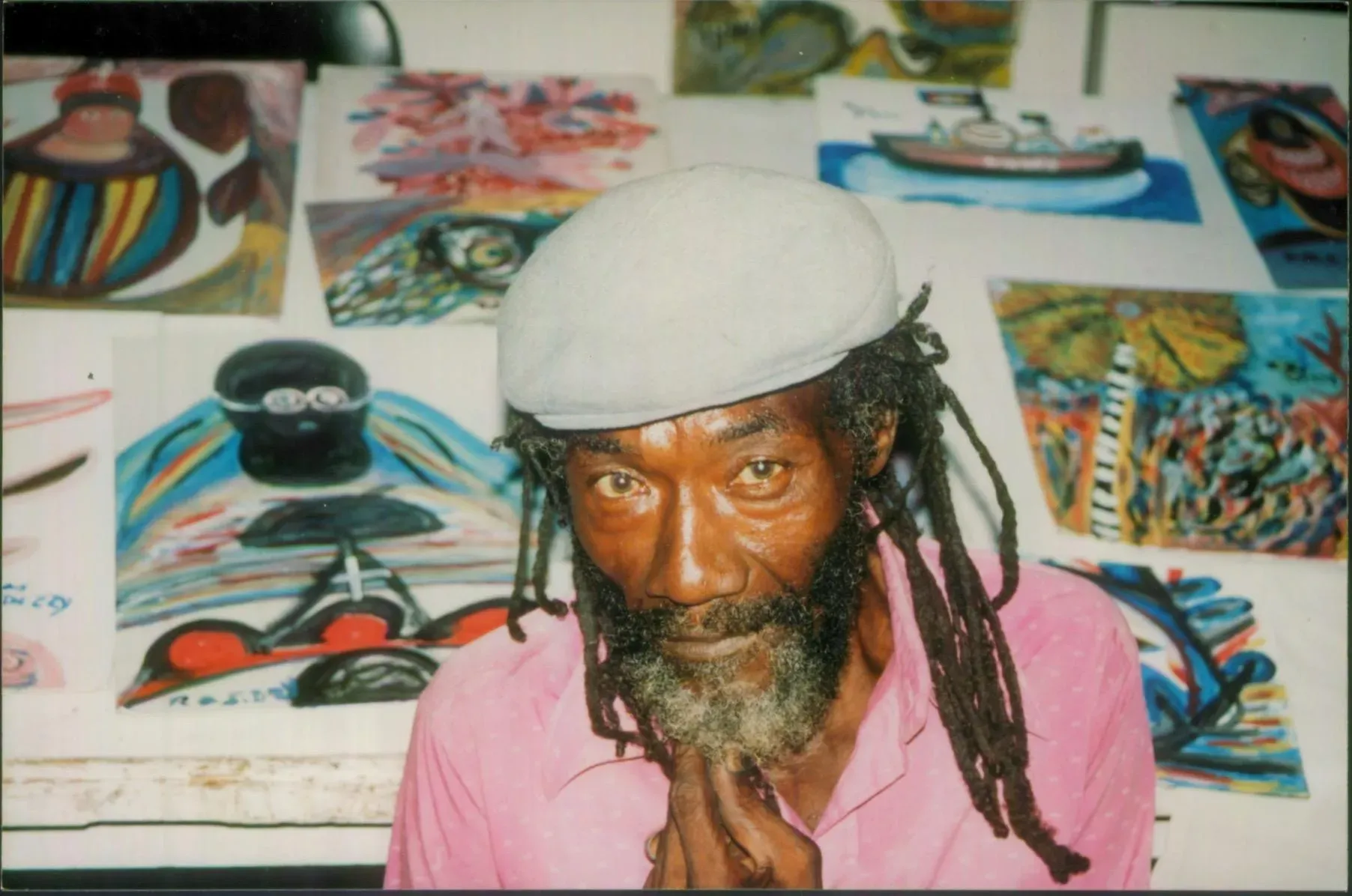
KINGSTON, Jamaica—It’s hot and humid at the start of hurricane season. Herman van Asbroeck welcomes me into his home in Kingston, Jamaica, draped in the works of Caribbean artists—from Indigenous to contemporary. Seeped with an immaterial sensation and functioning as a vessel of sorts, the house’s walls, drawers, and counters bring together artwork created to invoke and connect with spirit.
Van Asbroeck, a former gallery owner who moved from Belgium to Jamaica in 1980, is primarily a collector of the Jamaican Intuitives, a grouping of self-taught artists who often worked in rural working class communities in Jamaica.
The Intuitives made work that was both rigorous and a departure from the well-regarded Western-influenced artworks prominent at the time. The Jamaican Intuitives created works made of anything from tree bark to hibiscus. Stylistically, the works are marked by fluid movement and assemblage structures. Emotionally, these works exude a devotion to the spiritual. In fact, across the Black diaspora, particularly the Caribbean and the Southern United States, Black self-taught artists create out of a spiritual inclination and a divine calling to make.

As a nonprofit journalism organization, we depend on your support to fund more than 170 reporting projects every year on critical global and local issues. Donate any amount today to become a Pulitzer Center Champion and receive exclusive benefits!
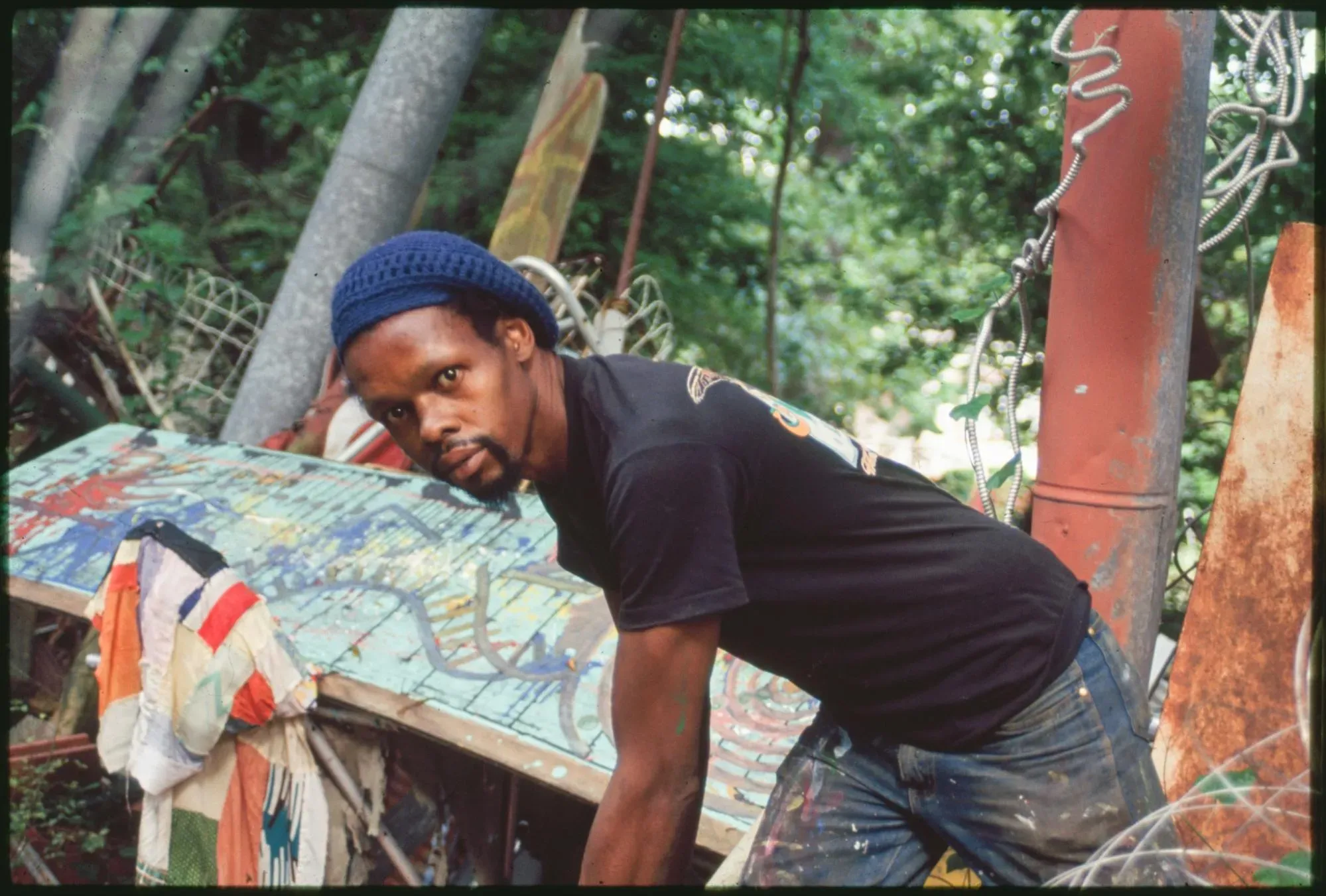
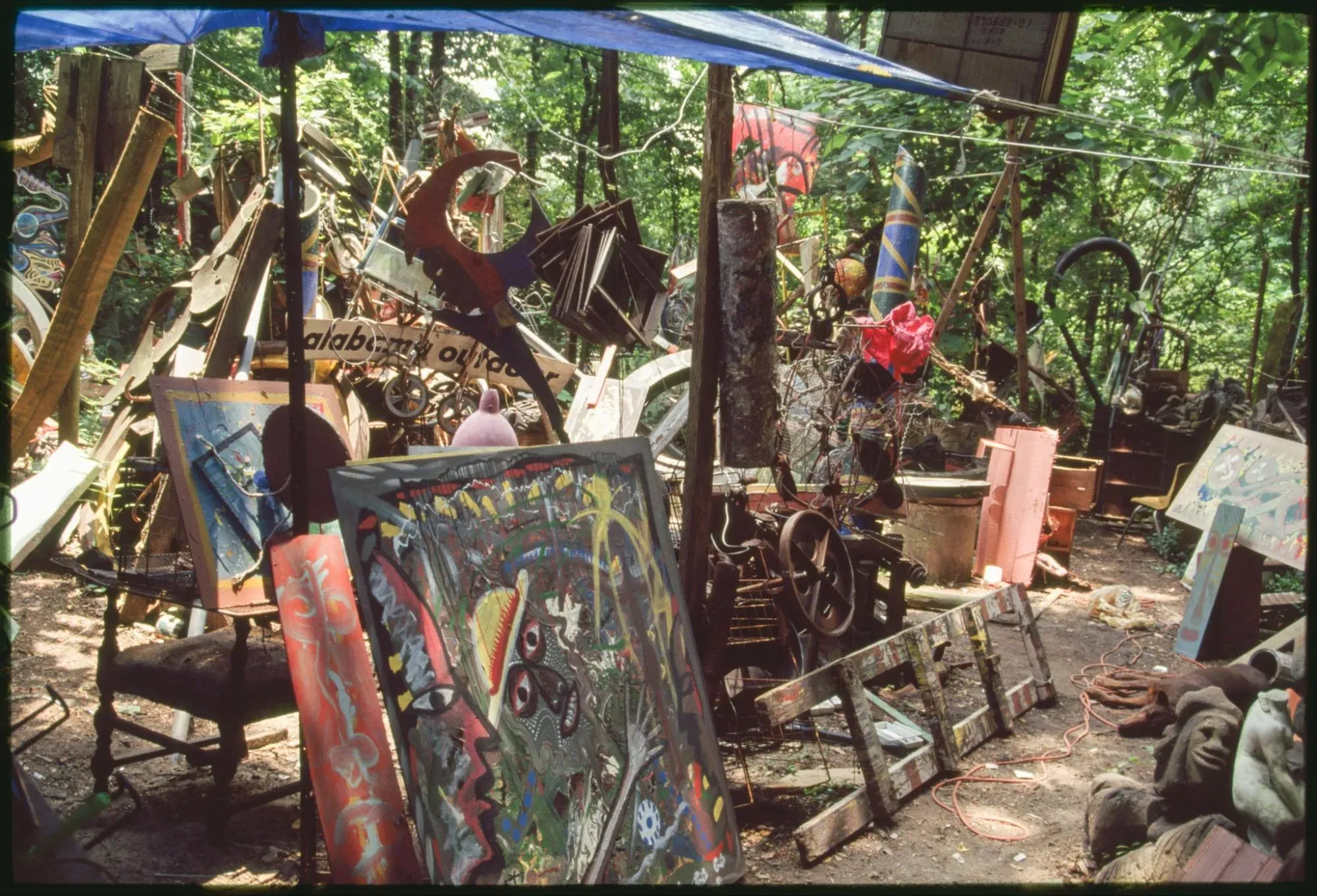
“My creativity took and just jumped up out of me to keep me from going to death,” Lonnie Holley, a Southern self-taught artist, told me from his studio in Atlanta. “I had too much going on inside of me. It was something that I was not doing that would have killed me. So something that I've learned to do has sustained my life. Let me say that again. Something that I’ve learned to do has sustained my life.”
Holley—and his work, which had been included in exhibitions at the Whitney Museum of American Art and The Met in New York City—is among a growing list of self-taught artists who have gained space and prominence in exhibitions and collections across the world. And art collectors and historians have taken note of it.
“They are establishing a canon with your Southern artists,” van Asbroeck said.


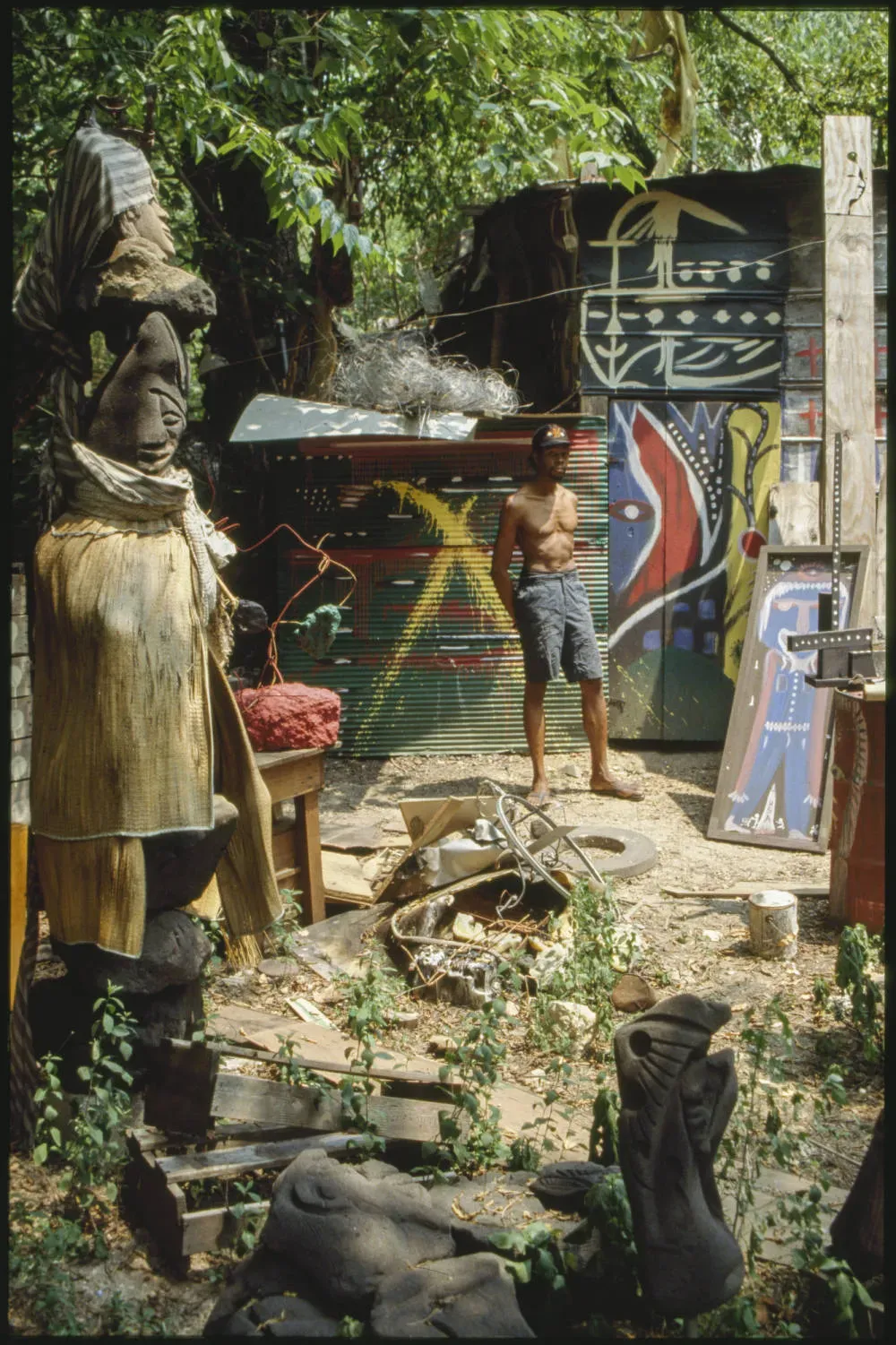
In Atlanta, the High Museum of Arts’ Department of Folk and Self-Taught Art has exhibited the work of several of these artists in its permanent collections. The Gee’s Bend Quilters recently had a Target collaboration. One of the Jamaican Intuitives, Everald Brown, was featured in the Museum of Contemporary Art Chicago’s landmark exhibition “Dancing the Revolution: From Dancehall to Reggaetón.” Most recently, “Trapped Spirits,” the work of the late Purvis Young, a Black self-taught American artist of Bahamian descent, was sold for $127,500 in the Slotin Folk Art Auction in 2024. according to Antiques And The Arts Weekly.
And, also in Atlanta, a foundation and repository for Black Southern artists collections, many of which have exhibited at the High Museum, was established in 2010. William Arnett, an art historian and collector who began collecting these works in the ’80s, created the Souls Grown Deep Foundation to support Southern self-taught artists and to compensate them fairly for the legacies they’ve left in the world. Calling himself “a corrector, not a collector,” Arnett’s interests were in uplifting, typically Black, nontraditional artists into the arts canon, according to The Washington Post.
In Jamaica, however, a similar space doesn’t yet exist. Aging collectors are left with vast collections and archives of these works. And, with several of these artists having passed, the collectors now reckon with the legacies of the artists, their collections, and archives. According to van Asbroeck, despite the numerous catalogs and exhibitions centering Southern self-taught artists, there’s a lack of real inquiry into the Jamaican Intuitives. The field of self-taught art is contentious and, relative to other art styles, it’s under-researched, underfunded, and undercollected.
Van Asbroeck saw this clearly reflected at another Slotin Folk Art auction. A self-taught piece, projected to fetch about $500, was sold for about $3,000, according to van Asbroeck.
“It was a major breakthrough for a lot of these artists. They just fetched money that had never been seen before,” van Asbroeck said. “I thought at that time, OK, it’s finally the breakthrough of self-taught art into mainstream auction houses.”
But this expectation quickly hit a bump in the same auction, where some Jamaican pieces didn’t sell. “The quality of this Jamaican painting is superior to whatever Southern artist,” he said. “But Jamaican art is not known, who knows about it? There’s no documentation.”
Self-taught art and the Jamaican Intuitives
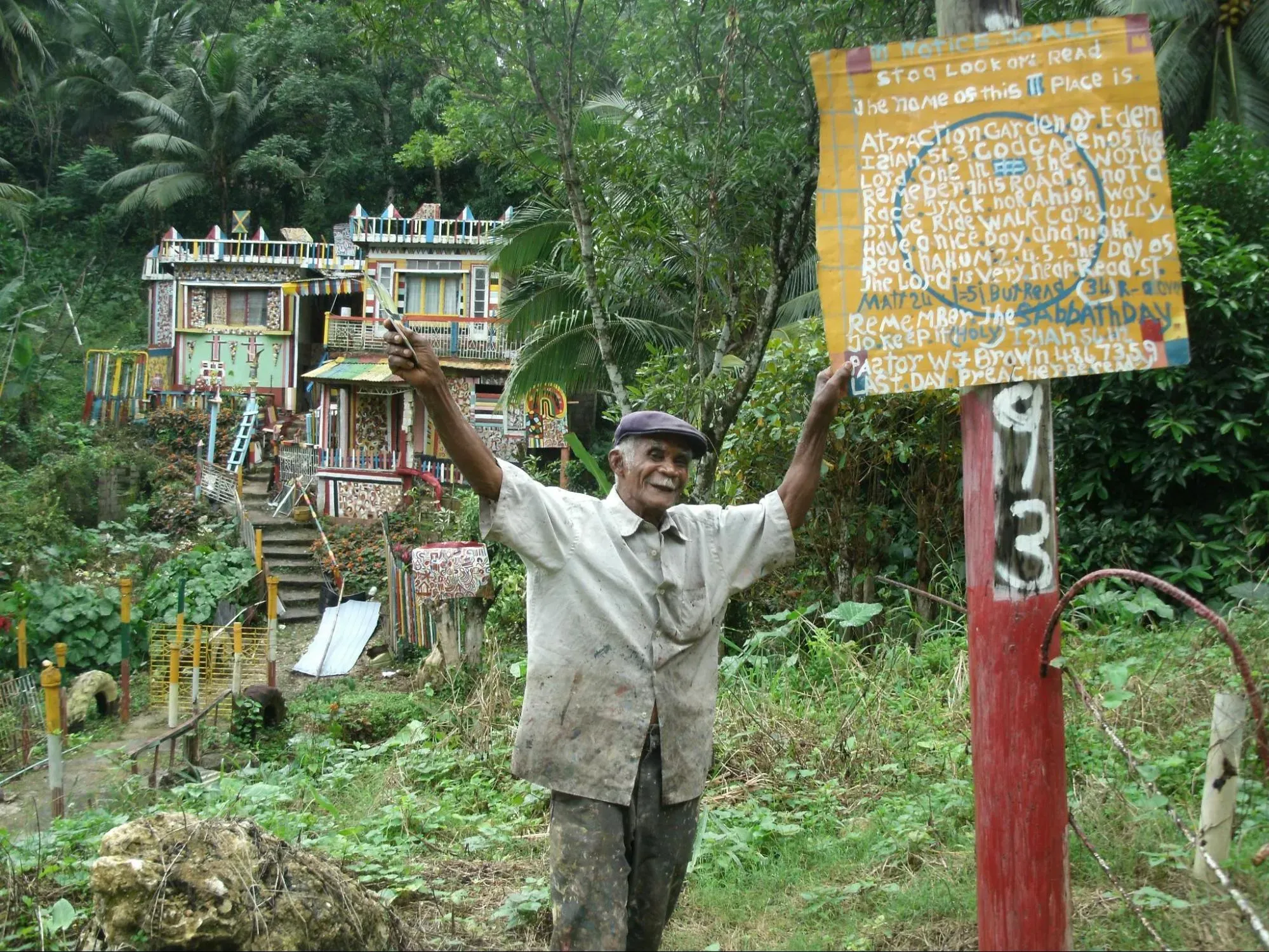
Jamaican Intuitive art is dictated by “heart and soul,” art historian David Boxer wrote in the late 1980s after the exhibit “Fifteen Intuitives” at the National Gallery of Jamaica in Kingston.
The Black tradition of making things from what one has is significant. This curiosity is a throughline in the works of Jamaican Intuitives and Southern self-taught artists. These artists were curious about building worlds, whether in their backyard or their homes; they were and are committed to manifesting spirits out of sheer devotion, despite a lack of formalized education.
“Self-taught and driven by instinct and not by fashion, the Intuitives’s visions (and many are true visionaries), as released through paint or wood, are unmediated expressions of their individual relationships with the world around them—and the worlds within,” Boxer wrote.
Shaped in stark contrast to descriptors like “primitive,” “outsider,” or “naive” that ignored the rigor and talent of these artists, the term “intuitive” emerged to situate these Jamaican artists in conversation with artists coming out of the Negritude movement, Haiti, and the American South.
The Intuitives “through some form of inspiration which is how most describe the initial creative act – and the creative urge they feel within themselves – bypass this route of learning and apprenticeship and tap directly into that wellspring of original imaging,” Boxer said. “They simply arrive at a spontaneous expression.”
Jamaican Intuitives were named as such by Boxer in the catalog for the 1979 exhibition “The Intuitive Eye,” which featured a central figure in Intuitive art: Everald Brown, also known as Brother Brown.
Intuitives like Brown shared spiritual devotions to a power higher than themselves and commitment to making, according to Boxer.
“In the case of Everald Brown, he received a message from God to create these works. He believed God had actually implanted an invisible spiritual message,” said collector Wayne Cox. “He made these works so God’s word could spread so that those who could not see it could hear it.”
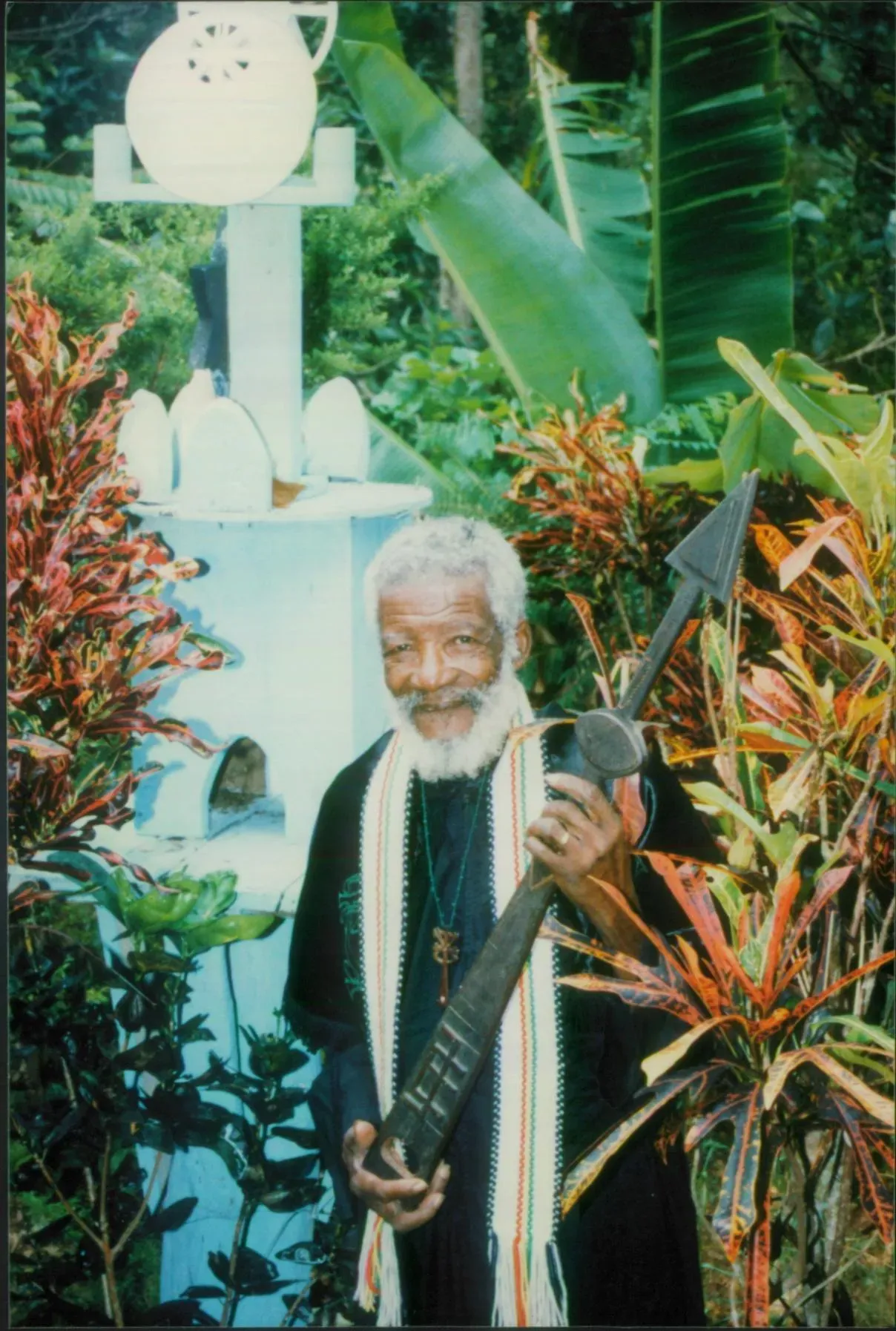
The Intuitives sculpted items from trees around them, created their own dyes and paints, and found discarded objects as opportunities for creation. They lived in small communities in Jamaica, removed from cities, and led churches and religious practices for the families and accepting community members.
Boxer’s naming of the Intuitives launched them onto the international stage, exhibiting abroad in Western countries. Yet, Jamaican self-taught art hasn’t established a foundation or repository for the Jamaican Intuitives. The Intuitives’s work, hence, have found a place in the homes of collectors. Two central collectors, Cox and van Asbroeck, house a large majority of the works and archives of the artists featured in “The Intuitive Eye” and its following exhibits.
While these collectors can appear to be no more than a line item on a wall didactic, or, in Cox’s case, a curator at a museum, they can and do silently shape the way artworks live, and are cared for.
The shape and scope of the Intuitive art is, hence, defined by small collectors typically white and upper class, like van Asbroeck, Arnett, and Cox and his wife, Myrene Liebman Cox.
The collectors
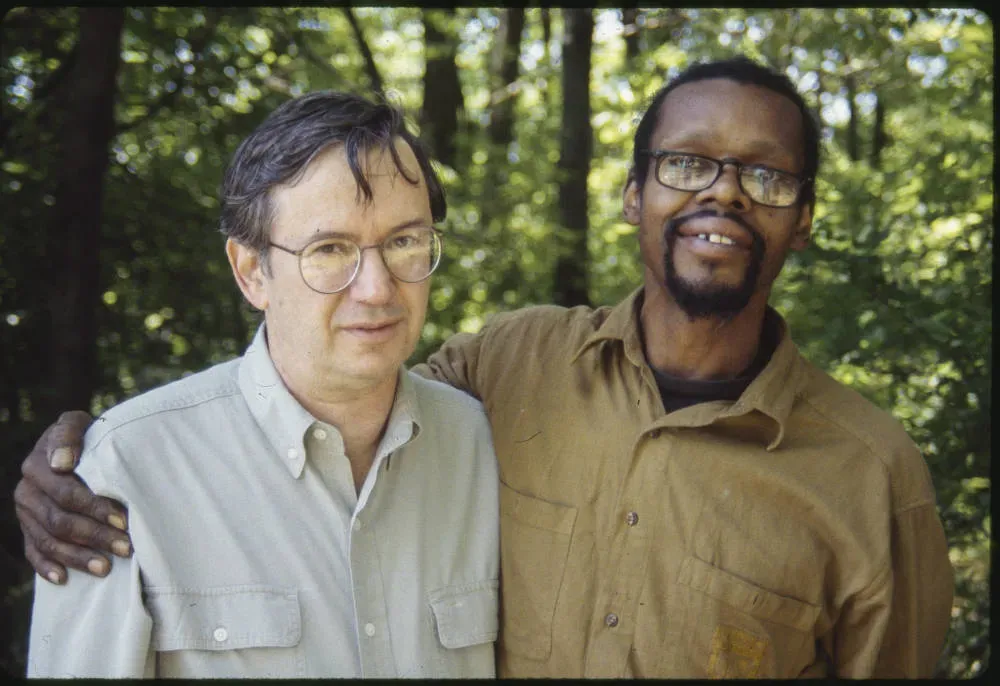
Van Asbroeck’s home overflows with Intuitives’s works—they line the walls and floors, sit porch-side, or are filed away in drawers. Van Asbroeck owned a framing shop and an adjacent gallery named Amaicraft in Kingston, Jamaica, for several years. There, he befriended many of the artists who came in with 10 to 20 pieces of work at a time. As the works in the gallery grew, so did van Asbroeck’s personal collection.
However, the house-bound collection is subject to many issues that face collectors in the Caribbean: hot and humid summers, hurricane season, and other issues that could affect the collections’ long-term stability.
For Cox and his wife, Myrene Liebman Cox, their collection is held in a climate-controlled facility in South Florida where they used to reside.
The Coxes collected Jamaican Intuitives artwork from 1985 through 2018. Their collection has been displayed in several exhibitions like “Spiritual Yards: Home Ground of Jamaica’s Intuitives – Selections from the Wayne and Myrene Cox Collection” at the National Gallery of Jamaica in 2017 and “Redemption Songs/the Self-taught Artists of Jamaica,” a nationally touring exhibition in 1997. And, as part of their archive, the Coxes have images and videos taken over the course of 30 years. Images of Everald Brown, Ras Dizzy, and Elijah remain in their collection and are at times exhibited alongside the artists’s work.
The Coxes took videos and photos during their journeys to these artists’s communities. Cox, like van Asbroeck, would trek out to these artists’s homes, hiking through the bush to learn what was available to them within the artists’s collections. Cox would spend time with the artists, build relationships, observe the artists make works from a fallen tree, or mix paints from natural dyes. Cox would then leave with artwork propped on his shoulder or cart, unintentionally alerting the community that the artist had come into an influx of money.
Before the Coxes started collecting, they created a mission statement: They would collect works from artists themselves, collect archival information, and create a cultural record.
However, their attendance in these communities had, at times, starkly negative impacts. Though these artists continually lived with financial precarity, the presumption of wealth in relation to these white collectors’s visits cost them greatly at times. Van Asbroeck said an artist told him he was stabbed after one of his visits.
The legacy of this movement is shaped by these tensions. Though Jamaican Intuitives like Everald Brown were exhibited in Jamaica and abroad during their lives, their relationship to success and financial stability was complicated. Their methodology of ascertaining funds from their work was directly correlated to their relationship with collectors like Cox and van Asbroeck.
Intuitive art’s afterlife and the ethics of legacy
These materials raise questions for those interested in the field of where the afterlife of Intuitive art should take place.
Emma Yau, assistant curator for the Souls Grown Deep Foundation, said that the nonprofit’s overarching goal is to increase visibility of the works of Southern self-taught artists, scholarship, and education. Ultimately, the goal is to have these works in permanent collections. These artists should be a part of American arts legacy, Yau said.
But, the afterlife of these works is at a crossroads. Aging collectors are left with vast collections and archives of this work, and now are faced with their legacies.
For their part, the Coxes—who remain firm in their mission to create a cultural record of the Jamaican Intuitives— are actively working to disburse their collections.
But the question is, to where? From which, more questions arise: What would an organizational model like the Souls Grown Deep foundation do for Jamaican Intuitives? Does it serve Black Southern self-taught artists? Would it serve Jamaican Intuitives, their collections, and archives?
The Black tradition of making things from what one has is significant. This curiosity is a throughline in the works of Jamaican Intuitives and Southern self-taught artists. These artists, who created works out of intuitive feeling and an urgency, were curious about building worlds, whether in their backyard or their homes. They were and are committed to manifesting spirits out of sheer devotion, despite a lack of formalized education.
For works of such spiritual nature, it begs the question of how these works’s connection to spirit and intuition can be preserved, collected, and exhibited in ways that honor the artist and their devotion, said Katherine Jentleson, curator of the Folk and Self-Taught Art at the High Museum.
This remains to be answered. But the afterlife of some of these works can continue on through the living, along family lines.
Venice Black, the granddaughter of Everald Brown, is continuing the artist’s legacy through an Intuitive practice. A graduate of Edna Manley College, Black is a sculpting, painting, and assemblage artist.
Black used to watch her grandfather paint instruments. And, when she was 10, she stole a canvas from him and created her earliest work. She did it again later. Those works were sold to Wayne Cox, who still had them almost 20 years later when she reached out to him asking to see the works.
Her practice now is her way of “saying thank you for what she learned” from her grandfather. Black, who grew up as a part of her grandfather’s church, the Assembly of the Living, shares in his devotion to a higher power.
“All of his works were symbols to God,” she said.
Her large-scale and intricate sculptures, honoring both her devotion to spirit and family, are visual descendants of her grandfather's work.
For van Asbroeck, preserving and continuing the legacy of these artists is a matter of urgency. “I know my obsession here with Jamaica is because I live here,” van Asbroeck said as he looked through a catalog of a French exhibition of global “outsider” artists where no Jamaican artist was included. “Each time though, I’m disappointed if one of my guys is not in it. Because I think [that] what the Intuitives have done here in Jamaica is really, really fantastic.”