

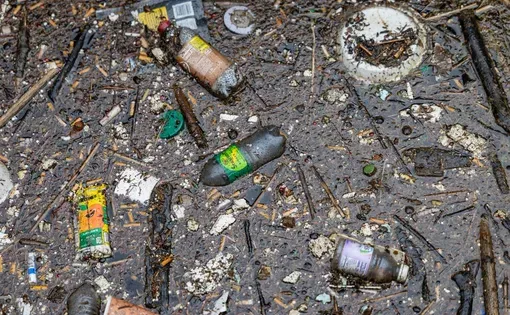
Petrochemical conglomerates are moving to dramatically increase the amount of plastics produced in...
From flax that can be used in clothing and cars to robotic skimmers to stricter laws, researchers, activists and volunteers fight an industry intent on making more plastic.
Spending more than a decade documenting the spread of plastic waste throughout the Great Lakes took a psychological toll on Melissa Duhaime.
Scary findings. Seemingly few solutions to intractable problems. Scientists stacked against the world’s most clout-heavy corporations bent on tripling production of fossil fuel-based plastics.
Duhaime, a University of Michigan biologist, found solace — and maybe a chance to build her own business while bolstering the regional economy — in a plastics-free alternative dating back to ancient Mesopotamia, now known as Iraq.

As a nonprofit journalism organization, we depend on your support to fund more than 170 reporting projects every year on critical global and local issues. Donate any amount today to become a Pulitzer Center Champion and receive exclusive benefits!
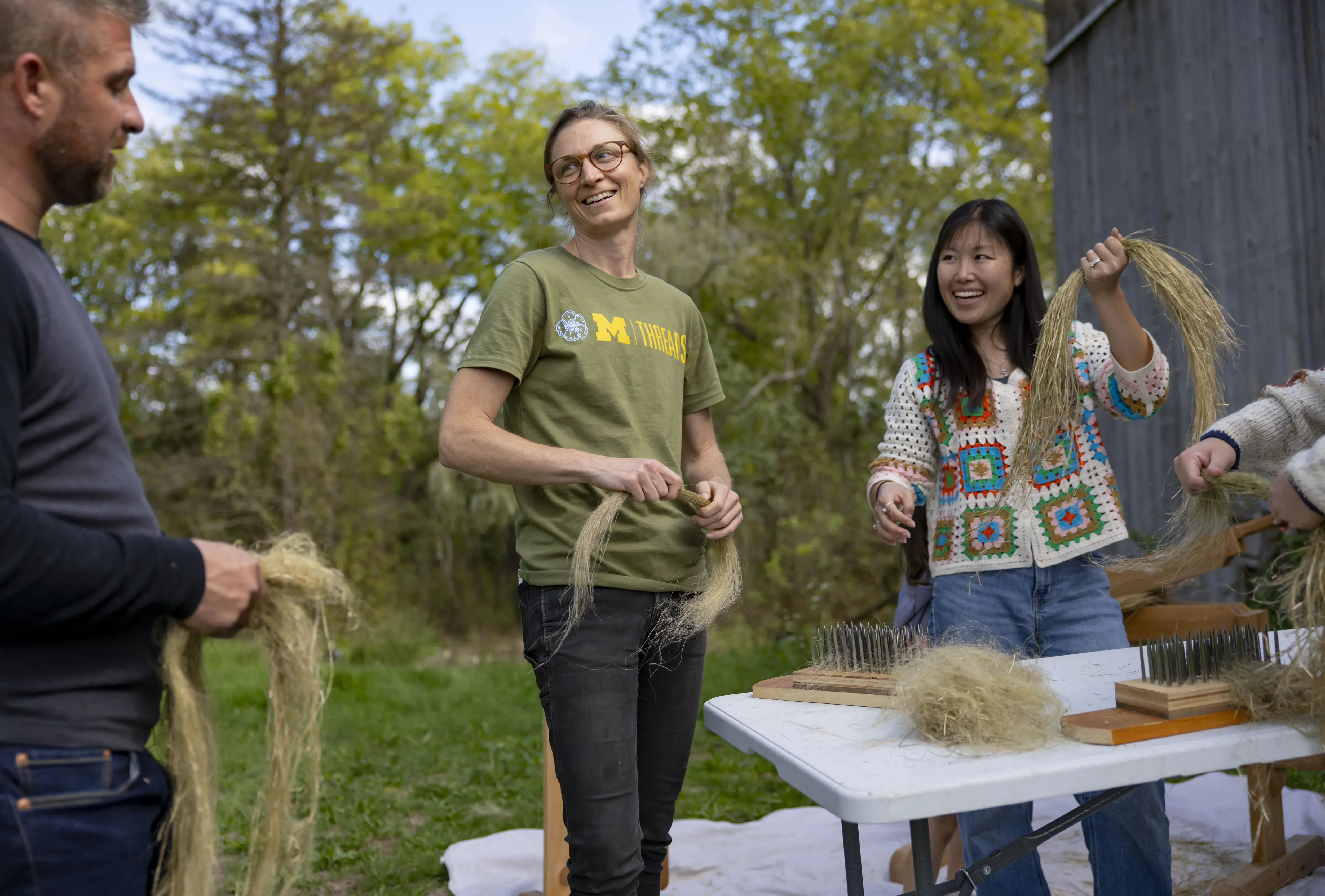
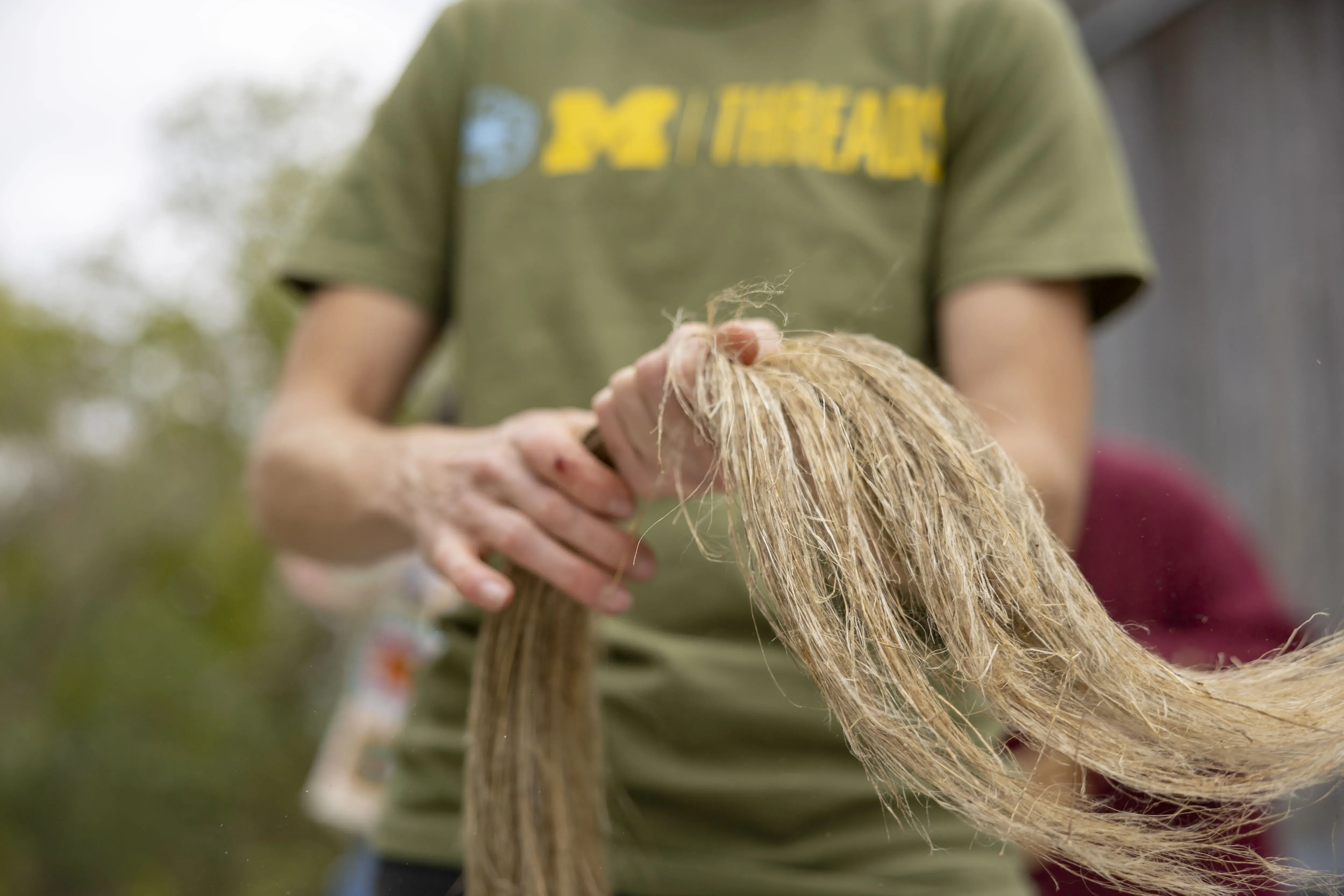
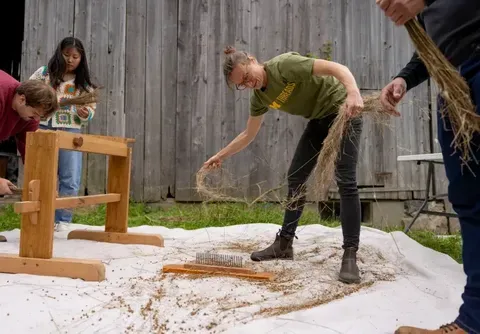
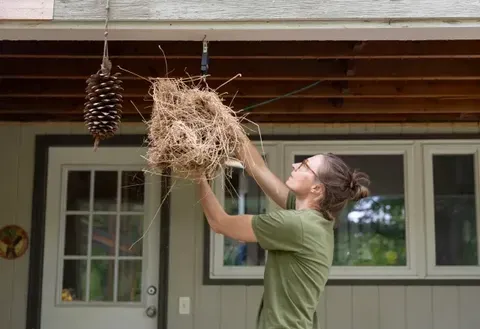
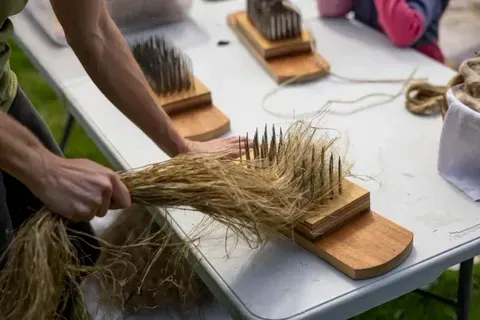
She decided to adjust her research and focus on flax, a plant that can be spun into linen and woven into clothing instead of polyester, acrylic or other synthetic fabrics that shed plastic fibers every time they are laundered.
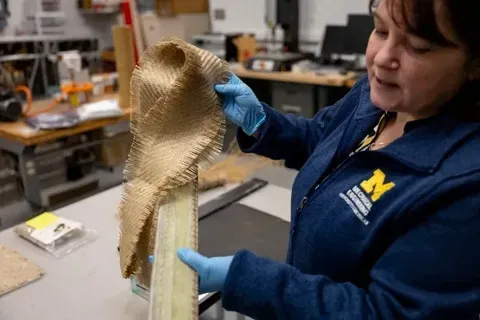
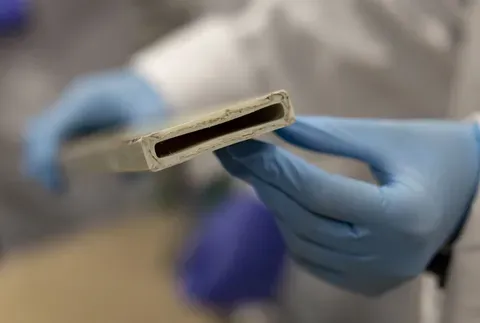
The stems of flax, mostly grown in America these days for versatile, nutritious seeds, also are a proven substitute for petroleum-based carbon fiber in automobiles and construction.
“Our farmers are interested, some big companies are interested,” Duhaime said in a recent interview. “We have the potential to create a new manufacturing sector when it comes to the growing and processing of (flax) fibers, spinning and weaving them, and developing new products.”
Duhaime is among a cadre of researchers, environmental activists, policymakers and volunteers striving to curb the onslaught of plastics in every aspect of life.
Some focus on legislation in state capitals and city councils and push for a global treaty that would limit plastics production.
Innovators seek to swap plastics for sustainable options and develop new methods to skim plastic litter out of the environment.
Beach cleanups draw attention to a throwaway culture spawned and encouraged by oil and chemical companies.
The problem is dire: Already more than 8 billion tons of plastic waste clog the planet, enough to rise into outer space if piled within Chicago’s Millennium Park.
At least 22 million pounds end up in the Great Lakes every year, half of it in Lake Michigan. Dump that on the Dan Ryan and it would bury every mile of the expressway in more than a foot of plastic garbage.
The Chicago Tribune is documenting the scourge — and highlighting potential solutions — in “Great Waste in the Great Lakes,” a series about plastic pollution threatening the health and environment of 40 million Americans and Canadians who depend on the world’s largest source of fresh surface water.
There are growing concerns about microplastics, bits of decomposing plastic goods no larger than a grain of rice linked to heart and brain diseases and other ailments, either by their mere presence in people or from toxic chemicals leaching out of the particles.

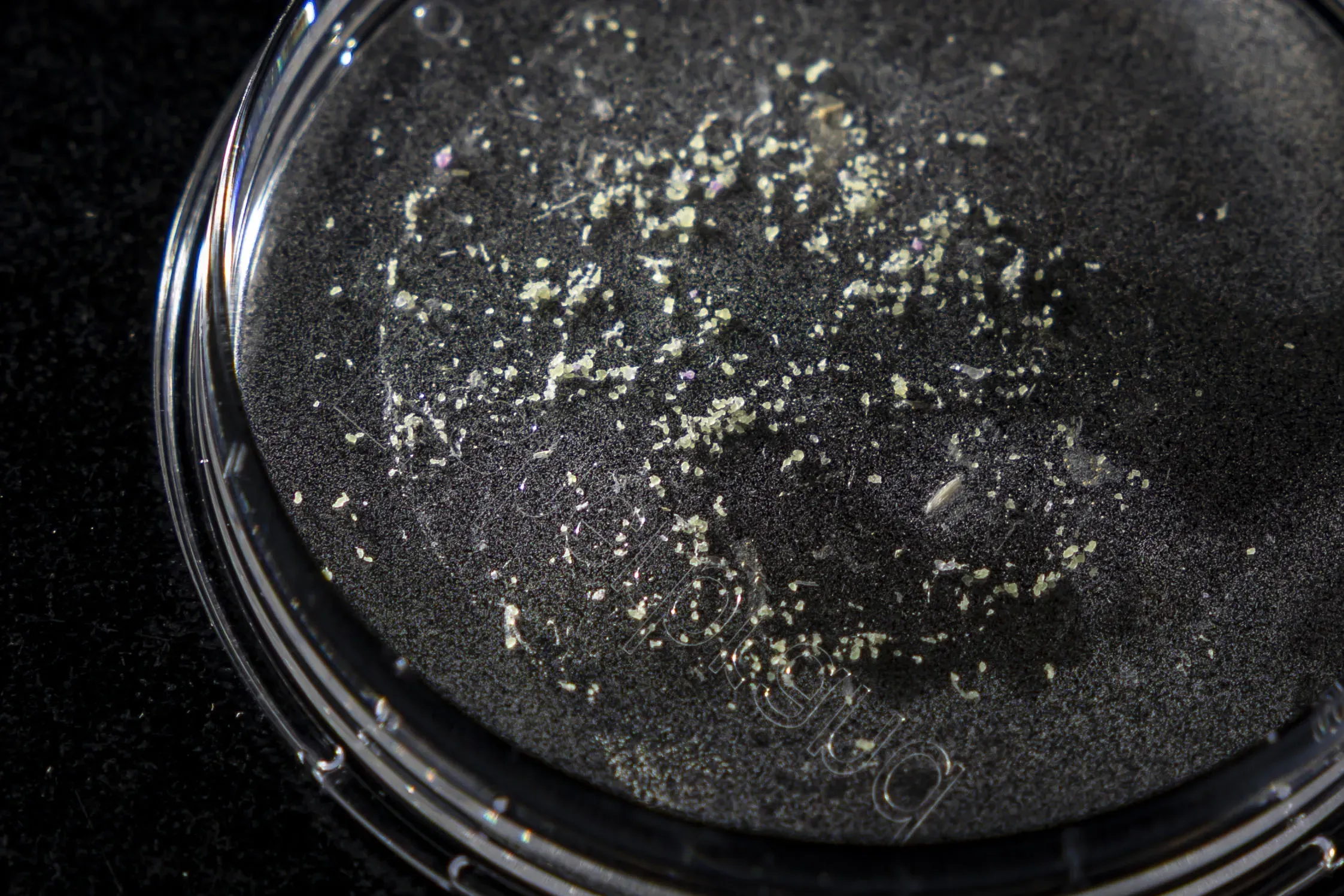
Tinier fragments — nanoplastics — might be even more dangerous.
“We are turning our lakes and oceans into unpermitted landfills with profound impacts,” said Judith Enck, a former regional administrator at the U.S. Environmental Protection Agency who founded Beyond Plastics, a nonprofit research and advocacy group.
Plastics manufacturers contend their products are essential in modern life.
“Plastic products are highly engineered to meet performance standards for food packaging, medical devices, vehicles and electronics,” the American Chemistry Council, the industry’s chief trade group, said in an email response to questions.
“And there are places where we don’t even realize we’re using (plastic), but it’s indispensable,” Ross Eisenberg, chief of the council’s plastics division, is quoted saying in a November advertorial published online by The Washington Post.
Half of all plastics have been synthesized since just 2010. Much of it is devoted to single-use, nonmedical items such as soda bottles, utensils and food packaging, according to the United Nations.
Very little plastic is recycled in the United States; the rate has never exceeded 10% and hovers around 5%, according to the EPA. Most of what isn’t landfilled or burned despoils the environment and breaks down into microplastics.
“The science is absolutely clear,” said Anja Brandon, director of plastics policy at the nonprofit Ocean Conservancy. “We need to make fewer plastics, better manage the plastics we are using, and continue effective cleanups to prevent plastics already out in the environment from doing more harm.”
Project
The Guatemala Plastic Problem


Tapping into olden ways
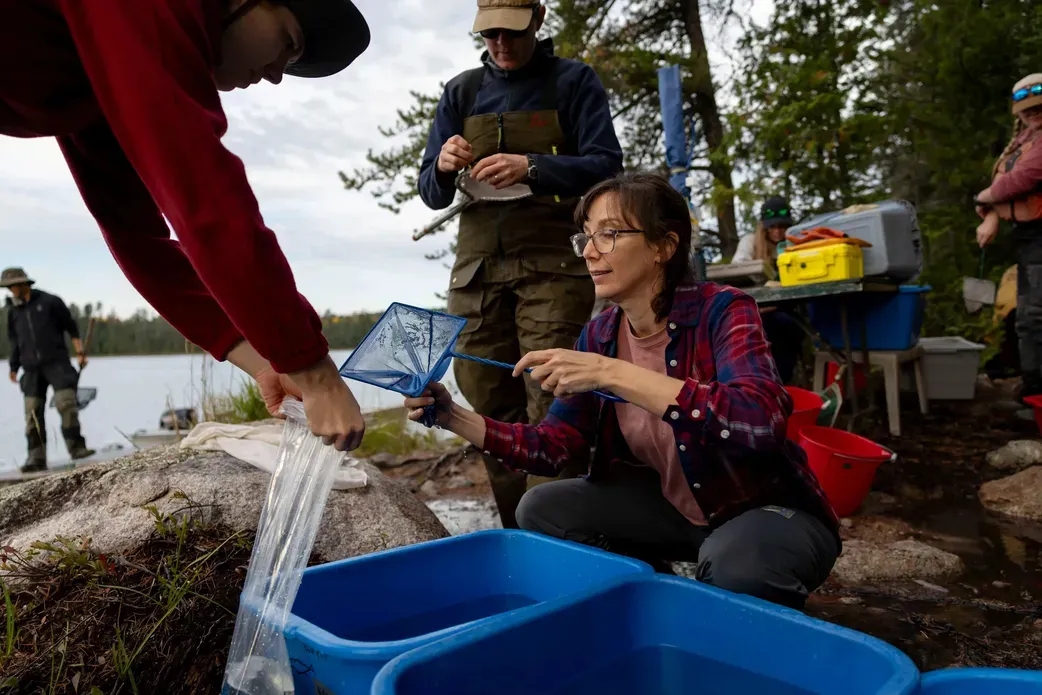
As a young scientist during the early 2010s, Duhaime, the University of Michigan biologist, was one of the first researchers to find plastic waste floating across the Great Lakes.
In her lab she used microbes to figure out how the garbage degraded and found microplastics in every sample — data suggesting there are more of the tiny bits in the Great Lakes than anywhere else in the world.
Collaborating with Chelsea Rochman at the University of Toronto, Tim Hoellein at Loyola University Chicago and others, Duhaime and her colleagues later discovered how even small amounts of plastic stunt the growth and reproduction of fish and other aquatic life.


Microplastics also absorb and carry toxic chemicals dumped into the lakes, they found.
Then there is the fact that synthetic clothing has irritated Duhaime’s skin since childhood, she said. Becoming the mother of twins, now 14 years old, and an 11-year-old, made it clear more needed to be done than publishing scientific papers about plastic pollution.
“It damages my spirit in some ways every time I give a talk about the problem, how gnarly it is, teaching young people about it,” Duhaime said.
She and her husband, also a University of Michigan biologist, shifted to a different way of living by moving to a farm outside Ann Arbor, raising sheep and learning how to shear them for natural wool.
Flax came into the picture later.
During the COVID-19 pandemic, Duhaime connected with Rebecca Burgess, a farmer and thinker who advocates sustainable methods of textile production, similar to the local food movement Chicago chef Rick Bayless and other farm-to-table pioneers nurtured at farmers markets, grocery stores and restaurants.
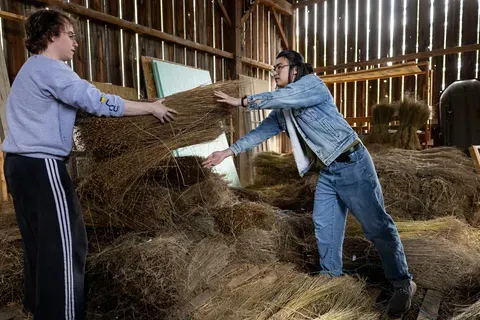

Like Bayless and many of his suppliers, Burgess and now Duhaime tap into olden ways of producing food and goods. The late writer Wendell Berry surely would approve.
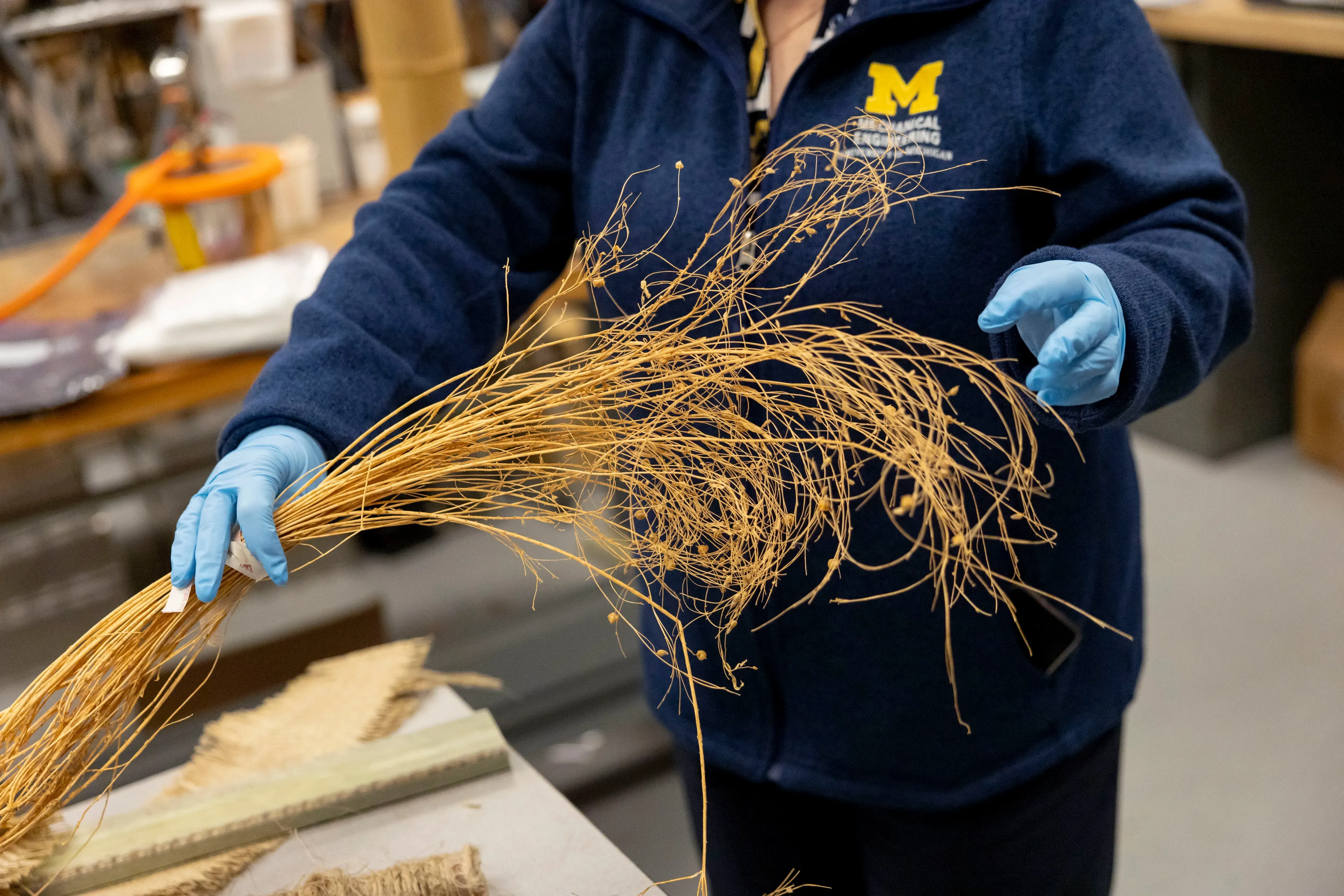
Weaving flax into fabrics dates back centuries. Colonial Americans spun flax in their homes. President Abraham Lincoln’s government encouraged flax production during the Civil War as an alternative to Southern cotton.
Eli Whitney’s cotton gin — and Jim Crow-era sharecropping after the end of the war — all but wiped out flax-to-linen production in the U.S. The surge of plastics production after World War II killed it.
But at least two automakers are reviving flax for something other than today’s uses in the U.S. as animal feed, seed oils and smoothie supplements.
In Europe, BMW and Volvo are making new vehicles with flax-based panels instead of carbon fiber, in part to comply with European Union limits on climate-changing pollution and to meet corporate sustainability goals.
Duhaime and her University of Michigan colleagues are pitching Detroit’s Big 3 automakers about the possibilities.
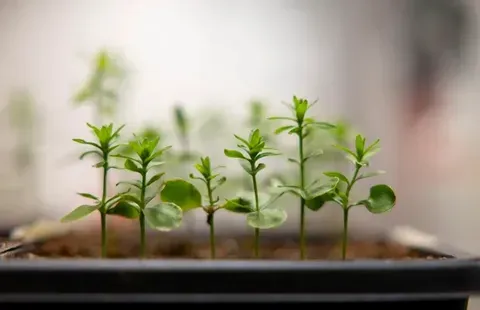
A newly created THREADS Natural Fibers Institute at Michigan is part of a broader “fibershed” movement — a term coined by Burgess envisioning regions where natural fibers are grown, manufactured, worn/used, then returned to the soil.
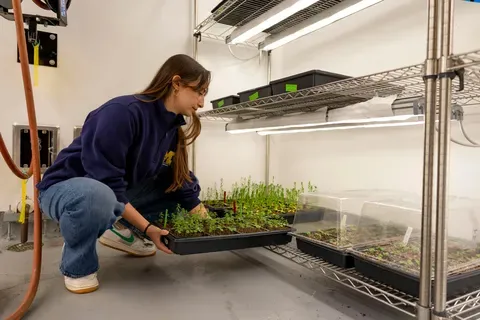
During interviews with the Tribune, several advocates wondered aloud if a different way of doing business could repair the political divide between rural and urban areas.
The thinking is economic and personal bonds could be renewed by making goods closer to home, reforging links between farmers, regional intermediaries, processors and end users.
There are five other fibershed groups building similar programs in Great Lakes states and Canadian provinces: Cleveland, Madison, Minneapolis, Montreal and Toronto. (Illinois’ climate is considered too warm for widespread flax production.)
“All of the early European immigrants to Wisconsin grew flax,” said Leslie Schroeder, co-founder of the nonprofit Midwest Linen Revival in Madison. “Now we’ve got this complicated international system where farmers are dependent on the Strait of Hormuz being open.”
President Donald Trump’s war with Iran is driving up the price of crude oil, diesel fuel and fertilizers normally shipped through the strait. Higher food prices are one result.
“Humans developed all of these technologies using plastics, which shows we can be quite clever,” Schroeder said. “But we can be clever and develop other things, too, by learning from the past.”
Putting pressure on producers
Plastics manufacturers haven’t been held accountable for the long-lasting waste of their products.
Taxpayers foot the bill for local recycling programs. Multiple studies have found it is difficult to separate plastics and make them marketable for reuse, largely because there are scores of different proprietary formulations containing toxic additives.
Even the American Chemistry Council acknowledges some types of plastic are impossible to recycle.
Seven states, including Minnesota in the Great Lakes region, are attempting to nudge industry in another direction with laws that require manufacturers and brands to pay into funds intended to improve the management of plastic goods.
The laws are grounded in a clunky-named, European concept called “extended producer responsibility” or EPR. It is essentially a version of the “polluter pays” principle behind the federal Superfund program, which requires industries to bankroll the cleanup of land they contaminated.
EPR laws in the states are still in the planning stages. Backers hope the requirements make it too expensive for plastics manufacturers to sell products that can’t be recycled, forcing a shift to sustainable packaging and products.
“It’s as simple as that song we all learned in kindergarten: ‘Clean up, clean up, everybody do your share,’” said Brandon, the Ocean Conservancy plastics analyst, who also is involved in Great Lakes issues.
“Right now the folks making all of our packaging and other single-use plastics aren’t cleaning up their share,” Brandon said. “They are leaving that to the rest of us.”
Oil, chemical and packaging companies are challenging the laws, just as they have with legislation and lawsuits attempting to block efforts to address climate change and rid household goods of toxic substances.
In California, industry coalitions are lobbying and suing to kill landmark state laws requiring a sharp decline of single-use plastics by 2032, mandate what is left to be compostable or recyclable and label everything accurately.
Emails obtained by the Los Angeles Times show how industry groups are attempting to sway public opinion by focusing on — wait for it — rising prices for gas and groceries.
“The goal is to capitalize on the nationwide outcry surrounding affordability and California’s cost of living topping the U.S.,” Lou Caron, president one of the industry groups, wrote in a July 13 email to his staff, the Los Angeles newspaper reported.
One victory for advocates of change came last month when a federal judge upheld Oregon’s plastics-reduction law, a decision that could affect legal challenges of the California laws and similar requirements adopted in Colorado.
U.S. District Judge Michael H. Simon, an appointee of President Barack Obama, wrote in a 71-page decision that the Oregon law is a constitutionally acceptable step toward making manufacturers account for the entire life cycle of their products.
There has been tougher sledding in New York, where industry lobbyists have repeatedly blocked legislation written by allies of Enck, the Beyond Plastics founder.
Jen Walling, chief executive of the nonprofit Illinois Environmental Council, testified against a doomed version introduced in Springfield. She argued it was riddled with industry-backed loopholes.
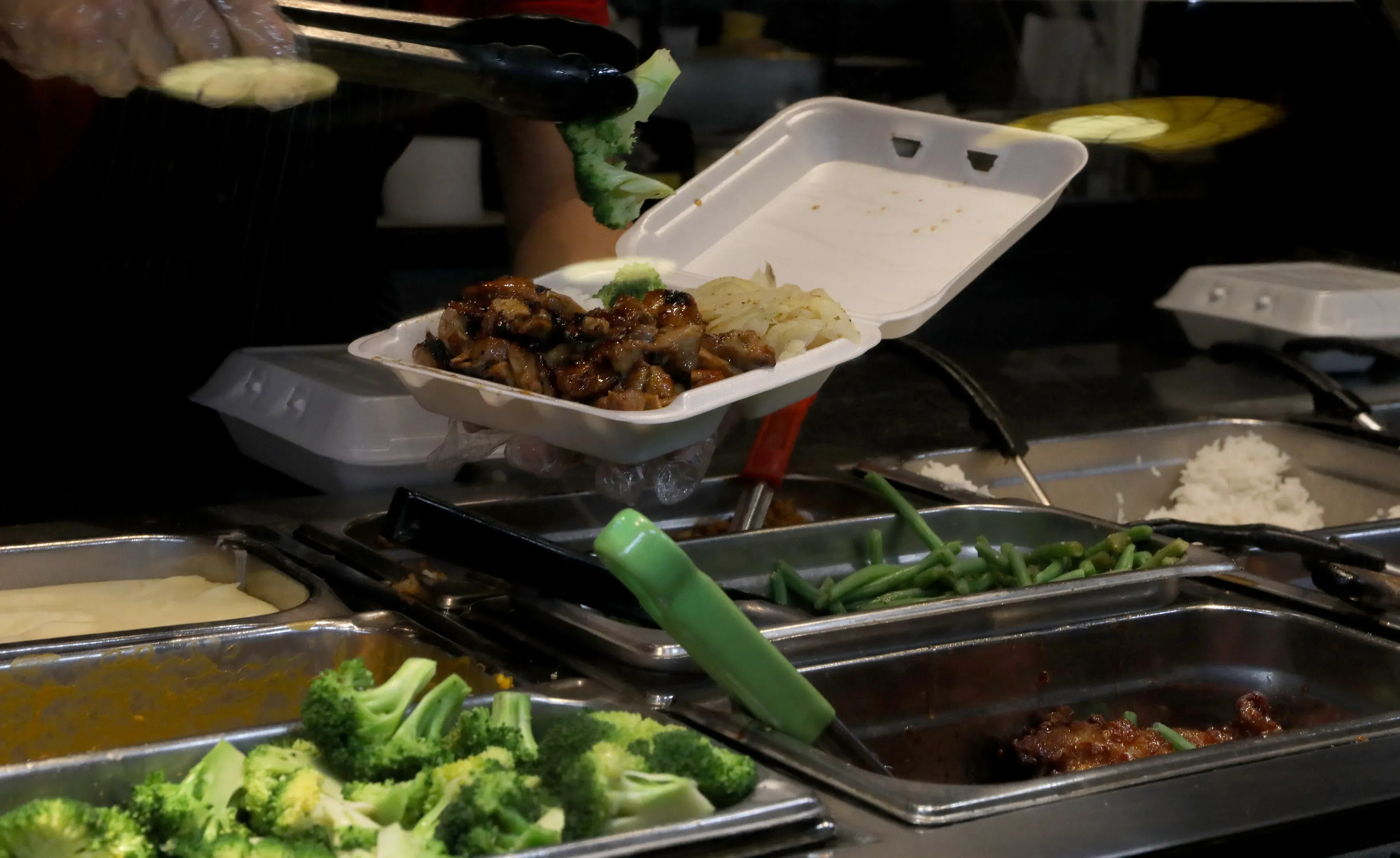
Walling is focused on legislation approved by the Illinois Senate that would impose a statewide ban on polystyrene packaging, an all-but-unrecyclable form of plastic often sold under the brand name Styrofoam.
More expansive laws adopted in Europe, California, Minnesota and a handful of other states are intriguing, she said. Efforts to persuade Illinois lawmakers to support the idea are ongoing.
“If you’ve got aluminum cans, there are no fees because they are easy to recycle,” said Walling, who during the summer saw firsthand how EPR works in Austria. “But (in Austria) they don’t have yogurt containers with three types of plastic because it’s too expensive.”
Grants, cleanups and filters
The detritus of more than a half-century of plastics manufacturing washes ashore daily on every Great Lakes beach.
Plastic waste accounts for nearly every piece of litter picked up during Adopt-a-Beach events organized by the nonprofit Alliance for the Great Lakes.
Volunteers cleaning up beaches might seem like descendants of Sisyphus, a king in Greek mythology forced to fruitlessly push a boulder up a mountain for eternity.
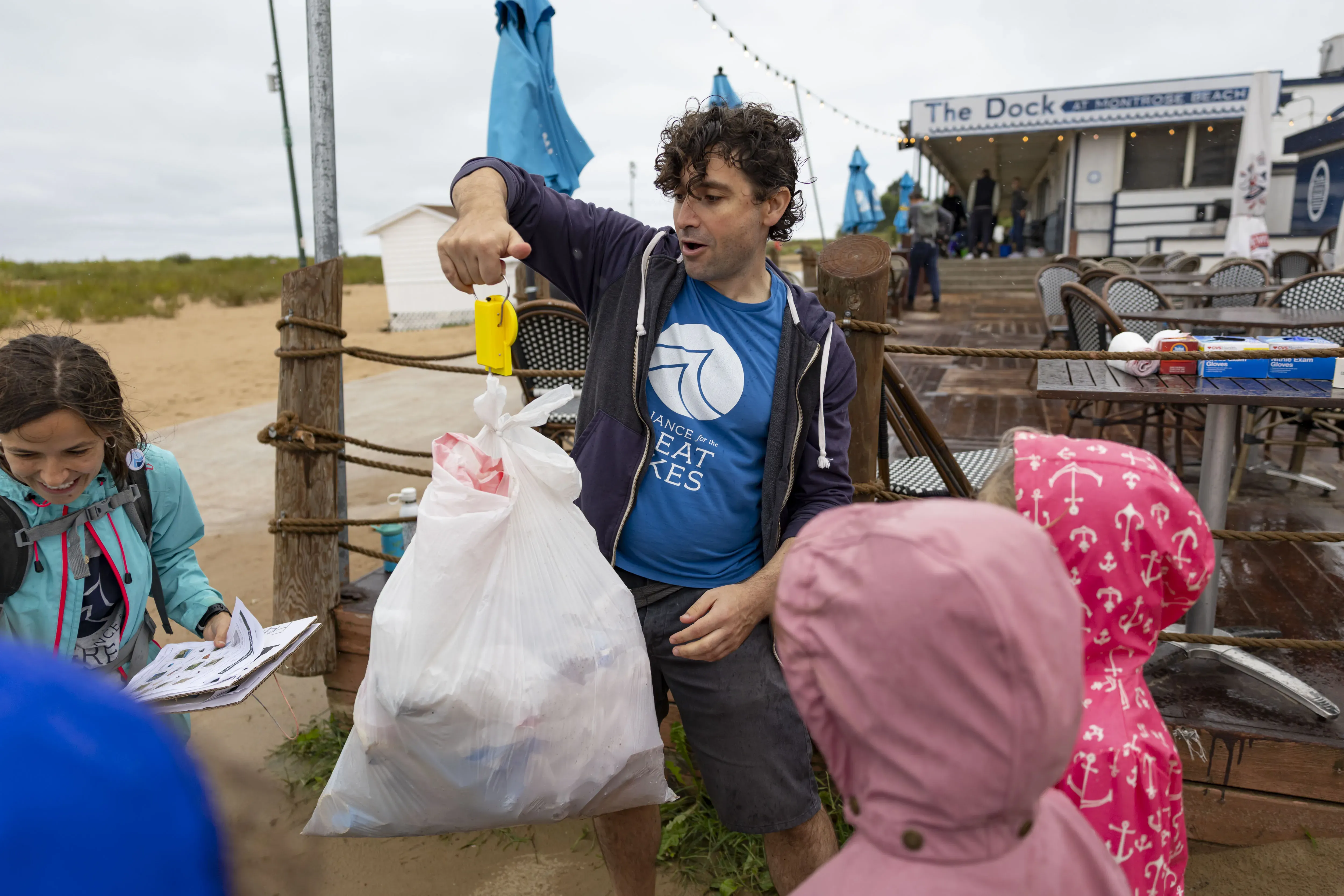
But their endeavors make a difference and raise public awareness about the crisis, said Rochman, the University of Toronto researcher, who also co-leads the U of T Trash Team, a group of students and others that collects and tracks the waste in Canada’s largest city.
Last year Rochman and four colleagues published a peer-reviewed paper revealing the trajectory of smoothie bottles outfitted with GPS trackers and released into the Don River, a major Lake Ontario tributary.
Most of the bottles sloshed into marinas within Toronto’s harbor, findings that pinpointed where garbage-skimming traps, robots and other equipment should be deployed.
One bottle meandered more than 230 miles across Lake Ontario and ended up near Rochester, New York.
The study highlighted how plastics pollution from one community can blow or flow hundreds, if not thousands of miles away.
It’s why Shelby, Michigan, the most western part of the state jutting into Lake Michigan, often is littered with decaying strands of mylar balloons and plastic bottle caps, likely from more populated areas such as Chicago, Hammond and Milwaukee.
Shelby is a sparsely populated area of cherry orchards in the northwestern lower peninsula, with a string of vacation homes along Lake Michigan.
A giant glass jar behind the cash register at the Cherry Point Farm & Market, a mile away from the lake, is filled with plastic cigarillo tips collected from nearby beaches — pollution that no doubt blew and swirled northward from more urbanized stretches of the lakeshore.
Closer to home, Hoellein, the Loyola researcher, worked with the Chicago Park District and local advocates to obtain grants for trash skimmers at Lake Michigan marinas and next to the Wendella landing along the Wrigley Building on the Chicago River.
Emptying the skimmers is a malodorous task, to say the least.
“Hypothetically microplastics would go away if we stopped putting plastic garbage in the environment,” Hoellein said. “But in a real lake or river, there always is more plastic being added to the water.”
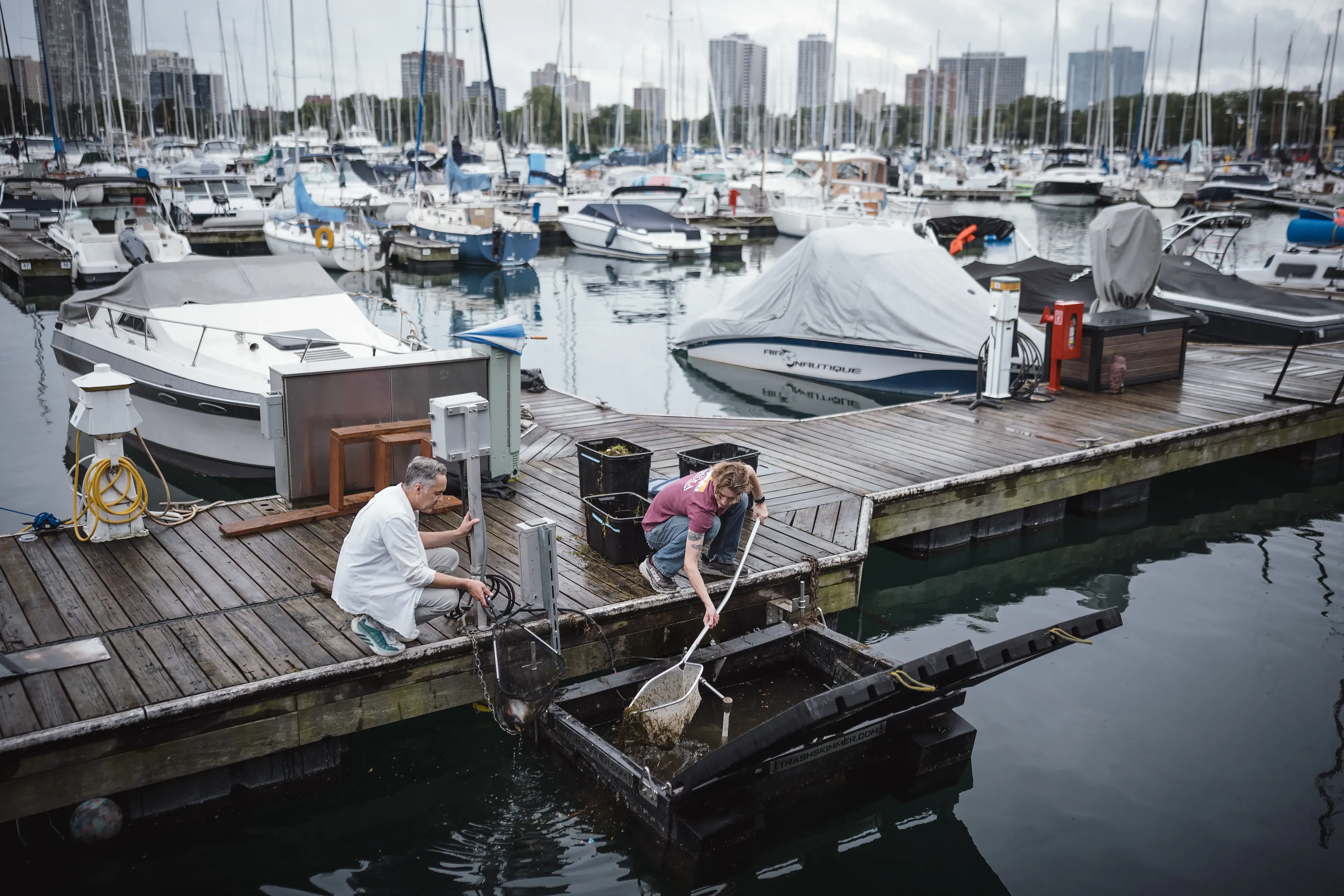
Andy Scarpelli, who runs a nonprofit biotech incubator on Chicago’s North Side, is a longtime organizer of Lake Michigan beach cleanups.
He said he tries to remain upbeat when encouraging fellow volunteers.
“Even if kids bring nothing back, they’ve been out on the beach all day,” said Scarpelli, who also teaches at the School of the Art Institute. “Hopefully they get a bit of understanding about what happens to plastics they’re using without thinking about it.”
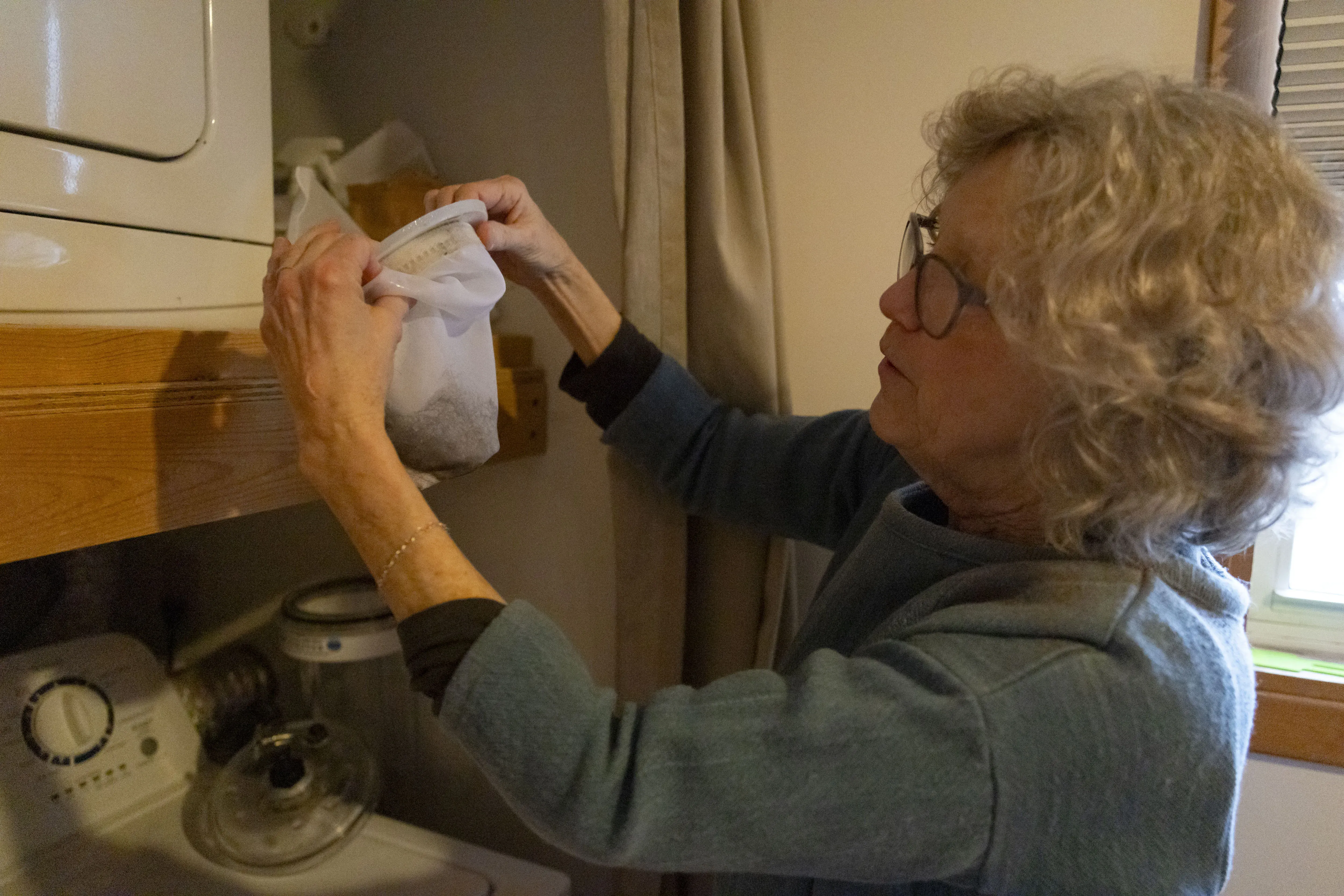
In Parry Sound, an eastern Ontario community near Lake Huron, dozens of volunteers participated in a study testing the effectiveness of microplastics filters attached to their washing machines.
The filters, available to anyone, significantly reduced the amount of plastic fibers flushed into Georgian Bay, which flows into the Great Lake, according to findings by one of Rochman’s former graduate students.
A handful of manufacturers include microplastics traps on their machines or offer aftermarket filters. So far the devices can be fussy and require careful maintenance, participants in the Canadian study said.
“I would rather not know about this and be ignorantly happy,” Merry Bridges, one of the Parry Sound study participants, said during a December interview as more than three feet of snow fell outside her home.
“I guess my answer is to form a ukulele group,” Bridges quipped.
After industry lobbyists intervened, California Gov. Gavin Newsom, a possible Democratic Party candidate for president, vetoed legislation that would have required filters on all new washing machines sold in the state. The legislation likely would have pushed manufacturers to re-engineer machines sold throughout the U.S.
Oil and chemical executives, who spent decades advertising that recycling is the answer, contend their new solution is old processes that use chemicals or heat to break down plastic waste into a low-grade oily substance. Theoretically it could be used to make new materials.
Chemical recycling of plastics — industry public relations describes it with the more friendly term “advanced recycling” — has a checkered environmental record. Several operations have faded into bankruptcy. A California lawsuit against ExxonMobil alleges no more than 8% of the waste shipped to the company’s Baytown, Texas, plant is converted to new plastics.
In an email response to questions from the Tribune, ExxonMobil, the biggest U.S. manufacturer of plastics, said its Baytown plant has kept 150 million pounds of plastic waste out of landfills.
To put that figure into perspective, during 2021 alone ExxonMobil produced more than 25 billion pounds of new plastics, according to an analysis the energy research firm Wood Mackenzie conducted for the nonprofit Minderoo Foundation.
‘Something had to be done’
Up against powerful corporations, Al Swigonski and other volunteers go door to door, one restaurant and coffee shop at a time, to get single-use plastics out of American life.
Swigonski is best known in Erie, Pennsylvania, for helping save minor league baseball in the Great Lakes city, a feat memorialized by the comedian John Oliver.
The retired corporate auditor now spends a portion of his days urging restaurant owners to break free of plastics.
Along the way he met the owner of a butcher shop and a handful of restaurants, who suggested collaborating with others to cut costs by buying non-plastic utensils in bulk.
Swigonski and his wife began obsessing about the problem while combing for beach glass along Lake Erie.
“I look down and all I see is cigarette butts and plastic bottles,” Swigonski said during an interview in their backyard. “We knew something had to be done.”

Brent Schwoerer had similar motivations when he founded Engrained Brewing Co. in Springfield, a few miles southeast of the Illinois capitol, more than a decade ago.
Schwoerer is another farm-to-table guy. He gets most of the ingredients for his beer and food from nearby suppliers. He buys utensils and takeout containers made of sustainable bamboo and compostable paper.
“There are guys who just don’t care and want to buy the cheapest thing possible,” said Schwoerer, who testified before an Illinois House committee in favor of the proposed polystyrene container ban. “But the cost of (non-plastic) stuff keeps coming down, and the financial impact would be minimal if we all are on the same playing field.”
For Duhaime, a potential answer is forming her own flax company with a couple of Michigan engineers, one of whom also has a Harvard business degree.
They are meeting with automakers and suppliers, with a goal of raising enough money to build a flax-processing mill — a necessity if the fruits of research at test plots and in laboratories become part of Michigan’s economy.
Schroeder is trying to accomplish something similar in Wisconsin.
She recently became the co-owner of Blackberry Ridge Woolen Mill outside Mount Horeb, a village in the Driftless Area southwest of Madison. The mill spins woolen yarn for local shepherds and others as far away as the Dakotas.
Another part of her business plan is to restore flax production in the state. The Wisconsin Farmers Union endorses the idea. So do researchers at the University of Wisconsin who study alternatives to growing corn and soybeans.
“This is an absolute contrast to global supply chains, sprawling networks where you have no idea where things come from,” Duhaime said. “It’s exciting to think about how we can relearn and refine old methods to build a new way to live.”