Story
 August 23, 2026
As Microplastics Pollute Every Corner of the Great Lakes, Scientists Push Governments To Combat Threat
Country:

Petrochemical conglomerates are moving to dramatically increase the amount of plastics produced in...
Deep within the boreal forest of western Ontario, scientists do the unthinkable: They dump pollution into remote, self-contained lakes to see what happens.
Canadian researchers curtained off two halves of a lake during the late 1960s and doused each with different fertilizers. Their findings prompted bans on phosphorus-laden detergents that were supercharging algae blooms choking the Great Lakes.
They later documented how brain-damaging mercury spewed by coal-fired power plants contaminates fish, showed how gases emitted when burning fossil fuels creates acid rain, and demonstrated how thick Canadian crude oil called bitumen spreads after spills.

As a nonprofit journalism organization, we depend on your support to fund more than 170 reporting projects every year on critical global and local issues. Donate any amount today to become a Pulitzer Center Champion and receive exclusive benefits!
One of the latest experiments is unfolding amid the jack pine and spruce trees ringing Lake 378.
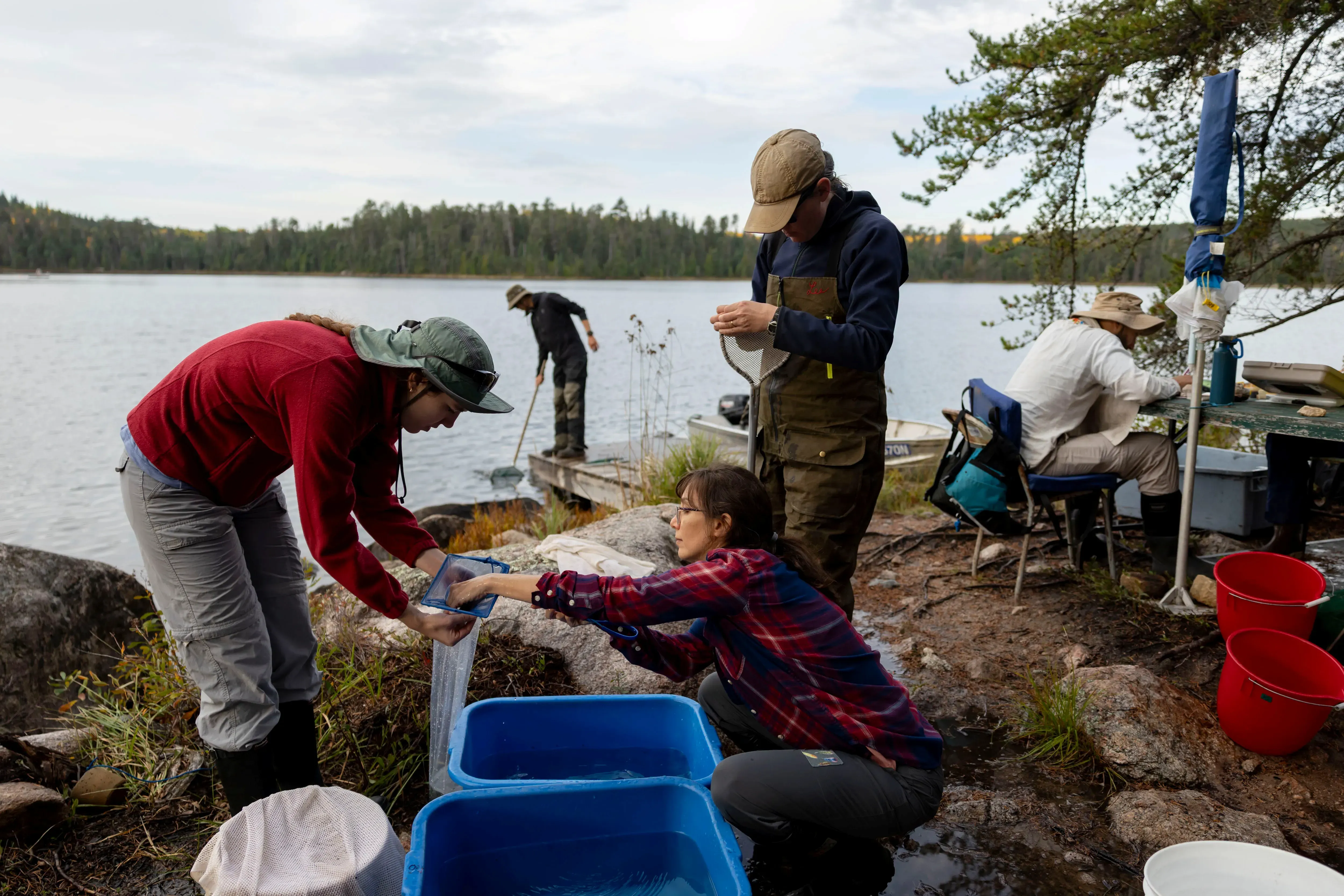
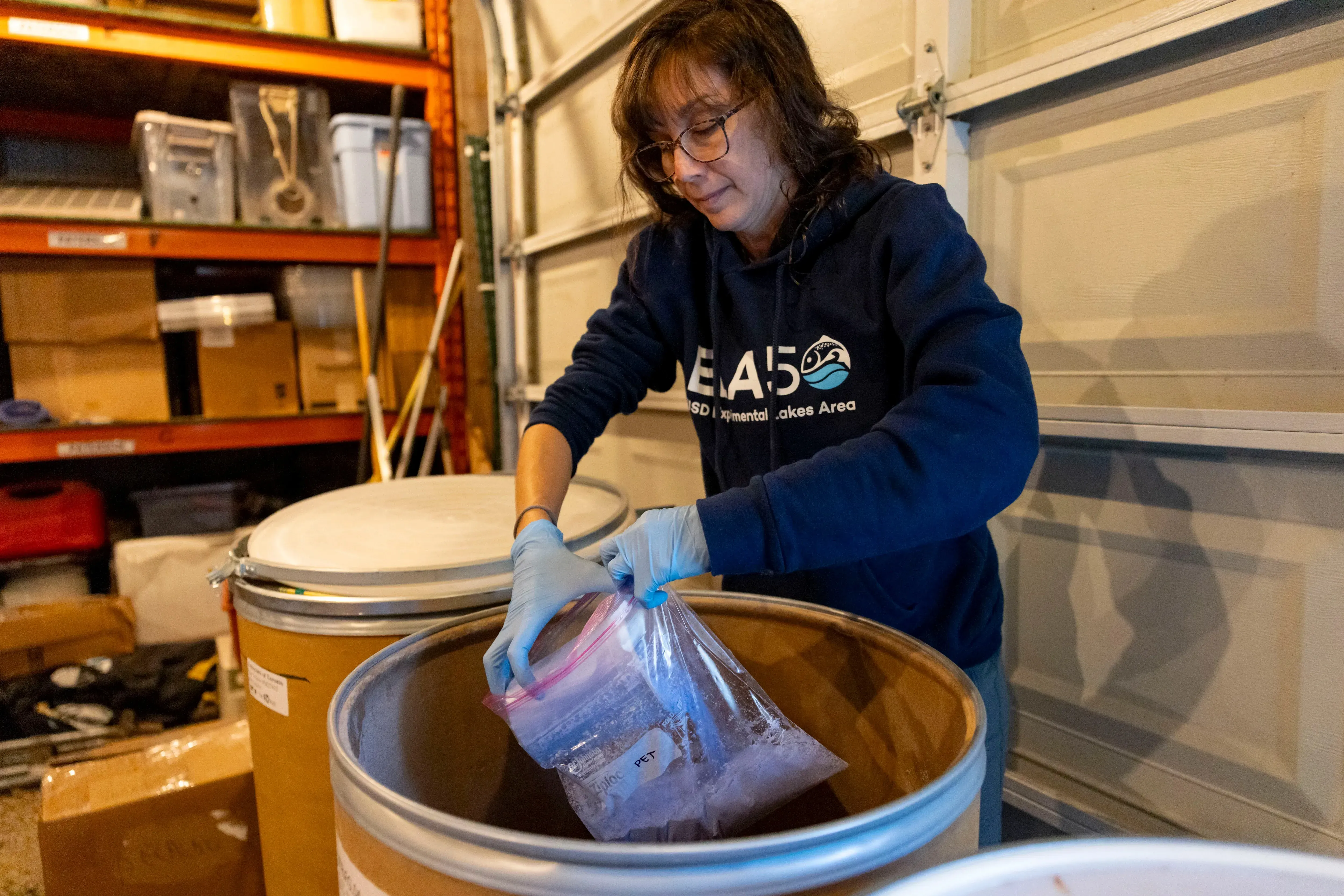
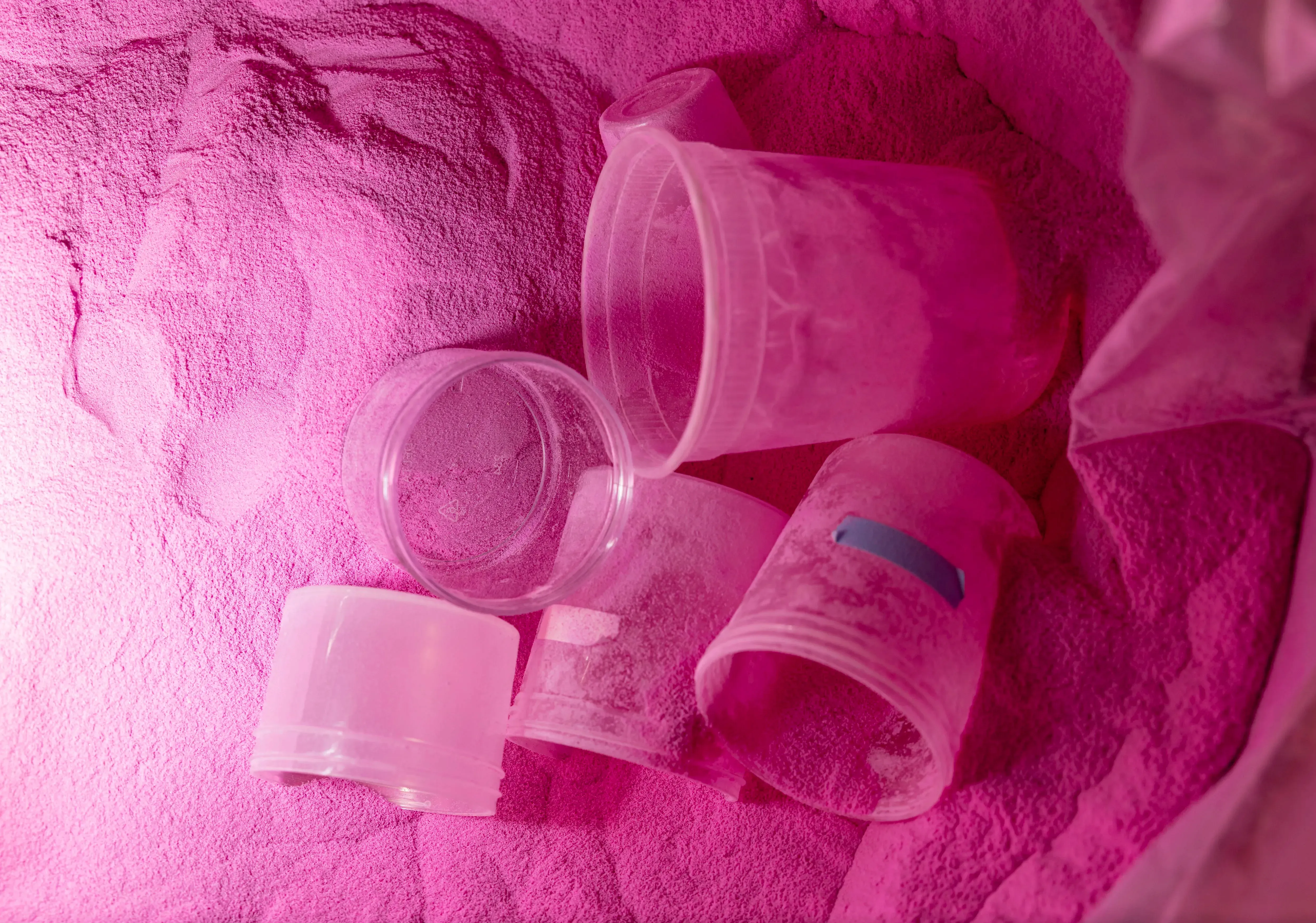
A newer team of scientists, led by University of Toronto biologist Chelsea Rochman, churned a gallon of bright, color-coded microplastics into the water during each of the past three years — an amount intended to mimic bits of pollution in urban storm runoff.
Now the researchers are tracking the different types of plastic, some of which sank to the bottom of the 62-acre lake and others that eventually blew or washed ashore.
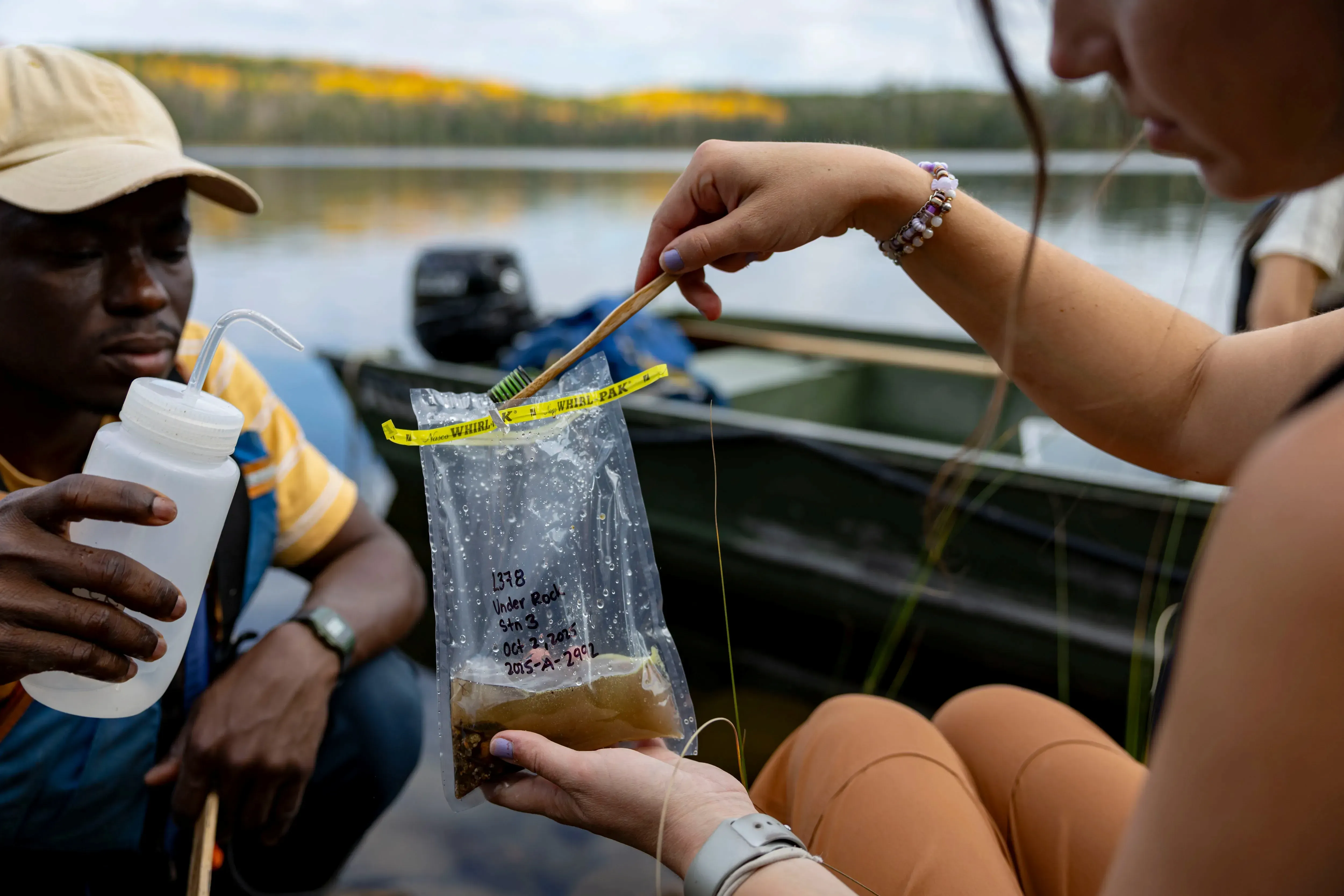
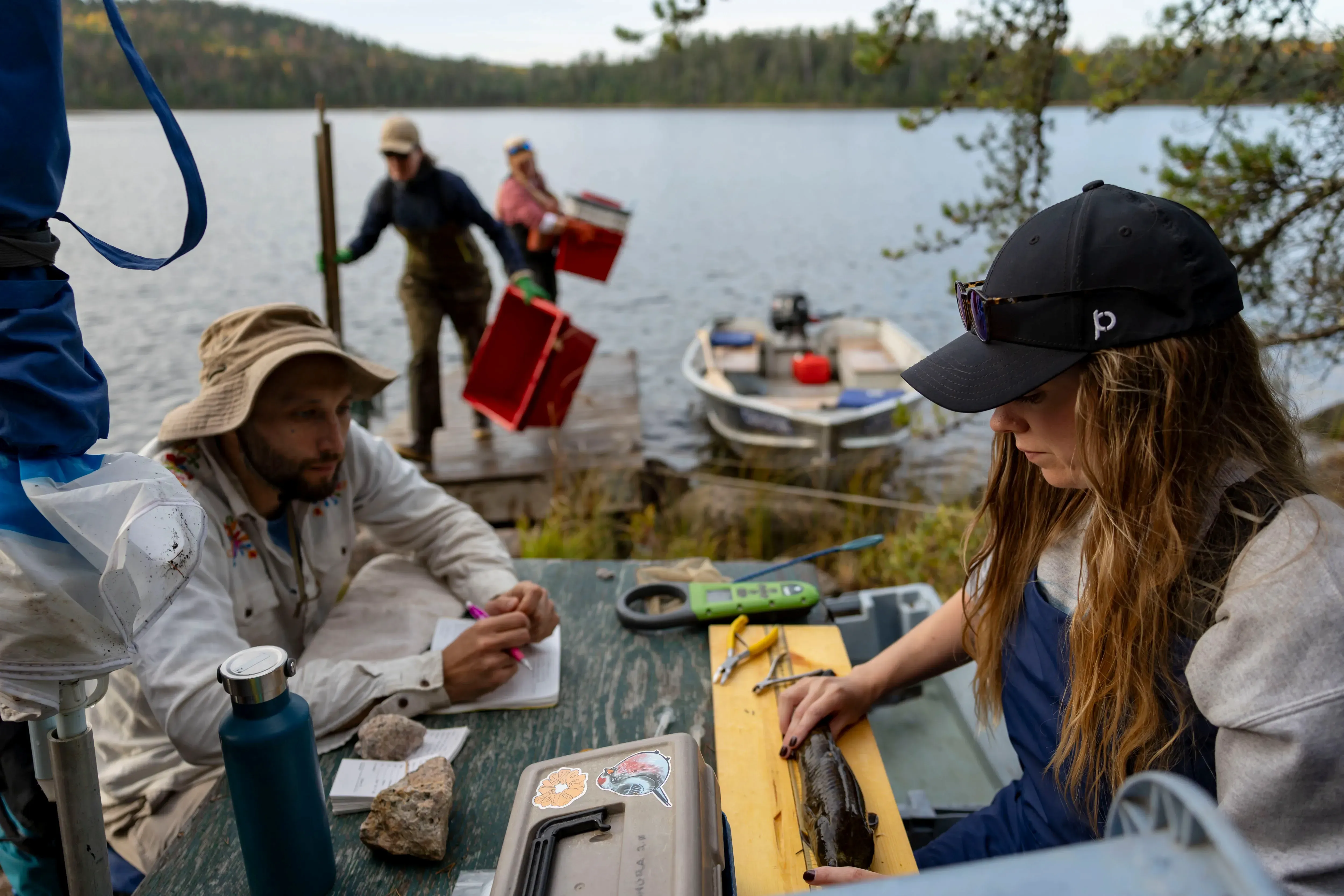
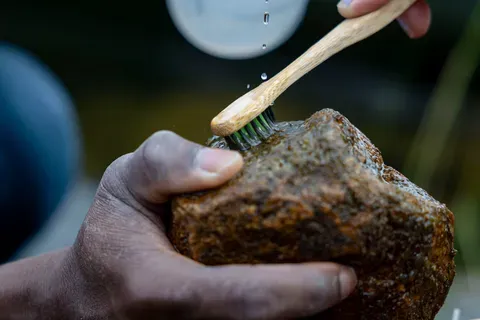
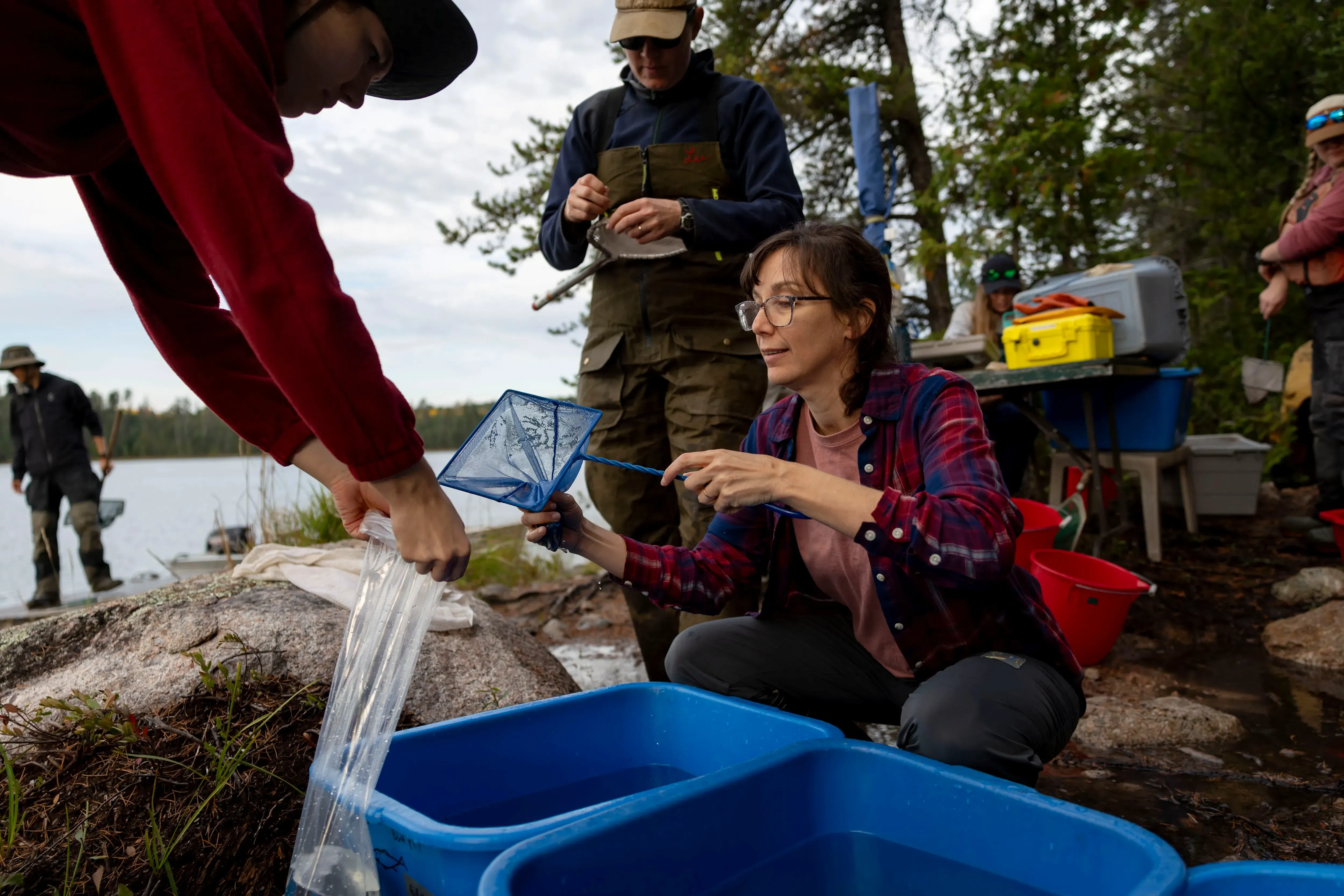
Graduate students on Rochman’s team are dissecting fish and finding that manmade bits ingested by some of their catch passed from stomachs into filets. The team is analyzing microplastics painstakingly collected from plants, rocks, water samples and sticky traps erected along the shoreline.
All of this long-running research at the Experimental Lakes Area, or ELA, is geared toward persuading leaders in the United States and Canada to get off the sidelines and combat a growing, unchecked threat to the Great Lakes, the source of drinking water for 40 million people in the neighboring countries.
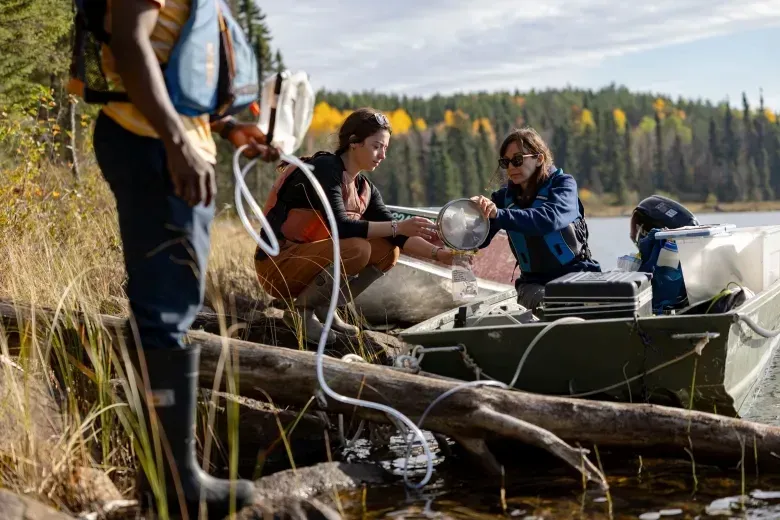
“We already know concentrations of microplastics in Great Lakes fish are some of the highest in the world,” Rochman said during an interview with the Chicago Tribune while she and two grad students gathered samples from Lake 378 last fall.
“These tiny particles also are in the water we drink,” she said. “Understanding the fate and transport of microplastics at ELA enables us to improve monitoring in bigger lakes, and hopefully influence policy.”
Rochman is among a group of scientists who decided during the early 2010s to focus on plastic pollution in freshwater, rather than in saltwater oceans where startling images of floating garbage patches drew, and continue to draw, worldwide attention.
Microplastics are in every corner of the Great Lakes, from Canada’s “Chemical Valley,” a strip of fossil fuel plants off Lake Huron north of Detroit, to the pristine Apostle Islands in Lake Superior. The most densely populated Great Lakes, Lake Michigan and Lake Erie, contain the highest levels of microplastics detected to date.
The Tribune is documenting the scourge as part of “Great Waste in the Great Lakes,” an ongoing series delving into mostly unseen risks to the health and environment of Americans and Canadians who depend on the world’s largest source of fresh surface water.
‘Wild Wild West’
At least 22 million pounds of plastic garbage despoil the Great Lakes every year, according to one estimate.
Microplastics, each no larger than a grain of rice, are formed as throwaways such as water bottles, packaging and fast-food containers break down. Other sources include fibers shed when washing synthetic clothing, worn tire particles in storm runoff and spills of industrial plastic pellets known as nurdles.
How much comes from each source depends on a variety of factors. Some stand out.

For instance, studies have found a single load of laundry can wash 700,000 tendrils of microplastics known as microfibers into sewers.
Conventional sewage treatment is capable of filtering up to 99% of microfibers and other microplastics flushed from homes and businesses, other studies have found. Yet billions of particles and strands are small enough to pass through the treatment process and flow unimpeded into lakes and rivers.
Consider if each of the 40 million people in the Great Lakes watershed did their laundry once every two weeks. That would mean at least 7.3 trillion microfibers end up in the lakes every year.
“We get hit multiple times,” said Andrea Densham, director of regional governmental affairs at the Chicago-based Alliance for the Great Lakes. “Plastic chemicals are manufactured here, objects made from those chemicals come from here and we get the pollution at the end of their useful life.”
Petroleum-based plastics never completely go away. They just keep getting smaller, and potentially more harmful to humans, fish and wildlife.
Even the most remote areas of the Great Lakes aren’t spared.
At the northeastern tip of Minnesota, Seth Moore watches over land, water, fish and wild game for the indigenous Grand Portage Band of Lake Superior Chippewa.
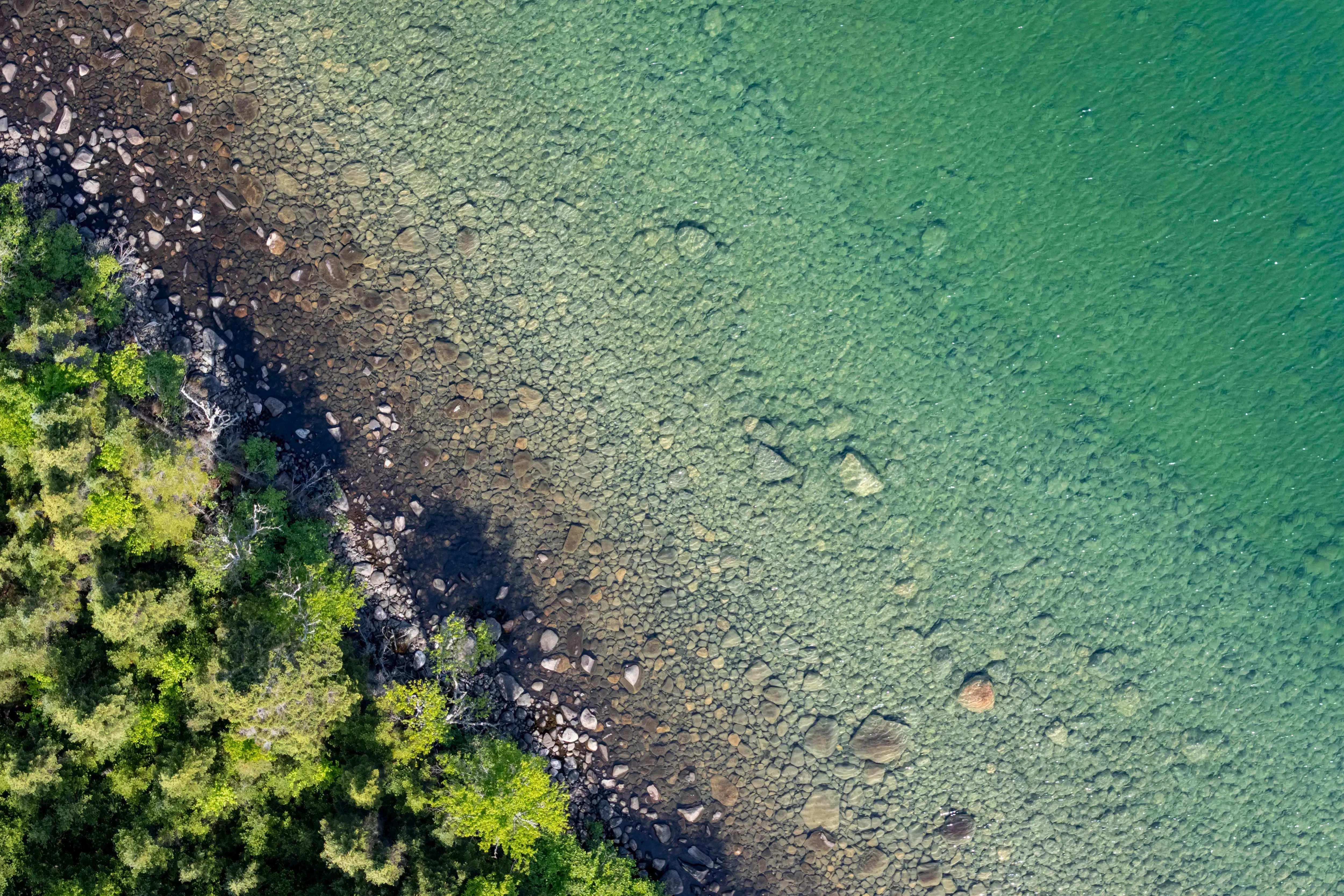
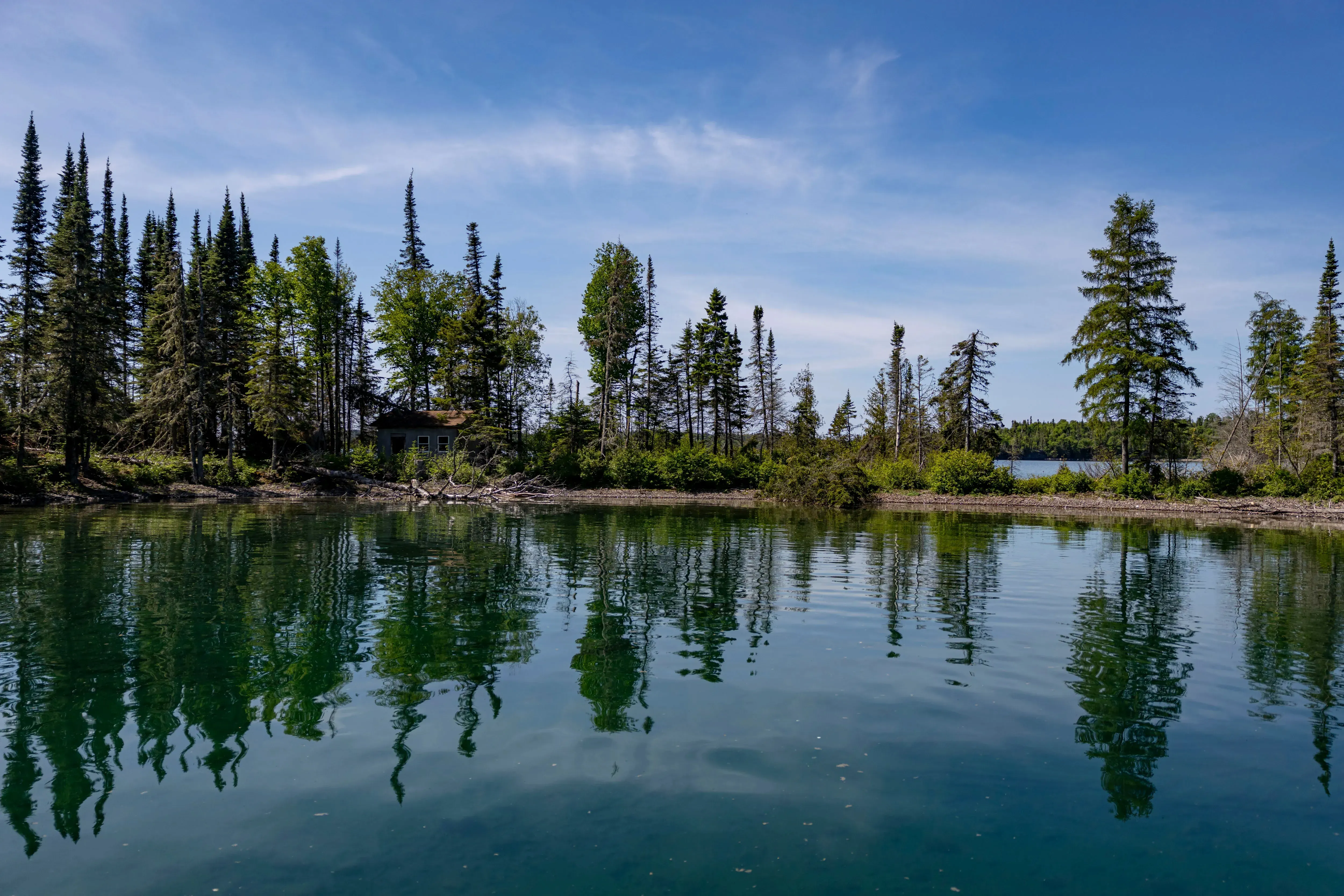
As Moore piloted a research boat last month, the largest Great Lake was calm and pancake flat, its water so clear the bottom could be seen at multiple depths. Few signs of humanity interrupted the rocky shoreline — just a couple of cabins and the wooden railings of a path leading to a wizened cedar tree revered by the tribe.
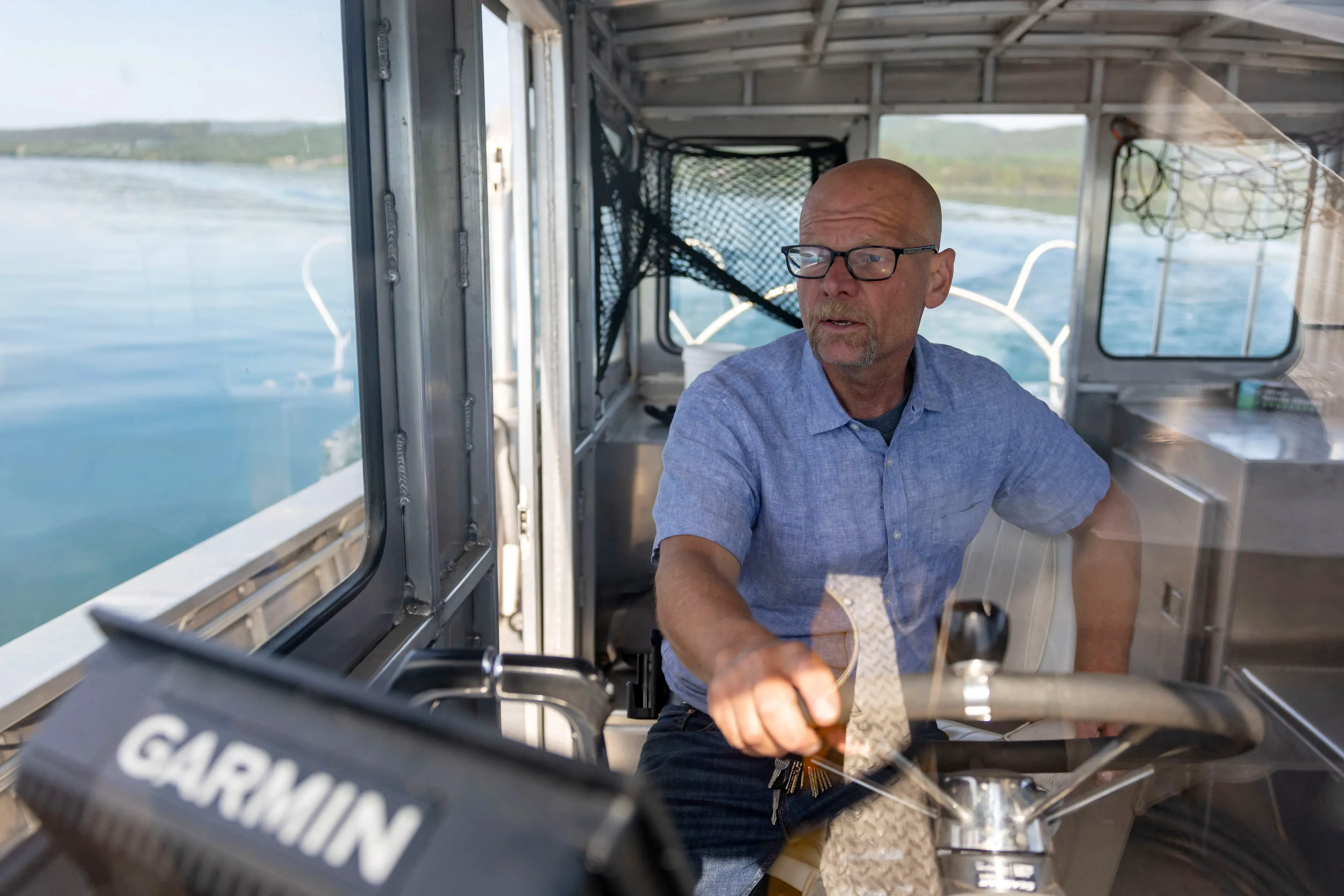
Moore, the tribe’s natural resources director, said he spends a good deal of his time these days studying threats invisible to the naked eye, including forever chemicals and residue from pharmaceutical drugs.
Microplastics are a more recent addition to his worries. Some of the highest concentrations in Lake Superior have been detected offshore from the tribe’s territory.
“They affect the entire food chain, starting with plankton and fish that think it’s food,” Moore said. “For people who rely on subsistence fishing, that’s a big deal.”
When scientists at the National Park Service sampled every beach in their system a decade ago, they were surprised to find protected areas in and along Lake Superior had some of the highest levels of microplastics among continental U.S. parks.
Atop their list: the Apostle Islands National Lakeshore in northwest Wisconsin.
Others that jumped out in the results included two Lake Michigan parks: Indiana Dunes National Park near Chicago and Sleeping Bear Dunes National Lakeshore along the northwestern lower peninsula of Michigan.
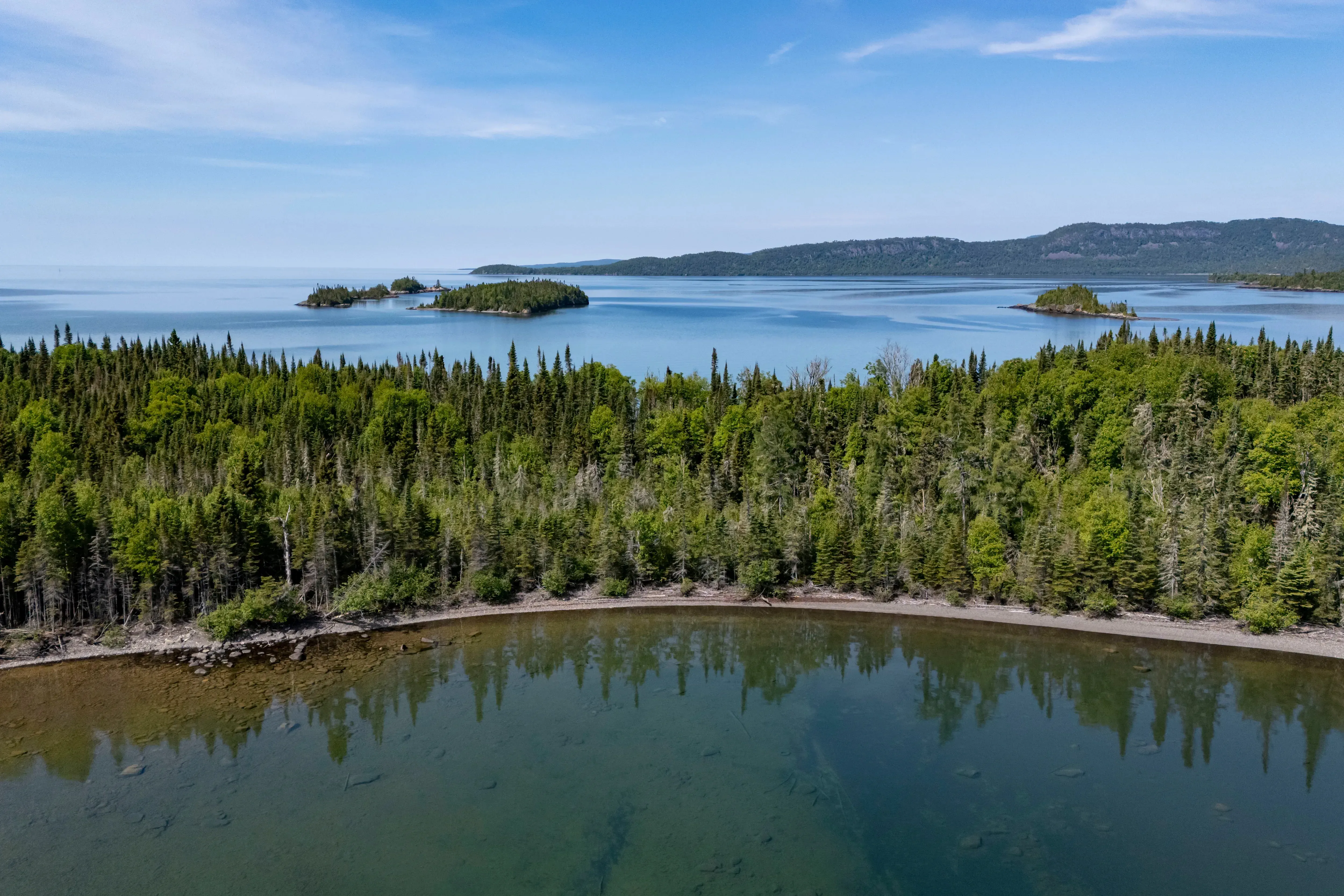
Like other studies, the Park Service’s samples were snapshots taken in gargantuan, constantly changing lakes. A later look by researchers at the University of Minnesota-Duluth recorded smaller concentrations of microplastics in Lake Superior beach sand.
Elizabeth Minor, lead author of the more recent study, said the conflicting results reflected different testing methods, neither of which have been perfected. It still is difficult for scientists to pinpoint tiny plastics in sand or water containing nonplastic particles that can appear similar through a microscope or in machine-assisted analyses, she said.
“In many ways it’s the Wild Wild West out there,” said Minor, a chemist who noted her research team is finding concentrations of microplastics swirling above the bottom of Lake Superior fluctuate as seasons and water currents change.
Park Service officials refused to make anyone available for an interview. But during a 2021 webinar, Brenda Lafrancois, a Park Service biologist, suggested urban areas are largely responsible for bits of plastic pollution, even in a sparsely populated lake such as Superior.
At one point during her presentation, she narrated animated graphics showing blobs of contaminated sediment oozing out of a tributary near Duluth and undulating along 60 miles of shoreline toward the Apostle Islands.
“It’s worth noting we’ve now detected microplastics in beach sand, also water, also fish,” Lafrancois said at the time.


Largely unregulated
Plastic waste remains largely unregulated in the U.S. and Canada, unlike multiple other pollutants contaminating the Great Lakes.
In April, President Donald Trump’s administration announced it would begin measuring microplastics in water with an eye toward enforceable limits — a priority for the Make America Healthy Again movement.
Administration officials reneged on their promise two months later, one of several policy reversals benefiting the clout-heavy American chemical industry during Trump’s second term.
Another option is designating microplastics as “chemicals of mutual concern” in a Great Lakes treaty between the two countries, a listing that would trigger routine monitoring throughout the watershed, similar to measurements of poisons such as mercury, brominated flame retardants and forever chemicals, also known as PFAS.
Rochman, the University of Toronto researcher, co-authored a petition urging rigorous scrutiny of microplastics by the International Joint Commission, a binational group that oversees the treaty.
“We know microplastics are everywhere,” Rochman said. “It’s time to think about how we manage them.”
The commission’s scientific advisors support the petition. So do other institutions, including the Great Lakes Fishery Commission and groups representing the region’s mayors and legislators.
Neither the Trump administration nor the government of Canadian Prime Minister Mark Carney has taken a public position. The two governments declined to answer a detailed list of questions emailed by the Tribune.
“Discussions with the Canada Water Agency are ongoing and we expect to share our findings later this calendar year,” a U.S. Environmental Protection Agency spokesman said in an email. “In the interim, EPA is exploring opportunities to partner with Great Lakes states to support domestic U.S. work on plastic pollution.”
Costs and health
Some states are taking action in the absence of nationwide policies from the federal government.
A new Illinois law requires polluters to report spills of industrial plastic pellets and develop plans to limit concentrations of nurdles in storm runoff — a first for the Great Lakes region.
Nurdles are manufactured by petrochemical plants specifically for the purpose of making new products.
In Michigan, the only state entirely within the watershed, officials are testing 200 tributaries for microplastics.
Minnesota law nudges companies to shift away from plastic packaging by requiring them to pay into a fund for managing the waste, a concept known as extended producer responsibility.
“The public increasingly is telling us this is what they want,” said Densham, the Alliance for the Great Lakes lobbyist. “If we have to go object by object to get plastics out of specific goods, maybe in time that will make it easier for bigger projects to move the marketplace.”
Elsewhere, dozens of countries and non-governmental organizations are clamoring for a global treaty under negotiation at the United Nations.
For those behind the treaty, the answer is eliminating certain uses of plastic and sharply reducing production for others.
Supporters contend a binding agreement is needed to stanch plastic waste spreading into every nook and cranny on the planet — an amount that since the middle of the last century has swelled to more than 8 billion tons.
Based on well-studied hazards of just a few of the 16,000 chemicals added to plastics, an analysis by scientists who support the treaty found worldwide damages to human health are estimated to cost $1.5 trillion a year.
“When you are talking to policymakers facing competing priorities you need to talk about costs, not just about health,” said Philip Landrigan, a pediatrician and epidemiologist who leads the Program for Global Public Health and the Common Good at Boston College.
Decades of toxic air
The staggering impacts begin during the extraction of fossil fuels for oil refineries and chemical plants, including a cluster in and around Sarnia, Ontario, at the southern tip of Lake Huron.
Sarnia, an hour northeast of Detroit across the St. Clair River from Port Huron, Michigan, has some of the most polluted air in Canada, according to the World Health Organization.
Its skyline is dominated by towering smokestacks, hulking arrays of metal tubes and bright flames erupting from flares at petrochemical plants in the global plastics supply chain.
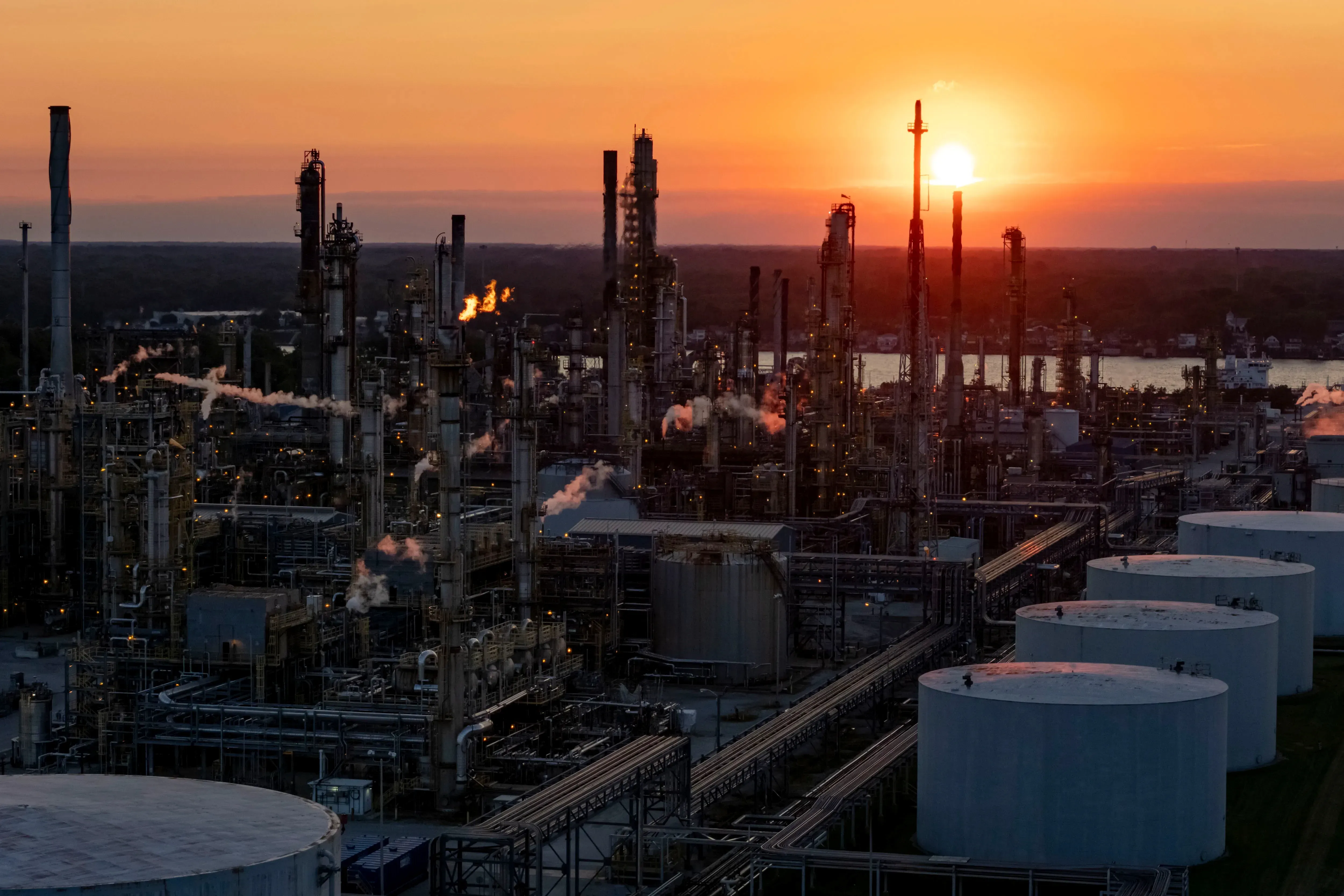
During the 1970s and ’80s, local industries flexed so much political muscle that special editions of Canadian $10 bills featured an image of Polymer Corp., a government-funded chemical plant built in Sarnia during World War II to make synthetic rubber.
Polymer Corp., along with an Imperial Oil refinery (today part of the ExxonMobil subsidiary branded as Esso at gas stations), launched a postwar boom in what became known as “Chemical Valley.”
Local petrochemical complexes have opened and closed since then, corporate logos on signs outside the gates occasionally change. But Sarnia appears to be a Canadian version of “Cancer Alley,” a concentration of American refineries and plastic manufacturers built on former Louisiana sugar plantations forcibly cultivated by enslaved people along the Mississippi River.
People in both regions have breathed toxic air for decades. Occasionally some take legal action against polluters.
Air quality monitoring in recent years showed a Sarnia plant, last owned by London-based INEOS Group Ltd., emitted high levels of cancer-causing benzene across the street from the headquarters, community center and softball fields of the Aamjiwnaang First Nation.
Members of the tribe, another band of indigenous Chippewa, sued INEOS, other Sarnia-area companies and the Canadian government seeking protection. Tribal leaders moved a daycare center in response to spikes of air pollution recorded by a monitor outside Aamjiwnaang headquarters.
“Pollution has increased in my nation due to a lack of regulations that would protect our rights and health from plastic pollution,” said the elected Aamjiwnaang chief, Janelle Namabin, also known as Red Cloud Woman. “We need stricter regulations that eliminate chemicals and polymers of concern with deadlines for outcomes that are enforced.”
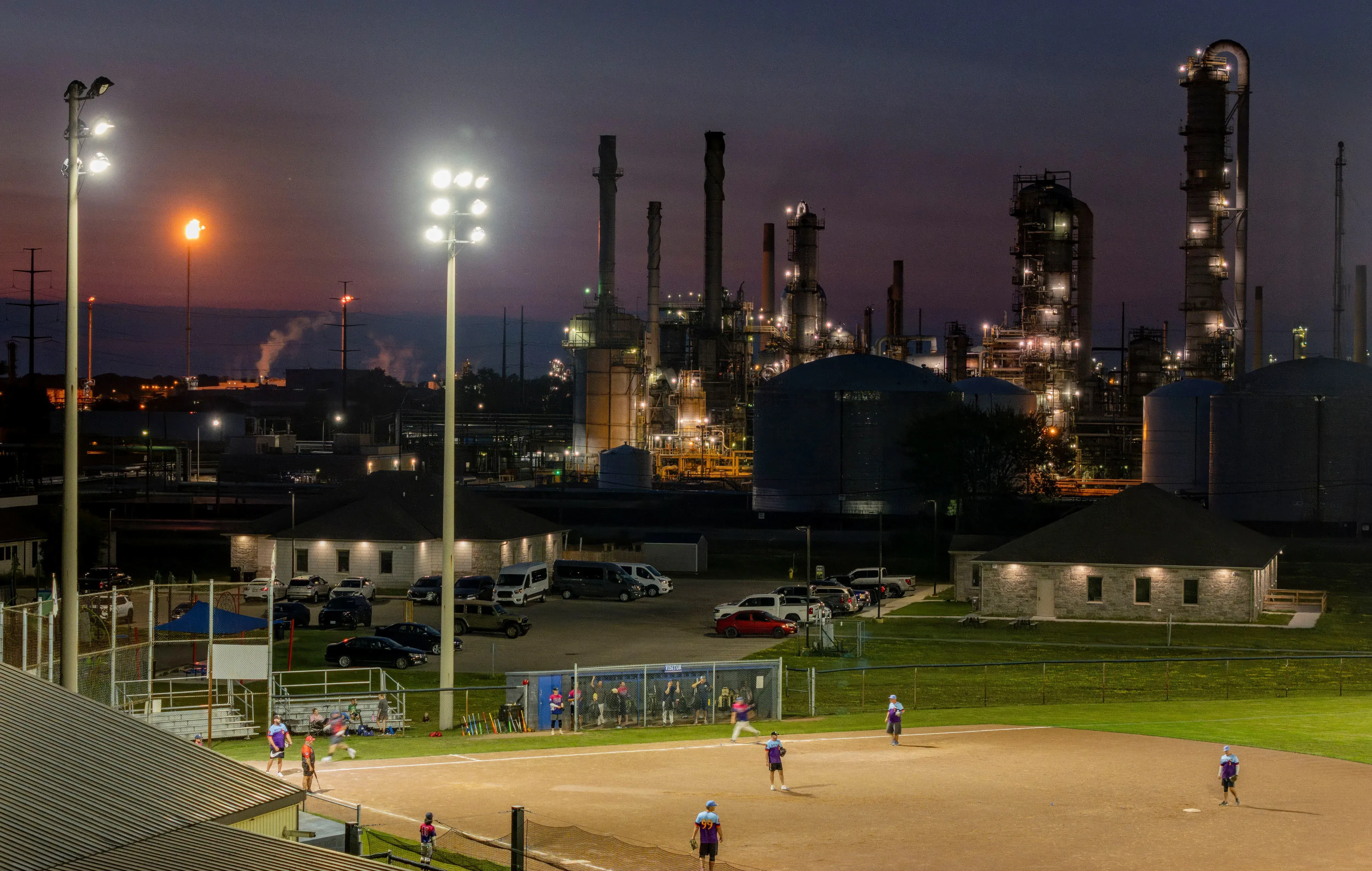

Benzene, the hazardous chemical flagged near the Aamjiwaang community center, is a key ingredient in the production of styrene, another plastics-related carcinogen used in products sometimes branded as Styrofoam.
Under pressure from the tribe and the Canadian government, INEOS shuttered its Sarnia plant at the end of last year, part of what the company called economic decisions that included planned closures of similar facilities in Channahon, southwest of Chicago, southern Ohio and northwest France.
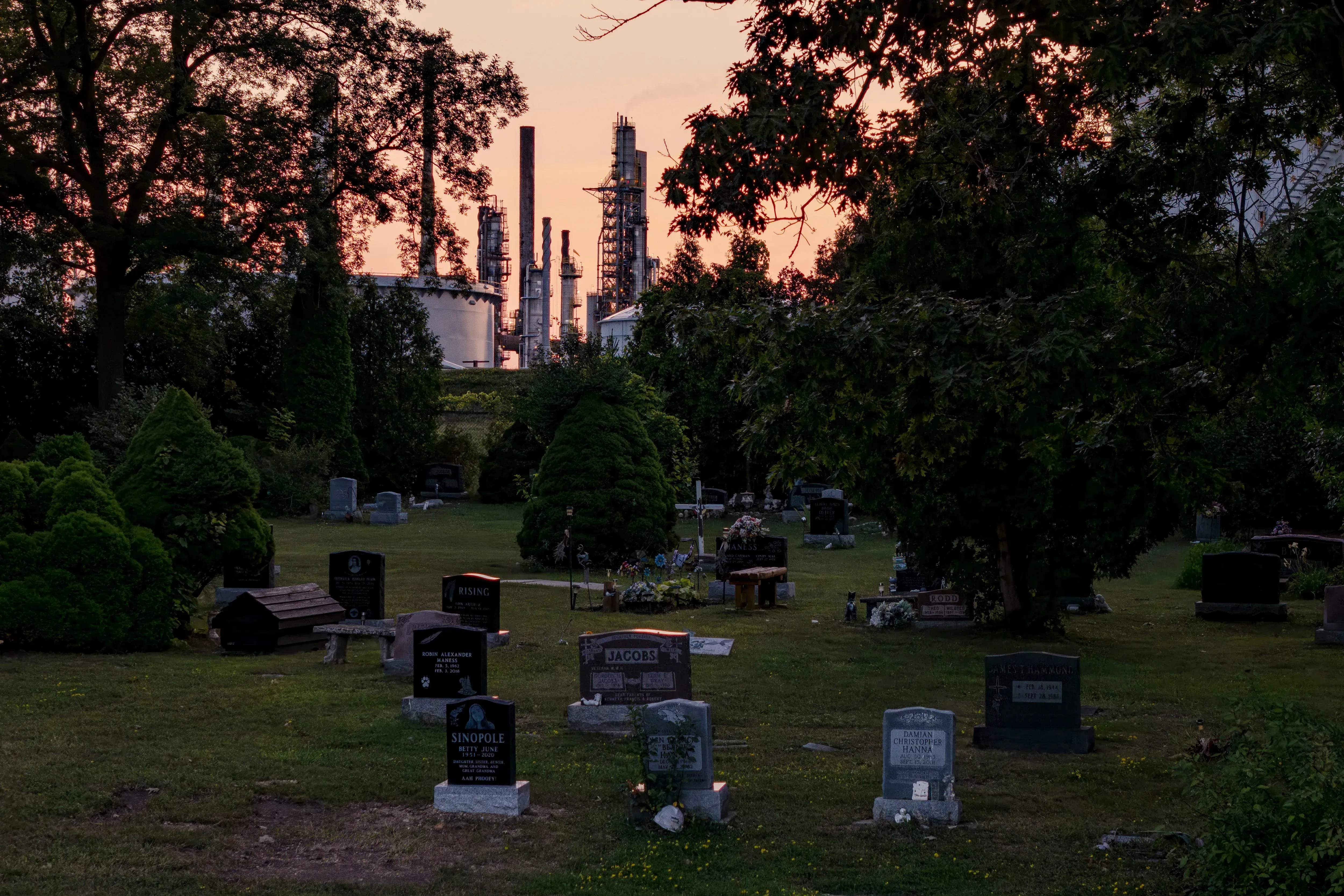
Other Aamjiwnaang land in the Sarnia area is surrounded by plastics-related plants owned by multinational corporations such as Shell and Dow Chemical. A cemetery for tribal members, dating back to the late 19th century, is enveloped by a massive Suncor refinery.
Tribal areas aren’t the only part of Sarnia affected.
One of the city’s Lake Huron beaches is littered with the highest concentrations of nurdles found on Great Lakes shorelines, according to research by Patricia Corcoran, a geologist at the University of Western Ontario.
Though Sarnia’s industrial corridor is downstream from Lake Huron, several drainage ditches in the area are connected to creeks that flow into the lake, Corcoran said in an interview. She noted nurdles are industrial plastics normally untouched by everyday people, and likely drifted to the Sarnia beach through wasteful transportation or production practices.
Farther from shore in the open water of Huron and the other Great Lakes, another group of scientists is spending the summer attempting to build upon Rochman’s findings at the Experimental Lakes Area in Ontario.
Two weeks ago some of Melissa Duhaime’s graduate students pulled water samples around the clock in the southern basin of Lake Michigan. They have been meandering throughout the larger watershed aboard the Lake Guardian, an EPA research vessel.
Duhaime, a University of Michigan ecologist, said her goal is to assess concentrations of microplastics in deeper water and within sediment at the bottom of each Great Lake, rather than just on the surface.
“One of the challenges is there are thousands of different, proprietary chemical formulations of plastic. In other words, features that are selling points for industry but make it difficult for the rest of us to know what is out there,” Duhaime said in an interview. “We need to know more about plastics small enough to be consumed by the base of the Great Lakes food web, the base of our fisheries and a direct path to humans.”