Story
 July 9, 2026
Alaska Has Killed 254 Brown Bears From the Air. Will It Save a Caribou Herd?
Country:

Project
Alaska’s Predator Control Gamble
Wildlife officials credit a program for a caribou rebound, but critics call it reckless.

Scientists and advocates worry the state’s predator control gamble will fail but still expand aerial bear gunning across Alaska. Some proponents say the program is necessary because bears imperil rural residents’ subsistence foods.
In the past four springs, state employees in small planes and a helicopter have combed the skies of Southwest Alaska looking for brown bears. When they find them — boars, sows or cubs — they shoot them with shotguns at close range. The hides are usually skinned off the carcasses to be shipped to Railbelt tanneries. Then they look for more bears.
In four years, the state culled 254 bears in one relatively small rural patch midway between Bristol Bay and the Kuskokwim River at the western edge of Wood-Tikchik State Park. The number could have been higher, but aggressive legal opposition to the program led to a pause in 2025 after three days of operations.
Last year’s halt on the program was temporary. And this June, the Alaska Department of Fish and Game wrapped up its fourth season of what experts describe as a radical cull of bears, one without precedent in modern wildlife management.

As a nonprofit journalism organization, we depend on your support to fund more than 170 reporting projects every year on critical global and local issues. Donate any amount today to become a Pulitzer Center Champion and receive exclusive benefits!
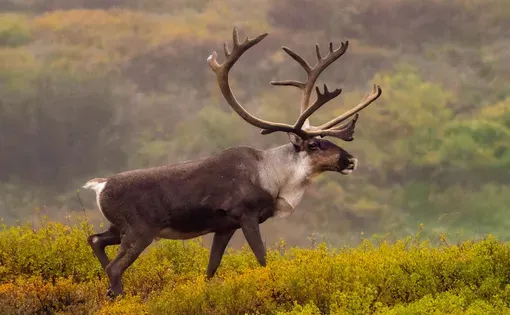
Between May 9 and June 7, the state reported killing 68 brown bears in the control area. The intent is to revive caribou in that part of the state, keeping bear predation at bay by protecting vulnerable newborn calves in the springtime to improve the odds they’ll reach reproductive age and regrow the Mulchatna caribou herd population enough to reopen subsistence and sport hunting.
“In our eyes, it has worked. It is working, it’s doing what it is intended to do,” said Ryan Scott, director of Fish and Game’s Division of Wildlife Conservation, which oversees the Mulchatna predator removal program.
In court testimony, before policymakers with the Alaska Board of Game, and during an interview in May, Scott and other members of the department point to metrics they say demonstrate the Mulchatna caribou herd is growing steadily since the bear cull started in 2023.
Critics don’t buy it. The state is facing vocal and effective opposition to the program, much of it from wildlife biologists, bear experts, former Fish and Game managers and Alaska environmental groups. They’ve challenged the program in opinion pieces, at regulatory meetings and in multiple lawsuits.
Opponents say the cull is wantonly wasteful and savage, that it was unlawfully implemented in ways that ignored public input and will not do anything to improve caribou numbers because nearly all the scientific evidence shows that predator control fundamentally doesn’t work.
“Killing more bears is not going to put caribou in freezers,” said Nicole Schmitt, head of the Alaska Wildlife Alliance, the advocacy group that has spearheaded legal challenges to the program. “I think (the state is) gonna do this for five more years, it’s gonna be way too expensive, it’s not really gonna change anything, and we’re not gonna really know what the impact was on bears or caribou, and it’s just a bunch of waste all over.”
On top of state-led aerial gunning are loosened rules for hunting bears in the region. Combined with the harvest by hunting guides and residents, the state recorded 319 brown bears killed in the management area between 2022 and 2025, according to a report to the Board of Game in February.
Fights over the program are likely to keep raging, because both sides expect a push to expand it into other parts of the state during the years ahead.
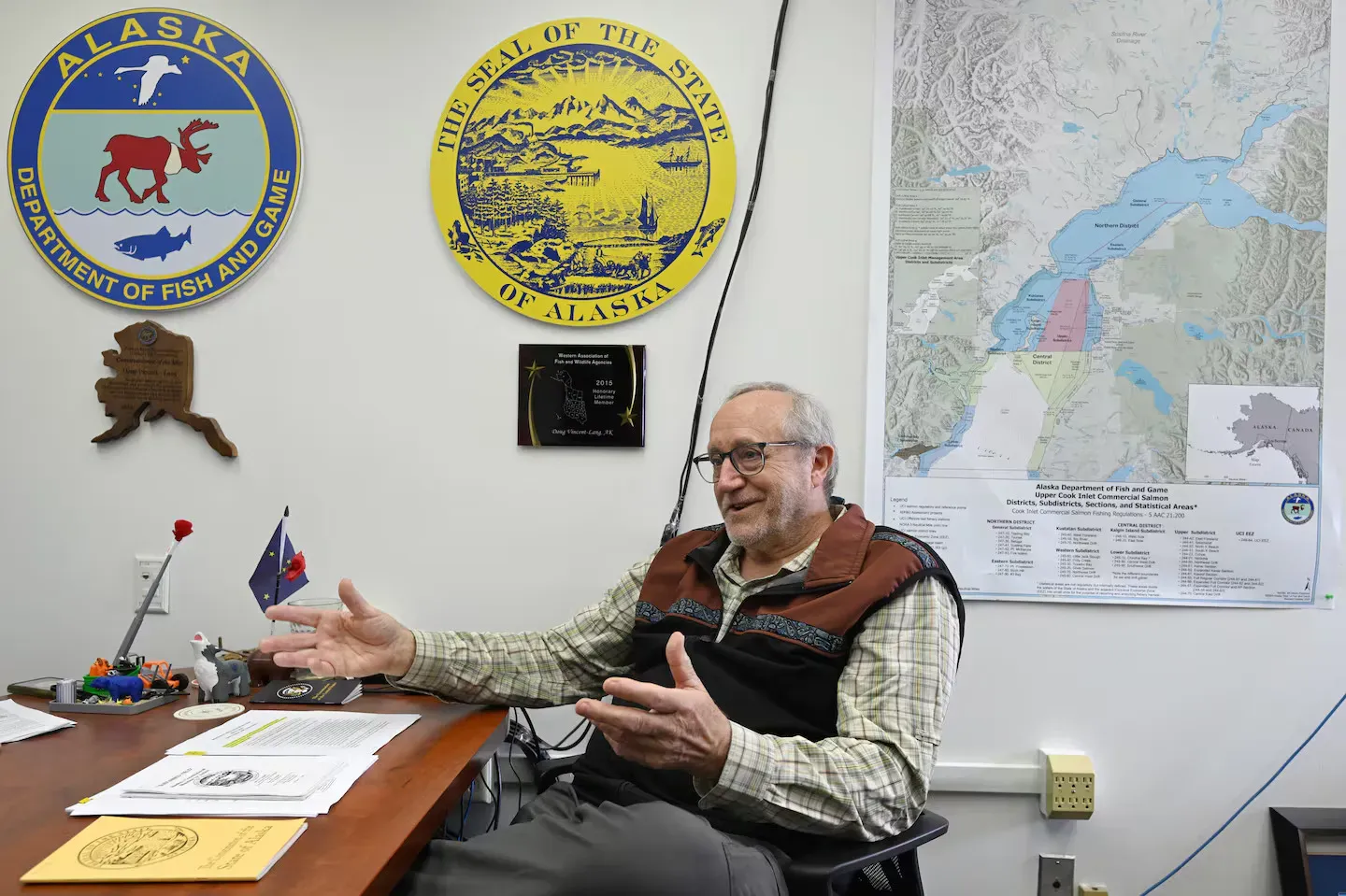
Fish and Game Commissioner Doug Vincent-Lang said that amid declining caribou numbers in other parts of Alaska, as well as the crash in salmon stocks throughout many rural regions, members of the federal subsistence board are “increasingly asking for predator control to improve the number of caribou and ungulates that are being taken by federally qualified subsistence users.”
That may mean implementing aerial gunning procedures targeting bears in more parts of Alaska, Vincent-Lang said, to potentially include federally owned lands currently off limits to state predator control.
‘It’s very surgical’
The predator control program around the Mulchatna herd aims to eliminate not only bears, but also wolves from the area. In fact, the wolf element was in place for more than a decade before the state expanded efforts to include black and brown bears in 2022. But in recent years, crews have killed far more bears than wolves and have spent much more money on their removal.
The timing and the location of the bear cull depend on when and where Mulchatna caribou are calving. Each day of the operation, two small spotter planes and a helicopter fly south from their operations base in Bethel out to the calving ground in a wild section of country where there are no villages or permanent settlements.
“Once target predators were located, the helicopter crew were called in to the location to humanely remove bears or wolves using 12-gauge shotguns loaded with 3-inch slug ammunition for adults and buckshot for wolves and juvenile bears. The field crew salvaged the hide and removed the skull,” management coordinator Todd Rinaldi wrote in a 2023 memo to a supervisor.
What’s known about how the aerial bear cull works comes mostly from public Fish and Game reports. The department has declined repeated requests to see the program firsthand, citing safety protocols.
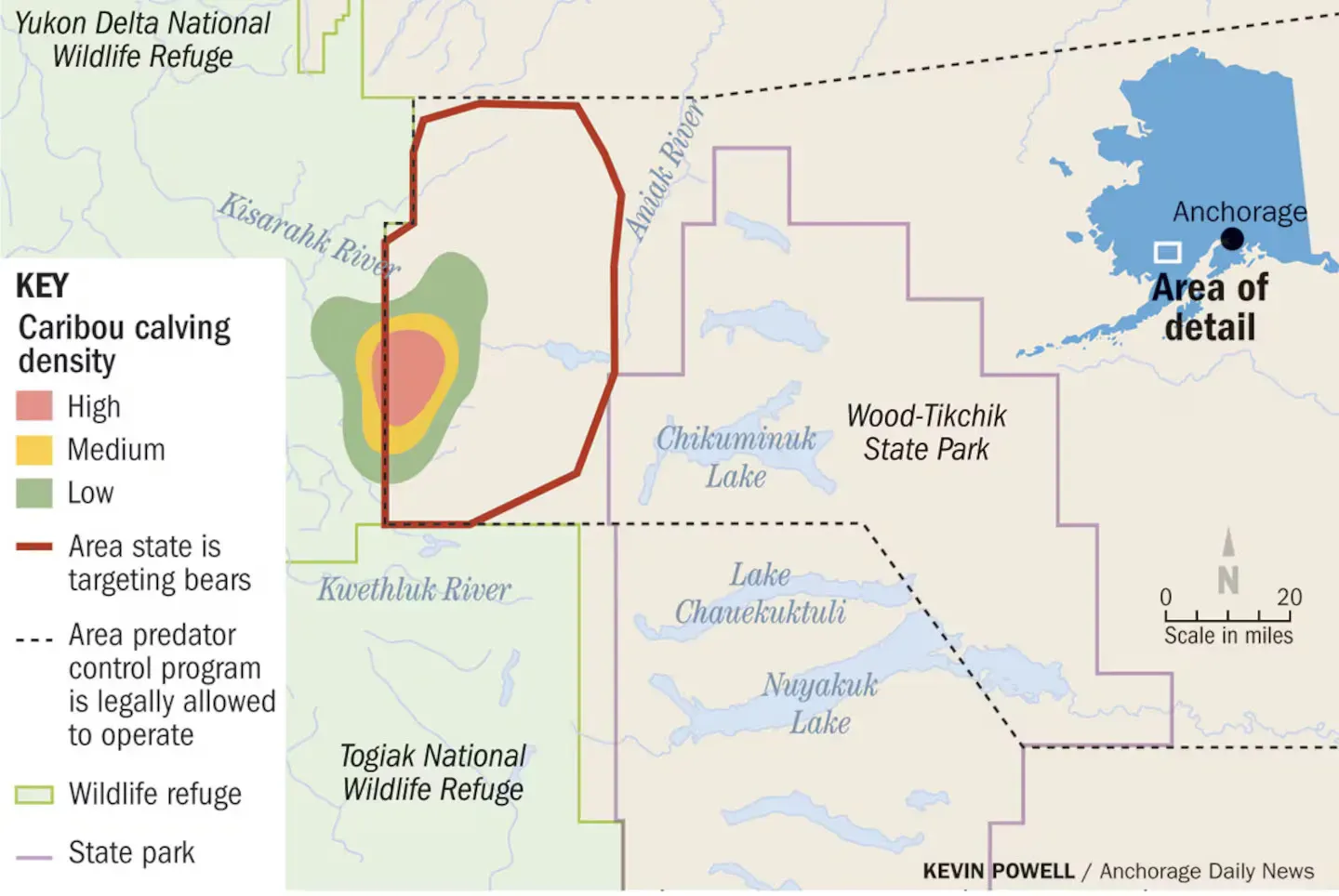
In the first year of the program, “a total of 104 predators were removed including 94 brown bears,” Rinaldi wrote, as well as five black bears and five wolves. The state made an effort to donate salvaged meat to nearby villages for food, but there was little interest in it as few people in the region eat brown bear.
According to a 2024 report on that year’s cull of 81 bears, “On average 4 brown bears, independent of age-class, were removed per day,” 18 of which were cubs. Without any interest in salvaged meat, it was simply left on carcasses in the field, according to the document.
Though the work of “skinning adult bears was very labor and time intensive,” according to the report, “hide removal averaged roughly one-half hour per bear using 2 staff.”
Depending on the condition, Alaska brown bear hides are a valuable commodity. After salvaging them from the culled bears, Fish and Game reported that its field teams transport them back to Bethel, where they are shipped to the road system for tanning and eventually resale at auction, with proceeds going to the department.
During the 2023, 2024 and 2025 seasons, the state spent $2.18 millionon intensive management efforts designed to help the Mulchatna caribou. Some of that money was for research efforts. But according to figures from the Division of Wildlife Conservation’s annual report to the Board of Game this February, the majority of the funds, $1.57 million, was for predator control, a sum that does not include either the thousands of hours of staff time spent engaged in the work or the half a million dollars the state has been ordered to pay after losing a lawsuit challenging the program’s legality.
Predator control is not new in Alaska. State legislators passed a law in 1994 that outlines its approved use as a tool to increase residents’ abilities to hunt ungulate prey species like caribou, moose and deer. For Vincent-Lang, the bear program around the Mulchatna herd is a fully legal interpretation of those statutes requiring the department to manage natural resources for public use.
“The constitution of the state basically says that it is the policy of the state to encourage the settlement of its land and its development of its resources by making them available for the maximum use consistent with public interest,” he said during an interview in his Anchorage office in May.
Hunts for Mulchatna caribou have been shut down since 2021, closing off most of the opportunities for families in dozens of Bristol Bay and Kuskokwim River communities to access a major subsistence food source.
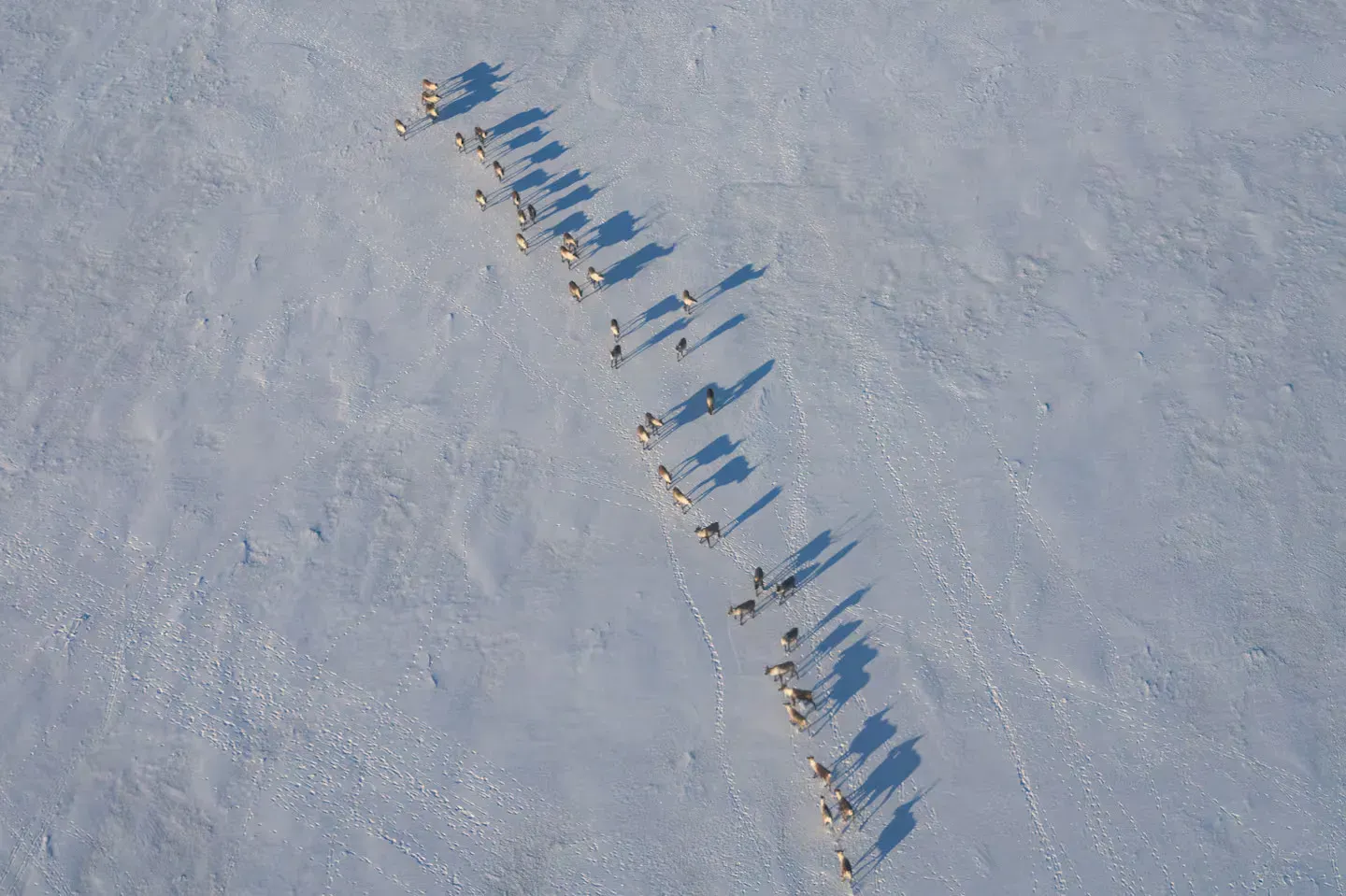
Vincent-Lang and others at the department point to recent data showing Mulchatna caribou population metrics moving in the right direction. Chiefly, they say, surveys of the herd show it is getting bigger, growing 30% from 2023 to 2025 up to an estimated 16,276 animals last fall.
A higher percentage of young caribou are maturing to the point of being able to have calves of their own, according to the state. Those measures show the herd nudging closer to managers’ target of 30,000 to 80,000 animals — which, if reached, could allow limited hunting to resume.
There is no shortage of residents from all over the country who have submitted hundreds and hundreds of pages of written testimony to the Alaska Board of Game calling the bear removal tactics unethical, unsportsmanlike and barbaric.
That is not a view shared by Vincent-Lang or the official position of the department he leads, which routinely dispatches all kinds of animals for all kinds of reasons with firearms.
“This is not hunting, this is not a sporting-type event. We’re doing predator control,” Vincent-Lang said. “The fact that it’s shot out of an airplane versus on the ground, I don’t consider it inhumane just because it’s out of an aircraft.”
“It’s not inhumane at all,” said Scott, his deputy, sitting across the table.
The program overall, Scottsaid, is not carried out “willy nilly,” but the result of serious analysis done in the interest of helping one wild animal population, albeit at the expense of another. Wildlife management inherently requires balancing competing needs, Scott said.
“It’s very surgical, frankly,” Scott said of the predator control program.
In June, evidence emerged that the program’s execution on the ground may not be as clinical as it is portrayed in state documents. Schmitt, with the Alaska Wildlife Alliance, chartered a helicopter in May to search the predator control area for kill sites, and in one day of flying found two bears, a cub and an adultboar, that had been left in the field with their hides still on.
The state confirmed the bears were likely killed during predator control work this spring, and said there had been a miscommunication between Fish and Game and its field teams regarding salvage protocols. The pelts were of poor value for either educational purposes or sale, Scott wrote in a response to questions about the alliance’s photographs.
Leaders at Fish and Game readily admit that predation is not the sole culprit that caused the Mulchatna herd to crash from a peak around 200,000 caribou in the late 1990s. That abnormally high population ate up much of its forage, and there was an outbreak of brucellosis, a bacterial disease, that wrought havoc on the herd. But the argument for predator control from Vincent-Lang and others is that natural recovery for the caribou is impossible with the existing pressure from wolves and bears that opportunistically target newborn caribou before they are big and strong enough to fend for themselves. If the state can lessen that pressure by keeping wolves and bears away from the calving grounds, they argue, it will give the Mulchatna caribou a chance of recovery to a stable, sustainable size.
“That’s the intent: to have a series of years to get a calf from day zero up through 36 months old,” Scott said. “You get to a certain point where your growth in a population, the number of calves coming up, outpaces the number of calves that are being killed by predation.”
Time is a factor in all this. The state has argued in court that any halt in the program could erase gains made over the last several years. And the head of Fish and Game is a political appointee, meaning that after this fall’s election, the next governor may take the department in a different direction, one that opts not to prioritize predator removal as a management strategy for sensitive stocks. Or, the next executive could choose to double down.
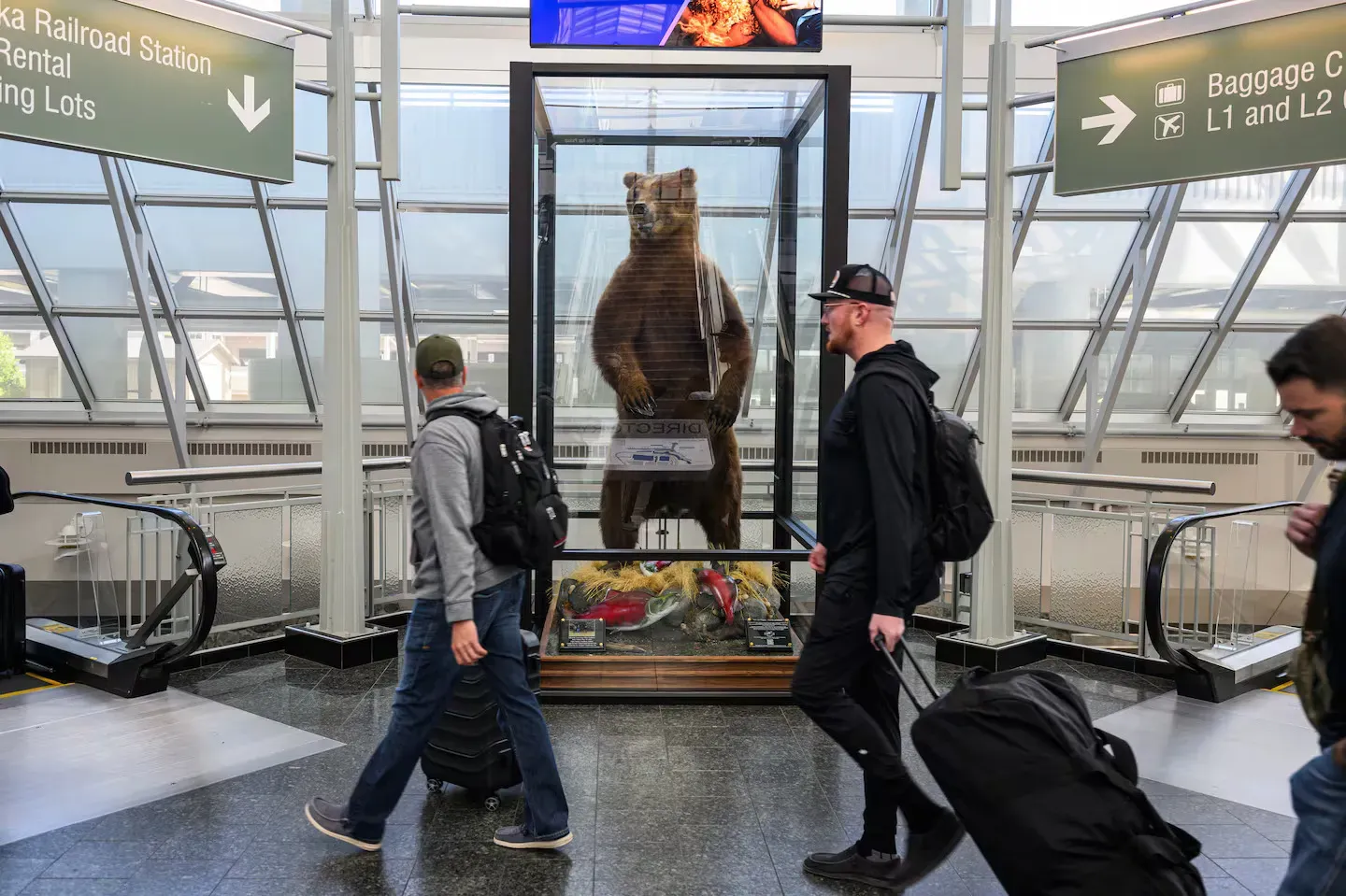
Gov. Mike Dunleavy, who appointed Vincent-Lang in 2018 at the start of his first term, is an avid hunter who has not shied away from touting hunts both rare and expensive. During his two terms, those have included a successful musk ox harvest on Nunivak Island, a guided brown bear trip on the Alaska Peninsula and African antelope on a Lower 48 ranch. Travelers heading to the baggage carousels at Ted Stevens International Airport in Anchorage pass a brown bear Dunleavy shot outside Cordova, which is mounted upright in a glass display case paid for by a hunting advocacy group. On an out-of-state trip, Dunleavy has even hunted from the air — which is illegal for hunters within Alaska — reporting in a financial disclosure he’d accepted a chartered helicopter flight to shoot pigs in Texas, which allows the practice.
“Food security has been a priority throughout my administration. If a caribou can end up on the dinner table of a family in Western Alaska or in the jaws of a 1,000-pound brown bear but not both, I’m choosing the Alaskan family. That’s why I support predator control,” Dunleavy wrote in an email this June.
War on predators
Many critics of the state’s bear cull program say its implementation has been profoundly unscientific.
“Politics was driving everything,” said Jeff Stetz, a bear expert who worked at Fish and Game from 2018 to 2024 as a research coordinator. “They made up their minds. … It was just ‘kill everything you can find.’ Especially that first year.”
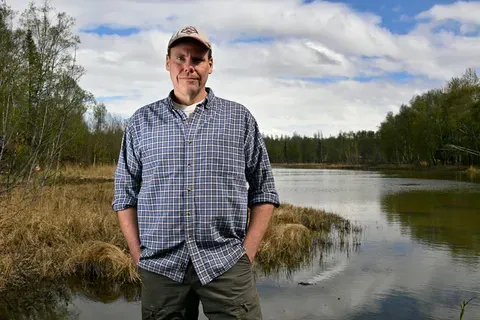
Stetz said leaders at Fish and Game pushed forward the predator control program despite concerted guidance against it from department staff, then retaliated against some of the personnel who’d publicly voiced opposition. Stetz said he was galled by the disregard for basic science in the department and Board of Game’s decision-making process. He kept his head down and wrapped up the research project he was doing on brown bears in Southcentral Alaska before leaving Fish and Game in 2024.
Bears are notoriously hard to find and study, which makes population estimates a difficult, expensive proposition for managers. Still, he said, the department didn’t try to figure out how many bears it should try removing from the region, only that it should kill them until the caribou numbers started improving.
“Personally, I’m scared that once this precedent has been firmly established, they will basically weaponize (it),” Stetz said of the current Mulchatna program and the modest herd recovery statistics the department points to as demonstrations of efficacy. “This is giving them that authority.”
The state does not have estimates on bear populations in most of the state, according to Scott with the Division of Wildlife Conservation, including how many black and brown bears live within the Municipality of Anchorage. An active lawsuit from the Alaska Wildlife Alliance and another group contends that by not producing a credible population assessment of bears in the Mulchatna range, the state has failed to do enough basic due diligence to legally embark on a predator removal program.
Stetz pointed out that when the department initially pushed a proposal to the Board of Game to expand predator control from just wolves to bears in the Mulchatna area, it thought it might kill 10 or 15 of the animals. But they found, and shot, far more: 99 in that first season, almost all of them brown bears.
“It really highlights that they knew nothing about the predator populations out there. It’s just egregious to be that far off,” Stetz said, adding that in the first year of the cull, little to no biological data was collected from the bears, which would have helped the state learn about the region’s bears. “In terms of not knowing anything about a population, I think this comes close to setting the lowest bar ever.”
Stetz said the state’s population targets for the Mulchatna herd are driven not by scientific analysis of what’s realistic and sustainable, but by how many animals managers hope to allow hunters to harvest.
Stetz said he’s bothered, too, by the state’s methods for removing any and all bears it finds in the control area, a roughly thousand-square-mile splotch equivalent in size to the state of Rhode Island.
“The idea of these cubs being chased around the tundra in a helicopter … no animal should have to deal with that,” Stetz said. “This is a war on predators, there’s no way around it.”
The criticism that the state of Alaska is engaged in a “war on predators,” specifically on brown bears, goes back further than the Mulchatna program. One of the authors of a 2017 paper in the journal Ursus was Sterling Miller, who managed and researched Alaska brown bears at Fish and Game for 20 years.
“What I’ve been documenting is the change in regulations that have been happening, which are all designed to decrease bear abundance in the hope that will increase moose and caribou harvest,” Miller said from his home in Montana, where he now lives and still studies bears.
Miller’s research documented the many ways that Alaska loosened its rules on hunting bears in the decades since statehood. Aerial gunning is a tactic more commonly used against wolves in Alaska, and coyotes across several western states Outside, but rarely bears. Prior to 2023, the state primarily reduced bear numbers by extending hunting seasons, increasing the number of animals people could take in a year and generally granting hunters more opportunities to target them.
The Mulchatna program is unprecedented in modern wildlife management, Miller said, in both its methods and the intensity with which it is removing a large number of bears from a relatively small area.
“This is the most extreme bear reduction effort that’s ever been conducted,” Miller said. “There’s nobody doing that anywhere in the world, except for Alaska.”
He said it would not be fair to call the effort an experiment, “because it’s not controlled.”
Alaska has the world’s highest number of wild brown bears outside of Russia, and the state maintains that the program will not permanently harm the health of Alaska’s overall bear population.
Miller attributed the ungulate declines to climate and habitat changes, and is doubtful the state’s efforts will do much of anything for caribou.
But the damage to bears, he thinks, could be profound, because they reproduce comparatively slowly. The population of brown bears in the Lower 48, he pointed out, has gradually grown from near-total eradication by the mid-1970s. But that revival has been extremely costly, and will only ever be partial because most of the bears’ former habitat is now crisscrossed with roads and development. Alaska is one of the few places left in the Northern Hemisphere where bears “can still exist in relatively natural conditions” because their ecosystems are still intact.
“I think that in Alaska, there’s a special responsibility not to repeat the errors of the past in the Lower 48,” Miller said.
‘It’s never ever worked’
For some proponents of the bear control program, there is no worry about a lack of bears in the region. In fact, despite the ongoing efforts, they say there are still far too many.
“On the Board of Game we’ve been getting testimony for years about the bear numbers going up and up,” said vice chair Stosh Hoffman, who’s been on the board since 2008.
All seven members are politically appointed to three-year terms.
Court rulings in 2025 effectively barred the state from carrying out its third season of bear gunning for technical violations of public process requirements, although not until Fish and Game staff had killed 11 bears in three days. Months later, the Board of Game approved a different version of the same rule on bears, which opened the door for officials to resume the program this season.
Hoffman, who lives in Bethel, said that when the Mulchatna herd was bigger, families from Kuskokwim River villages used it as a “go-to meat supply,” one he could reach in about 40 minutes by snowmachine.
The region has seen drastic declines in salmon, Hoffman said, affecting not just subsistence harvests but commercial opportunities that put cash in peoples’ pockets to get through the year. The bitter irony, he pointed out, is that much of Southwest Alaska has seen huge sockeye runs in recent years. Restrictions on fishing gear and limited openings designed to maximize the number of king and chum salmon reaching their spawning grounds have allowed large numbers of sockeye to likewise fill upriver creeks and drainages. And based on locals’ observations and traditional knowledge, Hoffman said, those sockeye surpluses are a feast for inland bears in the later part of summer and on into the fall.
It’s not only the main Board of Game that supported the expanded predator control efforts around the Mulchatna herd. Regional advisory councils have likewise passed measures in recent years voicing approval for the state effort. So have tribal entities, among them the Alaska Federation of Natives, which in 2023 passed a resolution in support that was put forward by the Association of Village Council Presidents on behalf of communities along the Yukon and Kuskokwim rivers.
According to Hoffman, most rural people living in the region favor the measure as a means of reviving the caribou herd, and because bears imperil people’s other subsistence foods, primarily moose and salmon. Opposition comes from people on “the other side of the mountain,” he said, meaning east of the Alaska Range, along the road system.
But critics of predator control broadly say its advocates overhype its efficacy.
“The state has yet to produce any sort of peer-reviewed study that shows that predator control works, be it on wolves or bears,” said Schmitt with the wildlife alliance. “There’s generally a little blip in the short term for a lot of these things, but in any medium or long term, it’s never ever worked.”

Schmitt and many others with backgrounds in biology and wildlife management have accused the state of cherry-picking instances where predator control achieved modest success reviving ungulate levels. But on balance, the successes are short-lived: Wolves or bears might be removed from a habitat, the prey population rises a bit, but then it reverts back to where things were before the intervention.
“No matter how we examined these data, we observed no evidence that any past predator harvest was positively correlated with subsequent moose harvest in (Game Management Unit) 13,” states a 2022 paper analyzing decades of wolf and bear culling in one part of Southcentral Alaska published in the peer-reviewed journal Diversity.
A separate academic analysis of the relationship between bear and moose in Alaska found that for predator control to work, it had to be “both intense and relatively frequent.” But there was “no factual basis” or empirical data that “a few years can result in long-term changes in ungulate population densities,” wrote authors of the 2003 paper in Alces.
In a recent opinion piece published by the Daily News, Anchorage attorney Michelle Bittner accused current Fish and Game staff of misrepresenting mortality data on Mulchatna caribou. In assessing the state’s own necropsy reports, Bittner, who is currently suing the state over the predator control program, concluded that malnutrition appears to be a far bigger threat to Mulchatna calves than predators.
Schmitt said the Alaska Wildlife Alliance is not inherently opposed to predator control as a management tool. But the state has become overly reliant on that tool, she said, and is using it in service of unrealistic animal population targets for the Mulchatna herd and others.
“I think we’re having a death grip on this historical goal that’s just not possible no matter how many bears you kill,” Schmitt said. “If I thought it would work, then there could be sort of a hard truth to that.”
Predator control critics also make a pragmatic argument against the policies: It costs a lot of money that might be better spent on other intensive management measures like habitat restoration.
Schmitt expects proponents of the intense aerial gunning program against bears to push for similar methods elsewhere in the state. If that happens, she said, it is unlikely to help faltering caribou herds or subsistence hunters.
Horns and Hides
The last stage of the Mulchatna bear control program is the auction block.
Each March during the Fur Rendezvous festivities in downtown Anchorage, the hides salvaged by Fish and Game during the bear cull are sold off to bidders.
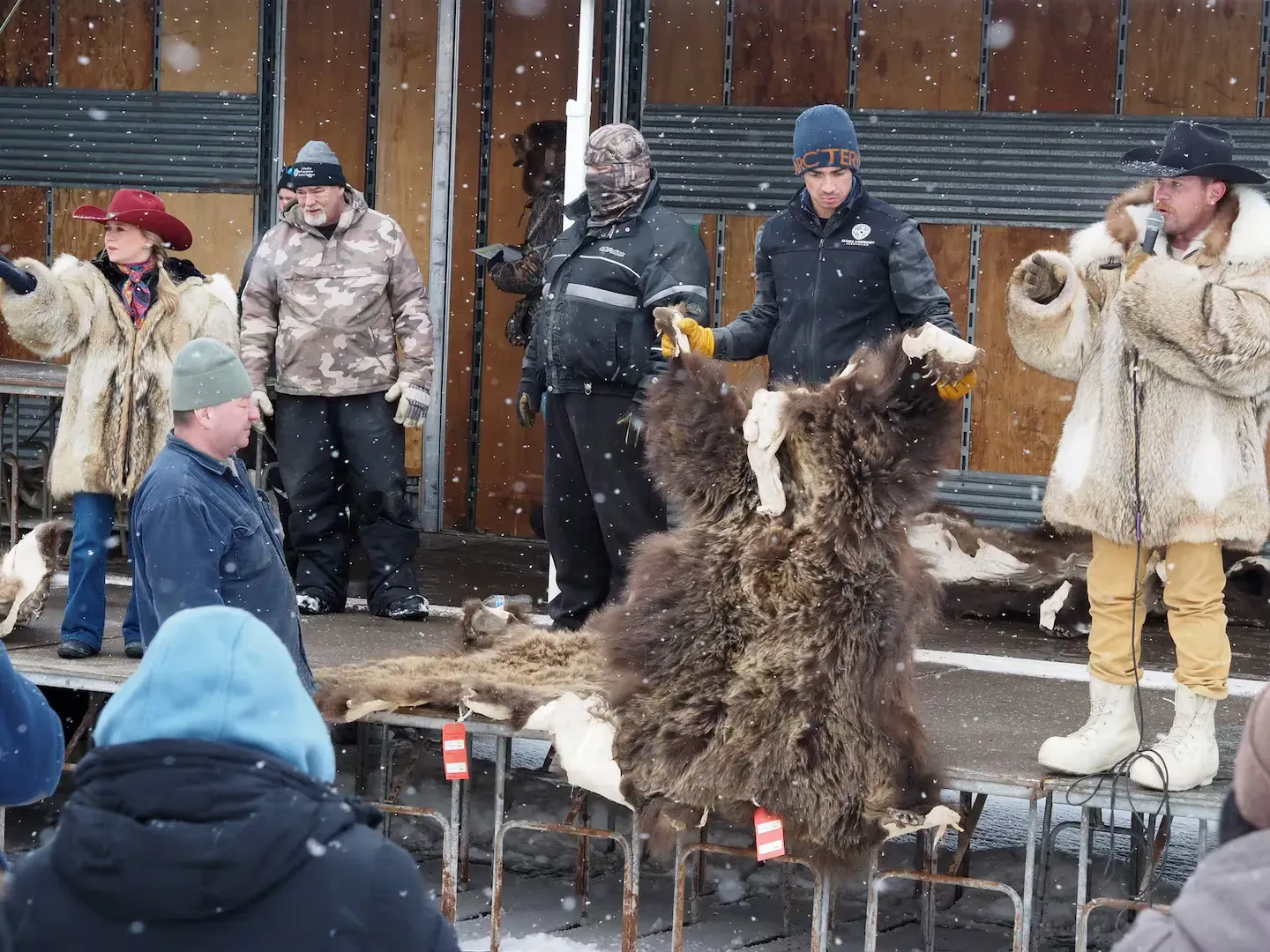
After being skinned, shipped and tanned, bear hides from the 2025 season were sold during an auction run by the South Central Chapter of the Alaska Fur Trappers Association.
“SCCATA FUR AUCTION: The wild spirit of Alaskans, our traditions live in fur,” read a banner above a stage fashioned from a tractor-trailer.
Eli Piper, an auctioneer from North Dakota wearing a heavy wolf fur jacket, bunny boots and cowboy hat, rattled through confiscated caribou and moose antlers as a crowd of about a hundred people milled about a snowy parking lot shaded by deserted carnival rides.
“Look at the paws and claws on ‘em,” Piper said before opening bidding on the bear hides, black ones first, then onto the browns.
The auction didn’t include information on various horns’ or hides’ provenance. Asked where items came from, two women working at a registration tent cheerfully replied, “No idea.”
In recent years, the number of brown bear pelts sold off by the Trappers Association during the Horn and Hide auction loosely tracks the number that are reported culled by the Department of Fish and Game.
This March, following the department’s arrested season where Fish and Game took 11 bears, 13 were brought to auction. The rough furs were stacked atop a blue tarp, emanating a faint musk. Most of the hides were small and cinnamon-blond, the more common color of bears emerging from hibernation in the springtime than the deep browns they take on by fall.
“That was a large and in-charge animal,” Piper said as Lot 142, a modest grizzly cape the color of caramel sauce, was carried on stage for exhibition.
“That’s a real blond,” Piper said, nudging up the price in between salvos of a bidding war.
Lot 142 sold for $650. A portion of the money will go back into state coffers for wildlife management programs.