Pulitzer Center Update July 15, 2026
Two Chicago Teacher Fellow Alumni Lead Pulitzer Center Workshops for Educators in Their Communities
Country:

In April 2025, the Pulitzer Center launched the inaugural Alumni-led Teacher Workshop program, inviting two seasoned educators and Teacher Fellow Alumni, Heather Renée Ingram and Catherine Yackee, to lead workshops for eighteen educators from their school communities on Chicago’s South Side. Focusing on one of the five focus areas that Pulitzer Center grantees cover, Heather and Catherine introduced Pulitzer Center reporting and curriculum to teachers, facilitated meaningful discussions about the challenges and opportunities they face engaging with news in their classrooms, and made connections between underreported news stories and each participant’s content area and instructional goals.
After leading workshops at their school sites, Catherine and Heather met with Pulitzer Center staff for a closing think tank where they shared takeaways from the experience, including suggestions for program improvement and ideas around the needs of their community.
As a result of both workshops, eighteen educators teaching in the Pullman and Ashburn neighborhoods of Chicago discovered free global news resources and explored curriculum designed for their student population by a Pulitzer Center Teacher Fellow.
“I didn't know the Pulitzer Center existed. Now, I know, and I would like to use it as a resource.”
-Educator Participant from Sarah E. Goode STEM Academy
English Teachers At Gwendolyn Brooks High Schools Explore Environment and Climate Change Stories
Catherine Yackee has been a Social Science educator in the Chicago Public Schools and currently teaches AP Psychology and AP Human Geography at Gwendolyn Brooks High School in Chicago. Catherine has participated in three fellowship programs at the Pulitzer Center. Catherine led this workshop for a group of 10 English Language arts educators at her school.
I am a Social Science Teacher with over 20 years in Chicago Public Schools. I decided to present the Critical Questions, Empowered Action Workshop to 10 members of our English Department. Approximately half of the staff have over 20 years of teaching experience, and the other half have less than ten years of classroom experience. They teach a varied curriculum which includes Basic English, Advanced Placement Classes, and Dual Credit Classes. They also offer classes like Latin American Studies, Film Studies, and African American Studies.
I explained the purpose of the Pulitzer Center and gave examples of work I have done in past fellowships. Most of them were not familiar with the Pulitzer Center and took some time to peruse the website. When reflecting on how they use news in the classroom, teachers shared:
“I use news specifically [about] African-American current events for my African-American studies class as a way to get kids engaged and kind of start the morning meeting as a jump-off discussion point. Kids get that news – sometimes they bring in things that they want to talk about, and that is a nice kind of community-building activity where kids can hash through their thoughts and opinions.”
“Human rights come up in Film Study class where we're talking about consent, power, agency, that sort of thing, which we know is a combination and all across our globe.”
Since most teachers use real-world examples in the classroom, I decided to focus on climate change as my topic, first by introducing aligned Pulitzer Center articles and then by introducing my own lesson plan about the impact of lead pipes on urban communities. The issue of climate and environment also connects to the Social Studies curriculum in the 9th and 10th grades, so I figured that we could all converse using the background knowledge from our various classes.
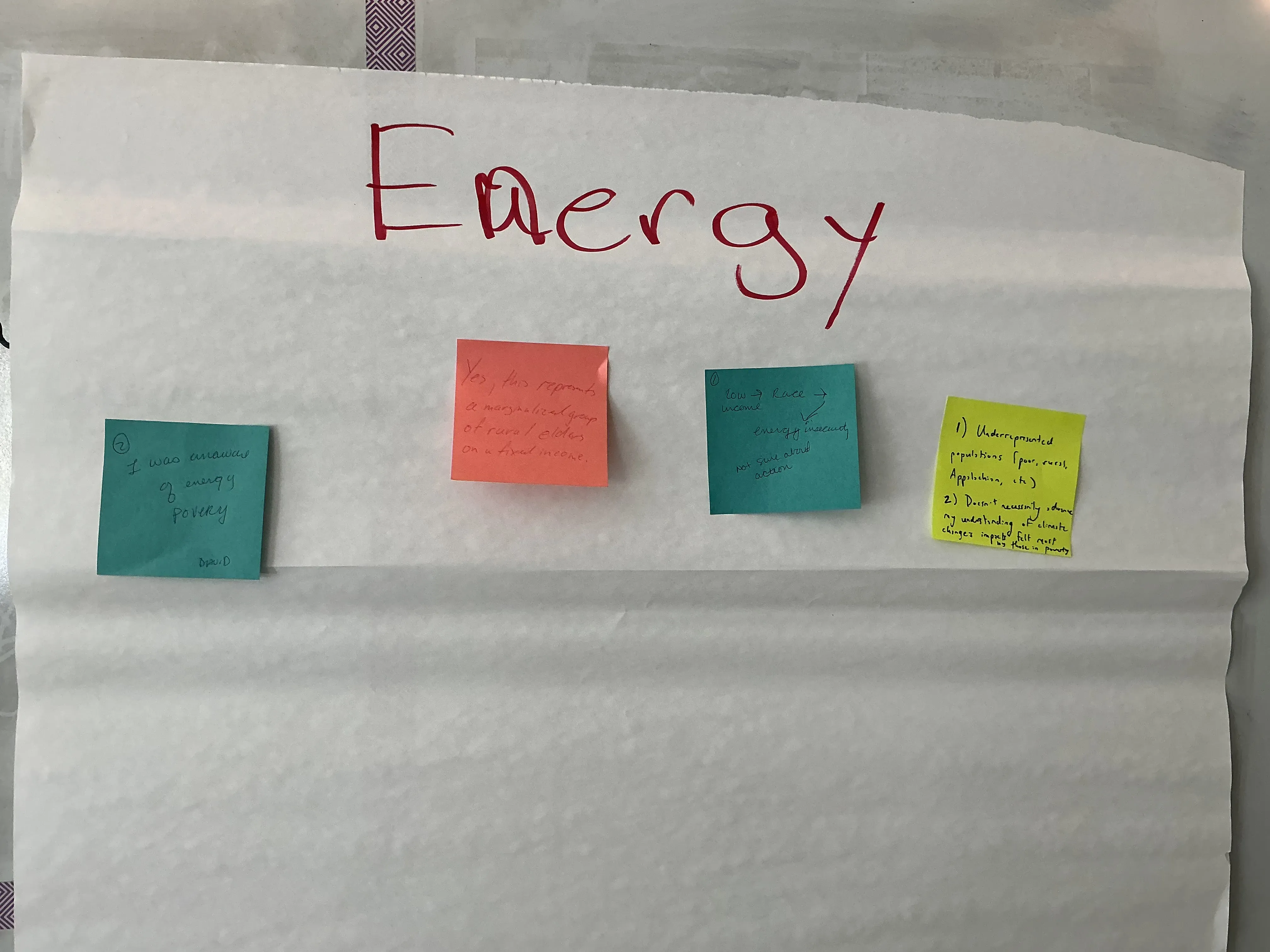
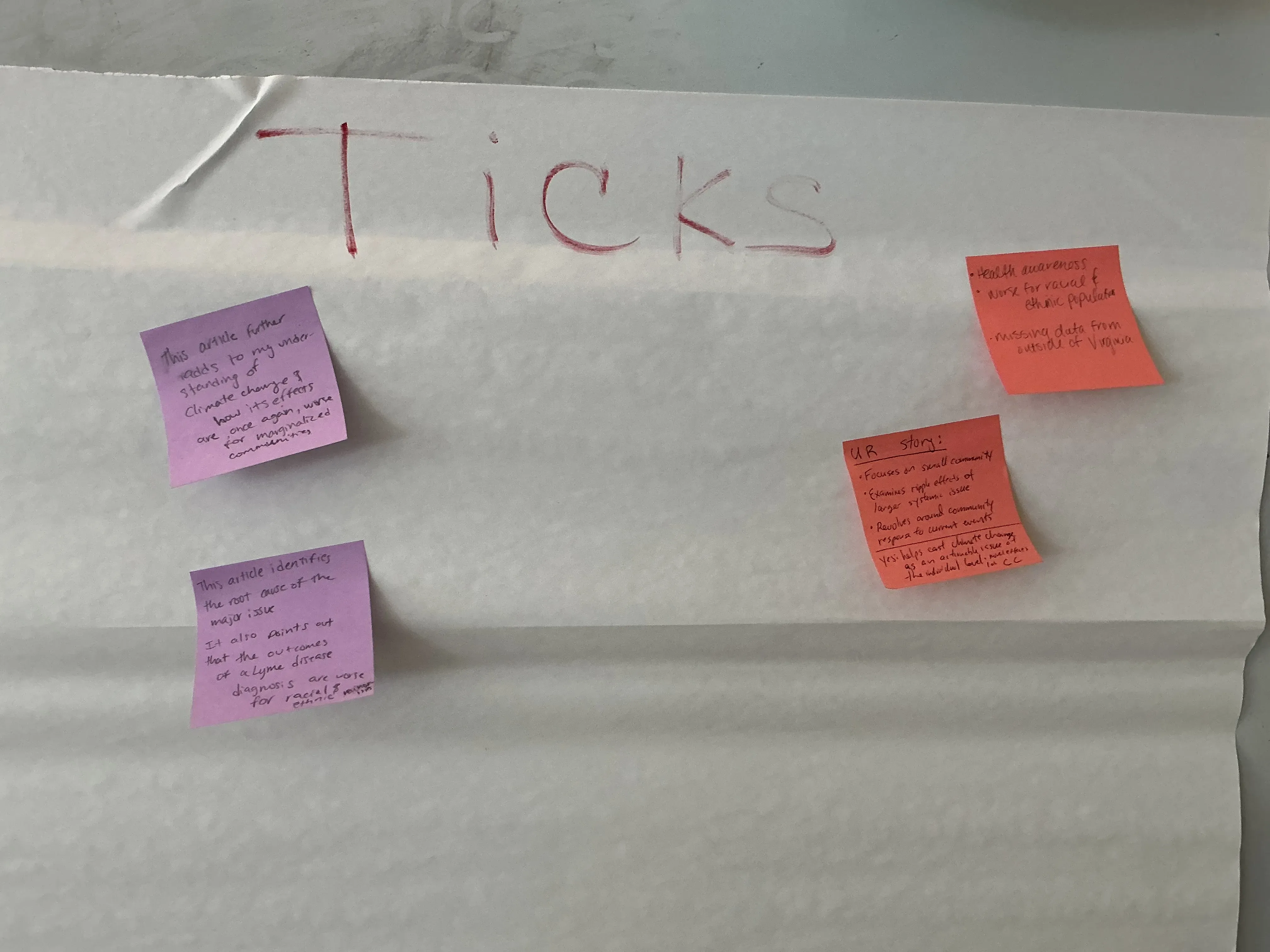
Teachers got to choose one of the following articles to read and analyze either of the following articles from the Pulitzer Center-supported project, A Warming World, a Rural Challenge in Southwestern Virginia for WVTF & RADIO IQ:
- “Ticks Are Thriving in Southwest Virginia. Here’s What That Means for Your Health,” by Katie L. Burke
- “Energy Scarcity and Extreme Heat in Appalachian Virginia,” by Katie L Burke, Melba Newsome, Michelle Young, and Jennifer Brady
When asked how the article impacts their understanding of a larger issue, participants said:
“I thought that [the Pulitzer Center news story we read] was a way to make climate change more accessible as a concept [in] literary stories that we’re [exploring in class]… along with how human behavior and climate change are leading to health problems.”
“[It helps in] being aware of how our actions influence the world in which we live and how that depends on our continuous connection.”
After reading the articles, I introduced the lesson plan I created during the 2025 Spring Pulitzer Center Teacher Fellowship for Teacher Fellow Alumni, “Using GIS to Track Lead Levels in Chicago.” In this lesson, students compared accounts of lead poisoning in Oakland, CA, to coverage of Chicago’s issues with lead. They conducted water tests and used data to develop a lead count map for Chicago. One participant shared that they were planning to teach the lesson plan this summer. Another teacher drew connections among A Raisin in the Sun, the impacts of the lead pipe issue in Chicago, and the experiences of young people in her classroom.
“A Raisin in the Sun explores how income disparity directly impacts poverty and underrepresented communities that are often forgotten. This is definitely like the air conditioning situation because we've had a couple of hot summers where you've had people in Chicago who have died as a result of not having it, so it is an issue here, too. All of the ideas can be brought back to the neighborhoods in Chicago, which is why young people want to leave their area. They are compressed in the small apartment, they don't have money, and they want to be in a house where they can have some of the amenities that would probably preserve Lena's life and allow them to get out of their low-income slump."
I had some takeaways from the experience. The workshop definitely provided my coworkers with some new materials that they were not aware of. My colleagues were very receptive and actively participated in the workshop, expressing their excitement about the materials. Several commented that they planned to go back and do a more exhaustive search, and I have already been approached about sharing past lessons from previous fellowships. When I surveyed participants about what they liked most about the workshop, they mentioned “the ease of access and the knowledgeability of the presenter” and “the relatable and current topics, as well as the service learning component developed by the teacher presenter.” When I surveyed them about how the workshop might inform the way they engage with news stories in their classrooms, they shared:
“I think that there are a ton of useful resources that would operate either as supplemental materials in support of analysis of a novel, or, if put together, could be a serviceable unit in and of themselves.”
“I teach African studies. I can see the [opportunity] to integrate reliable and current topics to show students trends over time that are relatable now.”
“Pulitzer [Center] materials offer a huge amount of content tie-ins. As an English teacher, text analysis is central to my curriculum.”
In reflection, I feel that this presentation would have been better suited to the beginning of the school year. At this point in time, teachers are wrapping up their classes, and even if they say they are interested, August 2026 is still a few months away. This material needs to be engaged with in a timely manner. Finally, I would like to present this workshop to a larger audience. At the end of the year, there is little to no professional development time.
Learn more about Catherine Yackee by reviewing her full biography. The lesson plan referenced in this blog, along with an additional lesson plan, “Using Cultural Diffusion to Support Vaccination Campaigns,” will be published by Fall 2026. Yackee’s full 2022 unit plan, “Hidden Voices: Injustice and Women's Empowerment in the Era of COVID,” is available.
Bridging Information Texts & Literature for Humanities Teachers at Sarah Goode STEM Academy
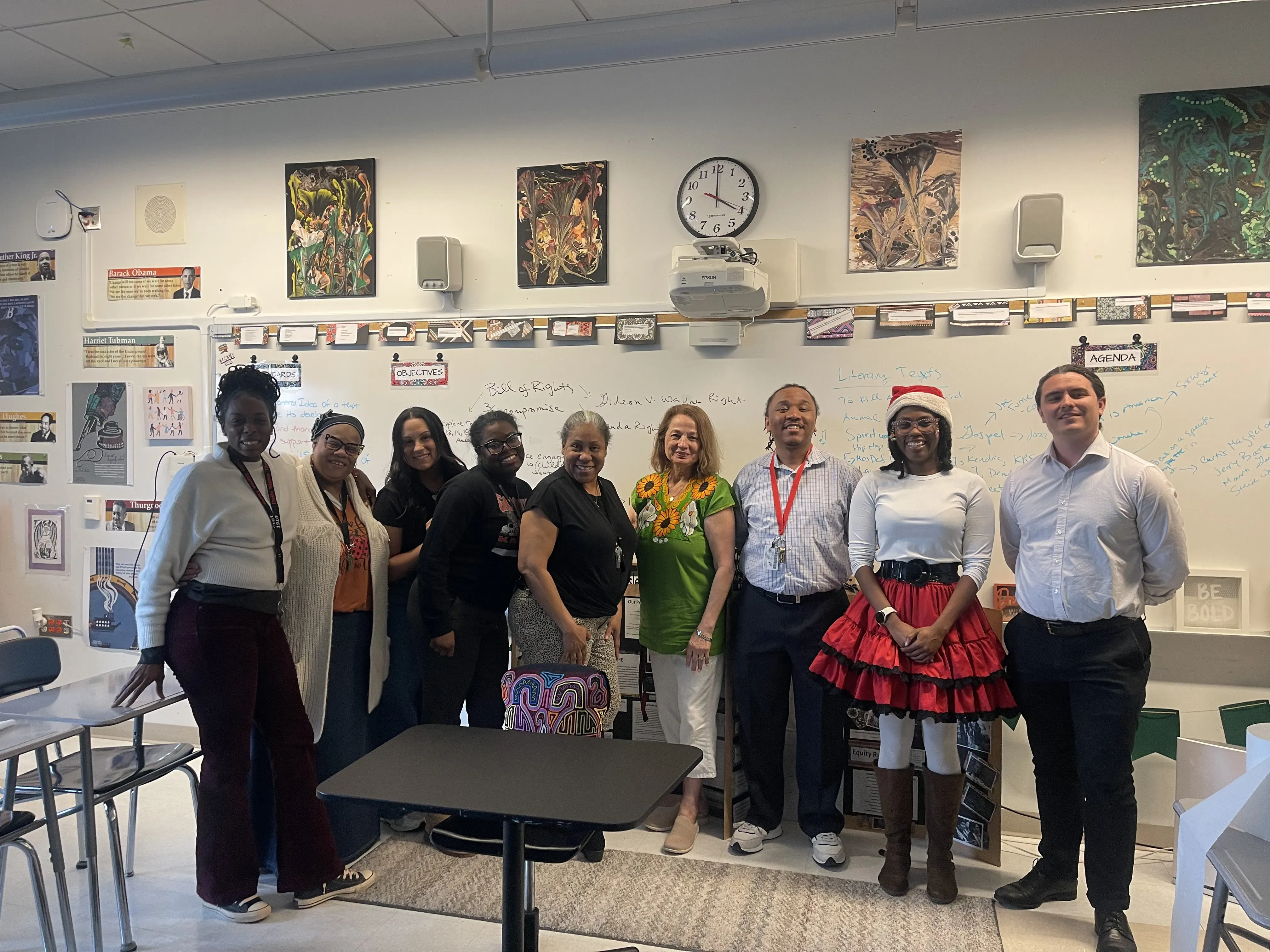
Heather Renée Ingram is an ELA educator at Sarah E. Goode STEM Academy in Chicago, Illinois. Heather has participated in three fellowship programs at the Pulitzer Center. She led this workshop for eight Humanities educators at her school.
My goal was to equip educators with actionable, student-centered, and ready-to-use strategies, backed by resources found at the Pulitzer Center. By bridging informational texts and literature in a collaborative workshop, we empowered colleagues to tackle cross-curricular planning.
Our educator collective serves a vibrant, primarily Black and brown Title I student population. Because our students represent varying socioeconomic backgrounds and learning levels (from honors to exceptional learners), our pedagogical needs are highly diverse. We need a professional development approach that acknowledges these realities while fostering critical thinking and civic engagement across all classrooms.
As humanities educators, we sit at the critical intersection where the literary meets the informational, and we want to seamlessly bridge the gap between English and Social Studies content. To achieve this, I leveraged this workshop to incorporate primary documents and literary texts alongside informational journalism published by the Pulitzer Center to encourage students’ analysis of underreported global and local issues.
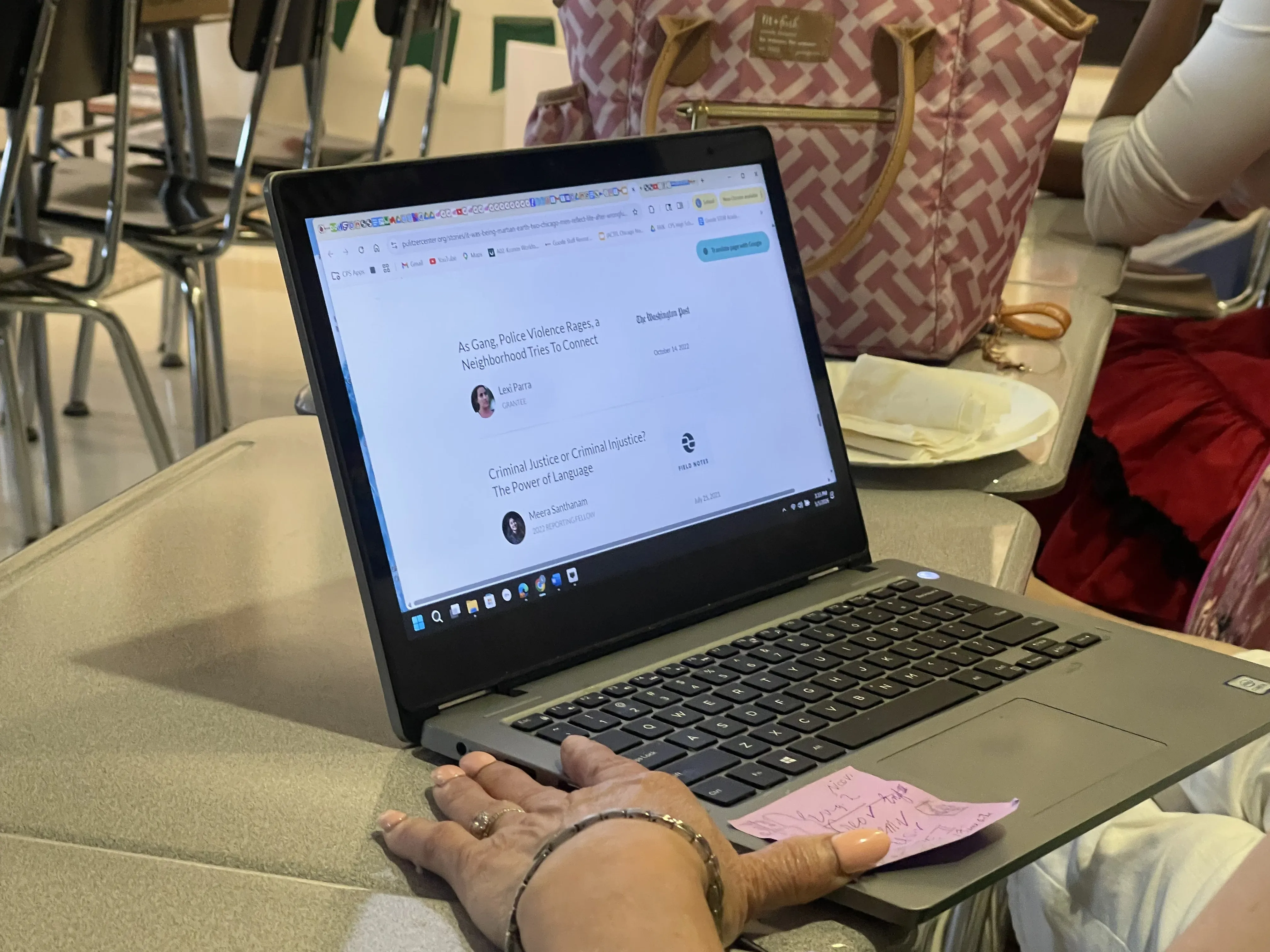
During the workshop, we unpacked Ashonti Ford’s “Exposing the False Confession Capital of the World.” Because of its local relevance and a broader connection to The Exoneration Project, we anchored Ford’s text to explore cross-curricular planning. I guided teachers through inquiry-based discussions, asking which primary sources, seminal documents, and contemporary media would be relevant. We examined a local story from the last decade, asking how it resonates today and connected that global narrative to our students' local realities.
The workshop was a resounding success and was heavily supported by the Pulitzer Center team through presentation templates and probing questions. Teachers were incredibly receptive, including a newer history teacher who used the session as a springboard to design an extensive collaborative unit. When asked what attendees liked most about the workshop, they shared:
“I liked the collaboration; it was very engaging to not only learn about the Pulitzer but about stories that could be used in tandem with the subjects I am currently teaching (History).”
“This was one of the most practical professional development workshops I have attended this year in my current school.”
When asked how attendees will inform the way you engage with news in your classroom, they shared:
“Not only will I be able to encourage students to check out the resources provided by Pulitzer, but I can also read the stories that I myself find interesting and deep dive to figure out how to incorporate the articles into current news lessons, practice with deciphering texts to glean their meaning, or how to stay informed about the world around them.”
“I really liked how we discussed engaging with news sources for the purpose of building up our students' skills as critical thinkers and global citizens.”
After the workshop, attendees shared articles they had explored with colleagues and students, sparking engaging conversations, and read more Pulitzer Center articles to prepare ways to use them in their classrooms for the upcoming school year.
My two main takeaways are simple but essential: always come highly prepared, and trust that your colleagues are eager to expand their practice.
Learn more about Heather Renée Ingram by reviewing her full biography. Heather is the author of two curricular resources, including “The Ties That Bind: Cross-Cultural Solidarity in Social Justice Movements” and “Banished but Unbowed: An American Legacy.” Ingram’s third curricular resource, “From Chavez to Chicago, with Love: A Letter Writing Lesson,” will be published by Fall 2026.
This program will launch again in the fall of 2026 for local Teacher Fellow Alumni. Applications for teachers interested in leading learning in their communities will be open by September 1, 2026.