Lesson Plan April 29, 2026
Seeing Through Someone Else’s Eyes: Understanding Mental Health Shows Up Differently For Everyone
Country:
Grades:

This lesson was created by Veronica Pitts, a Government and Economics teacher in Selma, Alabama, as part of the Fall 2024 Pulitzer Center Teacher Fellowship program. It is designed for facilitation across approximately two minute class periods.
For more lessons created by Pulitzer Center Teacher Fellows in this cohort, click here.
This lesson addresses the community's unique challenges by focusing on mental health awareness. Aiming to educate and empower students, it uses a jigsaw activity to explore diverse perspectives and connect mental health issues to students' lives.
Lesson Overview
This lesson helps students build awareness and empathy around mental health, helping them to understand various emotions and mental states in themselves and others. Since COVID-19, the rise in mental health challenges have highlighted the importance of students knowing it’s okay to face struggles and that support is available. By exploring mental health in a safe environment, they learn to recognize signs of struggle and ways to offer support. This fosters a more compassionate and connected school community.
The lesson goes beyond identifying emotions, encouraging students to feel seen and empowering them to seek help when needed. Themes like empathy, self-awareness, and support are directly relevant to their lives, helping them manage well-being and assist others. The pedagogical vision emphasizes collaborative, inquiry-based learning, inviting students to create social media posts on mental health. This approach blends practical mental health education with creative expression, helping students become advocates for mental well-being.
Essential Questions
- How can understanding mental health help us support ourselves and others?
Objectives
- Students will create an evidence based resource to help peers recognize signs that someone may be struggling, offering support strategies and raising awareness of available mental health resources to foster empathy.
Performance Task
The culminating activity is the creation of an infographic that highlights key information from each mental health resource. After collaborating in groups to synthesize the main points, students will design an infographic that is visually engaging and easy to understand, emphasizing critical elements like definitions, symptoms, warning signs, and ways to seek help. This infographic will not only serve as a classroom resource but will also be shared on a dedicated social media platform, making the information accessible beyond the classroom.
Assessment
Checklist for Infographic
- Does the graphic summarize key information from your assigned resource?
- Does it include definitions, symptoms, warning signs, and/or ways to seek help?
- Did you ensure all information is accurate and clearly represents the resource?
- Did you clearly cite the source of your information (title, author, or website as appropriate)?
- Did you use graphics, icons, and colors that enhance understanding and engagement?
- Is the layout optimized for sharing on social media (e.g., clear visuals, easy to read on a phone)?
Notes on Context & Content Advisory
This lesson contains references to suicide and emotional distress, which may be triggering for some individuals.
This content is essential as our school has seen a rise in mental health challenges since COVID-19. It’s crucial for students to know it’s okay to struggle and that resources are here to help.
Two-day lesson plan, including warm-ups, texts and video resources, discussion questions, and final performance task for the lesson. Download below to read the complete lesson plan.
Lesson Resources
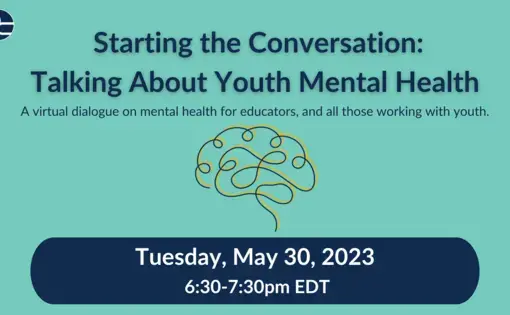
| Pulitzer Reporting | “D. Watkins and Nia Johnson: Not Just Surviving, but Thriving | Pulitzer Center” by Corey S. Powell “Young Palestinians Face a Steep Toll on Mental Health | Pulitzer Center” by Kern Hendricks “How Extreme Heat Impacts Your Brain and Mental Health | Pulitzer Center- this story could also demonstrate something out of students’ control that is impacting their mental health” by Aryn Baker “A Dad and His Teenager Are Talking Openly About Suicide. And They Say Your Family Should Too | Pulitzer Center” by Deepa Fernandes, Ashley Locke, Julia Corcoran, and Grace Griffin “Teacher Fellows Engage Over 1,500 Students in Projects Inspired by Global Health Reporting” by Sushmita Jaya Mukherjee and Fareed Mostoufi Webinar on Demand: “Starting the Conversation: Talking About Youth Mental Health” |
| Additional Media | YouTube: Growth Mindset vs. Fixed Mindset |
In this lesson, students used Pulitzer Center journalism to learn about mental health and why it is important, ultimately building a sense of empathy among classmates. Here are some student reflections from the lesson:
I didn’t realize how much stress can affect your physical health. It’s not just about emotions; it’s your whole body.
Student in Alabama classroom
A lot of what we read happens here in Selma, and it made me think about how we can help each other more.
Student in Alabama classroom
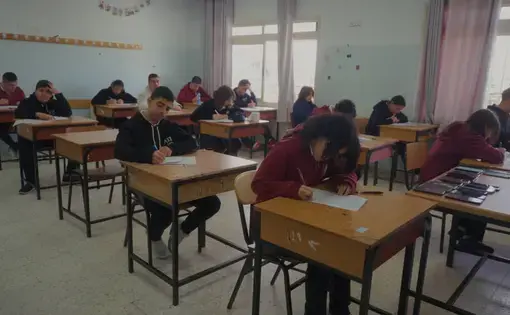
Students shared some of their reflections with their peers during a "Peace Week" promoting mental health and positive connection ahead of their school break.
REPORTING FEATURED IN THIS LESSON PLAN
-

Pulitzer Center Update
Teacher Fellows Engage Over 1,500 Students in Projects Inspired by Global Health Reporting
A total of 1,582 high school students from nine states engaged with over a dozen Center-supported...
April 8, 2025 -
Pulitzer Center Update
Young Palestinians Face a Steep Toll on Mental Health
In the West Bank, a Teen Mental Health Crisis “It just twisted something inside of me, like I felt...
July 19, 2024