


Project
Chicago's Baltic Bond
Two Chicago journalists explore democracy, defense, and the economy in Lithuania.
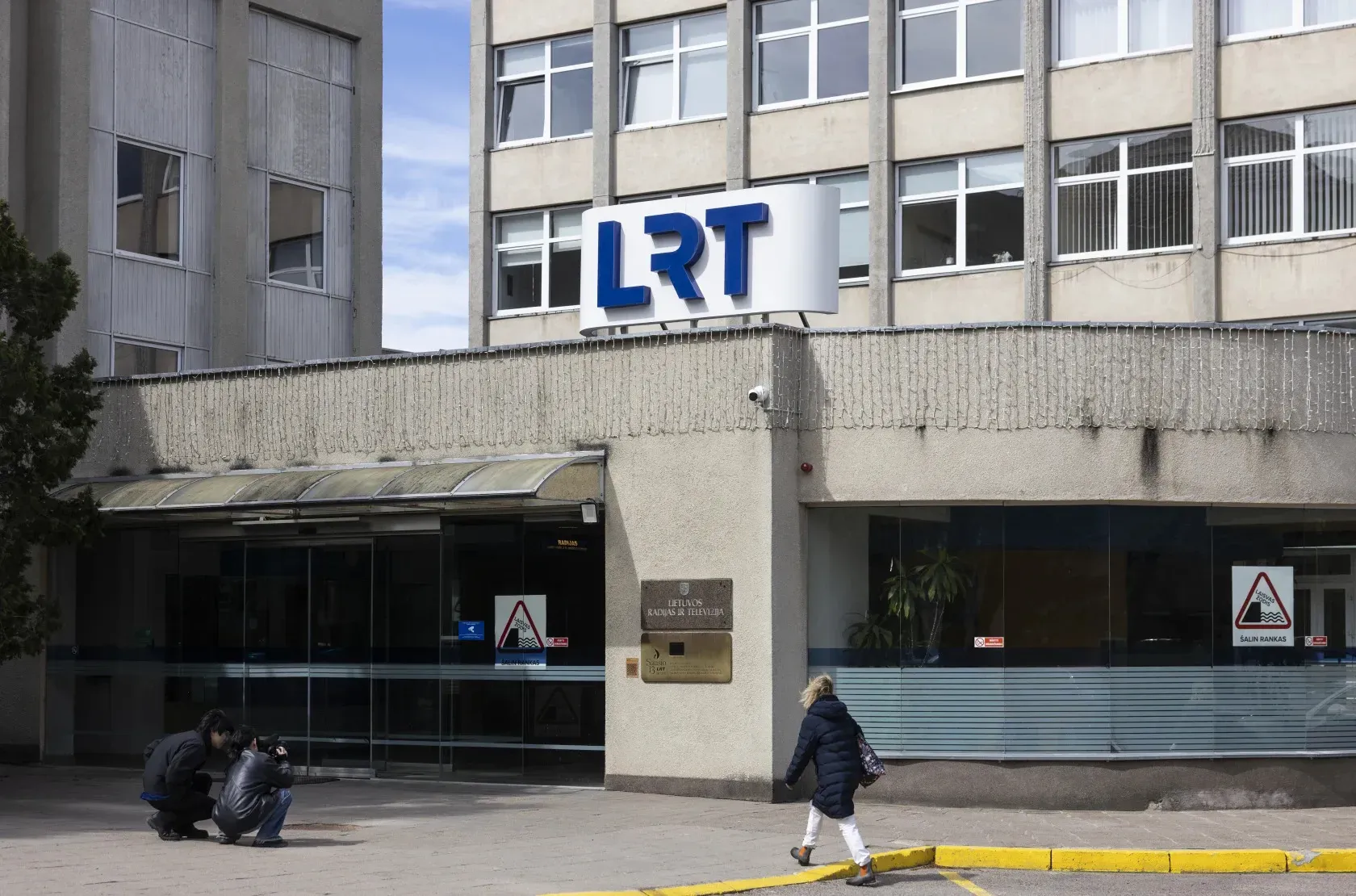
VILNIUS, Lithuania — On Jan. 13, 1991, Soviet troops stormed the building of Lithuania’s public broadcaster and pulled the plug during a live newscast.
A few minutes earlier, soldiers had begun shooting and driving tanks toward civilians who had gathered to defend the iconic 1,071-foot Vilnius TV Tower in another part of the capital. Fourteen people were killed and hundreds injured.
Archival video captured the moment, around 2 a.m., when Lithuanian Radio and Television anchor Eglė Bučelytė told viewers another group of soldiers had just breached their offices.

As a nonprofit journalism organization, we depend on your support to fund more than 170 reporting projects every year on critical global and local issues. Donate any amount today to become a Pulitzer Center Champion and receive exclusive benefits!
Soldiers streamed through the hallways.
“Dear people, this is the very last piece of information: The Lithuanian radio has stopped broadcasting, but television, as you can see, still is,” Bučelytė says.
But just as quickly, she’s gone; the broadcast shuts off.
Guoda Litvaitienė was a radio producer at LRT, assigned to work on programs for Lithuanians living abroad.

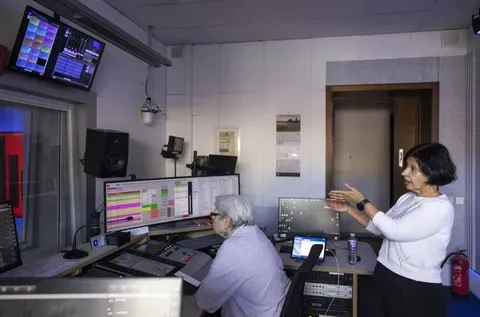
Litvaitienė, now 63 and editor-in-chief of LRT Radio, remembers the tense atmosphere that began two days earlier, when Soviet troops seized the National Defense Department building and the Press House, home to most of Lithuania’s newspapers and publishers.
Litvaitienė’s editor sent her and many other employees home, so she was glued to the same broadcast as everyone else in the country.
“It was horrible, and nobody knew what would be the ending — will they shoot or what? It was terrible,” she says.
The soldiers occupied the LRT building for more than seven months, beaming out Soviet propaganda.
But LRT’s journalists continued working from other locations. Within days, a makeshift TV studio and transmitter were set up at the barricaded parliament building in Vilnius, where legislators inside and citizens outside had managed to repel Soviet soldiers.
Litvaitienė’s public radio colleagues borrowed studios in Vilnius, offered by a library for blind people, and were able to continue broadcasting.
“Somehow [the public] knew where we were stationed, and they brought us cakes, some meals, flowers, money,” she says.
After the troops left, it took months to clean up their mess. Litvaitienė says employees found excrement inside destroyed audio equipment and archival tapes that were wrecked and lying on the floor.
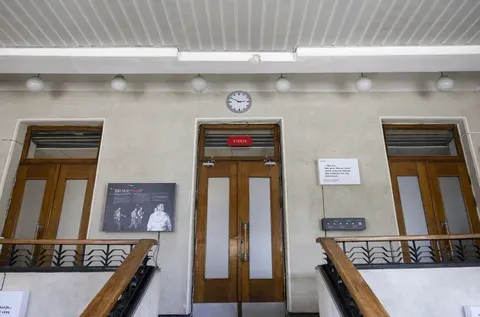
The equipment was replaced, but the bullet holes in the building were left as a reminder for future generations.
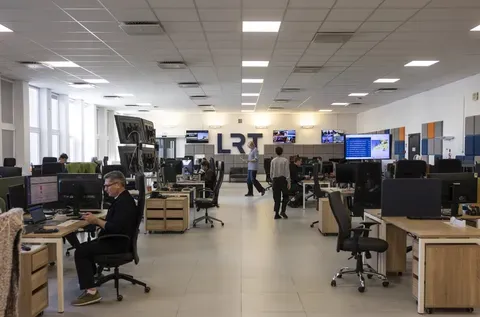
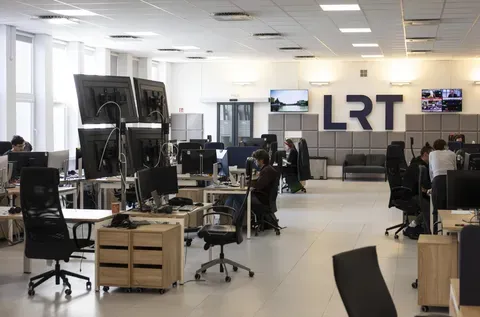
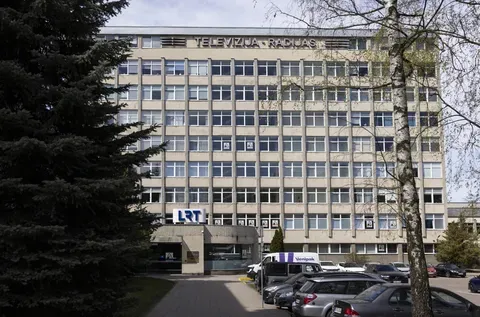
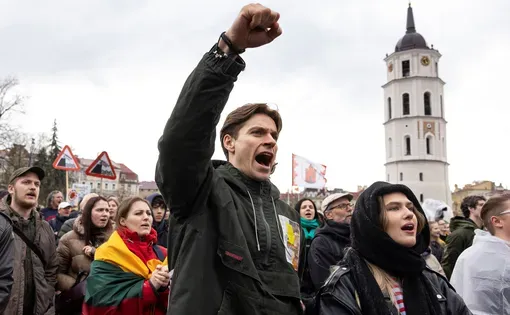
A new battle over the future of Lithuania’s public broadcaster started late last year, after a far-right populist party installed one of their own at the Ministry of Culture. Parliament members tried to push through legislation that would freeze funding for public broadcasting, making it easier to fire LRT’s director general and compromise the broadcaster’s editorial independence.
Tens of thousands of people protested, and more than 145,000 people signed a petition in support of LRT’s independence.
The culture minister resigned after one week and was replaced, and some of the most controversial legislative proposals were withdrawn. The populist party was kicked out of the ruling coalition government in June.
But supporters of press freedom remain concerned.