
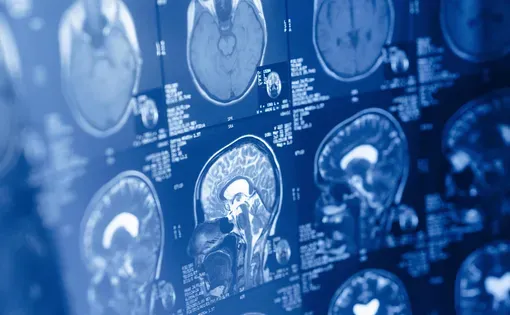
How weak regulation leaves brain data largely unprotected
Construction and mining companies are using fatigue-monitoring devices to improve safety. But critics say these technologies threaten workers’ privacy
At first glance, there’s nothing unusual about the construction workers’ garb. They wear fluorescent orange uniforms, sturdy shoes, and yellow hard hats. But hidden inside the helmets, made by Huanao Security (Beijing) Technology, are multiple sensors that keep tabs on the workers. Some record their movements. Others monitor their blood oxygen levels. And still more collect employees’ most private and sensitive information: their brain data.
Based on these recordings, Huanao Security’s algorithm generates metrics that help it determine everything from how tired or stressed a worker is to whether their body temperature is abnormal. The device is used at every stage of work, including for screening workers before their shifts and monitoring them on the job.
The helmets, branded as NeuroHua, have been used at dozens of high-risk construction sites in China, including on metro lines in Guangzhou, Chongqing, and Beijing, as well as in mines and steel and petrochemical plants across the country. Almost all workers on these projects wear them. With 2000 helmets now in use, the company and its clients have accumulated more than 300,000 hours of electroencephalography (EEG) brain data in total—a number that is “constantly increasing,” says Tang Zaixi, founder of the company.
As a nonprofit journalism organization, we depend on your support to fund more than 170 reporting projects every year on critical global and local issues. Donate any amount today to become a Pulitzer Center Champion and receive exclusive benefits!
Huanao Security says the helmets help ensure employees’ safety. If someone’s data suggest they are at high risk of an accident, the system issues an alert, prompting workers to take a break. “We believe that the safety of high-risk workers is a very important application scenario,” Zaixi says. The company says it has issued nearly 5000 safety reports and “prevented multiple major safety accidents.”
Neurotechnologies that monitor people’s tiredness are becoming increasingly common in hazardous occupations across China, which recently introduced a nationwide standard recognizing the use of such systems to investigate road traffic accidents. They’re also being used at major mining and construction sites in Latin America, Africa, Australia, and beyond.
But critics say these technologies could threaten privacy and be misused by authorities. Science has found that brain data collected by another Chinese company are being relayed to traffic police with no anonymization, for instance. And although some neuroscientists say the neural data gathered from these devices can be too unreliable to reveal much about users, others are concerned that with the help of artificial intelligence (AI), the systems might enable companies—and governments—to decipher some of the most intimate parts of our inner lives.
“I worry very much about freedom of thought or mental privacy and whether this sets up a mechanism for state neural surveillance,” says Nita Farahany, professor of law and philosophy at Duke University.
Schemes for monitoring fatigue to improve workplace safety are not new. Several companies around the world have developed systems that use cameras equipped with eye-tracking software to detect signs of fatigue. Fitted into vehicles such as long-haul trucks or mining equipment, they monitor how often the operator blinks, how long their eyes remain closed, and whether they are yawning.
EEG-based fatigue-monitoring devices take this idea one step further by focusing on electrical activity in the brain. The approach builds on EEG research showing brain waves occurring at certain frequencies, known as theta and alpha waves, tend to become stronger when someone is fatigued.
Turning these findings into a practical fatigue-monitoring device isn’t easy. Wearable EEG systems often use few electrodes and simple hardware, which can come at the cost of data quality. Signals can also be noisy, especially when people are moving. And workload, attention, and other mental states can influence the telltale theta and alpha waves, making fatigue difficult to isolate. Although some experts think the devices could reliably estimate fatigue, others are more cautious. “I am somewhat skeptical as to whether EEG is a suitable objective … indicator for a fatigue-monitoring system,” says Lars Göran Kecklund, professor of psychology at Stockholm University.
Nevertheless, Huanao Security says its system can detect “high-risk” states in workers with more than 95% accuracy. Like other firms, the company does not disclose exactly how its algorithms work. But such systems generally draw on multiple types of data besides brain waves, including heart rate, head inclination, and eye tracking.
Project
An AI Risk to Mental Health?


Similar systems are being used in transport. In 2018, the South China Morning Post broke the news that another company, Shanghai Diyi Technology, also known as Deayea, was testing fatigue-monitoring headsets on train drivers. Science has learned that a Deayea subsidiary has now launched a new initiative in China’s northern province of Shanxi, this time with truck drivers.
In 2024, according to the company’s press releases and local coverage, 890 trucks had been fitted with its technology. Drivers wear gray visor caps containing electrodes that record their brain activity. An AI system scores the driver’s tiredness on a scale from zero to 100, and if this score falls below a certain threshold, a camera begins to record the driver and the company is alerted and can contact the driver to check in.
Fatigue monitoring could soon be rolled out nationally. In June, China’s Ministry of Public Security implemented a new standard that, for the first time, formally recognized EEG as one method for assessing driver fatigue. Deayea helped draft the standard, and the company’s legal representative has publicly stated the long-term goal is to build a system they can “promote and replicate across the country.”
“Where we have 20th century solutions to some of these things, China comes up with 21st century solutions,” says Rogier Creemers, a lecturer in modern Chinese studies at Leiden University.
Fatigue-monitoring devices have gained traction in China in part because they are classed as a “brain-computer interface” (BCI), an industry the country has been trying to foster. Cultural factors also play a role. In China, “safety is viewed as a fundamental public good, a source of national pride,” says Mirko Farina, professor of philosophy of technology and AI in the School of Philosophy and Social Development at Huaqiao University. It often trumps civil liberties, as the ubiquitous surveillance cameras in Chinese cities testify. Their presence, Farina says, “is not merely an imposed top-down policy; it is actively demanded and welcomed by the public.” China’s main data privacy law does not mention brain data, but allows companies to gather sensitive personal information provided there is consent, a specific purpose, and strict security measures.
Because current fatigue-monitoring systems generally only collect surface-level brain activity using a small number of sensors, they are “unlikely to enable genuine mind reading or constitute an infringement of mental privacy,” says Haidan Chen, associate professor of medical ethics and law at Peking University. But that could change as neurotechnology companies integrate AI into their systems, allowing for ever-more-sophisticated decoding of brain signals.
Collecting other physiological measurements alongside brain data increases the privacy threat, says Robert McCombe, principal policy adviser with the United Kingdom’s Information Commissioner’s Office. As more data are gathered, “what was previously thought to be low-value data becomes far more valuable.” With enough information, employers could potentially decode sensitive information about a person’s mental health, for example, and make discriminatory decisions, says UNESCO’s Lidia Brito, who was formerly assistant director-general for natural sciences. This is a particular concern when companies process not just the fatigue signal, but also the raw EEG data, as Huanao Security and its clients do, because this could theoretically reveal much more about a user.
In a statement, Huanao Security said it signs commercial and data protection agreements with its clients to ensure data from its system can only be used for safety-monitoring purposes. Employees must give consent to data collection, which only occurs during working hours. Clients store data on their own servers and “establish their own standards for risk warnings, according to their needs,” Huanao Security writes; the company itself does not store unprocessed EEG data, but—with a client’s consent—uses anonymized data sets for research and development. Because these data contain no identifying information, it is not possible to link them to any specific individual.
Both the company and its clients comply with all Chinese laws and regulations, including those related to the protection of personal information and workers’ rights, Huanao Security adds.
Yet experts worry about the human rights implications of such devices in an authoritarian regime like China. “I think this is part of a systematic surveillance strategy, and collecting EEG has this goal,” says José Muñoz, director of the International Neurotechnology Governance Observatory.
Deayea, for example, gives local traffic police real-time access to the brain wave data from truck drivers, alongside live video footage from the cameras and identifiers such as a driver’s full name, worker ID, location, and company. Police are already using this information to impose penalties on distracted drivers, and in theory they could use it to investigate and punish fatigued drivers involved in accidents. And Huanao Security is a contractor for a BCI lab tied to China’s Ministry of Emergency Management, although Zaixi says the company does not share brain data with any department and only provides “advice and technical support.”
Still, companies might not be able to resist if the government requested their data in the name of security, says Emile Dirks, senior research associate with the Citizen Lab, a research unit at the University of Toronto.
Huanao Security says it is “an independent legal entity and is not subordinate to any official institution.” The company denied it would be obliged to share data, which, it added, would not be possible because it only holds deidentified data.
Deayea did not respond to repeated requests for comment.
China is not the only country experimenting with the technology. In 2021, Wenco International Mining Systems, a Canadian mining company, acquired SmartCap, a technology that detects fatigue levels in workers operating heavy machinery. The cap collects EEG data from five sensors positioned on the front of the head and has been used at major mining and construction projects around the world—from gold mines in Ghana and Mexico to coal mines in Australia. As of 2021, the company had about 5000 users globally.
The technology allows employers to “make real-time decisions of who should go on break and then who should do what type of work,” says Emily Tetzlaff, principal scientist with Wenco. Supervisors, health and safety teams, and others with access to the system receive fatigue scores every 3 seconds, alongside workers’ IDs, allowing them to locate and contact dangerously fatigued employees directly.
Wenco has not published details of its SmartCap in a peer-reviewed journal, but the company shared three independent assessments with Science. In one, conducted by researchers from Monash University and Austin Health Institute for Breathing and Sleep in 2011, 21 participants completed attention tasks in the lab after being restricted to 4 hours of sleep. The SmartCap correctly identified periods of severe sleepiness about 95% of the time. Another study conducted by researchers at the University of Chile showed the SmartCap and a clinical-grade EEG headset produced broadly similar signals in volunteers, some of whom had slept no more than 4 hours.
The studies suggest SmartCap is a plausible method for detecting fatigue, says Christer Ahlström, senior researcher at the Swedish National Road and Transport Research Institute. But he points out several limitations, including missing data and a partial analysis of the findings. “Overall, the results support the approach, but they do not actually establish the accuracy and robustness of the system, especially when used in the field.” Wenco declined to comment on these concerns.
The only information that leaves the device is the user’s score, Tetzlaff says, not the underlying brain data. Only the bare minimum data are collected, informed consent is obtained, and there is a real and tangible purpose to using the device. “This implements all of the ways in which data privacy should be done,” Farahany says.
Tetzlaff says about 85% of fatigue alerts come from just 5% of the workforce—workers the company has described as “high alarm frequency” individuals. That alarms some observers. “This is profiling essentially,” says Tom West, program director and legal officer at Privacy International, a U.K.-based charity and human rights organization.
Tetzlaff acknowledges that companies could misuse the data—for example, by firing workers who are repeatedly flagged as tired—but says Wenco ensures there is “no punitive use case of this data.” She says the company encourages clients to help workers access support, including counseling programs or sleep clinics, rather than punish them.
In Australia, one union says SmartCaps created a culture of mistrust between workers and employers. “The experience was overwhelmingly negative,” says Robin Williams, district president of the Mining and Energy Union. Workers fought back by gaming the system. Around 2012, at two large coal mines run by Rio Tinto in New South Wales, the company noticed a handful of workers appeared to be perpetually fatigued. It turned out that by staring at a spot on their machinery’s dashboard for long enough, they could make their brain waves appear to indicate fatigue. Supervisors would see the alert and give the employees a break. The systems “just weren’t foolproof,” Williams says.
Wenco declined to comment on this alleged incident.
Despite the concerns, fatigue-monitoring systems continue to proliferate worldwide. In March, Wenco showcased its SmartCap device at a conference in Germany that brought together academics, industry, and government. And in China, Huanao Security says it hopes the number of its helmets in use will rise fivefold by the end of this year, to 10,000.
Zaixi says for clients the calculus is simple: “It’s about saving lives.”