Story
 May 29, 2026
The US Cut Billions in Health Aid for Africa; We Went There To See the Impact
Country:

How South Africa and Lesotho are navigating a critical transition in U.S. global health policy
The closure of USAID shook the world, especially the USAID-dependent NGOs scrambling to close abruptly and figure out their future after the Trump administration shut down the federal agency committed to humanitarian aid.
Some of that funding came from a program known as PEPFAR, which stands for the "U.S. President's Emergency Plan for AIDS Relief." Starting in 2003, USAID and the Centers for Disease Control and Prevention deployed taxpayer dollars to help treat, prevent, and study HIV and AIDS in countries around the world.
"It was very traumatic. What happened and how it happened was really traumatic. We got the notice on a Sunday evening that we had to close our services the next day," said Dawie Nel.
As a nonprofit journalism organization, we depend on your support to fund more than 170 reporting projects every year on critical global and local issues. Donate any amount today to become a Pulitzer Center Champion and receive exclusive benefits!
Nel is the Executive Director for OUT LGBT Well-Being, an organization that provides HIV/AIDS healthcare services including treatment and testing to high-risk groups throughout cities in South Africa. He vividly remembers the 2025 notice he received informing him of the pause on his USAID-funded program and the agency's eventual closure.
"So overnight we had to deal with a lot of stuff — like how to ensure ongoing treatment for clients, internal issues in terms of your staffing, closing down, messaging to the broader public," said Nel in an interview in Pretoria, South Africa.
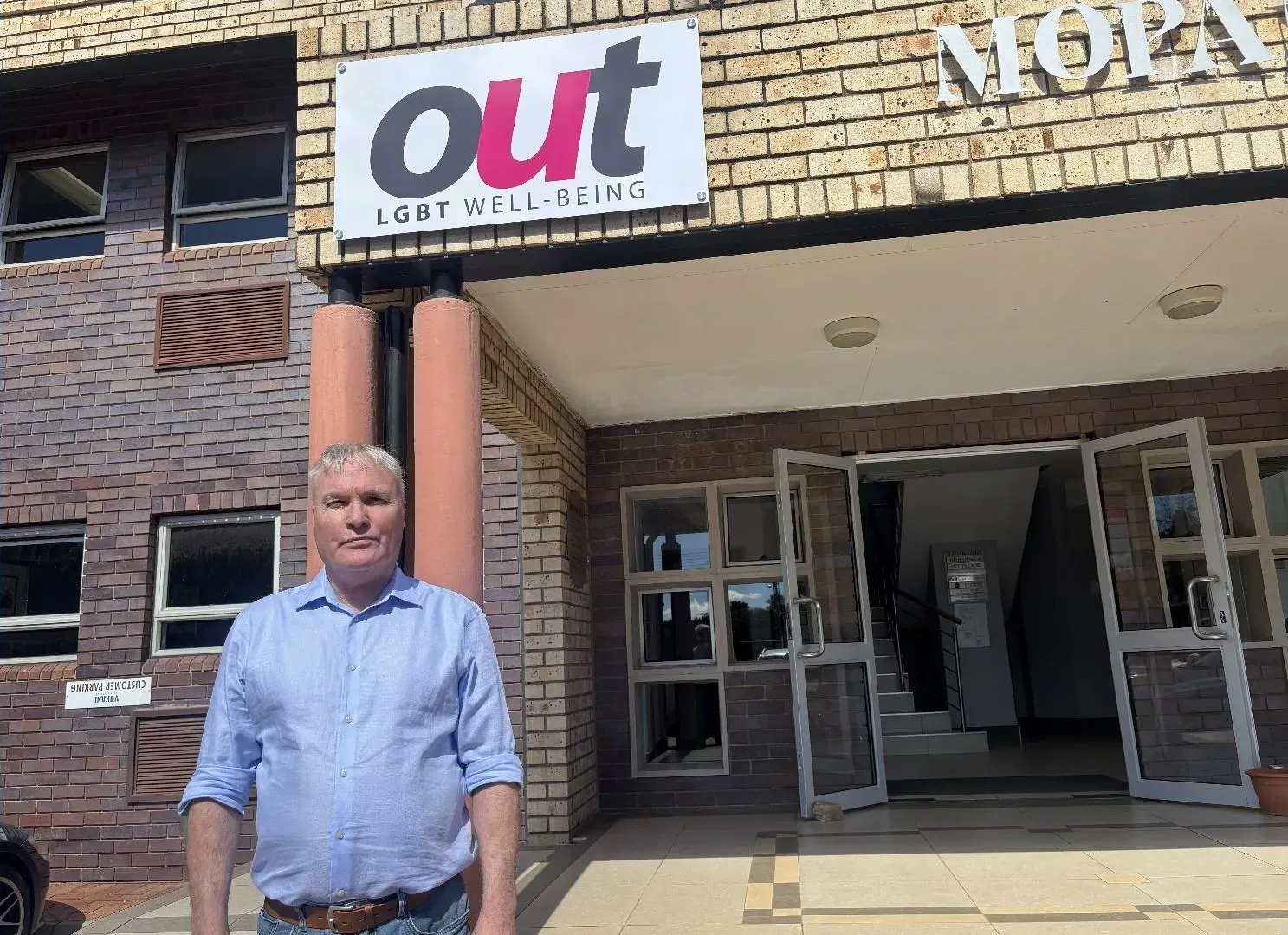
Nel said OUT LGBT Well-Being received roughly $2.5 million in PEPFAR funds administered by USAID, helping more than 1,600 patients get life-saving HIV medication.
"It's not that this was totally unforeseen, but that it happened in such an abrupt way," explained Nel.
In an X post from 2025, Secretary of State Marco Rubio addressed the USAID contract cuts. He said the 5,200 canceled contracts "spent tens of billions of dollars in ways that did not serve (and in some cases even harmed) the core national interests of the United States."
The administration has provided limited examples to corroborate the claims. Yet the contract cancellations caused chaos within health programs, provided patients with few answers, and set back gains to control HIV/AIDS.
Health experts warn that infectious diseases in any part of the world impact Americans by contributing to supply chain disruptions, possible disease exposure, and economic impacts as well.
Nel said since USAID funding was canceled, some of the 1,400 clients he was treating are now missing.
"At this point in the game, we know 200 of them are totally lost and 400 are linked back into government. It gets even bleaker," he said.
Health experts say patients diagnosed with HIV/AIDS require routine visits to check medication adherence and more. If patients fail to take their medication regularly, the virus could rebound and potentially contribute to new infections.
"I thought this is the end for us, especially for those of us who are positive," said "Brian," who asked we not use his real name out of fear of possible discrimination.
Brian told WUSA9 he has seen a drop off in clients returning to the clinic since the USAID cuts were made last year and knows of others who have stopped taking their medication altogether.
"They told me, 'What is the use of going there if there is no funding?'" Brian recounted in his conversation with former clients of OUT LGBT Well-Being. "But I did tell them, there is no longer any funding — that doesn't mean there is no longer any medication."
In late 2025, some of the countries that had received PEPFAR funds began announcing new Memorandums of Understanding, or MOUs, with the U.S. State Department. These new five-year agreements provided PEPFAR funds in exchange for new concessions like specimen collection, data sharing, access to sensitive information, and there are allegations the State Department, for some countries, attempted to add mineral rights provisions to agreements as well.
Rare earth minerals like cobalt, lithium, and copper are vital to U.S. companies looking to produce new AI-powered technology. Many of the minerals needed to do that at scale are present throughout various countries on the continent of Africa.
Officials in Zambia came forward alleging the U.S. government wants rights to its minerals in exchange for PEPFAR funding. In a statement, Zambia's Foreign Affairs minister called the proposed provision "unacceptable."
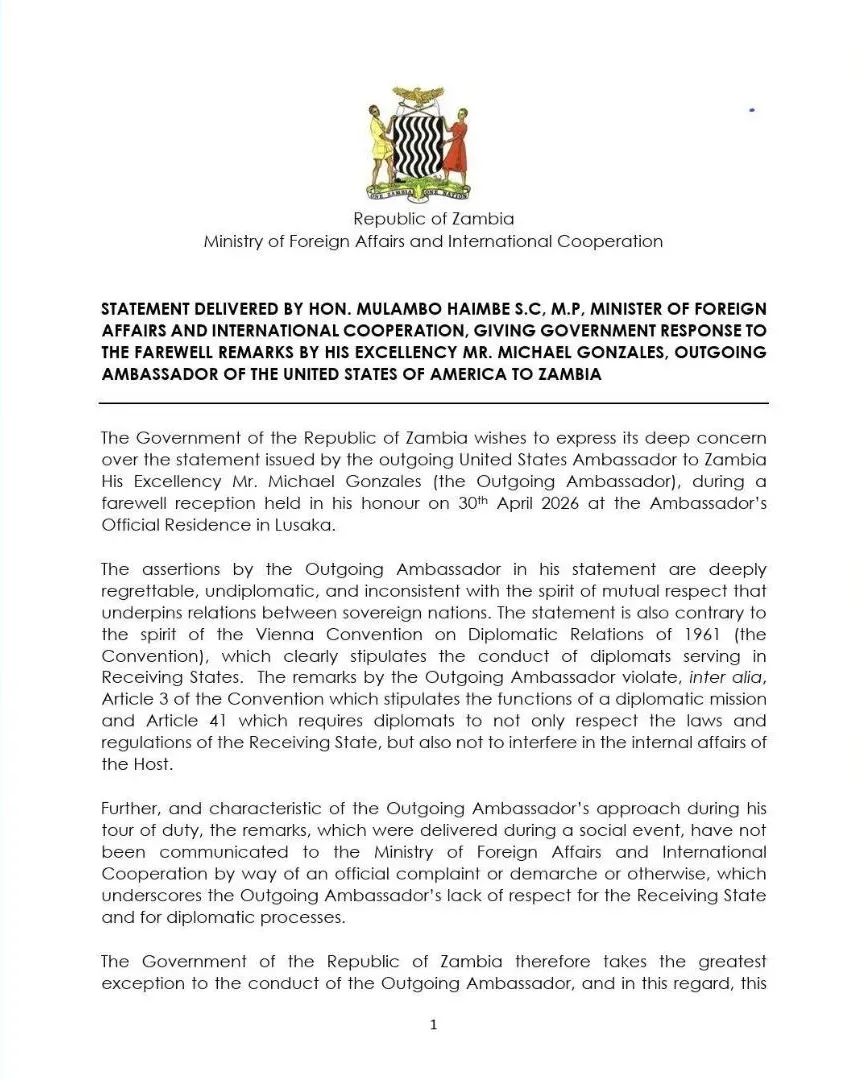
He said, "Zambia must have a say in how her critical minerals are used."
WUSA9 asked the State Department about the alleged "mineral rights" provisions. Officials declined an on-camera interview, but did respond to written questions.
"There are no critical mineral provisions in any of the America First Global Health MOUs, and no plans to 'sunset' PEPFAR," a spokesperson said in a statement. "We have prioritized continuity of care through bridge funding for PEPFAR and remain committed to responsible stewardship of the program."
But while Zambia rejected its proposed MOU, South Africa hasn't made much progress in its talks with the U.S. PEPFAR funds administered by USAID funneled more than $200 million into its HIV/AIDS response. Although a bridge program provided $115 million after USAID contracts were canceled, that deal expired last month. And sources tell WUSA9 that PEPFAR funds for NGOs are on a month-to-month basis that could end this summer unless a deal is finalized.
The uncertainty is contributing to new problems. Dr. Linda-Gail Bekker is a leading HIV scientist and clinician. She's also the CEO of the Desmond Tutu Health Foundation.
"What PEPFAR was providing was the nice-to-have but really quite critical," said Dr. Bekker. "It was only one-fifth of our program, but that one-fifth was providing counselors in the clinics, tracers to find people who had disengaged from treatment."
Bekker and her team are in the process of rolling out a twice-yearly injectable HIV prevention drug called Lenacapavir. The drug, in testing, has been shown to prevent new cases of HIV among high-risk groups, according to Dr. Tedros Adhanom Ghebreyesus, World Health Organization Director-General.
"In the Western Cape, where I am now trying to implement the Lenacapavir rollout, we don't have counselors in the clinics that would do choice counseling, who are doing the HIV testing."
South Africa has 8.5 million people living with HIV — the highest in the world. And without PEPFAR funds, it could complicate efforts to stop infections and control the virus once and for all.
Chapter 2: Abandon patients or find another way?
In a white four-door van with the Aurum Institute logo affixed to one side, the Aurum Institute's ProTB team navigates steep, unpredictable road conditions in South Africa's Sarah Baartman Province. The four-person team went house to house testing and treating people for tuberculosis, or TB.
"We are going to administer TBT in a community setting," said Refilwe Mototo, ProTB Program Manager. "Usually, TBT is administered in a clinic, but because of the congestion, sometimes patients don't want to come."
In addition to administering treatment for TB, the mobile healthcare team also conducts HIV testing.
"So here I have my equipment," said Lunga Sithunda, a nurse with Aurum's ProTB team. "I have medication. As you can see, there's a different regimen for the children—INH. This one is also an INH."
He pulled out another box from his collection of supplies.
"I also have an HIV test here for those that don't know their HIV status," he showed.
The World Health Organization lists South Africa, along with 29 other countries, as "high burden" for TB, HIV-related TB, and drug-resistant TB.
Tuberculosis is a serious infectious disease that usually spreads from an infected person by coughing or sneezing. It is curable, but if left untreated, it can be deadly.
In 2023, the South African government found more than 270,000 people in the country were diagnosed with tuberculosis. It is a leading cause of death in the country.
Experts say tuberculosis is prevalent in South Africa and some surrounding countries because of poverty, crowded living conditions, and HIV infection.
One family counseled by the ProTB team in Sarah Baartman included a heterosexual couple, both of whom were positive for HIV. The male partner also tested positive for TB. The female partner was negative, and to ensure she remains that way, she was monitored, weighed, and given preventative medication because of her close contact with her infected husband.
"They are going to make sure she stays on TBT until she finishes," said Mototo, referring to tuberculosis preventative treatment, or TBT.
In 2023, USAID awarded the Aurum Institute a $47 million grant over four years to research, track, treat, and prevent TB in seven provinces in South Africa—referred to as high-burden areas because of the prevalence of TB cases. But their work came to an abrupt halt in 2025, a short time after President Trump was sworn into office.
"As soon as the termination happened, for us, apart from being completely shattered and heartbroken about the work we were producing, we had to pick ourselves up quickly and figure out what do we do next," explained Dr. Priashni Subrayen, Aurum's Technical Director for TB.
The Trump administration canceled 83% of USAID contracts. Secretary of State Marco Rubio alleged in an X post in 2025 that the agency, known for its humanitarian work around the world, "spent tens of billions of dollars in ways that did not serve (and in some cases even harmed) the core national interests of the United States."
Dr. Subrayen said Aurum's "Accelerate One" program used their USAID funds appropriately and said there was regular oversight from officials with USAID.
"USAID was very strict about how to use your funding, how they monitor you, how regularly they come and visit you so that they can see you doing the work," she said.
The administration has what it calls an "America First Global Health Strategy." According to a spokesperson with the State Department, the strategy allows for "clearer strategic direction, stronger accountability, greater recipient-country ownership, and a sharper focus on results."
The USAID funding cut meant Aurum was forced to lay off workers directing the "Accelerate One" program and temporarily abandoned its efforts to fight TB. It left thousands untreated and without monitoring for months.
But thanks to an anonymous $1 million donation, the program was able to restart its work in February 2026.
"We're not serving within facilities like the Department of Health—we're really going to the people who don't go to facilities," explained Dr. Subrayen.
Instead of serving seven provinces as they did with "Accelerate One," they can now only afford to serve two. And some of the TB staff that were laid off were able to be rehired. With limited funding, staff look for cost savings wherever they can. They collaborate with other organizations and the South African Department of Health when possible. And of the three mobile X-ray vans the organization has, they only operate two to save on personnel and fuel costs.
While with the ProTB team in Soweto, WUSA 9's Larry Miller spoke with a man who traveled to get examined after sustained chest congestion. This discomfort forced him to sleep on his side in order to alleviate some of the pain, he said.
"I am very happy for this," said the male patient by way of a translator.
Going into the congested communities, staff with the ProTB team were able to meet a variety of clients in need of services.
"We identified a lot of cases and we're able to put them on medication," said Mototo. "But we still need more resources to make sure the spread is kept."
The cancellation of their USAID funds may have delayed but did not deny their work and their efforts to control and eradicate TB. And Aurum, like so many other organizations, is moving forward with a new reality where USAID no longer exists and U.S. support is limited.
"What that has clearly taught us: if you only have this amount of funds, and it's limited, how do you maximize every single dollar or cent to make this project last as much?" said Dr. Subrayen.
The future of Aurum's ProTB funding isn't clear, though they remain hopeful either an extension or additional funding will ensure their community-based TB program continues uninterrupted.
Chapter 3: The 'DREAM' is over
A short trip from Johannesburg, South Africa, to Botswana's capital city of Gaborone puts you in the middle of mostly flat terrain with the occasional large hill. The people are friendly yet reserved.
It was important to visit Botswana to understand how USAID contract cuts affect one of its most well-known NGOs, Stepping Stones International.
"We use a holistic program where we engage the young people themselves," said Beauty Mogasha, Program Director for Stepping Stones International, when asked to describe the work of the organization that supports children and young adults. "We work on ensuring that we empower them with life skills, psychosocial support, and support them with their education."
The campus of Stepping Stones International was buzzing during our visit. Secured by fences, the campus has an array of colorful buildings, some of which include artwork that shows smiling faces, like those on its campus.
"They come with a lot of traumatic challenges that impede them from being empowered," said Mogasha. "We find most of the children have suicidal ideation, have a lot of anger, are dealing with grief that has never been addressed before, so they don't know exactly what to do."
But like so many other non-governmental organizations, Stepping Stones International lost millions of dollars when its contract with USAID was canceled without notice last year.
In a 2025 tweet, Secretary of State Marco Rubio said 83 percent of USAID contracts were canceled because they "spent tens of billions of dollars in ways that did not serve (and in some cases even harmed) the core national interests of the United States."
Mogasha says they were two years into a $7 million contract. The remaining $4 million was eliminated without notice.
"We were implementing a PEPFAR-USAID project in eight sites," said Mogasha when she received a stop work order on all PEPFAR-funded programs. "We were also doing community HIV testing and providing support for people living with HIV and also providing HIV prevention services to the people that are HIV negative."
All eight sites sponsored by PEPFAR funds were closed. Hundreds of staff were laid off.
Another one of Stepping Stones' programs cut as a result of the USAID funding loss was its DREAMS Program, which stands for "Determined, Resilient, Empowered, AIDS-Free, Mentored, and Safe." Primarily for adolescent girls and young women, the program provided health education, psychosocial support, and financial literacy to prevent HIV infection.
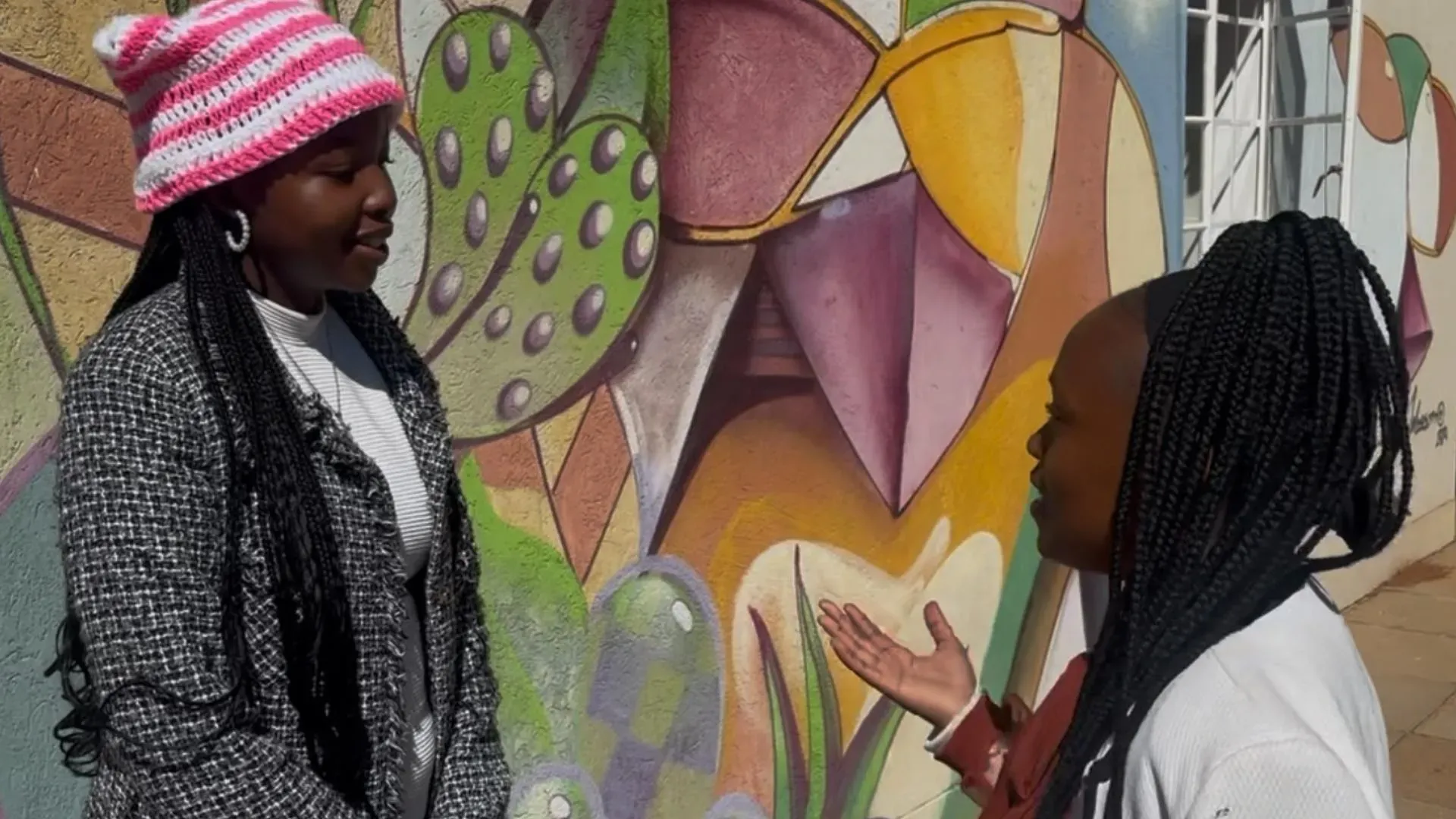
Up to 87% of all new HIV infections in Botswana occur among girls between the ages of 15 to 19, according to the Centers for Disease Control and Prevention.
"Since they've stopped, there have been quite a lot of cases of teen pregnancy," a former student in the DREAMS Program told WUSA 9. "They used to assist us with contraceptives, but now they don't do that anymore."
Data from 2024 show 15.7% of adults in Botswana are HIV positive. The World Health Organization lists Botswana among a group of other "high burden" countries for its prevalence of HIV, but progress has been made. The country was credited with decreasing mother-to-child HIV transmissions to below 2% and exceeding its "95-95-95" targets set by the United Nations—metrics that track the number of people who know their HIV status, receive sustained antiretroviral therapy, and are virally suppressed. Botswana surpassed those targets in 2022.
But the fear now is that without funds, progress could be reversed.
"We just need to see how we could do this," said Kennedy Mupeli, Executive Director of the Centre for Youth Hope, a Botswanan NGO that cares for young people living with HIV and AIDS. "It's difficult to gain these strides like Botswana did. It will be very painful if we slide back."
Botswana signed a three-year, $487 million Memorandum of Understanding with the U.S. State Department, according to a statement. The agreement outlines that $106 million will be provided by the U.S. and $381 million will be spent by the Government of Botswana on its own healthcare system.
The agreement, however, doesn't restore some of the funds lost during the USAID contract cancellation in early 2025. The State Department says the signed MOU works to "sustain progress beyond Botswana's HIV targets."
"The U.S. has been quite generous giving funding to countries," explained Dr. Jennifer Kates, Senior Vice President and Director of the Global Health and Policy Program at KFF. "What's being asked of countries—should there be some kind of co-investment requirement—which, frankly, is done by many other global health institutions."
The 2003 PEPFAR program is credited with saving the lives of 26 million people and staving off a crisis on the continent of Africa. More than two decades later, questions remain about how long the U.S. is expected to maintain its worldwide investment in PEPFAR.
"I think that's a good question. Should the U.S. do this in perpetuity?" said Kates.
Newly released PEPFAR data by the State Department shows what experts say are some warning signs since the USAID funding cancellations, including declines in global HIV testing, diagnosis, and prevention services.
Considering decades of work on HIV treatment programs and PEPFAR, Kates acknowledged the likelihood that policy shifts would have a negative impact on HIV outcomes.
"Will it be a catastrophe? I'm not going to say that," explained Kates. "There were some predictions that it would be, [but] it's hard to see how it won't have a negative impact."
A spokesperson for the State Department told WUSA 9 there are no plans to "sunset" PEPFAR and added they "remain committed to responsible stewardship of the program."
But in a new reality for global health funding from the U.S., many NGOs are left to figure out how to fill the gaps and avoid potential dangers that may lie ahead without support from USAID.
All eight of Stepping Stones' PEPFAR-funded sites are now closed. Hundreds of staff members lost their jobs. And the DREAMS Program—which provided health education, contraceptives, and HIV prevention to adolescent girls and young women—no longer exists.
In Botswana, 87% of all new HIV infections occur among girls between ages 15 and 19. The DREAMS Program was designed specifically for them.
Now, as a former student told WUSA 9, teen pregnancies are rising. "They used to assist us with contraceptives, but now they don't do that anymore."
The State Department says it remains "committed to responsible stewardship" of PEPFAR. But in Botswana, the girls who needed that program most are navigating adolescence without it—in a country where nearly 9 in 10 new infections occur in their age group.
"I will not throw away the great work that was done in the past," Beauty Mogasha said. But without funding, that work—and the young women it protected—are being left behind.
Editor's Note: This work is supported in partnership with the Pulitzer Center. WUSA9's Larry Miller was awarded a reporting grant to produce this project.