Story
 March 1, 2026
Mudflats in Korea: A Cultural Heritage Without Heirs? (German)
Country:


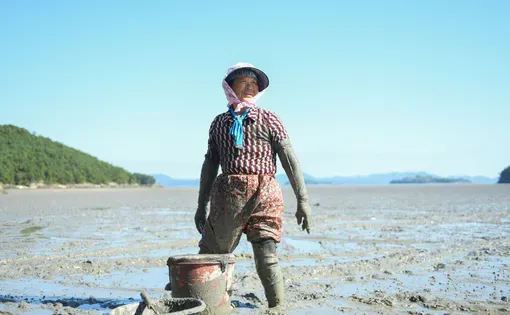
Korean fishermen want to ensure traditional sustainable management techniques are available to the...
This article was originally written in German and published in Natur. The key points of this article are presented in English below, followed by PDFs of the original story in Natur and Datum.
Key Points
- The Koreans call the mudflats Getbol. The term refers to a plain of silt at the transition between sea and land. Two-thirds of its area has been lost and has been diked and converted into agricultural land.
- Factories, roads, and even airports have been built in the middle of mudflats. The Korean mudflats are considered to be of particular ecological richness. They are home to more than 1,000 species and serve as a resting place for many migratory birds between Siberia and Australia.
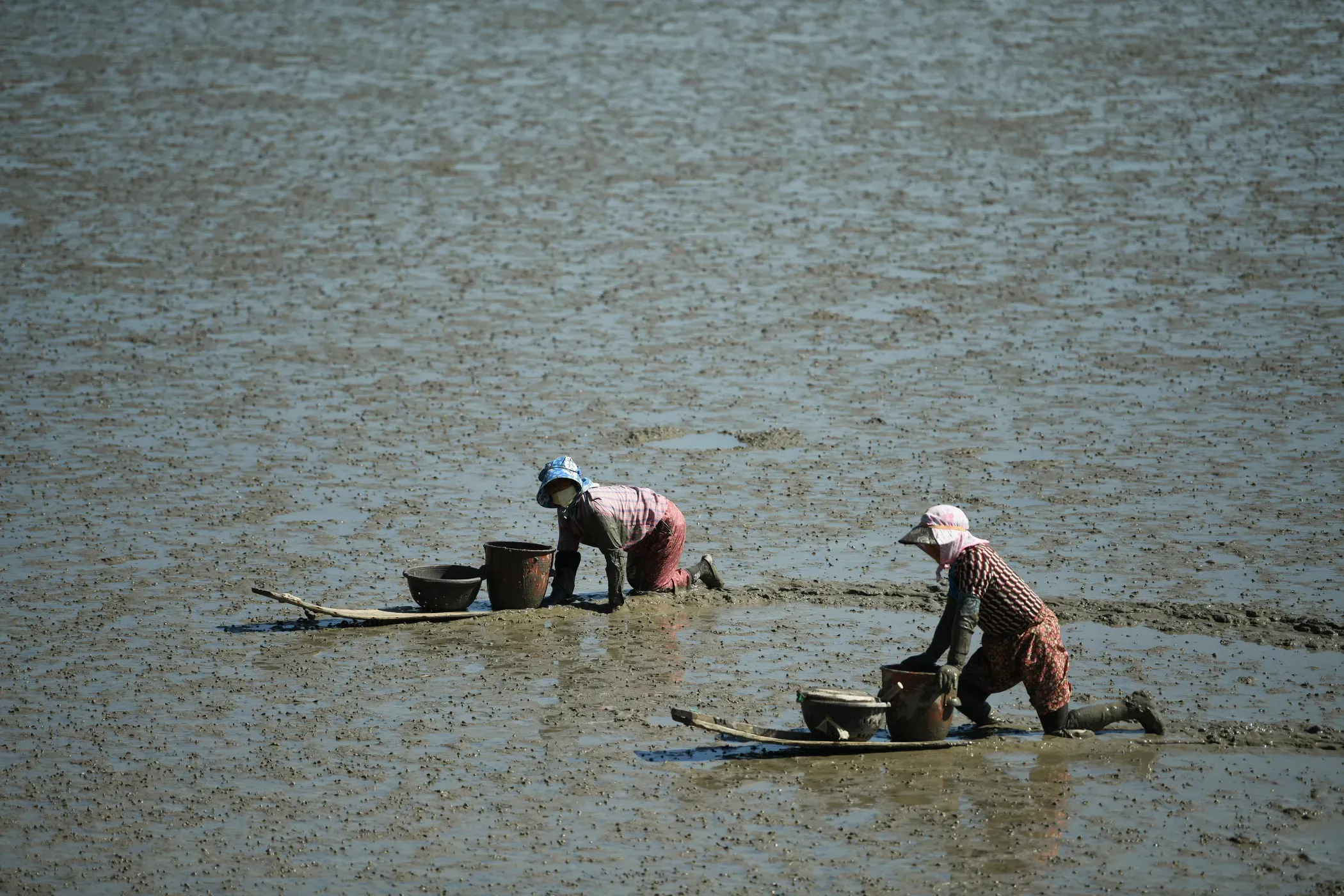
- After decades of destruction, traditional fishing methods are being used to protect Korean mudflats. The fishing methods are considered environmentally friendly, resource-efficient, and sustainable. They include shellfish gathering on Jangdo, South Korea.
- Koreans like Bong Yue Kim, 76, and Hyung Ja Park, 69, participate in the sustainable fishing method of gliding with canoe-like objects to protect mudflats. However, the women, who say they have no successors, worry if the tradition, along with mudflats, can be saved by the next generation.

As a nonprofit journalism organization, we depend on your support to fund more than 170 reporting projects every year on critical global and local issues. Donate any amount today to become a Pulitzer Center Champion and receive exclusive benefits!
Watt in Korea—Kulturerbe ohne Erben
Nach Jahrzehnten der Zerstörung soll das koreanische Wattenmeer geschützt werden. Auch mithilfe traditioneller Fischereimethoden. Was aber, wenn es dafür nicht mehr genug junge Menschen gibt?