Story
 August 2, 2026
Data Dive: Over 90% of Marine Carbon Removal Credits Yet To Be Delivered to Their Buyers
Country:

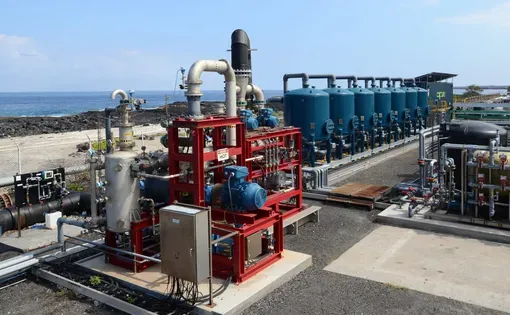
Many are capitalizing on the need to remove emissions from the atmosphere.

Marine carbon removal (mCDR) companies have less than five years to deliver roughly 237,000 carbon credits to companies that have bought them to meet climate targets.
mCDR, which refers to engineered carbon removal methods that use the ocean to remove and/or store atmospheric CO2, has attracted a range of corporate buyers purchasing anywhere from one to thousands of credits. Each credit corresponds to one tonne of CO2 removed and permanently stored away from the atmosphere. mCDR activities increase the ocean’s ability to absorb atmospheric CO2, for example by enhancing seawater’s alkalinity, which converts dissolved CO2 into bicarbonate and carbonate ions as forms of carbon storage, and thus means the ocean can subsequently soak up more CO2 to make up the balance.
The world’s top climate scientists at the Intergovernmental Panel on Climate Change (IPCC) have deemed CDR critical to avoid dangerous climate change.

As a nonprofit journalism organization, we depend on your support to fund more than 170 reporting projects every year on critical global and local issues. Donate any amount today to become a Pulitzer Center Champion and receive exclusive benefits!
mCDR companies, also known as project developers, can generate credits via protocols, also known as methodologies, created by two registries and certification bodies: Puro.earth and Isometric. A list of accepted mCDR methodologies is included at the end.
At time of publication, there are no mCDR credits listed in the Puro.earth registry. However, each of three Isometric pathways has one mCDR company using it to generate carbon removal credits: Nova Scotia-based Planetary, via ocean alkalinity enhancement; New York-based CREW Carbon, via wastewater alkalinity enhancement; and Nova Scotia-based CarbonRun, via river alkalinity enhancement.
The majority of mCDR credit buyers are members of Frontier, the leading corporate carbon removal buyers coalition with an advance market commitment of $1.8 billion, founded in Apr. 2022.
Frontier’s buyers, as listed on the group’s website, include Stripe, Google, Shopify, Anthropic, Salesforce, H&M, JPMorgan, McKinsey, Workday, and Autodesk. Frontier partners, who aggregate purchases on behalf of their customers, include marketplace Watershed.
All Frontier companies have purchased mCDR credits save for AI major Anthropic, which joined the group in June.
Frontier has signed one offtake agreement with each of the three mCDR companies:
- Planetary: $31.3 million to remove 115,211 tonnes of CO2 from 2026-30
- CREW Carbon: $32.1 mln to remove 71,878 tonnes of CO2 from 2025-30
- CarbonRun: $25.4 mln to remove 55,442 tons of CO2 from 2025-29
However, mCDR companies still have to deliver the vast majority of their contracted credit volumes. At time of publication, Planetary had delivered 4.1% of its offtake agreement, followed by CREWCarbon with 1.3%, and CarbonRun with 0.13%.
Each company lists just one or two projects in the Isometric registry that have generated credits to date, implying a ramp-up at existing sites or expansion to new sites in the next few years in order to deliver on their commitments.
Eddie Halfyard, co-founder and chief technical officer at CarbonRun, told Carbon Pulse that the gap between contracted and delivered credits is “planned and expected at this stage”.
“In our opinion, it’s not a sign of stalled progress. Nearly all offtake agreements in this market, including ours, are structured as advance purchases where buyers are pre-purchasing capacity for pathways that need years of development, verification, and scale-up before credits can be issued.”
Halfyard added that the delivery schedules for CarbonRun’s contracts are back-loaded towards the later years, pointing to several factors that have shaped the company’s pace to-date.
“Our view is that the science, verification protocols, and delivery infrastructure need to be robust before demand scales, not built reactively once buyers show up in volume…. We have spent a lot of time getting the underlying river alkalinity enhancement protocol built and verified with Isometric before the predicted wave of demand, working on climate-smart project logistics, building robust relationships in the communities where we work, rather than racing to issue credits against a framework that wasn’t fully tested,” he said.
“We’d rather scale carefully and build a durable, trusted track record than rush credits to market ahead of the science or the community relationships being ready.”
Diana Philip, vice president of community relations at Planetary, said that the company has met all of its Frontier delivery obligations due to date.
“The Frontier agreement sets annual delivery milestones over five years to account for the planned scale-up of operations,” she added, noting that this would primarily involve increasing operating capacity at its Tufts Cove site in Halifax, Nova Scotia.
Carbon Pulse did not receive comment from CREW Carbon as of publication.
A spokesperson for Frontier, in response to a request for comment from Carbon Pulse, said that carbon removal is still an early field.
“We expect delays in deliveries, it’s a feature of an emerging industry. There are many reasons for these delays, ranging from securing site access to getting the right permits, sourcing feedstocks, and navigating new protocols,” they said.
“All three [mCDR] companies have delivered tonnes this year, and looking at deliveries midway through the year, the picture is encouraging. The Frontier portfolio has removed 30,600 tonnes [of CO2 in 2026], already more than all of last year.”
According to Frontier’s 2025 letter, 22,977 tonnes of CO2-worth of removal was delivered in credits to its buyers.
Credit purchases are not equally distributed among Frontier companies. The group’s spokesperson told Carbon Pulse that each buyer decides how many tonnes of CO2 removal they want to buy.
Not all Frontier buyers use their credits in the same way. Individual corporate buyers within the alliance can retire the credits and make environmental claims on the back of that, or keep them to retire at some future point in time. At time of publication, Canadian tech company Shopify had retired more mCDR credits than any other buyer, followed by US bank JPMorgan Chase.
The Frontier spokesperson did not confirm whether its buyers are obligated to retire their credits, stating simply that buyers “have the flexibility to retire tonnes on their own timeline”.
In general, credits can be traded in perpetuity – bought and sold between other buyers and sellers – until they are retired. Beyond Shopify, JPMorganChase, Workday, and MaRS, it is currently unclear when buyers plan to retire credits, if at all.
Puro.earth offers the following options:
- Microalgae carbon fixation and sinking, where photosynthetic organisms grow on substrate on the open ocean’s surface, removing CO2 from the atmosphere as part of their natural life cycle, before sinking into the ocean when they die to store the CO2 in its depths.
- Direct air capture and ocean storage, where seawater electrolysis increases ocean alkalinity and its ability to dissolve atmospheric CO2; in the water, the gas is converted into carbonate and bicarbonate ions for storage in the ocean or as carbonate solids removed and stored offsite.
- Marine anoxic carbon storage, where biomass from land, which has removed CO2 during its lifetime, is deposited into deep, oxygen-depleted ocean basins, where it stores the CO2.
There are no mCDR credits listed in the Puro.earth registry as of publication.
Isometric offers the following protocols:
- Ocean alkalinity enhancement, where alkaline materials are added to the ocean’s surface, increasing its ability to react with atmospheric CO2, which is then converted into bicarbonate and carbonate ions for CO2 storage.
- Wastewater alkalinity enhancement, where alkaline materials are added to treated wastewater, increasing its ability to react with atmospheric CO2, which is then converted into bicarbonate ions that remain in the treated wastewater and are transported into the ocean for CO2 storage.
- River alkalinity enhancement, where alkaline materials are added to rivers, increasing their ability to react with atmospheric CO2, which is converted into carbonate and bicarbonate ions that are eventually transported into the ocean.
An Isometric spokesperson told Carbon Pulse that its three protocols use direct measurement, combined with modelling, to calculate net carbon removal.
“Uncertainty in the calculation must be identified, quantified, and deducted, ensuring each certificate is conservative and represents a tonne of CO2 removed from the atmosphere,” the spokesperson added.