Story
 July 25, 2025
The Manmade Clouds That Could Help Save the Great Barrier Reef
Country:

This project explores the promise and perils of marine cloud brightening.
Inside a bold — and controversial — effort to cool the water around this beloved ecosystem.
To report this story, Jabr interviewed more than a dozen expert sources and spent four days in and around the Palm Islands observing this research up close.
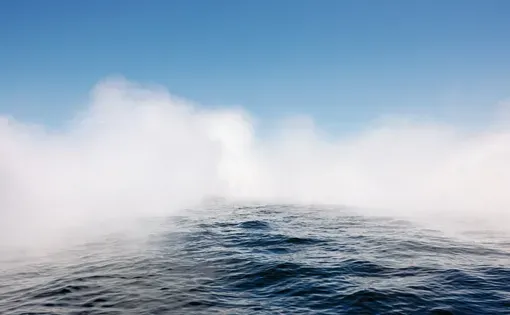
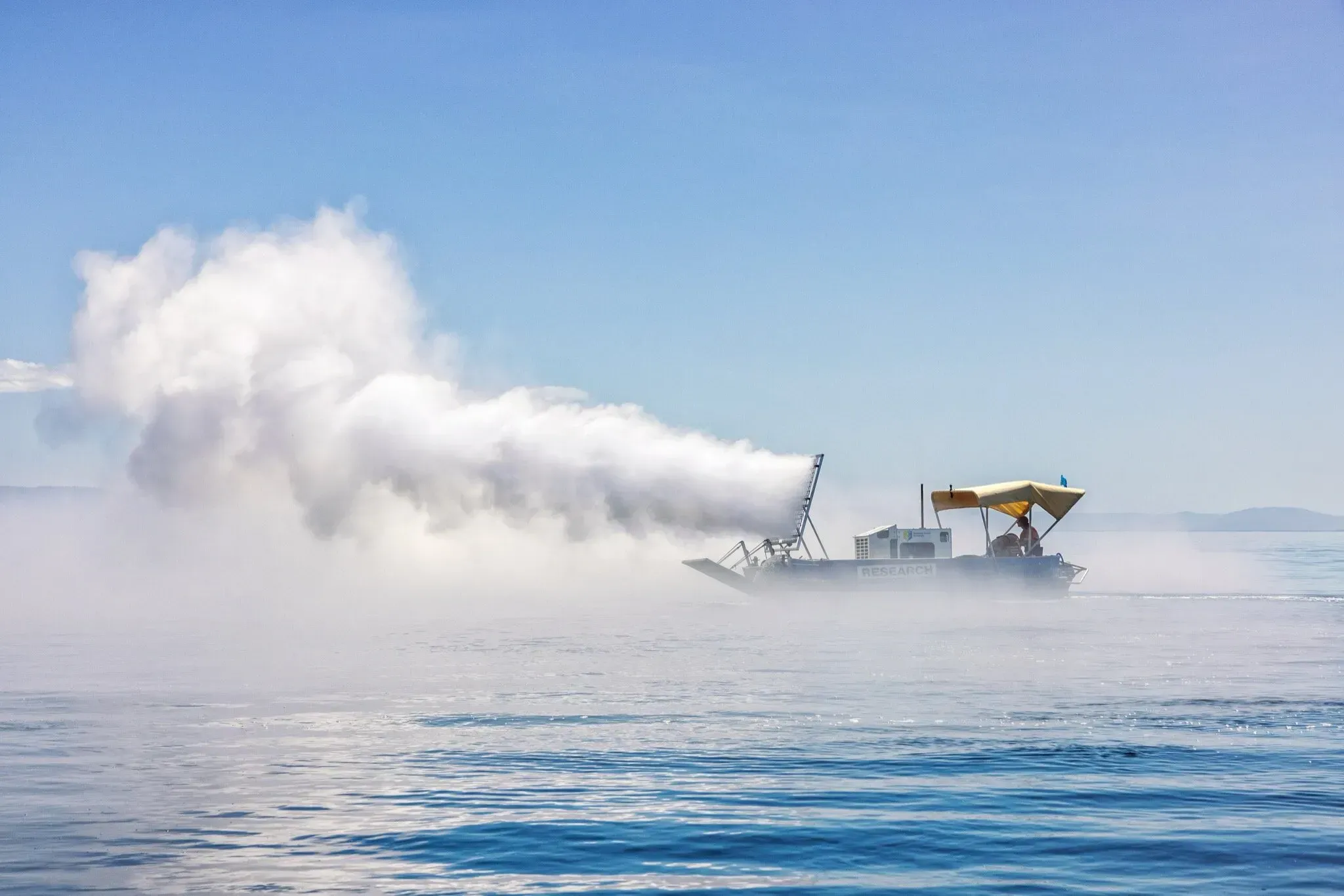
The fog was neither subtle nor slow. It did not emanate gradually from the sea or roll gently down the slopes of the nearby islands. It erupted into the air with all the drama of a volcanic-ash plume. Yet, for all that, its source was quite modest: a grid of nozzles, about 20 feet wide, stationed on the back of a ship.
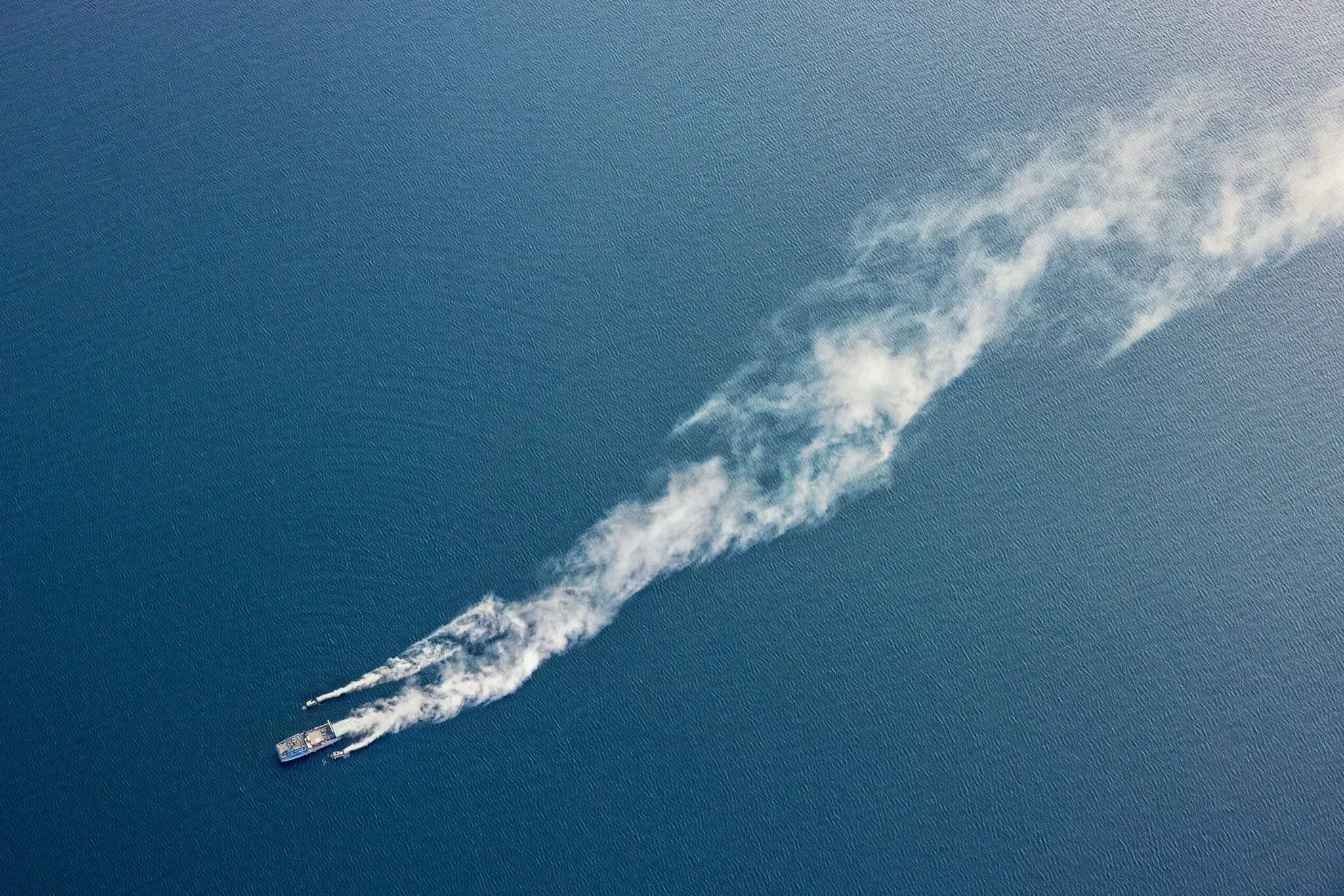
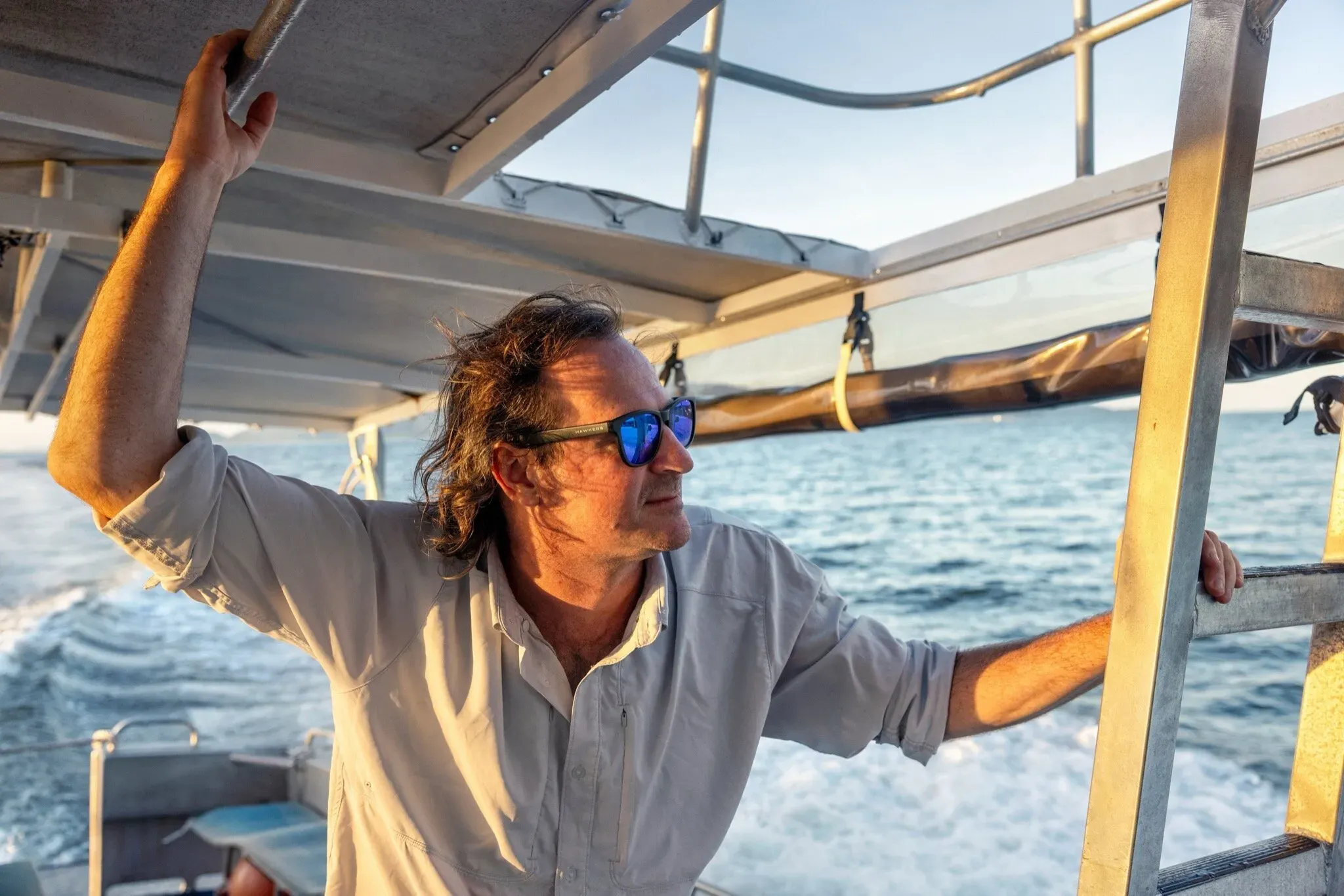
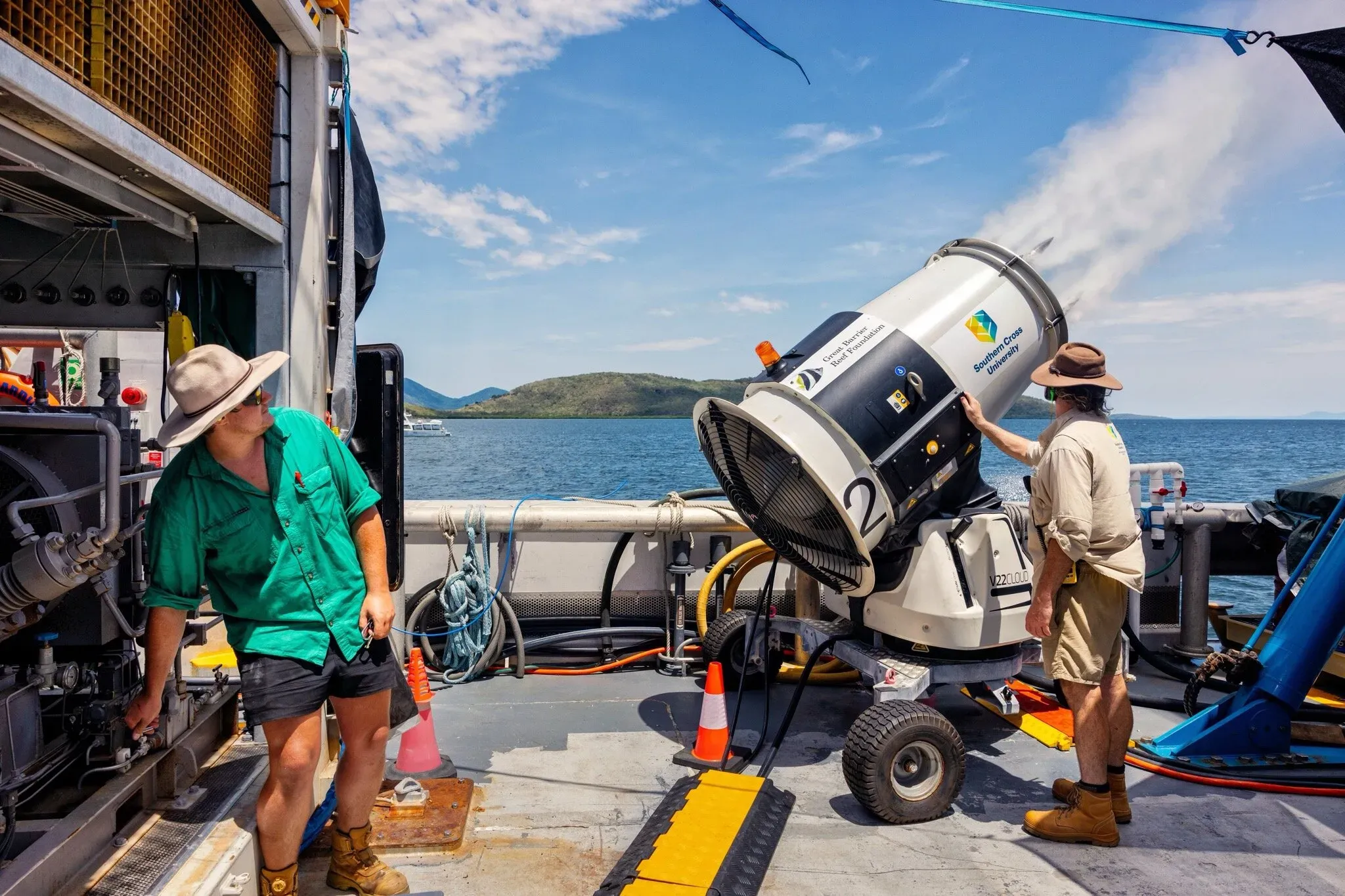
On a hot February morning, that ship and two smaller companion barges — nicknamed Big Daddy and the Twins — roamed a bay within the Palm Islands cluster, off the northeastern coast of Australia. Each pumped seawater aboard, pressurized it and sprayed it into the air through hundreds of tiny nozzles arrayed on metal frames. Dense plumes of fog billowed from all three vessels, forming long white strands that eventually converged into a seamless cloak. Daniel Harrison — an engineer, pilot and oceanographer based at Southern Cross University’s National Marine Science Center — surveyed the scene from the large ship’s observation deck, one hand on his wide-brimmed brown felt hat to keep it from flying away. It was the most successful test of the technology to date, he said.
Since 2016, Harrison and his colleagues have been investigating whether it is possible to reduce coral bleaching in the Great Barrier Reef by altering the weather above it. As the planet heats up, unusually high ocean temperatures are stressing corals around the world, forcing them to eject their symbiotic partners: the photosynthetic single-celled algae that live in their tissues and provide them with much of their sustenance. Theoretically, machine-generated fog and artificially brightened clouds can shade and cool the water in which corals live, sparing them much of that stress.

As a nonprofit journalism organization, we depend on your support to fund more than 170 reporting projects every year on critical global and local issues. Donate any amount today to become a Pulitzer Center Champion and receive exclusive benefits!
Not far behind the primary fogger on the big ship stood a pair of cloud-modifying machines known as the cannons. From a distance, each tubular white contraption resembled a jet engine angled toward the sky. Up close, you could see that they were mostly hollow, outfitted on one end with a large fan and on the other with a ring of torpedo-shaped manifolds, each of which supported nearly 100 small metal nozzles. When the scientists switched them on, a series of squat, square air compressors began to groan and shake, like washing machines pushed to their breaking point. This time, seawater pumped onboard was combined with highly pressurized air before being expelled through the nozzles. The result was a fine white mist that burst from the cannons at more than 60 miles per hour. As the wind lifted the briny spray into the air, it intermingled with low-lying clouds, making them more reflective.
Harrison’s project is essentially a highly localized version of geoengineering: the deliberate modification of the planet to counteract climate change. When Harrison began his undergraduate studies in the late 1990s, geoengineering was still largely taboo in the scientific community. In a paper that considered the history of such research, the climate scientist Stephen Schneider recalled that even the idea of including a single chapter on geoengineering in a 1992 National Research Council report resulted in “serious internal and external debates.” The physicist David Keith, now a prominent figure in the field, remembers colleagues in the ’90s telling him that pursuing geoengineering might tarnish his reputation and derail his career. Not much changed in the subsequent two decades, though there were some high-profile geoengineering blunders.
In 2006, the Nobel-winning atmospheric chemist Paul J. Crutzen published a landmark editorial advocating studies on the possibility of cooling the planet by releasing reflective sulfur particles in the stratosphere. Although his engagement helped legitimatize scientific interest in geoengineering, it also provoked what one colleague described as a “passionate outcry.” In 2007, the U.S. entrepreneur Russ George made an unprecedented — and, according to many experts, reckless — attempt to dump up to 100 tons of iron dust into the ocean to create an enormous carbon-sucking phytoplankton bloom but was foiled by opposition from multiple environmental groups. The next year, the signatories of the United Nations Convention on Biological Diversity agreed that large-scale ocean fertilization should cease for the time being, followed in 2010 by a moratorium on geoengineering more broadly.
Since then, and especially in the past five years, the situation has evolved considerably. The failure to prevent the planet’s average temperature from reaching 1.5 degrees Celsius above the preindustrial base line, and the progressively obvious and lethal consequences of climate change, are rapidly shifting attitudes toward geoengineering. Interventions once deemed too risky to study are now viewed as potentially necessary. Geoengineering still faces substantial opposition: More than 550 scholars have signed a petition calling for an international non-use agreement that would severely restrict development and deployment of solar geoengineering, for example, a category that includes cloud brightening and other sunlight-reflecting techniques. Yet that appeal is countered by numerous endorsements for rigorous research on solar geoengineering and other climate interventions from prominent scientific organizations, including the United Nations Environment Program; the Royal Society, in Britain; the U.S. National Academies of Science, Engineering and Medicine; the American Geophysical Union; and the editorial board of the journal Nature. Just last year, the British government committed $75 million to such research, including outdoor experiments.
“Things have changed very quickly even in the last six months,” says Keith, who headed solar-geoengineering research at Harvard before moving to the University of Chicago in 2023 to establish a new climate-engineering initiative. “There’s a much higher level of interest. More senior political and environmental figures are willing to engage in a serious way. More people in the scientific core are talking about it. There’s new money. It feels different.”
Support for local and regional applications of geoengineering is growing in particular. Scientists who study Antarctica, for instance, are increasingly calling for physical interventions to stabilize the glaciers that are most likely to collapse. In addition to its limited scale, perhaps the compelling point in favor of Harrison’s project is its explicit goal to help save one of the world’s most celebrated ecosystems. If current trends continue, the compounding effects of global warming, ocean acidification and severe storms will devastate most of the planet’s tropical reefs by mid-to-late century, ultimately reducing them to fragmented havens tucked among swaths of slime-coated rubble. If we do not develop the means to protect them now, there won’t be much of anything left to protect.
Harrison has always been fond of the ocean. The eldest of 10 children, he grew up surfing, diving and spearfishing along Sydney’s North Shore. One day, while exploring tide pools, he and his siblings found a small octopus with mesmerizing iridescent markings. It turned out to be a blue-ringed octopus, one of the most venomous animals on the planet, capable of paralyzing and killing an adult human within minutes. Even after learning this, Harrison’s father let them bring the octopus home and keep it in an aquarium. “Mum wouldn’t talk to him for a few days after that,” Harrison recalled.
Harrison began his undergraduate studies at the University of Sydney in the engineering department, and eventually earned a doctorate in biological oceanography. In 2017, as part of a fellowship, he started investigating various engineering schemes to alleviate warming in the Great Barrier Reef. Clouds repeatedly emerged as one of the more feasible targets. Harrison and his colleagues have now been conducting open-ocean experiments on cloud brightening for five years. To date, they are the only scientists to have done so.
Despite the recent surge of support for geoengineering research, field studies remain challenging to orchestrate. Last March, following numerous delays and pushback from members of the public, including Indigenous communities, Harvard abandoned its long-running attempt to send a research balloon into the atmosphere to disperse and analyze a plume of reflective particles. Around the same time, researchers from the University of Washington began to spray a mist of sea salt from the deck of a decommissioned aircraft carrier in Alameda, Calif. Although the experiment was too small to alter local weather or pose risks to the environment, Alameda city officials halted it, in part because of the researchers’ lack of transparency with the city’s leadership and residents, many of whom first learned about the study from news reports. In parallel, some companies and scientists have tried to circumvent typical authorization. When the South Dakota-based start-up Make Sunsets launched balloons containing sulfur dioxide toward the stratosphere from Baja California in 2022 without government permission, Mexico responded by issuing a nationwide ban on any further solar-geoengineering experiments.
Harrison’s research group has navigated its share of skepticism and censure as well. Their critics maintain that fogging and cloud brightening are too costly and impractical, diverting attention and resources away from the most essential response to global warming: replacing fossil fuels with renewable energy. Moreover, they argue, the interconnectedness of the planet means that changing weather patterns in one part of the world could have unintended consequences in another, potentially harming wildlife, crops or urban populations.
Proponents of Harrison’s work counter that the limited scale and duration of localized geoengineering significantly reduce the inherent risks. The ship-based technology they are developing could be applied to just a few of the more culturally and ecologically important reefs among the nearly 3,000 that make up the Great Barrier Reef system. Even if cloud brightening were eventually deployed to protect the reef system as a whole — approximately the size of Italy — experts regard such an intervention less as a form of planetary engineering than a kind of regional weather modification, akin to cloud-seeding, which is already practiced in Australia, China, the United States and elsewhere to stimulate rain and reduce hail, primarily for the benefit of agriculture.
Unlike many other climate interventions, fogging and cloud brightening are not predicted to have long-lasting effects once shut off, and they involve no synthetic chemicals or marine pollution. Harrison’s supporters also point to surveys showing that people in developing nations, especially in the southern hemisphere — the very regions that will likely endure the worst repercussions of climate change — generally favor research on geoengineering. And although his allies agree that climate engineering should never be a substitute for emissions reductions, they contend that the failure to make sufficient progress on decarbonization necessitates supplemental interventions, especially for Earth’s most vulnerable ecosystems.
“It’s not a distraction — it’s a multipronged approach,” says Cedric Robillot, an environmental scientist and the executive director of the Reef Restoration and Adaptation Program, a consortium of nonprofit groups, universities and government agencies that oversees Harrison’s research. “And to me, it’s the only plan that makes sense.”
The program unites hundreds of experts to study dozens of novel interventions intended to save the Great Barrier Reef, like breeding highly resistant corals, reseeding barren patches of reef and cryopreserving genetic material. Much of this research takes place within the protected Great Barrier Reef Marine Park and has thus been subject to strict regulation from the start. Compared with some of the more clandestine or unsanctioned attempts at real-world climate interventions, Harrison’s group makes a point of being forthright, engaging in public outreach and seeking explicit permission from the Manbarra people, who are legally recognized as the traditional owners of the Palm Islands.
To learn more about the Indigenous perspective on this work, I reached out to Richard Cassady, the executive officer of the MinggaMingga Rangers and a member of the Manbarra elders council, who organized a lively round-table interview with a group of fellow rangers. “This is how we do things,” he explained. “We do things together.” From our discussion, it was clear that Cassady and his colleagues were simultaneously intrigued and wary, especially considering the history of environmental degradation by colonial powers in Australia.
“Appropriate engagement with our people is relatively new,” Natalie Friday, a rangers coordinator, said. “We’ve only been having this conversation in the last 10 years. We can introduce new practices, but we as First Nations people also understand that there is a delicate balance to maintain.”
The idea of artificially brightening marine clouds began with puzzling satellite images of wispy white lines lacing the ocean. In 1966, the meteorologist John H. Conover proposed that such “anomalous cloud lines” were a product of oceangoing vessels. Subsequent research proved him right. A cloud typically forms when water vapor in the air condenses onto tiny airborne particles, which can be dust, salt, soot, pollen grains or microbes. As the particles accumulate water, they form increasingly large droplets, which collide and combine, eventually becoming a visible white cloud. Ship tracks, as they are now known, form around the copious airborne particles generated by ship exhaust.
Conover briefly mentioned the possibility of mimicking this phenomenon to enhance the reflectivity of clouds, or what is scientifically termed their albedo, but he never pursued the idea. More than 20 years later, the British physicist John Latham independently developed the first serious proposal to deliberately brighten marine clouds by infusing them with particles of sea salt. A cloud packed with a multitude of tiny droplets is brighter than a similarly sized cloud made of fewer but larger droplets, because the former has a greater overall surface area with which to reflect sunlight. Dense, bright clouds are also more likely to persist in the atmosphere and thus reflect light for longer, because their droplets are not yet heavy enough to fall as rain. Artificially brightening ocean clouds around the globe, Latham proposed, could counteract global warming and alleviate its effects on threatened ecosystems like coral reefs.
The ostensible simplicity of the core technology underlying marine-cloud brightening — a tiny nozzle known as an effervescent atomizer — belies the complex, Goldilocks nature of the act itself. Together, the pumps, air compressors and nozzles have to yield a sufficient number of sea-salt particles of just the right size. If they’re too small, they won’t grow into cloud droplets. Too large or too few, and they won’t increase a cloud’s reflectivity. Creating fog — essentially an extremely low-lying cloud — is somewhat easier, because it requires neither compressed air nor such a narrow range of droplet sizes.
Harrison’s team began their work in 2016 by adapting an apparatus designed by a private research group in California. So far, they have demonstrated that their machines produce abundant particles of the appropriate size and that those particles rise high enough to integrate with marine clouds. Despite this preliminary success, the researchers remain concerned about efficiency. At the moment, their mist-spraying cannons and primary fogger depend on several shipping containers’ worth of gas-powered equipment. In order to scale up, they would ideally like to generate 30 times as many particles for the same amount of energy, which would enable a much sleeker overall operation. They are currently working on a new design that could reduce the number of nozzles required by a factor of 1,000. If they achieve optimal efficiency, Harrison thinks that they could eventually meet most of their energy needs with renewable sources. A recent study estimated that even a hybrid solar-diesel system could reduce their carbon emissions by close to 60 percent.
“I started off really skeptical,” says Michael Diamond, an atmospheric scientist at Florida State University who specializes in clouds and airborne particles. “But I’ve come around. I am definitely more optimistic now than when I first heard of the idea.”
Following a period of lab-based technological refinement, the next logical step is a substantially larger outdoor experiment. With three big ships working in tandem, Harrison thinks they could modify cloud cover across roughly 460 square miles of the Great Barrier Reef. He estimates that modifying weather over the entire reef system would likely require up to 800 cloud-brightening stations, which could be a mix of dedicated vessels, volunteer ships and anchored barges. Deployment at that scale is where some of the major obstacles to this endeavor come into focus. First, where is all that infrastructure going to come from? The single research vessel the scientists currently rely on is expensive and in demand among researchers. Acquiring an entire fleet of cloud-seeding ships, supplementing them with anchored stations and operating all that equipment continuously through the worst summer heat waves is a vastly more ambitious and costly proposition. Australia has committed an average of $200 million each year from 2014 to 2030 to fund all its reef restoration, adaptation and management efforts combined. This one intervention would probably exceed that entire budget. Even so, that’s a fraction of the roughly $4 billion that the reef contributes annually to the Australian economy, mostly through tourism.
The scientists also have to reckon with the sheer complexity of clouds themselves and how they interact with their environment, especially in aggregate. Computer models have hinted at potentially severe ecological and climatic repercussions of large-scale marine-cloud brightening. Several studies have concluded that brightening clouds in the South Atlantic, off the western coast of Africa, would sharply reduce precipitation in the Amazon rainforest. Related work has indicated that brightening in one region might result in inadvertent heating and cooling in another. Diamond thinks cloud brightening restricted to the Great Barrier Reef is unlikely to have these kinds of unwanted side effects, though a milder version of them is not out of the realm of possibility.
Perhaps more problematic for Harrison’s work are the type of clouds that tend to form over warm-water reefs. The ideal targets for artificial brightening are dark, clumpy stratocumulus clouds that mushroom over subtropical oceans, not the puffier, popcorn-like cumulus clouds more common over tropical regions. “In general, that type of cloud cover also probably declines as sea surface temperatures get higher,” Diamond says. “So if you specifically want to use this during heat waves, and that is when you have the fewest clouds, that is an interesting problem.”
Even localized geoengineering is an attempt to alter something that is already rapidly, and not always predictably, shifting. With its ethereal form and mercurial temperament, a cloud is the perfect embodiment of this fundamental challenge. How do you develop a novel technology intended to better the world when the world itself is changing faster than you can keep up? By the time you’re ready to deploy your invention, the environment in which you tested it may no longer exist. At this stage in history, the most important variable in any effort to counteract global warming — whether slashing emissions, sequestering carbon or reflecting sunlight — is the same: time.
Early one morning, Harrison, a few colleagues and I traveled about two and a half hours by boat from Townsville to John Brewer Reef. Queensland had recently endured severe, record-breaking floods — precisely the kind of extreme weather that is becoming more frequent with climate change — that flushed debris and sediment into the sea, reducing visibility in the water. Nevertheless, I was excited to snorkel at the Great Barrier Reef for the first time, an ecosystem I had revered from afar since childhood.
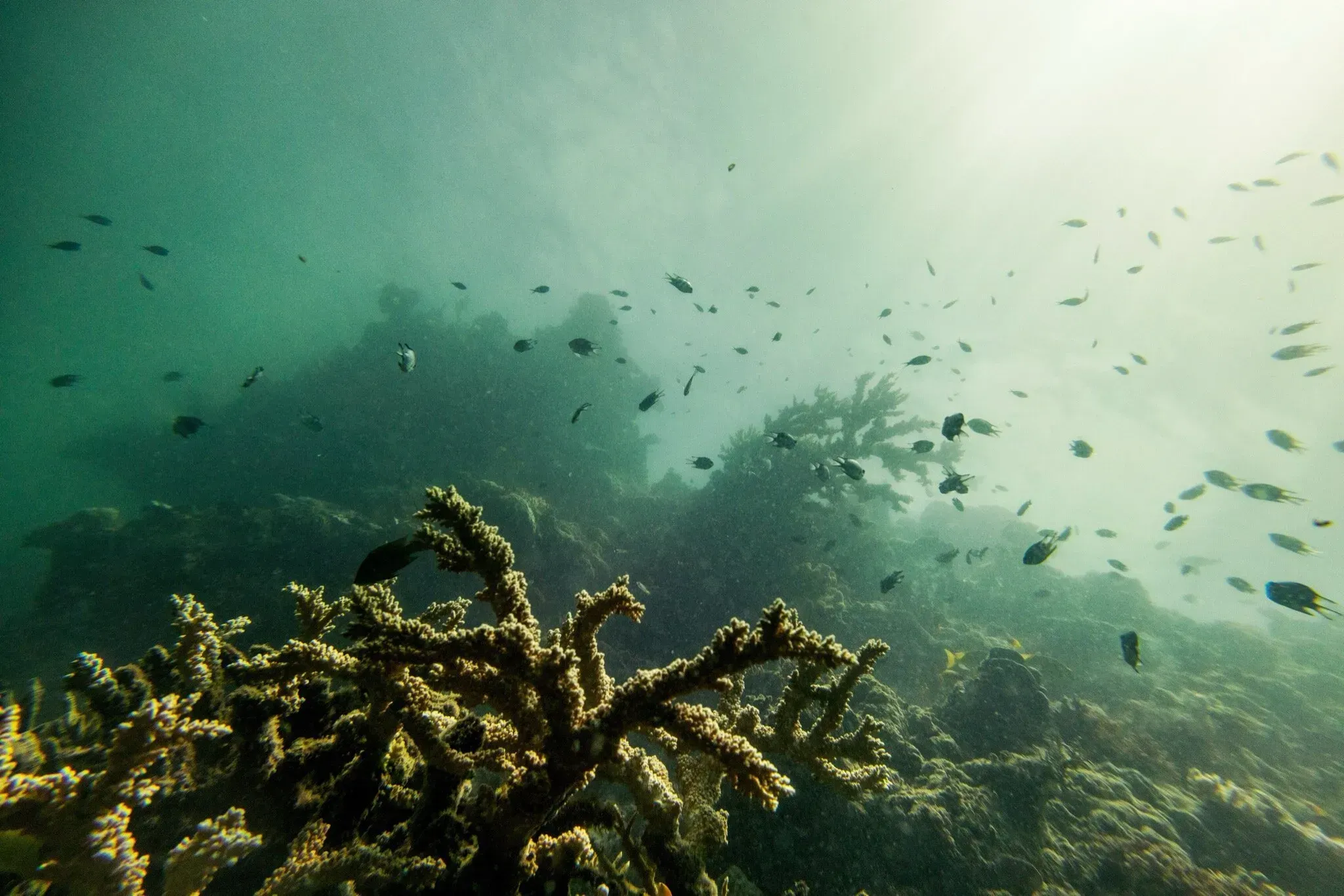
We slipped on fins, masks and stinger suits — lightweight wet suits designed to protect against jellyfish — and entered the water. Although parts of the reef were clearly either bleached or damaged by storms, or both, others were entirely intact and teeming with prismatic fish, mollusks and bivalves. I was especially impressed by the diversity and vibrancy of the coral itself. The blue ones in particular seemed to glow with striking intensity, even in the somewhat cloudy water.
“Bad news,” Harrison said when we were back on the boat. “It looks like a lot of this reef has bleached.” Those radiant corals, he explained, were most likely suffering. When corals are stressed by excess heat and light, they expel the microalgae that live within them, likely because the latter become feverishly photosynthetic, resulting in dangerous levels of highly reactive and damaging oxygen molecules. Once they have bleached, some corals produce fluorescent pigments, which are thought to act as a kind of sunscreen that diminishes further harm and a beacon that encourages the return of symbiotic algae, though recovery is far from guaranteed.
In the past 30 years, the Great Barrier Reef has lost more than half of its living coral. Climate change is likewise ravaging warm-water reefs around the world, threatening to reduce them to degraded and desolate versions of their former selves. More than a biodiversity crisis, the loss of the world’s tropical reefs would be an economic and humanitarian disaster. Collectively, coral reefs are vital to the livelihoods of a billion people. The Great Barrier Reef alone supports more than 60,000 full-time jobs.
Even faced with these dire prospects, some reef scientists remain firmly against marine-cloud brightening and similar interventions. Terry Hughes, a leading coral-reef researcher and emeritus professor at James Cook University, is one of the most vocal critics. “Calls for outdoor experimentation of the technologies are misguided,” Hughes and two colleagues wrote in an online essay. “Humanity must not pursue dangerous distractions that do nothing to tackle the root causes of climate change, come with incalculable risk and will likely further delay climate action.”
Yet most of the coral experts I spoke with expressed a different perspective. While their peers certainly recognize the central importance of curbing fossil fuels, they said, many now either embrace or are at least open to research on supplemental interventions to save coral reefs.
“I think we should do everything in our power to help coral reefs,” Vania Coelho, a coral-reef ecologist at Dominican University of California, says. “Not only for the sake of the planet’s biodiversity, but also for the human communities that depend on them. If we don’t help corals survive this transitional period, it will be too late.”
Coelho is especially interested in community-based approaches to reef preservation, perhaps involving the robust tourism industry that already surrounds them. This is where the compact foggers Harrison and his team have been developing could be especially helpful. Each can fit onto a small barge. Harrison envisions Indigenous rangers or other locals using such vessels to shade especially important reefs during the summer.
Geoengineering is often vilified as yet another example of humanity’s imperious technological meddling, pushing our planet even further away from what is considered natural. Harrison’s work aspires to a different model: one in which the rigorous and collaborative development of such technologies and their highly selective application help preserve a version of Earth that, while it may not be identical to the past, is at least still recognizable.
In the late afternoon that followed the fogging exercise, Harrison and I boarded a boat back to our lodgings in Townsville. As I watched the mangrove-lined shores of the Palm Islands recede from view, two arguments repeatedly surfaced in my mind, each counterbalancing the other.
First, it seemed clear that greenhouse-gas reductions alone were no longer sufficient to preserve a version of coral reefs as we know them. The reefs were out of time. Something more was needed. Yet it was equally clear that solar geoengineering and similar proposals carry considerable costs and risks, even when localized. One question in particular haunted me: Given how much we still don’t understand about the intricacies of the Earth system, can we confidently declare that novel climate interventions won’t have unintended and potentially ruinous side effects? Can we truly pronounce them safe before we deploy them at scale? The history of science is littered with the wrack of human hubris. Some of the most notorious examples — like the ecologically disastrous introduction of cane toads to control sugar-cane beetles — happened in Australia.
But then I remembered something: When it comes to climate change, there is no more “safe.” There is only less treacherous. As the climate-policy analyst Andy Parker told Elizabeth Kolbert in her book “Under a White Sky”: “We live in a world where deliberately dimming the [expletive] sun might be less risky than not doing it.”
Humans have already engineered the planet. We’ve been warping the planet’s climate and ecology for thousands of years — and for tens of thousands if you count the extinction of most Pleistocene megafauna from human hunting. We cannot erase the knowledge that further geoengineering, in particular at a local scale, may have genuine benefits, potentially stalling or preventing some of the worst outcomes of global warming. The relevant question now is not whether such interventions are safe but whether a world that pre-emptively excludes them is in fact worse than one that selectively invites them in. That’s exactly what scientists in this field are trying to figure out.
About 20 minutes into our return journey, Harrison called me to the opposite side of the boat and pointed to what looked like a low line of clouds in the distance.
“Do you know what that is?” he asked.
“I’m not sure,” I replied. “A storm front?”
“That’s our fog!” he said.
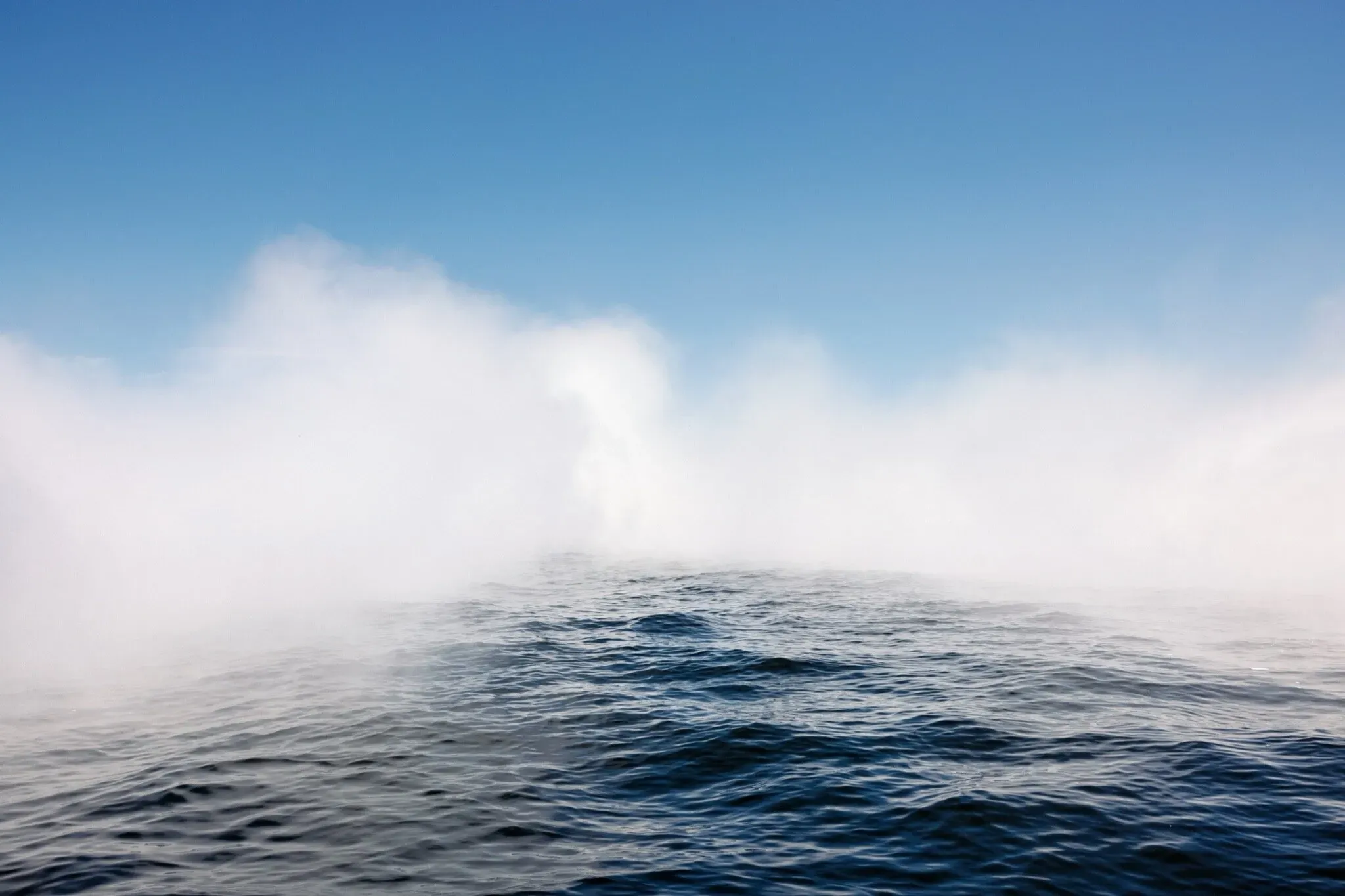
The plume of fog the researchers generated earlier that day had already impressed everyone with its breadth and longevity. Now, it had managed to drift a surprising distance from the bay. Airborne salt particles typically have short life spans, and the fog was likely to dissipate by morning if not sooner. Still, it was hard not to perceive the roaming mist, loose and amorphous, as an omen of the unexpected.