Story
 June 3, 2026
3 Years After Grantees' Investigation, Namibia Improves Sanitation, but Crisis Still Remains
Country:


Project
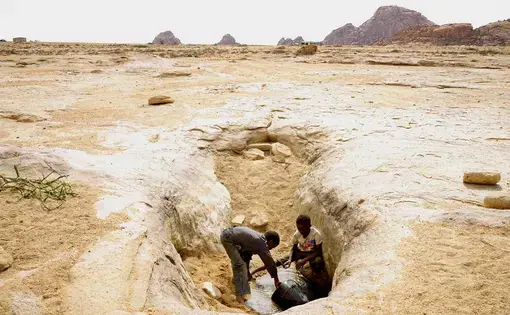
Namibia's Sanitation Crisis
More than half of Namibia's population are without sanitation facilities.
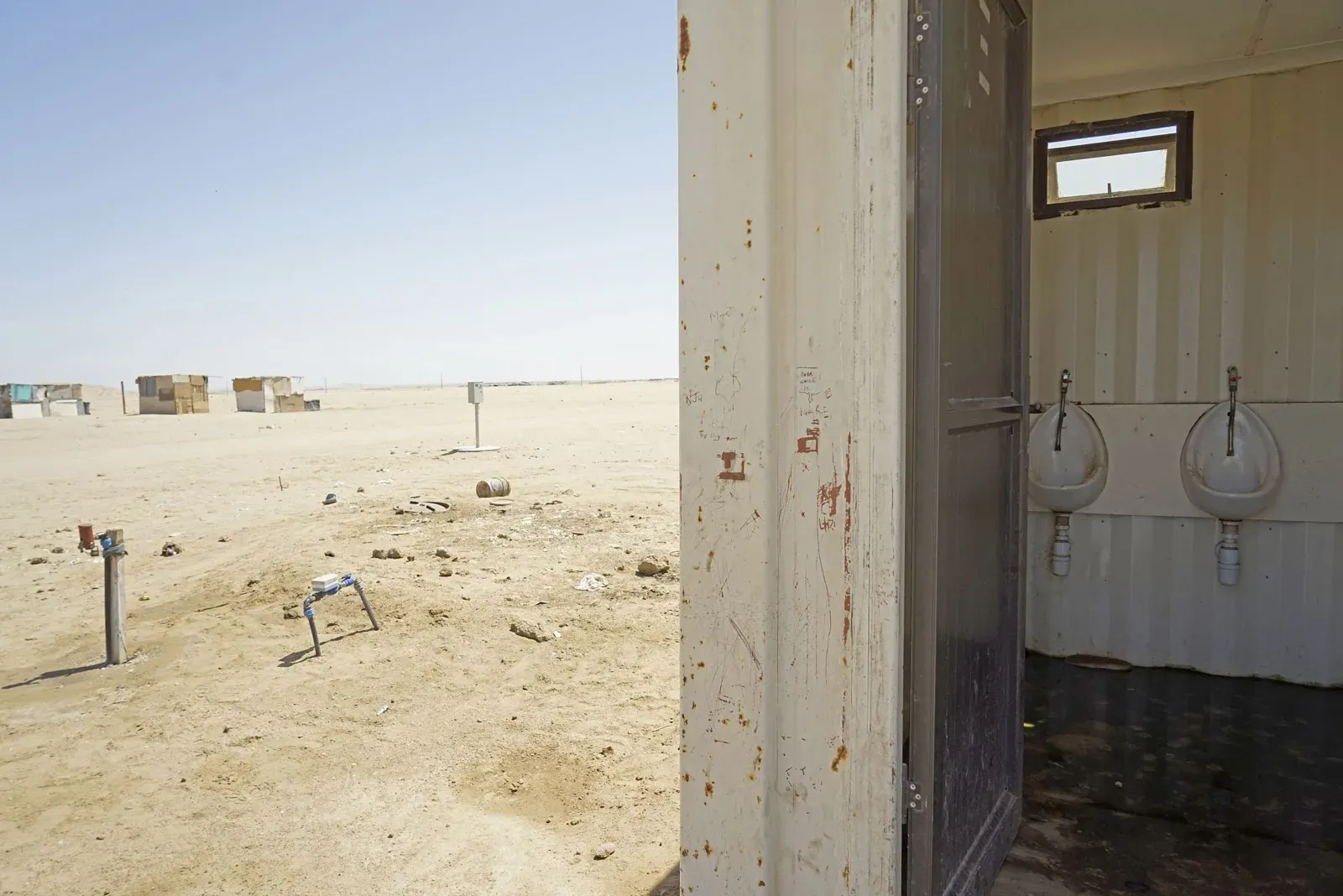
The Namibian government has continued to work with communities to improve sanitation coverage in some of the country’s poorest regions, three years after a Pulitzer Center-supported investigation by the Center for Collaborative Investigative Journalism (CCIJ) laid bare the country’s sanitation crises and recommended that toilet-building schemes be accompanied by community awareness, outreach and inclusion.
In rural areas of the Kapako Constituency, Prime Minister Elijah Ngurare announced that a total of 156 community toilets have been constructed, as part of a “collaborative sanitation initiative aimed at improving public health and eliminating open defecation.”
Roughly 95 people from eight constituencies of the Kavango West Region “played a central role in the project by producing their own bricks,” Ngurare said, adding that the project cost approximately N$3 million ($183,000).

As a nonprofit journalism organization, we depend on your support to fund more than 170 reporting projects every year on critical global and local issues. Donate any amount today to become a Pulitzer Center Champion and receive exclusive benefits!
Both residents and sanitation experts have welcomed the project in Namibia’s poorest region, which has the worst sanitation coverage in the entire country. Matheus Shuuya, water, sanitation, and hygiene specialist at UNICEF Namibia, praised the latest construction drive in Kapako.
“UNICEF commends the Government of Namibia on their efforts to address the sanitation situation in Namibia,” he told CCIJ in an email, adding that UNICEF will “continue to collaborate with the Government of Namibia to deliver sustainable sanitation at scale.”
However, major challenges remain around meaningful improvements to both water and sanitation across the nation, as underfunding and rapid urbanization leaves many communities in both rural and urban areas still relying on open defecation.
For many Namibians, open defecation is the only option they’ve ever known, but CCIJ’s investigation exposed the shocking conditions citizens face, risking robbery, sexual assault and even wildlife attacks, as they are forced to seek the privacy of the bush. In addition to safety and dignity concerns, these conditions can lead to the spread of deadly fecal-oral diseases, such as cholera and Hepatitis E, as well as the contamination of key water sources used for drinking and cooking.
The CCIJ’s expose further revealed that a crisis of this magnitude was avoidable. Namibia’s own 2008 Water Supply and Sanitation Policy and its 2010-2015 National Sanitation and Hygiene Strategy both outlined that training on cleaning, construction, maintenance and usage, as well as raising awareness of the benefits of sanitation, would be vital when installing toilets in a community.
CCIJ found that such practices were never previously implemented. Despite the government spending tens of millions of dollars on over 20,000 toilets in the past 15 years, open defecation levels dropped by just 2.7% nationwide and sanitation levels in urban areas actually declined, with many residents returning to the bush once their toilets became unclean or damaged.
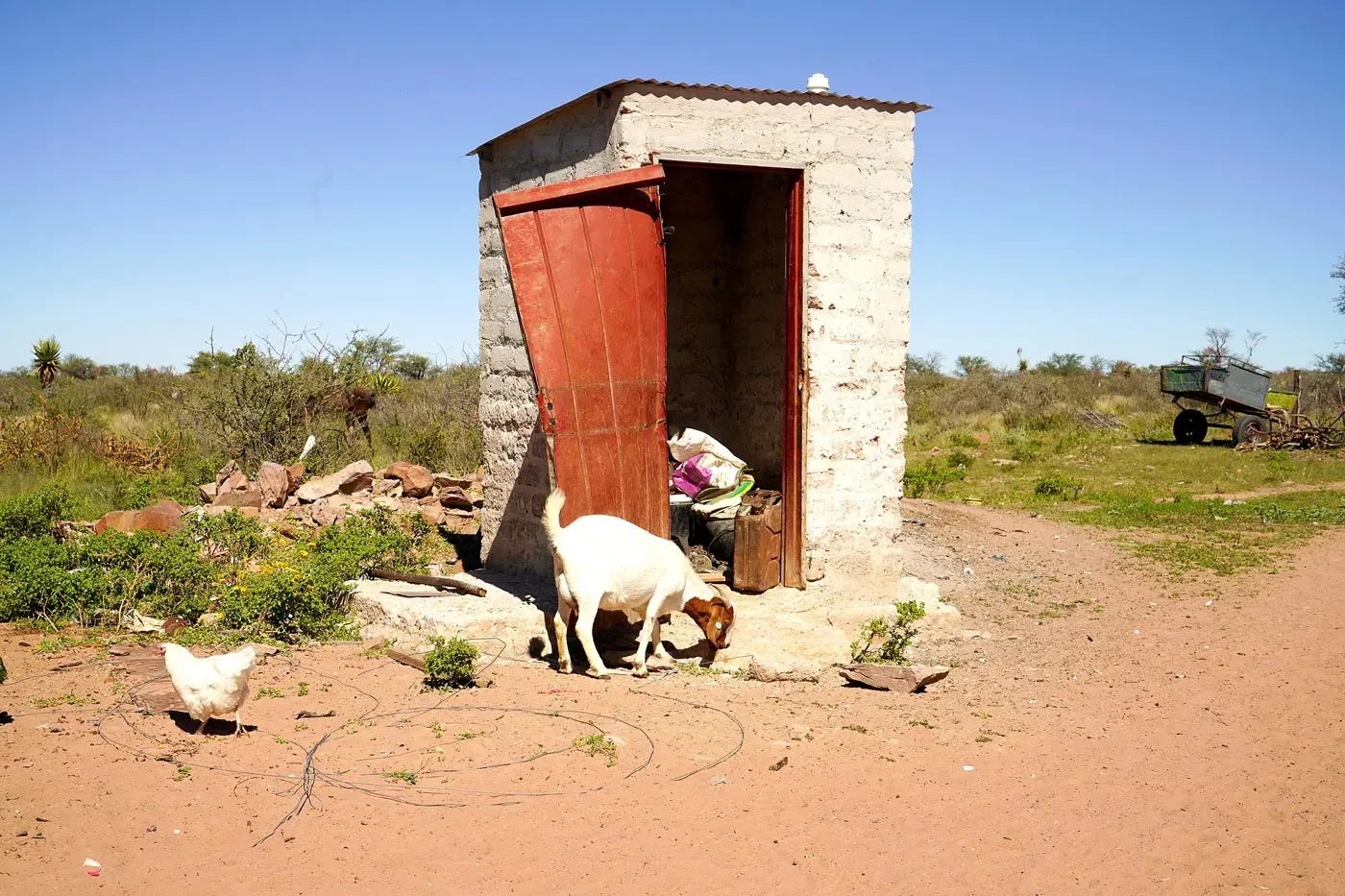
The Namibian government vowed to scale up its efforts to improve sanitation across the country following the report, and later that year began implementing toilet-building schemes in seven regions of the country, which were accompanied for the first time by crucial community outreach to train communities on how to both use and maintain the facilities, as well as other good hygiene practices that were recommended in CCIJ’s investigation.
Mukuve Hamwere, Local Development Community chairperson in Kapako, told CCIJ that the community was “very happy with the job well done by our government to build the toilets.”
However, he said the people who did not get toilets were “now complaining,” and that the community remained without a reliable clean water supply.
Hamwere’s comments reflect wider concerns that, despite progress in some rural communities, sanitation conditions remain harsh across much of Namibia, particularly in informal urban settlements and remote rural areas where many residents still rely on open defecation.
According to the World Health Organization and UNICEF’s Joint Monitoring Programme 2024 data, while the percentage of people openly defecating in Namibia’s rural areas decreased by 1.8% between 2022 and 2024, that number increased by 0.4% in urban areas during the same time period.
Former Windhoek mayor Ndeshihafela Larandja said last year that the capital’s informal settlements, often lacking sewage infrastructure and basic sanitation services, were growing at a rate of 6.1 % per year and doubling every 11 years, compared to the capital’s overall population doubling time of 21 years.
The situation in Namibia’s urban settlements “has worsened,” admitted Calle Schlettwein, Namibia’s former Agriculture, Water and Land Reform minister, in a statement to CCIJ.
“Even in the City of Windhoek and other towns with municipalities, these services are poor. In fact, in many cases they’ve collapsed, and raw sewage runs down the streets,” he said. “This failure is due to a total lack of maintenance, continued underfunding and lack of management capacity.”
He said achieving the targets of Namibia’s National Sanitation and Hygiene Strategy 2022-2027, which aims to increase the proportion of Namibians with sustainable access to safe sanitation from 46% to 67% by 2027, remains remote.
“The whole Water and Sanitation sector receives perpetually less than or about 1% of the total expenditure envelope of the budget,” he said. “This falls far short for bringing proper sanitation and water distribution services to communities.”






"If we don’t change our trajectory, things are definitely going to get worse, especially in the informal settlements and in the rural areas."
Matheus Shuuya, water, sanitation, and hygiene (WASH) specialist at UNICEF Namibia. From the story "Not the Kind of Life a Human Being Should Live."