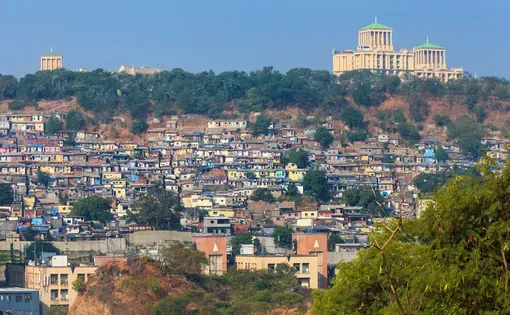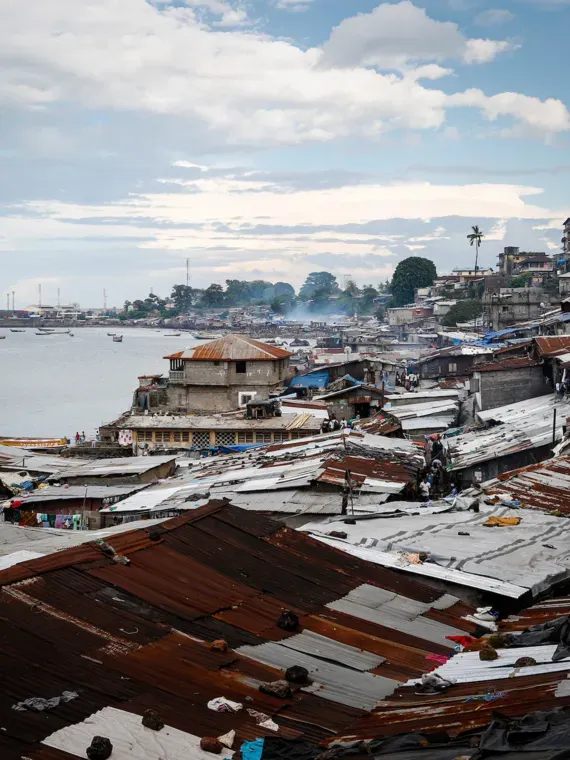

An unusual experiment is getting underway in Freetown, Sierra Leone. In collaboration with the city authorities and slum-dwellers, U.S. scientists are redesigning informal settlements—slums—in a way they calculate will bring maximum improvement in quality of life for their inhabitants, for minimum disruption.
The project, whose scientific driving force is Luís Bettencourt, a physicist at the University of Chicago, is the fruit of two huge undertakings in recent decades: efforts by complexity scientists to understand the rules of urban growth, and efforts by slum-dwellers—starting in India—to survey their own settlements.
Inspired by the 2030 U.N. Sustainable Development Goals and the associated drive to improve slums globally, these two programs have now come together in the experiment in Freetown, where more than a third of the population—and counting—lives informally.
This reporting project, Slum Science, looks into this experiment, which could point the way for the future development of cities. In the midst of this, politics needs to be taken into account. This means that even if the know-how, resources, and grassroots motivation are in place, the experiment's success is not a given.