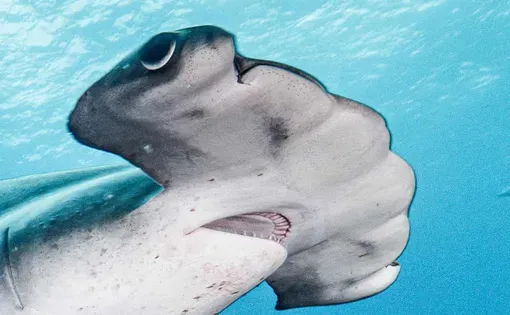

Many sharks undertake epic journeys, connecting distant ecosystems and playing critical roles in ocean health. However, their trans-boundary migrations put them at grave risk, especially from illegal, unreported, and unregulated fisheries—and many populations are in drastic decline. A critically endangered shark, the scalloped hammerhead in the Tropical Eastern Pacific, is a case in point.
In 2023, researchers from the Charles Darwin Foundation in Galápagos tracked for the first time a scalloped hammerhead shark swimming more than 1,000 km from Galápagos to Panama; she was pregnant and swam to the Panamanian mangroves to give birth. Now the challenge is on to find out more about the scalloped hammerheads' migrations and protect them throughout their range.
Helen Scales is the first journalist to join the foundation's shark research team on one of their twice-yearly ship-based expeditions to Darwin and Wolf Islands, in the remote waters of the Galápagos Marine Reserve.
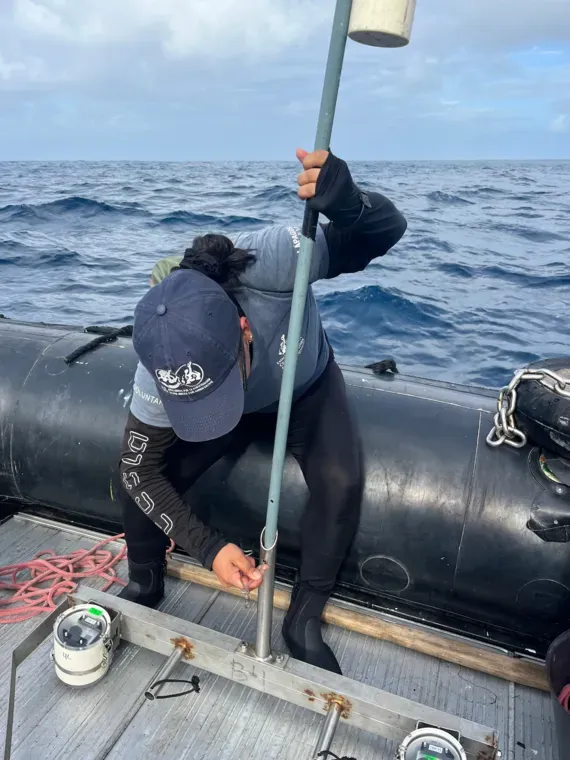
Scales’s reporting focuses partly on the team’s novel scientific techniques, including tagging free-swimming sharks to track their movements in Galápagos and beyond. Scales also investigates how the team’s scientific findings are helping to push for changes to international policy that will safeguard scalloped hammerheads and raise their profile as a "poster species" for wider ocean conservation.