Pulitzer Center Update August 17, 2026
Behind the Story: Uncovering Truths About Mega Data Centers

Project
The Backyard of AI
The boom of generative AI has launched tech giants into a race to increase their computing...


Para leer esto en español, haga clic aquí.
“One of the major challenges in investigating the physical infrastructure surrounding the artificial intelligence boom is the lack of transparency with which these large tech companies generally operate their data center complexes,” said 2024 Pulitzer Center AI Accountability Fellow Pablo Jiménez Arandia.
Jiménez, grantee Muriel Alarcón, and journalist Daniela Dib collaborated in the project The Backyard of AI to investigate how Chile, Mexico, and Spain are becoming hubs for companies to build data centers.
In each location, they discovered three very distinct responses from civilians and varying transparency laws.
“One interesting thing we observed in the case of Chile is how local communities have, in many cases, become experts on how this industry operates, because they have done the painstaking work of reviewing the hundreds or thousands of pages that projects of this type entail,” Jiménez said.
Jiménez points out that full environmental impacts of data centers have yet to be seen.
“We still need the perspective of a few years. We’re talking about hyperscale data centers, which are relatively new,” Jiménez said.
Pulitzer Center Publishing Assistant Ella Beiser spoke with Jiménez about the challenges of reporting on the physical infrastructure of data centers and how to leverage the limited information available.
The following interview has been edited for length and clarity.
Ella Beiser: Could you introduce yourself and briefly explain your project supported by the Pulitzer Center?
Pablo Jiménez Arandia: My name is Pablo Jiménez Arandia. I’m a journalist and investigative reporter from Spain. I work as a freelancer and specialize in the social and environmental impacts of technology, including artificial intelligence.
Between late 2024 and 2025, I was a Fellow at the Pulitzer Center as part of its AI Accountability Fellowship. During my Fellowship, I worked on a cross-border investigation covering Spain, Chile, and Mexico. In this project, we investigated how three regions in these countries were rapidly becoming major destinations for hyperscale data center companies—the largest data centers designed for generative artificial intelligence, which requires enormous computing power to function and, therefore, requires massive data center complexes to operate, both for training and for inferring or executing these applications.
And during the Pulitzer Fellowship, we sought to explore what was happening in those three regions. We looked at projects by Amazon Web Services—Amazon’s cloud computing subsidiary—as well as Microsoft and Google, which are, in fact, the three companies that hold the majority of the market for cloud services and cloud-based AI.
So we looked at more than 10 or 12 projects in these three regions, some of which had already been built. Others had only been announced or were in the planning stages.
What we tried to find out was how these companies operate and how they end up in the places where they set up. We also looked at how they interact with local communities—in terms of the information they provide—and what kind of impact they have, both socially and economically. Finally, we examined the role of local authorities in processing these projects and ultimately granting the necessary permits.

Beiser: What do the people living in those areas think about the data centers?
Jiménez: What we found were quite different situations and realities.
In Mexico, we looked at what’s happening in the state of Querétaro, north of the Mexican capital, Mexico City, which in a very short time has become one of the major hubs or regions for data centers in Latin America.
In Chile, we looked at the capital, Santiago, and especially the municipalities surrounding Santiago—on the outskirts.
One feature that is quite distinctive in the case of Chile—and which I have also observed through these projects in other countries—is that these companies often set up operations in working-class and industrial neighborhoods, that is, places where the local population is already facing a range of economic hardships and inequality.
And in the case of Santiago, Chile, I think this is very clearly evident in the various locations we examined.
Finally, in Spain, we’re focusing on the region of Aragón, which is located roughly between Spain’s two major economic hubs, Madrid and Barcelona.
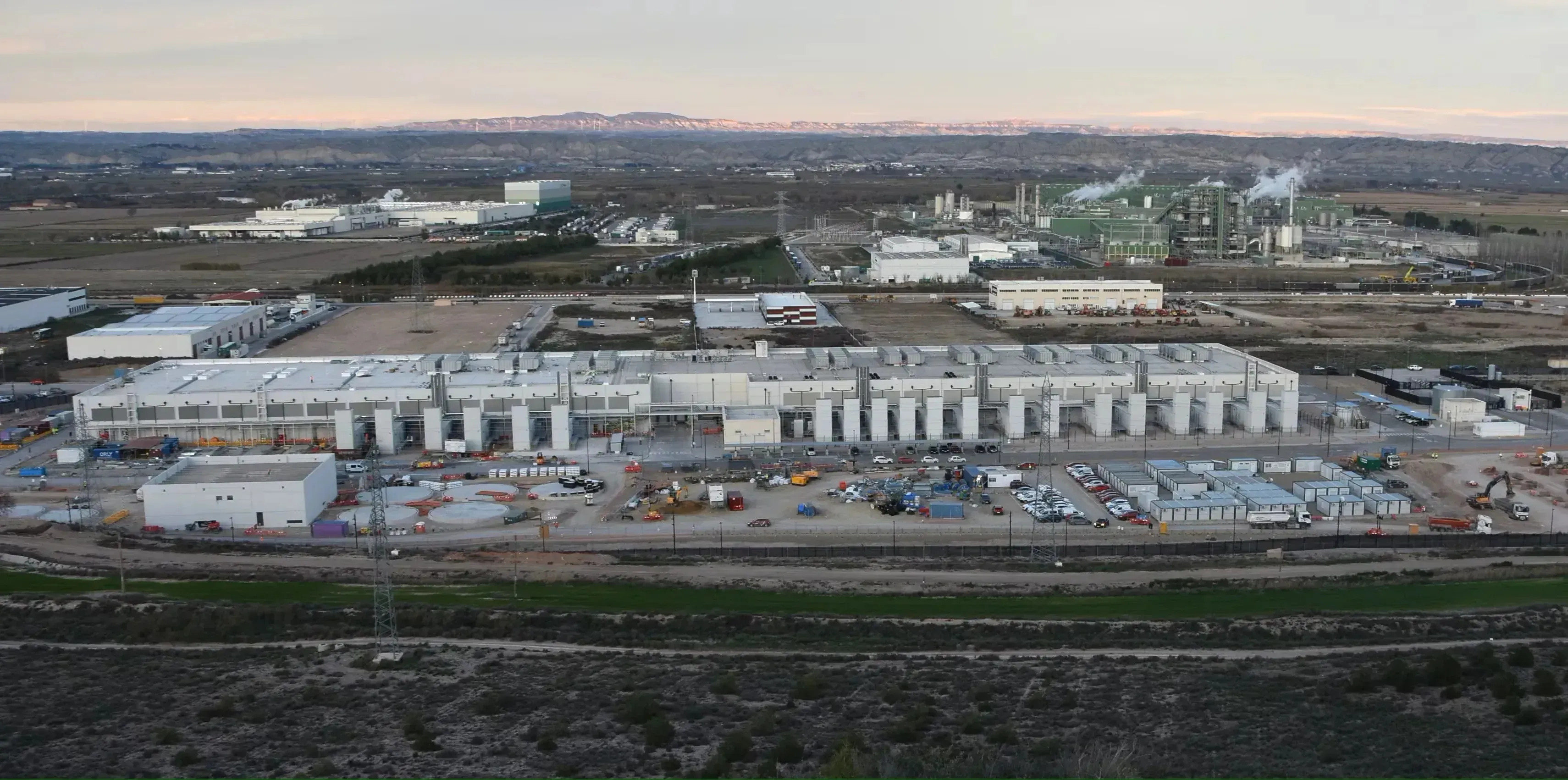
Here in Aragón, a phenomenon relatively similar to what has been happening in Querétaro and Santiago has taken place: Within a very short period of time—three, four, or five years, several hyperscale data center companies have set up operations here. Furthermore, in recent times, a long list of projects from other non-tech companies—as well as the real estate sector and investment funds—has been added to this, as they have found this to be a favorable location for establishing these types of complexes.
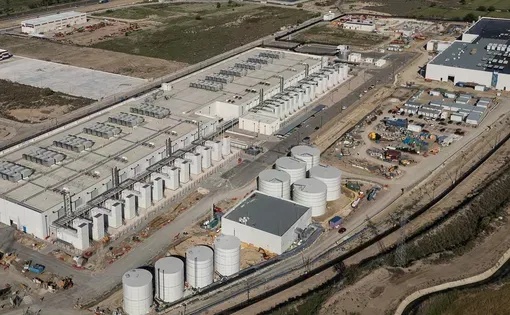
They are truly massive complexes. They look like enormous, windowless buildings surrounded by heavy security—which is indeed a characteristic feature seen almost anywhere there’s a large-scale data center complex.
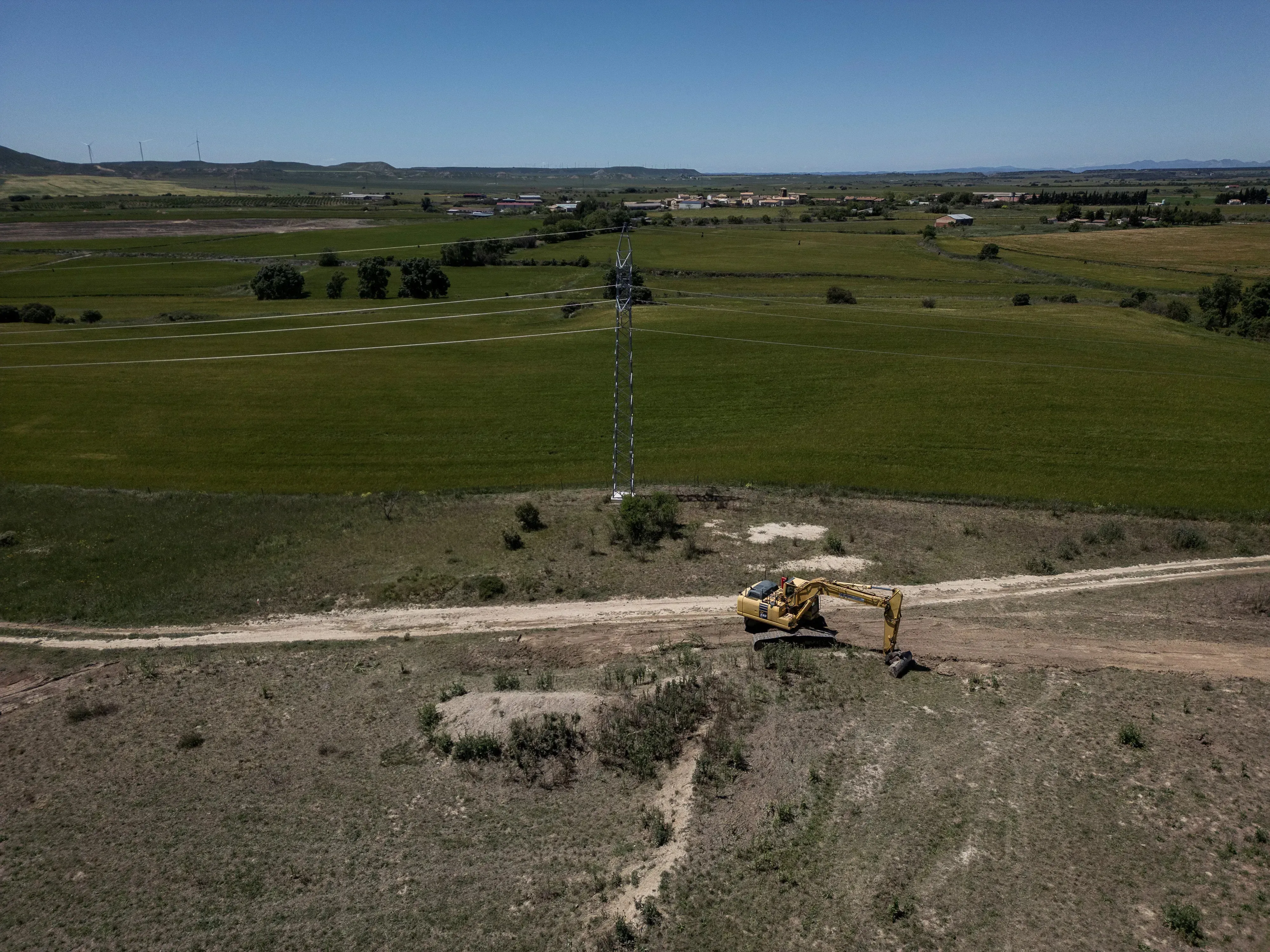
And aside from those buildings, there’s also a whole range of associated infrastructure—for example, the power infrastructure that supplies these complexes with electricity, which is one of the most distinctive features and one that’s increasingly raising concerns and coming under closer scrutiny, because the energy needs of these centers are truly enormous. They exceed even the energy needs of the entire regions where they’re located.
(Interview continues below the video)
In this August 16, 2025, video from El País, residents of the Punta Mocha hill surrounding La Pincoya, north of Santiago, Chile, protested against Amazon Web Services’ (AWS') plan to build three new data centers in the Chilean capital. The project required 24 high-voltage towers and a 3.5-kilometer power line to connect the substation—located among the homes in La Pincoya—to one corner of the nearly 10-hectare plot owned by AWS. The line was set to cross the only green space in the densely populated neighborhood in the Santiago district of Huechuraba.
In Chile, in the municipality of Huechuraba, one of the things we observed was how the local community opposed the complex because it would require the construction of a high-voltage power line—24 high-voltage towers that would cut through the municipality and, above all, the hill that surrounds the green space enjoyed by the residents of this working-class neighborhood there in Huechuraba.
And then, of course, there’s also the issue of water. Again, for someone who doesn’t know how these complexes work, they’re essentially huge facilities with thousands or tens of thousands of servers running day and night, which, as a result, overheat. Especially for those of us who are a bit older and remember older computers, it was common for them to overheat and have some kind of fan built in, because the servers used in these data centers contain microprocessors – microchips that are extremely powerful—and the overheating of these components is a problem for companies.
So they have to devise cooling systems, and one, well, several of the most common cooling systems involve the use of water to lower the temperature of these servers.
Beiser: Can you talk about how you navigated the limited information available about data centers?
Jiménez: Certainly. One of the major challenges in covering or investigating the entire physical infrastructure surrounding the current artificial intelligence boom is the lack of transparency with which these large tech companies generally operate their data center complexes. It’s difficult anywhere to find independent, verifiable data on the resources they use.
So, in some countries and in some places, you can access data from the companies themselves that they submit to the authorities when they’re applying for a project of this kind. But that also varies greatly from region to region.
For example, in the case of Mexico, in the state of Querétaro, companies are not required to submit environmental reports or specific technical reports to the authorities—at least not at the time we conducted our investigation there. This means it is very difficult to know how much energy, how much water, and how many greenhouse gas emissions a complex of this type will produce.
Eventually, we managed to obtain some data and information—for example, regarding the use of diesel generators by these complexes. This was made possible by reviewing requests that Mexican citizens had previously filed under Mexico’s transparency laws. This allowed us to access some public documents from which we were able to gather specific information on the technical aspects of these complexes.
Added to that, of course, is working with local sources—in this case, researchers who are studying the issue. In the case of Querétaro, when we were there, it was still a largely unknown topic even to local research centers, universities, and so on.
In Chile, however, the situation was a bit different. In Chile—at least until recently, when we were conducting this investigation there—there was indeed a comprehensive set of environmental laws in place regarding the permits these mega-complexes are required to obtain. These laws required them to make public all environmental reports associated with a mega-project, and in fact, any citizen who accessed a public platform could view and consult them there.
In fact, one of the stories we recount in the case of Chile is precisely how local communities learned about the mega-complexes that were going to be built in their communities, thanks to their almost constant monitoring of this public platform—in this case, operated by an agency known as the SEA, the Environmental Assessment Service— and thanks to that monitoring and constant vigilance of industrial projects in their communities, they were the first to learn that a complex of that nature was planned for construction.
One interesting thing we observed in the case of Chile is how local communities have, in many cases, become experts on how this industry operates, because they have done the painstaking work of reviewing the hundreds or thousands of pages that projects of this type entail.