
Project
War Crimes in Sudan
War crimes are being committed by a militia backed by the United Arab Emirates.
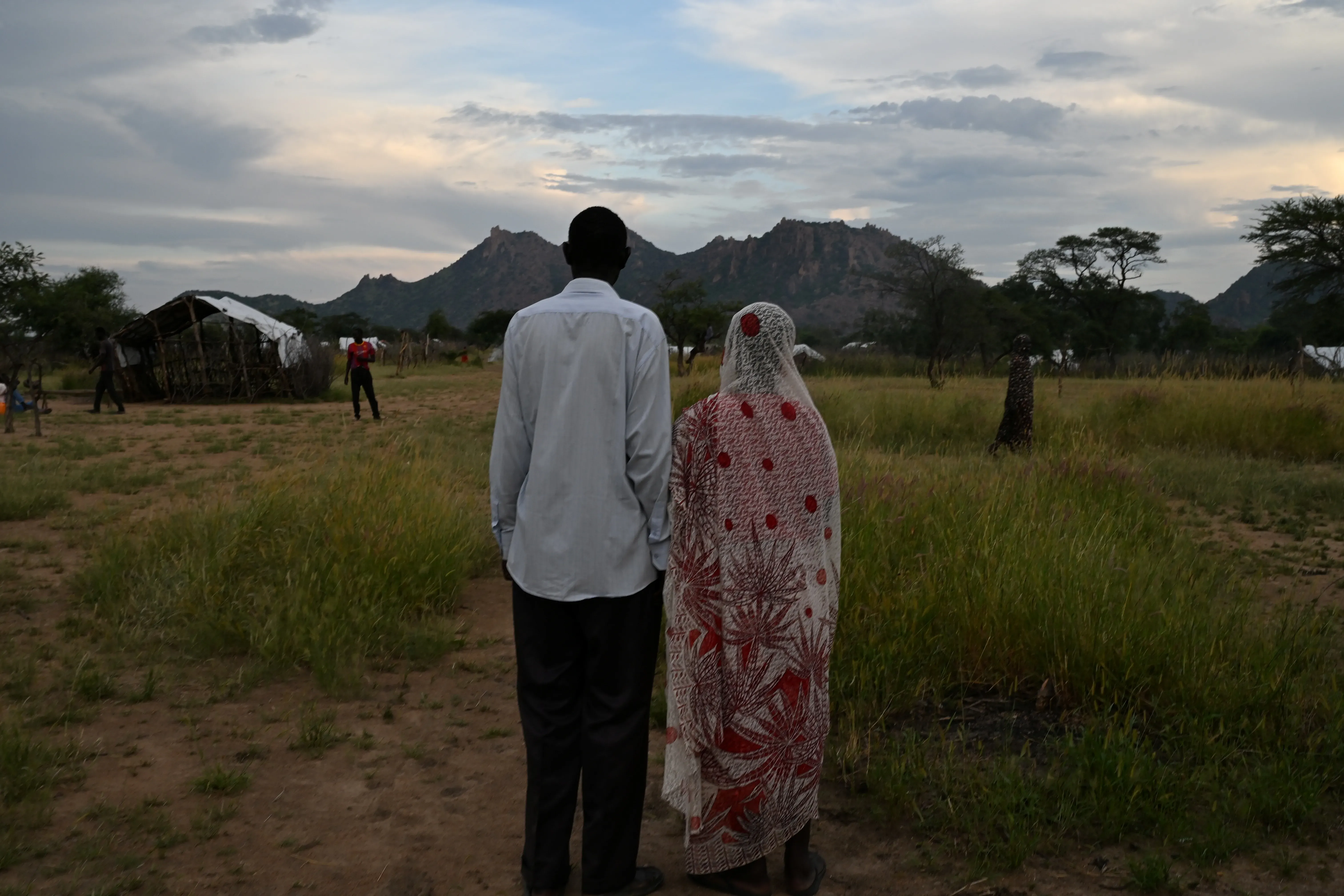
A family of nine’s desperate attempt to find safety in Sudan.
Like most civilians in Sudan, Wanis and his wife, Intisar, were unprepared when war broke out in Khartoum. The first day of fighting, April 15, 2023, was a Saturday. They’d planned to visit a cousin of Wanis’s who was undergoing treatment for diabetes at a hospital in Bahri, a neighborhood on the eastern side of the sprawling capital. Intisar and Wanis lived in Ombada, a western suburb; to visit the cousin, they’d have to cross the Nile, which bisects the city.
While preparing to leave, they learned that there had been clashes at the airport between Sudan’s Army and a paramilitary group, the Rapid Support Forces. Wanis worked as a courier at the airport, and wondered if the fighting would put his job in jeopardy. The R.S.F. soldiers, who followed a wealthy general known as Hemedti, were engaged in a contest of raw power against Sudan’s de-facto leader, General Abdel Fattah al-Burhan.
Intisar proposed cancelling the hospital visit, fearing that they might be targeted for violence by the warring groups, each of which was led by Arabs. Both Wanis and Intisar belonged to the Nuba people, a Black population long persecuted by Sudanese Arab leaders. But Wanis was undaunted.

As a nonprofit journalism organization, we depend on your support to fund more than 170 reporting projects every year on critical global and local issues. Donate any amount today to become a Pulitzer Center Champion and receive exclusive benefits!
Wanis had arrived in Khartoum from the Nuba Mountains, in the south, in 1993, and landed a job in a cookie factory. He met Intisar nine years later. She had come from the same region and had found work on a plot of farmland outside the city. Wanis was smitten after just one encounter, and he instructed his brother to tell Intisar that he wanted to marry her. At first, she declined: she needed the permission of her family, and they were in the Nuba Mountains, unreachable by phone. When Wanis next saw her, he told her, “No problem.” Intisar liked his directness. He’s quick in his responses and he has nothing to hide, she thought. He is humble. This man has a good heart.
A few months later, Intisar travelled to see her parents, and Wanis accompanied her. He introduced himself to Intisar’s parents and offered a dowry—four cows, twelve goats, and the equivalent of twenty dollars. Intisar’s parents agreed to arrange a wedding. After the ceremony, Wanis and Intisar stayed up all night dancing. Then they returned north to Khartoum, to start a new life together.
When fighting broke out in the capital, the couple had been married for twenty-three years and had seven children. The area where they lived was poor, with spottily paved streets. Their friend Nafisa, a Nuba schoolteacher, told me that whenever the Arabs developed an area non-Arab Black populations were moved “somewhere else—to a marginal place where there are no services.”
Wanis and Intisar had nonetheless built a haven for their family in Ombada. Intisar, who was thirty-eight, was jovial and well known around the neighborhood for having two pairs of twins. Wanis was tall and charming, a fifty-six-year-old with old-fashioned manners. They lived in a single-story house with a zinc roof, elegant wood furniture, two rooms with verandas, and a salon with a large flat-screen TV, on which Intisar enjoyed watching Bollywood romances. Nafisa told me that Wanis worked tirelessly at his courier job and was more “financially stable” than most. She said of the house, “It was very beautiful. Wanis had a house made from bricks. . . . He even had fans.”
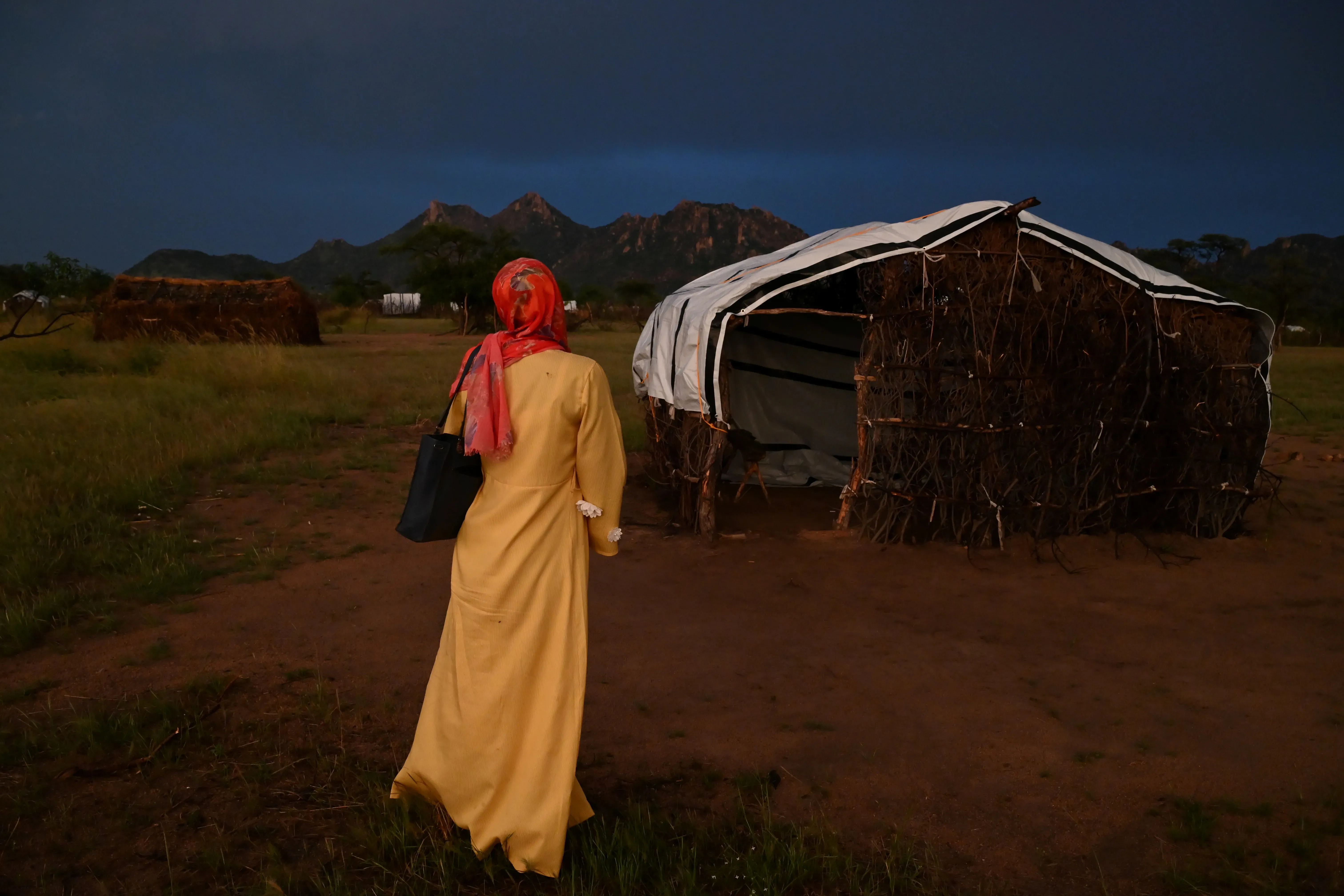
Wanis saw his situation differently. His monthly salary was about three hundred and sixty dollars—hardly a fortune, even in a poor country like Sudan. “I wasn’t saving,” he told me. “The money would go for school fees, food, things that my children wanted.”
That morning, Wanis left the house alone. While he headed east, by minibus, the R.S.F. fighters seized control of the airport. Shortly afterward, the Republican Palace, the seat of Sudan’s government, also fell.
Wanis made it to the hospital, but his visit with his cousin was interrupted by frequent gunfire. He tried to call home, but the phone network had gone down. In Ombada, Intisar heard from their children that warplanes were dropping bombs. She saw clouds of black smoke across the Nile. Intisar and Wanis are Christian, and the children began to pray for Wanis’s safety.
At the hospital, Wanis heard the explosions getting closer. At around 1 p.m., shots began hitting the building. Wanis and his cousin dived under a bed. Three hours later, Wanis got a phone signal, but he couldn’t reach Intisar. He called a relative who lived in their neighborhood and said, “Tell them I’m still at the hospital.” The relative soon phoned him back: Wanis’s wife and children were safe.
When night fell, Wanis crept outside, flattening himself against walls to avoid being spotted by fighters. He arrived at a station where minibuses were departing for Ombada. That morning, he’d paid less than a dollar to cross the city. Now the price was nearly seven dollars.
The R.S.F. was still gaining ground, and its troops were pushing into Ombada. At around 9 p.m., amid ferocious shelling, Wanis arrived home. God has protected him, Intisar thought. She fell asleep as Wanis listened to the tumult outside. He feared that if they stayed in Khartoum all of them would die. The airport had been heavily damaged in the fighting, and the R.S.F. now controlled it, so returning to work was out of the question. With seven kids, he had limited options. The family’s only realistic way out was a long bus ride to the Nuba Mountains, where they still had relatives. But Wanis couldn’t yet afford nine tickets, which collectively cost about fifteen hundred dollars. And the route would take his family through the heart of the conflict.
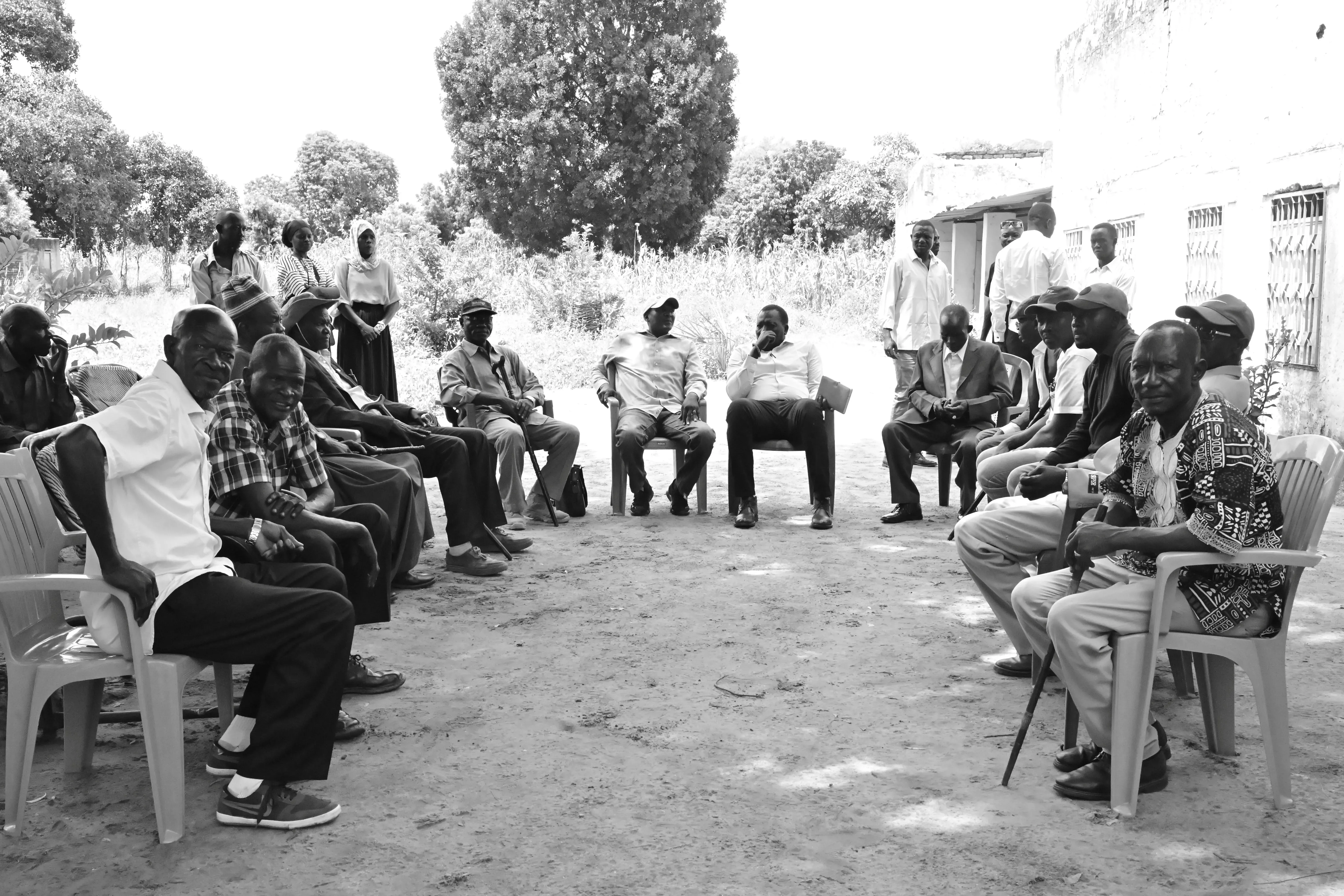
In Sudan’s current civil war—its third since gaining its independence from Britain and Egypt, in 1956—casualty estimates range from sixty thousand to a hundred and fifty thousand. The country has few resources to count the dead, however, so the true death toll may never be known. Since 2024, Sudan has also been in a state of famine, in part because the fighting has impeded the dissemination of humanitarian relief. In addition to the R.S.F., at least sixteen militias are vying for power. The R.S.F. has exploited the chaos to ferry gold—which is extensively mined in Sudan—out of the country, making it the wealthiest militia by far. (As Sudan has deteriorated, the global price of gold has soared, recently reaching all-time highs.)
Hemedti, the R.S.F. warlord, is an Arab Sudanese who was born Mohamed Hamdan Dagalo to a camel-herding people who moved between Darfur and Chad, Sudan’s neighbor to the west. Now in his fifties, Hemedti has become a billionaire, mostly thanks to the R.S.F.’s black-market trading of gold. He has close ties with the United Arab Emirates—a prime destination for the precious metal. Jérôme Tubiana, an adviser on refugee issues for Doctors Without Borders, has met Hemedti twice. “He’s more a businessman than a politician, and more a businessman than a warlord,” Tubiana said. “He was compelled to become a politician and a warlord by his tribe—and by the feeling that his business will not grow if he’s not also investing in the military and political fields.”
Arab supremacy is one of the R.S.F.’s animating ideas, and non-Arab Sudanese have increasingly become targets of racially motivated violence. According to Tom Perriello, the special envoy for Sudan during the Biden Administration, the R.S.F. has even poisoned non-Arab civilians in some parts of the country, reportedly by lacing bags of flour with fertilizer. (The Trump Administration hasn’t named a new envoy.)
According to a recent United Nations report, the “sheer scale of sexual violence” committed by the various combatants in Sudan is “staggering.” Mona Rishmawi, a member of the U.N.’s Independent International Fact-Finding Mission on the Sudan, told me, “We documented violations from both sides, from Sudanese Armed Forces and the R.S.F., but the kinds of violations that we documented by the R.S.F. were extremely severe. We are talking about systematic looting, systematic rape—it’s not incidental.” In November, the Strategic Initiative for Women in the Horn of Africa reported that women in the Sudanese state of Al-Gezira, south of Khartoum, were dying by suicide to avoid being raped. Tapiwa Gomo, an official from the U.N. Office for the Coordination of Humanitarian Affairs, told me, “I’ve never been in a country where you find all the indicators at the worst level. Sudan is in that place—worst food crisis, worst hunger crisis, worst learning crisis, worst children’s crisis, worst displacement crisis, worst protection crisis.”
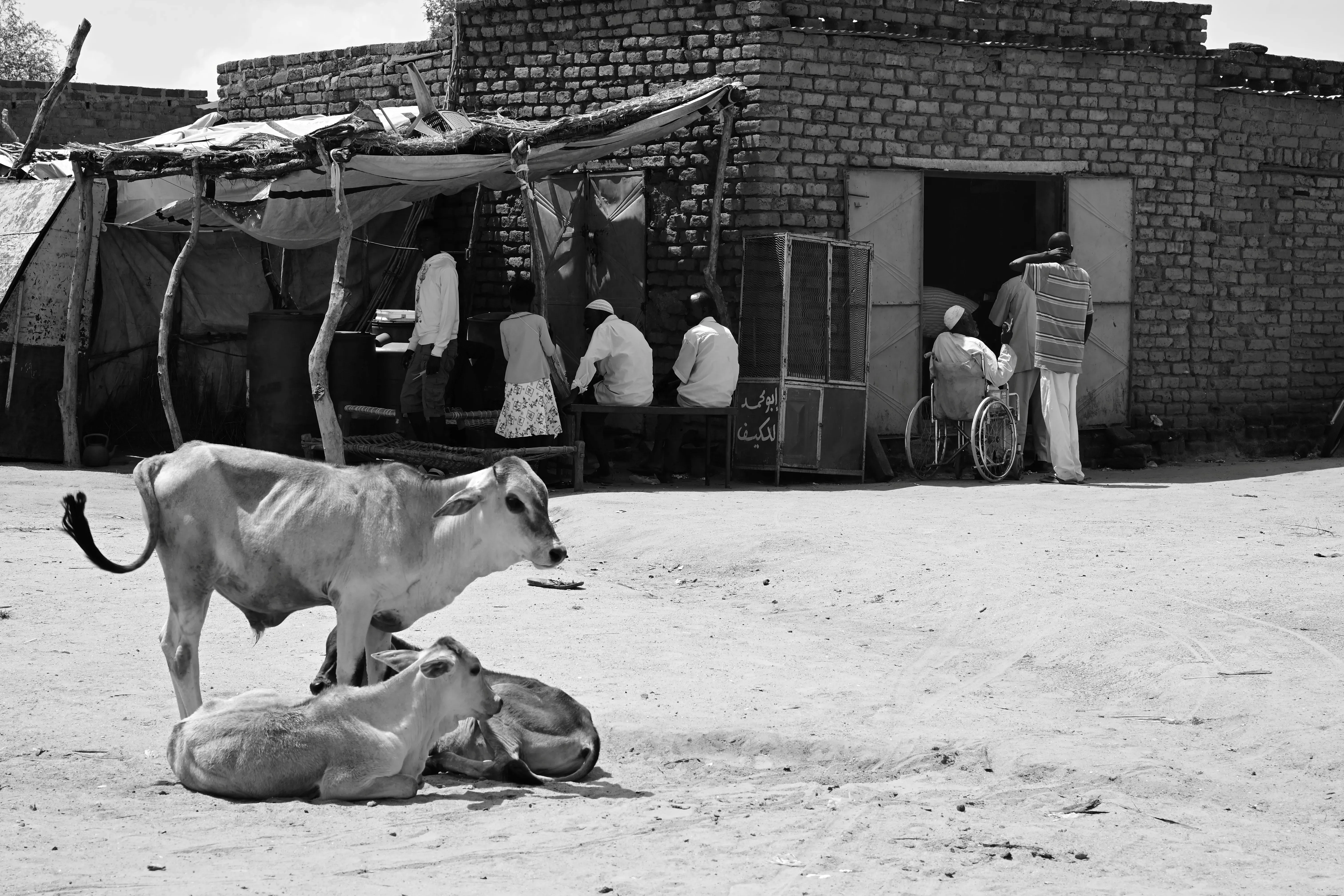
Sudan’s civil war has also become a proxy conflict among regional actors. The U.A.E. has secretly shipped weapons to the R.S.F. by disguising them as humanitarian aid. Amgad Fareid Eltayeb, a Sudanese human-rights advocate, told me that the U.A.E.’s interventions were “prolonging suffering and prolonging the war.” (The Emirati Ambassador in Washington did not respond to requests for comment.) Saudi Arabia and Egypt, meanwhile, appear to be supporting the Sudanese government, which has also received weapons from Iran.
I visited Sudan late last year, spending two weeks in the province of South Kordofan, which includes the Nuba Mountains. Three-quarters of a million displaced persons, mostly from Darfur and Khartoum, have fled to the area. I travelled there with Jean-Baptiste Gallopin and Belkis Wille, war-crimes investigators with Human Rights Watch. Gallopin, a tall Frenchman, and Wille, a sandy-haired Swiss Turkish researcher, have tried to bring global attention to the conflict, which has received markedly less coverage than the wars in Ukraine and Gaza. In May, 2024, they released a report on mass atrocities committed by the R.S.F. in Darfur, which they reconstructed using hundreds of testimonies. An absence of electricity and cellphone coverage in Darfur, they noted, had allowed the R.S.F. to murder ten to fifteen thousand civilians without the world noticing. There had been “the perfect conditions for an attack without accountability,” Wille told me.
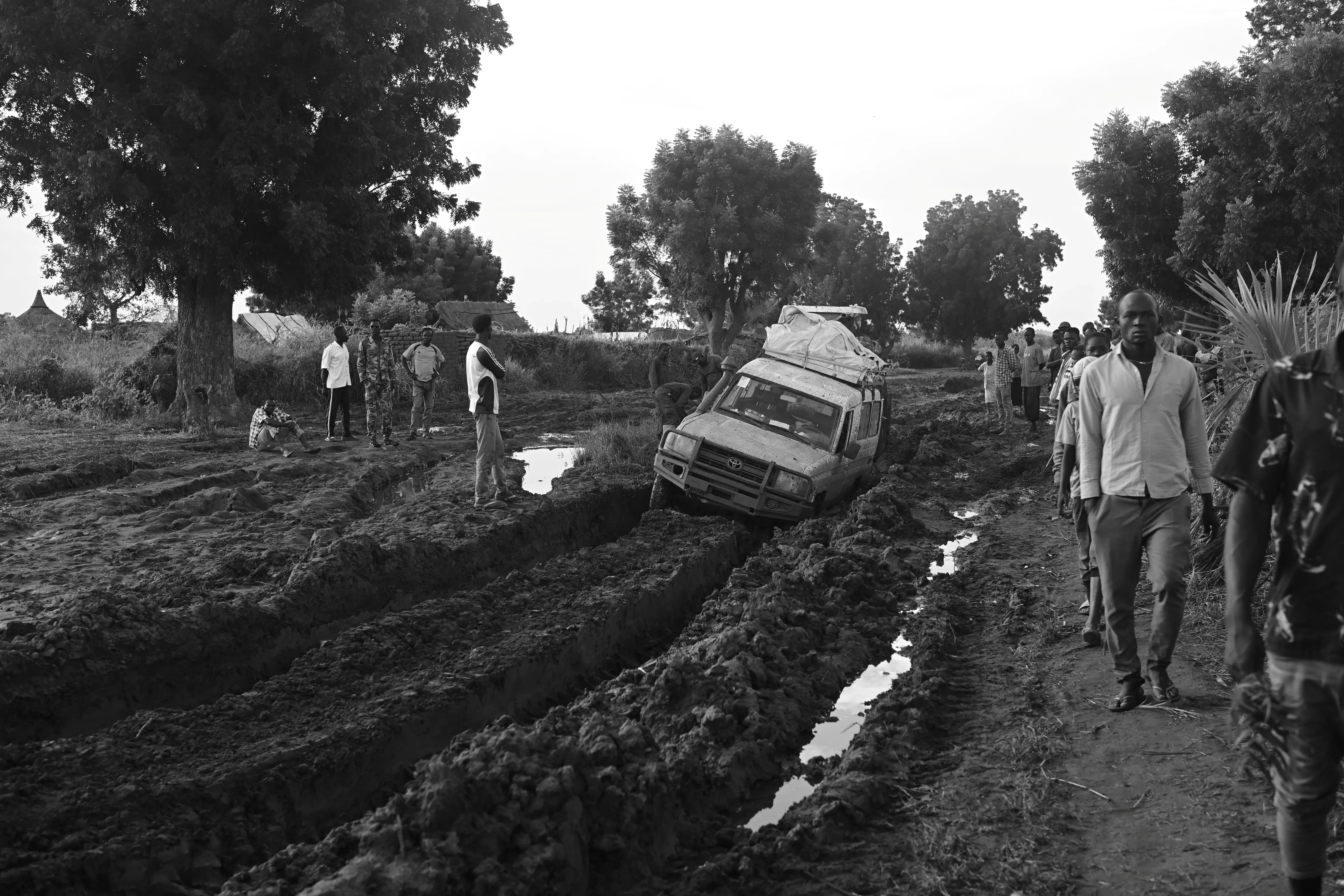
Gallopin and Wille had heard reports that racism against the Nuba was also leading to mass killings in South Kordofan. I followed them as they travelled through thick mud on snake-infested roads to visit camps for displaced persons. They conducted nearly a hundred interviews, which they later cross-referenced with satellite imagery of towns and villages that had been burned. Eventually, they concluded that members of the R.S.F. had been involved in many crimes against humanity in South Kordofan, where they levelled villages, “looted, raped women and girls, and killed men and boys who tried to intervene.”
Two months ago, the Sudanese Armed Forces took back the Presidential Palace, but conditions in the capital remain extremely dangerous, and the government’s recapture of Khartoum has led to an escalation of fighting throughout the country, as the R.S.F. struggles to rebound. Recently, the R.S.F. was accused of slaughtering more than a hundred civilians in Nahud, a city in the south. The R.S.F. has also acquired new weaponry, including exploding drones that were recently used to decimate the country’s main port.
Gallopin and Wille, in their Darfur report, called for “a civilian-protection mission for Sudan” composed of international peacekeepers. But when I spoke with Perriello, the former U.S. envoy, he said that there’s no will—in Khartoum or internationally—for such a move. “Sudan’s warring generals don’t want to concede power to an armed peacekeeping mission,” he said.
A spokesperson for the U.S. State Department told me that the Trump Administration is “focussed on resolving the crisis in Sudan,” adding, “We continue to engage with key regional and like-minded partners to urge the R.S.F. and the Sudanese Armed Forces to cease hostilities, allow unhindered humanitarian access to all parts of the country, protect civilians, and take steps toward a negotiated peace through inclusive dialogue. All external actors must cease military support to the belligerents.” The International Crisis Group, a think tank based in Brussels, recently warned that if the war in Sudan continues unabated it “could lead the country to fragment” into yet more pieces.
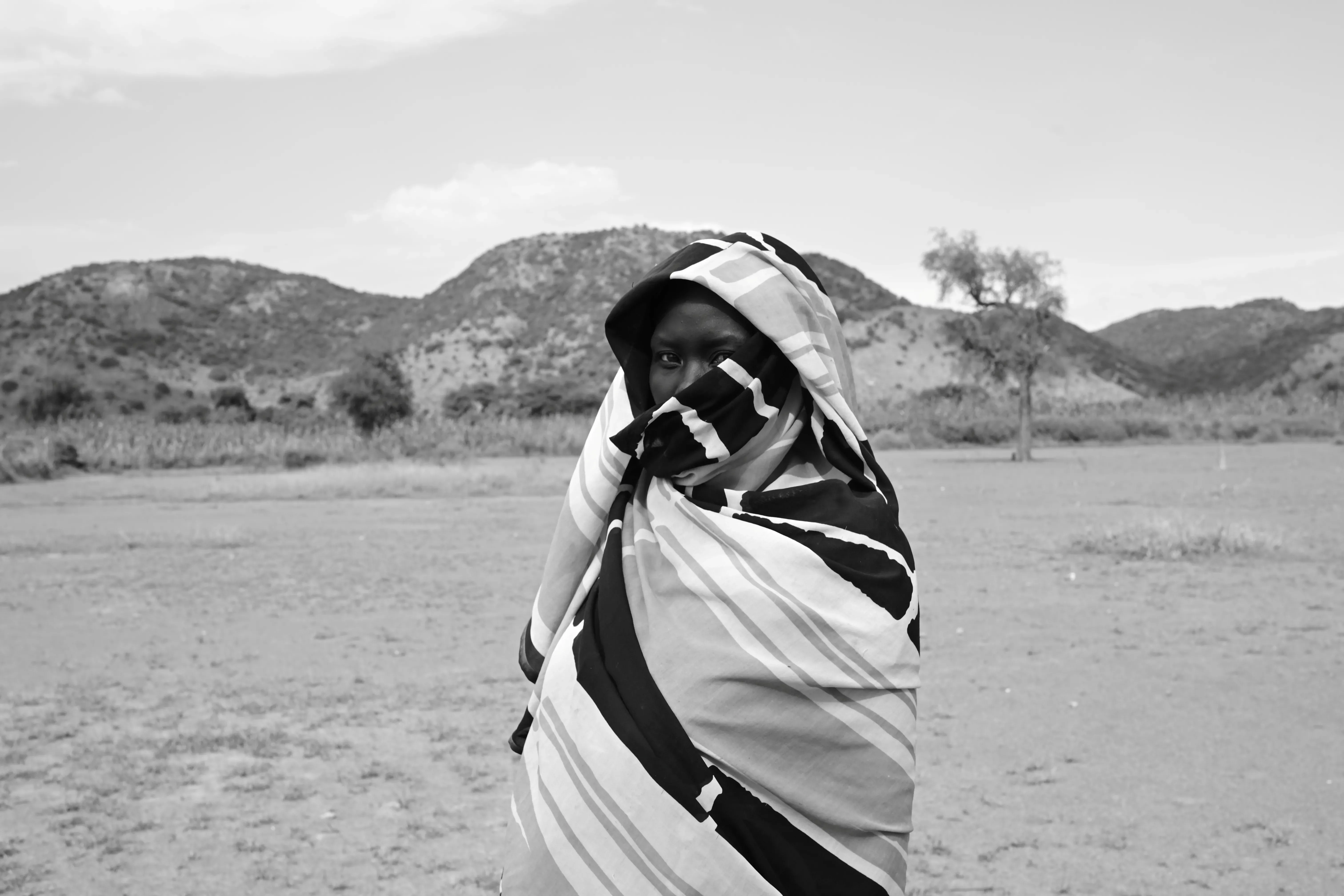
On the second day of the war, Intisar and Wanis took their children to church, even though fighting continued nearby. They were intimately involved with their local branch of the Sudanese Church of Christ. Wanis said that, after the government had blocked construction of a church a few years earlier, they’d helped the group buy a different plot of land. When Father Yaagoub, the priest, gave his sermons, Wanis said, “it felt like he was speaking directly to you—God gave him this gift.”
During the church service, a Sudanese-government plane dropped bombs nearby. “There were flames, there was smoke,” Intisar told me. The R.S.F. began firing anti-aircraft weapons, and the Army responded with mortars, which fell among civilian homes. The family spent much of the day at home, hiding under their beds. “When we turned on our TV, we found that Khartoum had been destroyed,” Wanis remembered. “It was a disaster.”
Wanis and Intisar agreed that they had to leave the capital. But fighting had broken out across Sudan, and reports of atrocities were filtering in from the countryside: mass rapes, mass executions, torture. The couple’s older twins, Tawfik and Tibian, who were twelve, began having nightmares in which men came to kill them. Tibian stopped eating.
Although every civilian was affected by the conflict, the non-Arab population was particularly at risk. A Sudanese women’s-rights activist told me that “women from African ethnicities were the first who were targeted and raped in the early days of the war.”
Two days after Khartoum erupted into violence, a plane strafed the Ombada church when Intisar was inside. Then she heard that a neighbor had been raped. Intisar became afraid even of going to the market. R.S.F. soldiers were entering homes and stealing gold, televisions, furniture. “If we tried to talk to them, they would shoot us,” Intisar recalled. One day that May, she saw R.S.F. fighters stop a man who was driving through the neighborhood. They demanded his car. He refused, and they shot him. When bystanders tried to help the dying man, they were shot, too.
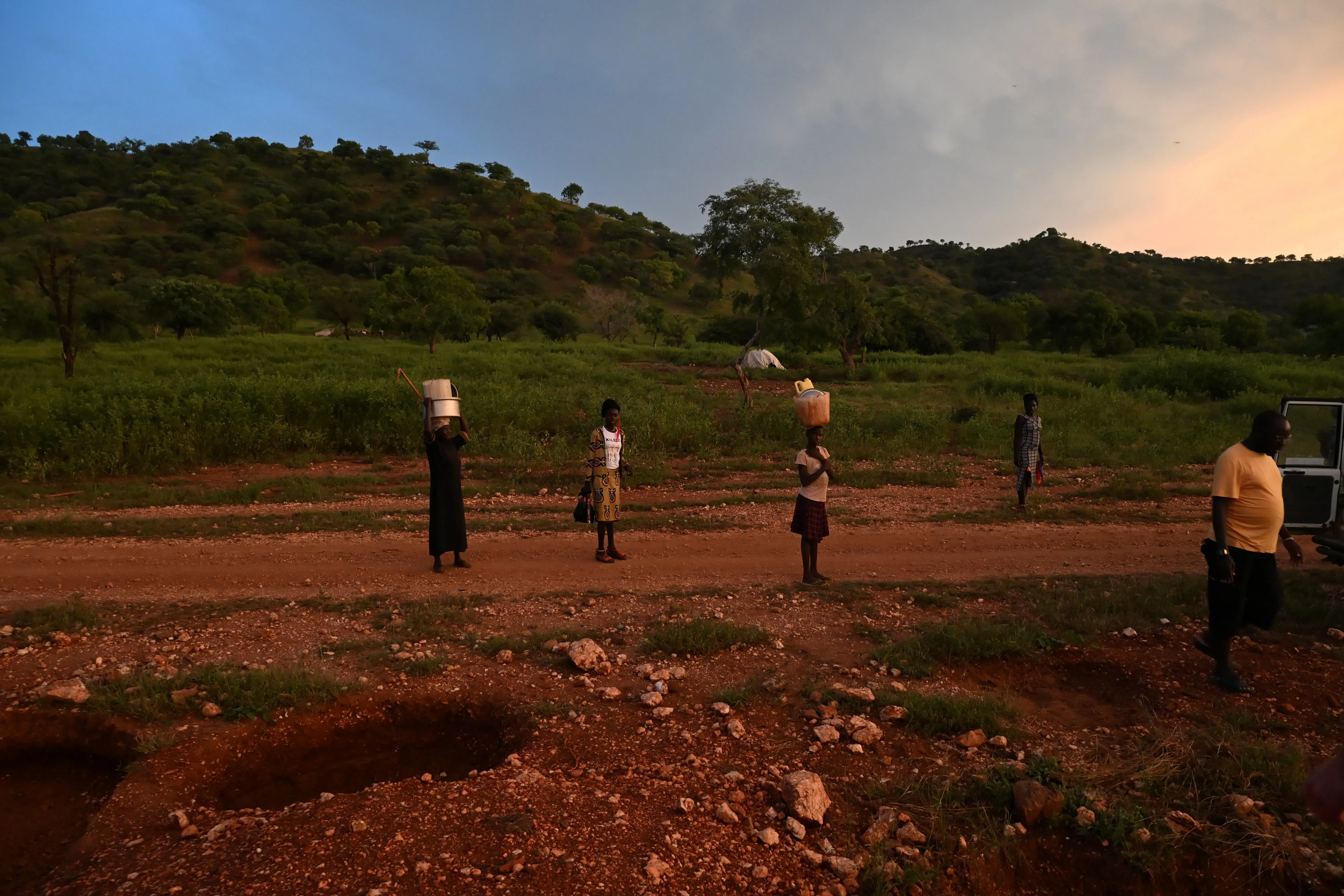
Wanis and Intisar had hoped that the fighting would end quickly, but it continued into the summer. Food and water grew scarce. Wanis gave most of what he could procure to his wife and kids. His blood pressure skyrocketed, and his entire body trembled whenever R.S.F. fighters began shooting nearby. “If anyone gets the chance to leave, get out of here!” he advised others.
Intisar saw hunger hollowing out her husband’s cheeks. Fear was chiselling away at his faith. “We are not alone,” she reassured him. “God is with us.”
“I haven’t forgotten God, but in this situation how can we get food?” he said, with exasperation. “How are we going to survive like this?”
Some five hundred miles to the south, Wanis knew, a group composed mainly of Nuba rebels had gathered in the mountains and created a haven for civilians. One of his brothers, who had remained in the Nuba Mountains, assured him that the family would be largely out of danger there. But Wanis worried that they’d waited too long to escape. International workers had been evacuated in the first days of the conflict, but the roads leading out of the city were now controlled by soldiers, militiamen, and bandits.
Horrible things had indeed happened to people who’d travelled on the roads to the south. When the conflict broke out, Mudathir, a father of three who sang at Intisar and Wanis’s church, had been attending a Bible camp in the Nuba Mountains. He’d taken a bus with other attendees to return to Khartoum. At an R.S.F. checkpoint, he’d been stripped naked, forced to sit on thorns, and stabbed in his pelvis and buttocks. R.S.F. fighters had threatened to kill him and all the other Nuba travelling with him. At the last minute, an R.S.F. leader told the soldiers not to execute civilians. He saved Mudathir’s life.
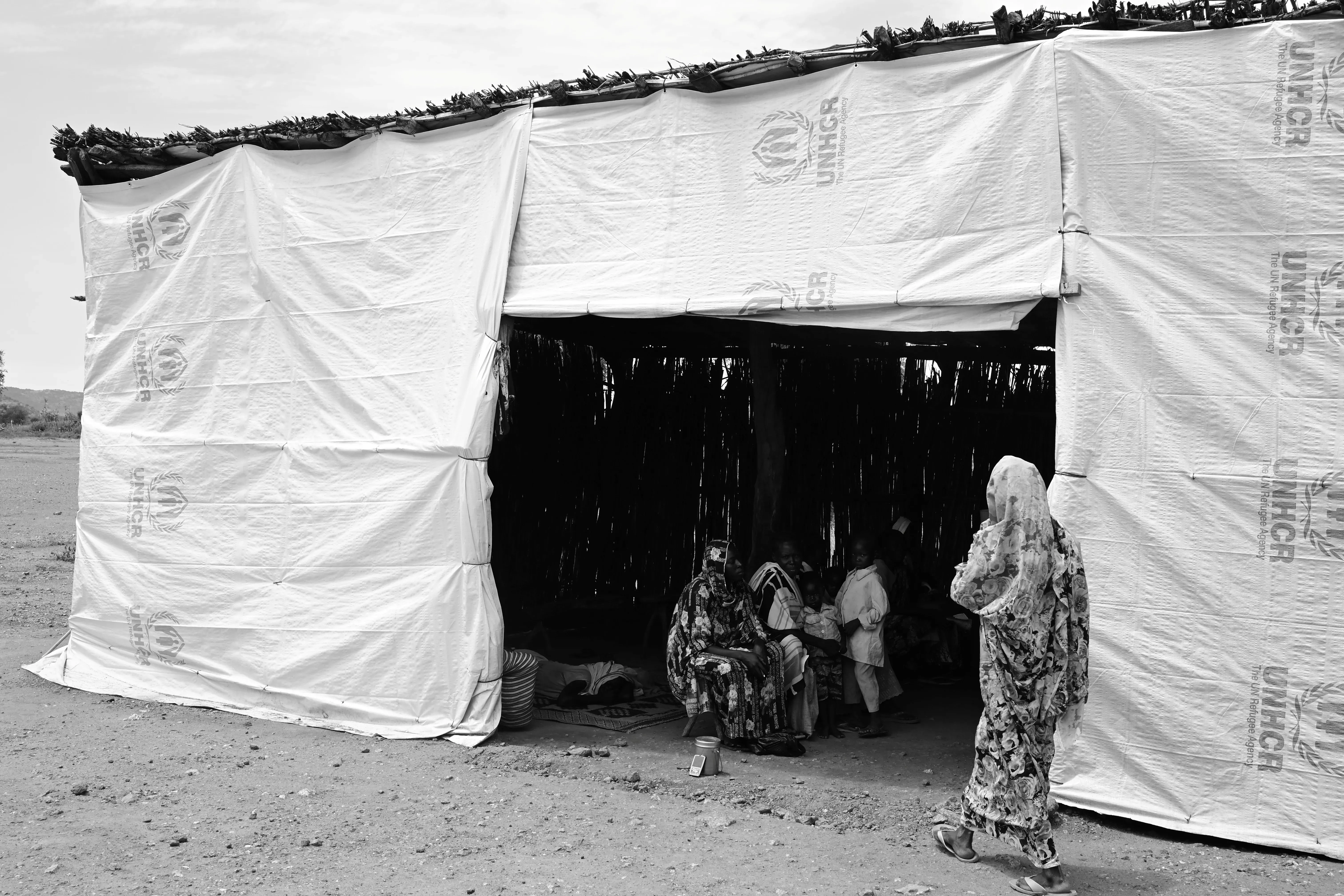
Wanis decided that, despite the dangers of the southern route, the only realistic destination was the Nuba Mountains. Life in Egypt would be safer, but border authorities were charging astronomical sums for visas. He was determined to amass the fifteen hundred dollars for the bus tickets, but it was too dangerous for him to leave the house, let alone find a job.
In desperation, he reached out to Ismat, his old boss, who had fled to Dubai. “Are you still there?” Ismat asked.
Wanis replied, “I couldn’t find a way to get to go out, because I don’t have money.”
“How can I send you money?” Ismat asked.
Wanis expressed gratitude and replied that Ismat could use a money-transfer app called Bankak. But Sudan now had cellphone service only from 5 a.m. to 8 a.m. A Bankak agent in the city could help him receive the money transfer, but to meet him Wanis would have to cross through contested territory.
That evening, there was intense fighting between the Army and the R.S.F, but Wanis slipped outside anyway. “Even if you went at night, it was terrible,” Intisar told me. “He risked himself.” It felt like the weather had changed—exploded ordnance had made the summer air even hotter. The streets reeked of the metallic smell of gunpowder, and the heavy smoke set Wanis coughing.
He zigzagged his way to the house of the Bankak agent, who helped him receive an electronic transfer of fifteen hundred dollars from Ismat. Wanis thanked his former boss again. Then he rushed home to tell Intisar that they could finally afford to flee.
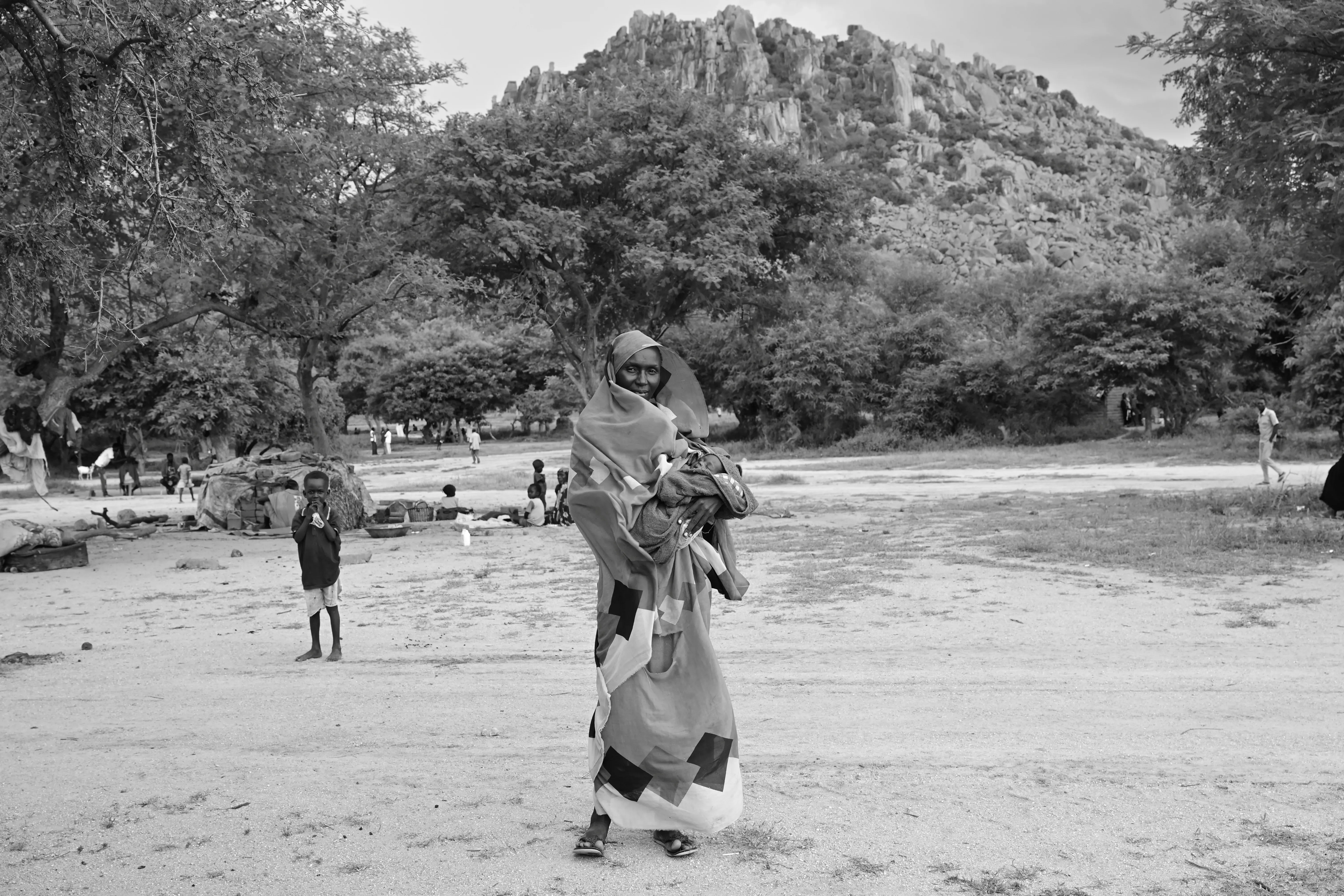
Sudan was one of the first sub-Saharan African countries to win its independence. But its British and Egyptian colonizers left behind a volatile mixture of ethnicities and resentments—and virtually unpoliceable desert borders. Sudan was then Africa’s largest country. Its northeastern population was heavily Arab, and its southern and western populations consisted mainly of non-Arabs. In 2011, much of the south officially broke off to form the new nation of South Sudan. What remained of Sudan was ethnically split. Regions such as Darfur and the Nuba Mountains had many Muslims, but other areas were largely animist and Christian. Khartoum was a little more cosmopolitan, but Arabs unquestionably held the power in the capital.
“Sudan” derives from the Arab word for “black,” but in the racialized vocabulary of the country Arabs have come to be called ahmar, or “red,” and people with black skin azrag, or “blue.” Racial animosities date to the era of the Arabian slave trade. Khartoum was founded as a slave market, in 1821, and Arabs continued to raid southern areas, including the Nuba Mountains, for human chattel long after the practice was outlawed, in 1924. Slave raids were reported in Sudan as late as the early two-thousands, and the Arabic word abid—“slave”—is a common racial slur used to describe Black Sudanese.
The R.S.F.’s roots lie in a militia from western Sudan called the janjaweed, which Omar al-Bashir, the country’s dictator from 1989 to 2019, cynically aligned with to eliminate resistance to his rule. In 2003, after civilian unrest broke out in Darfur, the Sudanese Army and the janjaweed killed some fifty thousand non-Arab Darfuris. (Another quarter of a million people died of related causes, including starvation.) In 2008, the International Criminal Court started issuing arrest warrants for the perpetrators of the massacres in Darfur.
Among the Arabs who joined the janjaweed was Hemedti. With the encouragement of the Bashir regime, Hemedti’s nomadic group claimed land that had traditionally belonged to the Fur, a non-Arab population. (Hemedti has claimed that he joined the janjaweed only after non-Arabs raided his family’s camel herd.)
The government armed the janjaweed with modern weapons and vehicles. In 2006, Hemedti led brutal raids on the Fur. His fighters mass-raped women and crushed men with their vehicles. In 2009, Bashir’s government rewarded Hemedti for fighting Darfuri insurgents by making him a security adviser.
After South Sudan declared independence, the regions bordering the breakaway country remained restive, and the Bashir regime began deploying a new paramilitary force there. Its members had been recruited from among the janjaweed of Darfur, and its leader was Hemedti. The government named this paramilitary the Rapid Support Forces. “They gave them heavy weapons, modern weapons,” Wanis remembered. Soon, he noticed that R.S.F. soldiers were even guarding the Army’s headquarters, in Khartoum.
Alex de Waal, the executive director of the World Peace Foundation and a scholar of modern Sudan, told me, “Bashir really turned Hemedti into a celebrity of the new militarism.” But the government wasn’t always able to manage the R.S.F. In Darfur, the two forces fought for control of checkpoints—which made significant profits through shakedowns. In 2015, R.S.F. soldiers who’d been sent to pacify the people in the Nuba Mountains mutinied, commandeered some hundred and fifty trucks, and took off for their home bases in Darfur.
The same year, a coalition that included Saudi Arabia and the U.A.E. attacked Yemen’s Houthi rebels. Air strikes were not enough to defeat the Yemenis, but the Saudi Arabians and the Emiratis were loath to have their armies engage in ground combat. So they turned to Sudan. Bashir sent forces from both the Army and the R.S.F. to Yemen in return for payment. As many as forty thousand R.S.F. fighters were deployed.
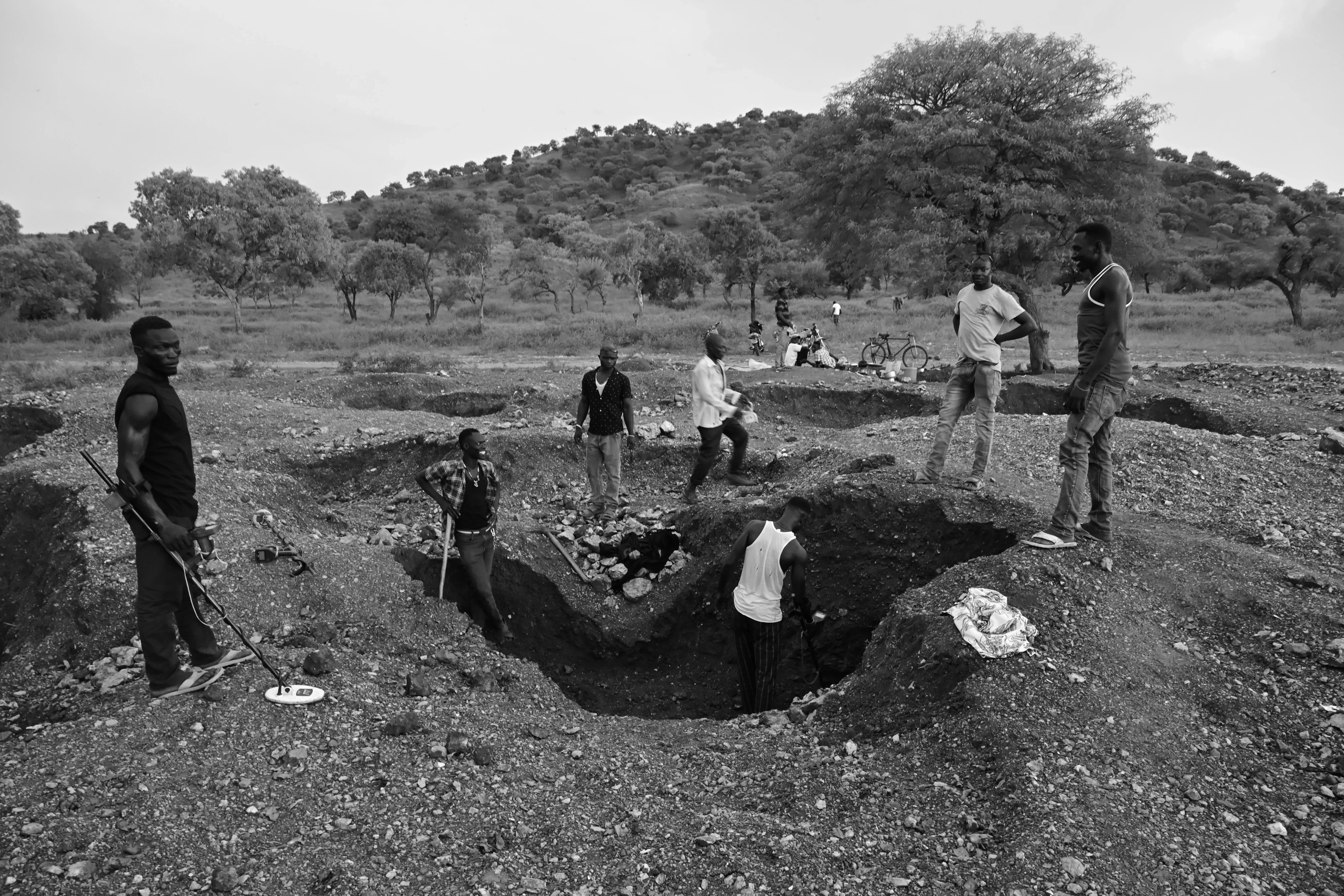
Hemedti cashed in on his newfound leverage with the Emiratis. In Darfur, he seized Jabal Amer, a mountain with rich seams of gold, and virtually all the mine’s product ended up in the U.A.E. According to Global Witness, an anti-corruption N.G.O., Hemedti used shell companies to funnel the profits from gold trading back to the R.S.F.
In 2019, Hemedti sent R.S.F. fighters to Libya to support an Emirati-backed general in the war there. After being paid forty million dollars by an unknown benefactor, he travelled to Dubai and bought six hundred Toyotas that could be mounted with machine guns. Meanwhile, tens of billions of dollars’ worth of gold was being funnelled to the U.A.E. each year, a significant portion of it through companies linked to Hemedti.
While Hemedti was becoming a warlord, a dour intelligence colonel named Abdel Fattah al-Burhan was climbing the ranks of the Sudanese Army. Bashir had deployed Burhan to West Darfur, where some of the regime’s worst massacres of civilians had occurred.
In 2019, the Bashir regime collapsed after thousands of people marched in the streets, demanding a less repressive and more ethnically inclusive government. Among them were Wanis and Nafisa, the Nuba schoolteacher. Wanis was overjoyed. A technocratic caretaker government was soon installed.
Nafisa, however, understood that Arab supremacists continued to hold sway in the capital. Despite Sudan’s new government, the real power clearly lay with Hemedti and Burhan, who now commanded the Army. The soldiers who had committed the worst excesses against non-Arabs in Darfur and in the Nuba Mountains had more power than ever.
In 2021, the R.S.F. and the Army overthrew the civilian-caretaker government. Burhan and Hemedti initially shared power, but their alliance quickly fell apart, in part because the R.S.F., with its racist ideology, was angry that Nuba men had been allowed to join the Army. Moreover, Hemedti felt that Burhan, who is from a town overlooking the Nile, did not respect nomads like him. A person who has been involved in negotiations to end the current conflict told me, “You can feel when you talk to Hemedti that he has that feeling—like he’s the real victim. He wasn’t allowed into the country club. He was looked down on by the other guys, and he went out and showed them: ‘I’m a better general and a better businessman, and I’m better diplomatically.’ ” Hemedti’s petty resentments had led to all-out war.
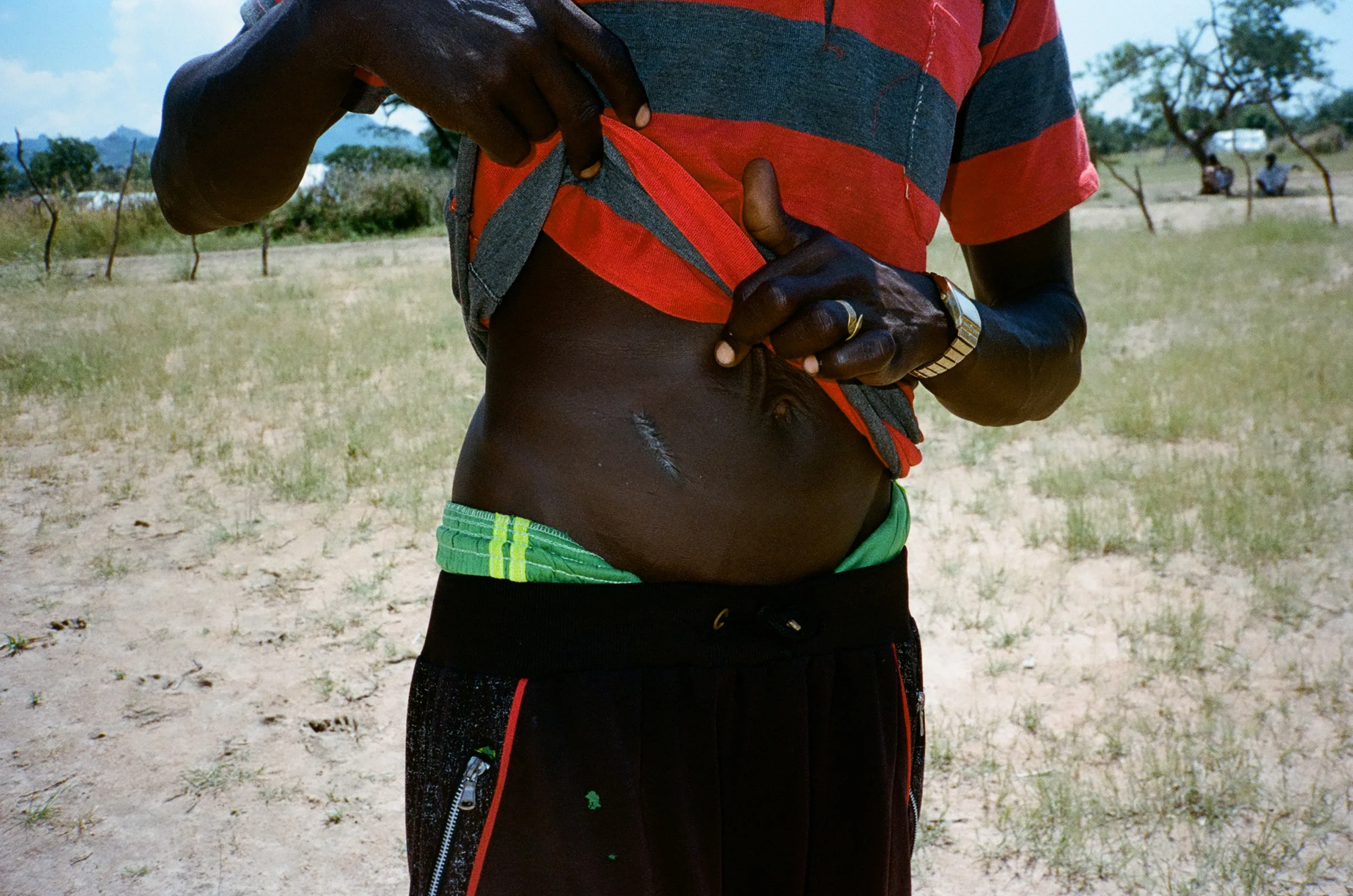
Mudathir, the man who had returned from the Bible camp, was also determined to take his family south. He’d used only leaves and traditional remedies to heal his stab wounds—getting proper medical care had become almost impossible. The R.S.F. was regularly raiding his neighborhood at night, killing, stealing, and raping. He even heard a rumor that Black people were being killed for their organs. “Let’s go to Nuba Mountains,” his daughters said to him. “If we stay here, we will die.” (The R.S.F did not respond to several e-mails, but it has previously blamed the mass killings on outlaws engaging in “tribal conflict.”)
On June 17th, Mudathir heard a commotion outside his house. R.S.F. fighters in khaki uniforms were stealing a man’s money. “Then they raped him,” Mudathir said. “They passed him from one to another.”
Once the fighters left, Mudathir ran out to help the man. But the soldiers returned, carrying a can of gasoline. “Why are you bothering with this man?” one fighter asked.
“He’s a human being, just like me,” Mudathir replied.
The fighters poured fuel on the man. Mudathir tried to stop them, but they were armed. The man was weeping as the fighters set him on fire. A soldier warned Mudathir, “Your turn is coming.”
Mudathir went back inside. A few hours later, a neighbor called out to him. R.S.F. fighters in five Land Cruisers had pulled up on their street, saying that they had come to kill Mudathir. Panicked, Mudathir gathered his three daughters. But he couldn’t find his wife, and he was afraid to shout for her. He and his daughters silently scaled the neighbor’s wall. The neighbor told Mudathir to hide under a bed, behind two jerricans of wine. He wedged his lanky frame into the hiding spot and prayed for his wife.
The R.S.F. searched Mudathir’s house, and, failing to find him, abducted his wife. That evening, an announcement was made over the megaphone of the local mosque: “Any Nuba must leave. We want to clean the country.” The R.S.F. was ostensibly carrying out an operation to rid the neighborhood of people who sympathized with its opponents, but it was targeting only one ethnicity.
Mudathir faced a dreadful choice: stay behind and search for his wife, risking his and his children’s lives, or flee to safety. He decided to save his children. By 8 a.m., he and his girls were on a bus heading south.
Intisar and Wanis made their final preparations to escape. Intisar was devastated to be abandoning their home, but she also understood that the city as they knew it was gone. “Khartoum has nothing,” she said. Everyone’s belongings were stuffed into two suitcases and one smaller bag. Wanis had heard that R.S.F. soldiers, many of whom were illiterate, might mistake Sudanese national I.D.s—which feature the state emblem, a bird carrying a shield—for Army I.D.s, so everyone’s cards were left behind. Intisar lamented that she couldn’t bring her beloved cooking pots and angel figurines. “We’ll get these things,” Wanis told her. “God will give us everything.”
Before dawn on August 6th, Intisar, Wanis, and their seven children went to the bus station. The proprietor of the bus line, a Nuba named Sharif, collected fares in cash. About seventy people crowded onto a vehicle intended for forty-five. Sharif had amassed more than thirty-three hundred dollars from the travellers—a fortune in an immiserated country.
Before Wanis climbed on board, he put one of the suitcases in a pile of luggage on the ground. Suddenly, half a dozen R.S.F. fighters arrived at the station, demanding money from the passengers. One of Sharif’s employees asked why they were taking the bus fares of people who were trying to flee. A fighter grabbed the employee by the neck. “Shoot this man!” another soldier cried. A shot rang out.
Wanis, watching through the bus window, saw that the bullet had missed the employee. Instead, it had struck a child, who lay dead on the street. The R.S.F. troopers continued to fire. The driver kicked the bus into gear and sped off. The suitcases were still on the ground.
The road south from Khartoum was a black tarmac strip through flat scrubland. August is the rainy season, and the countryside was boggy. The bus carrying Wanis’s family passed through several R.S.F. checkpoints without incident. Perhaps the trip will be easy after all, Wanis thought.
At midday, the driver announced that the bus had a mechanical issue. He pulled over at a rest stop and told the families that they could grab a snack for their children. Through the bus window, Wanis saw scores of uniformed R.S.F. fighters and numerous vehicles mounted with heavy guns.
The soldiers ordered everyone off the bus, and told the men to get on their knees. When an elderly passenger protested that he was too old, the fighters beat him with a whip. Wanis kept his eyes lowered. There was nobody around who could hold the R.S.F. troopers to account.
A man wearing a captain’s triple stars addressed the passengers: “If there are any soldiers here, we need them to talk before we find them.” He told the men to remove their shirts, and ran his fingers over their bare shoulders—perhaps looking for bruises caused by rifle recoil.
The captain began questioning Wanis in an Arabic dialect that Wanis barely understood: “Where are you going?”
“The Nuba Mountains.”
“Why? Most people flee to Egypt or abroad.”
“This is my land. If I die, I will die in my land.”
The captain ordered Wanis to lie down. Wanis’s children began crying and shouting, “Father!” The captain beat Wanis, bashing his head repeatedly. “You Nuba people, you stand with the Army,” the captain said. Wanis kept repeating that he wasn’t a soldier.
After the captain was done abusing Wanis, he let him board the bus, but not before telling him, “We’re supposed to kill you like dogs.”
A few hours later, at an R.S.F. checkpoint outside the town of El-Obeid, the men on the bus were again ordered out. Fighters began thrashing the passengers with camel-hide whips. But a senior trooper intervened. “We were supposed to rape you, to use you,” one of the soldiers told the women as they climbed back onto the bus. “But we didn’t, because he came to defend you.” It was the same checkpoint where Mudathir—the Bible-camp attendee—had been saved by the kind R.S.F. trooper. Wanis didn’t know if it had been the same man.
Staring at the flat grassland from the bus window, Wanis could see Jabal al-Dair, a cluster of rocky peaks, glimmering in the distance. If they avoided disaster, by the next day he and his family would be safe among their own people in the lush, rolling landscape of the Nuba range. The area had long been a refuge for the Nuba, many of whom are descendants of people who were pushed out of other parts of Sudan by Arab raiders.
When Sudan was colonized, in the nineteenth century, British administrators saw the Nuba as noble savages, and closed off the Nuba Mountains in a bid to preserve “primitive” traditions. As a result, when Sudan declared independence the area remained poorly developed and had few schools. The Arabs leading the new country viewed the Nuba—and most southerners—as backward.
Sudanese in the south began to rebel against the north in the nineteen-fifties. Nuba farmers initially didn’t participate, but after racially discriminatory laws were passed, in the early eighties, they joined the fight, led by a group called the Sudan People’s Liberation Movement, or S.P.L.M. In 1983, the country’s second civil war broke out.
Around this time, Chevron discovered oil in the Nuba Mountains. In 1989, Omar al-Bashir, who had just taken power, became determined to quell the restive Nuba region, in no small part because he wanted to exploit its natural resources.
Wanis was then living in the mountain village of Al-Geney. He’d begun helping his father with the family farm, taking cattle out to graze and cultivating the soil. The Nuba were traditionally agrarian, but by the late twentieth century raising cattle had become an important part of their livelihood. Wanis’s father, Kafitera, told him, “You need to be wealthy and have cows, goats, and chickens.”
Arab raiders began to besiege the village. One night, Wanis was awakened by gunshots coming from the nearby compound of Kafitera’s brother-in-law. Wanis ran over and saw that a wooden fence was on fire. His relative was lying dead on the floor of the barn, a pool of blood surrounding his chest. After killing him, Arab raiders had stolen about a dozen cattle, including a fat milking cow.
Throughout the year, Wanis heard gunfire around his village. Arab raiders burned entire settlements. As the violence increased, Wanis and his family moved from their village to Dilling, a lowland town of sixty thousand people. Reports that terrible things were happening to the Nuba filtered in from the mountains. Wanis used a shortwave radio to tune in to rebel broadcasts from Ethiopia. John Garang De Mabior, a southern rebel with a Ph.D. in economics from Iowa State University, spoke of a “New Sudan” in which all ethnicities would be treated equally—an idea that resonated deeply with Wanis.
In 1992, the government pressured Muslim clerics to declare a holy war against Nuba who opposed the regime. A former security chief in the region said in an interview that “the ongoing order to the troops is to kill anything that is alive . . . to destroy everything, to burn the area, so that nothing can exist there.” Nuba men were herded into “peace camps,” where they died of starvation and disease, and women were forced into marriages with Arabs.
During the second civil war, which lasted until 2005, an estimated six hundred thousand Nuba died, from violence, famine, or disease. But the rebels held on, despite almost no outside support. It’s a matter of intense pride for the Nuba today that the Bashir regime failed to perpetrate a genocide against them.
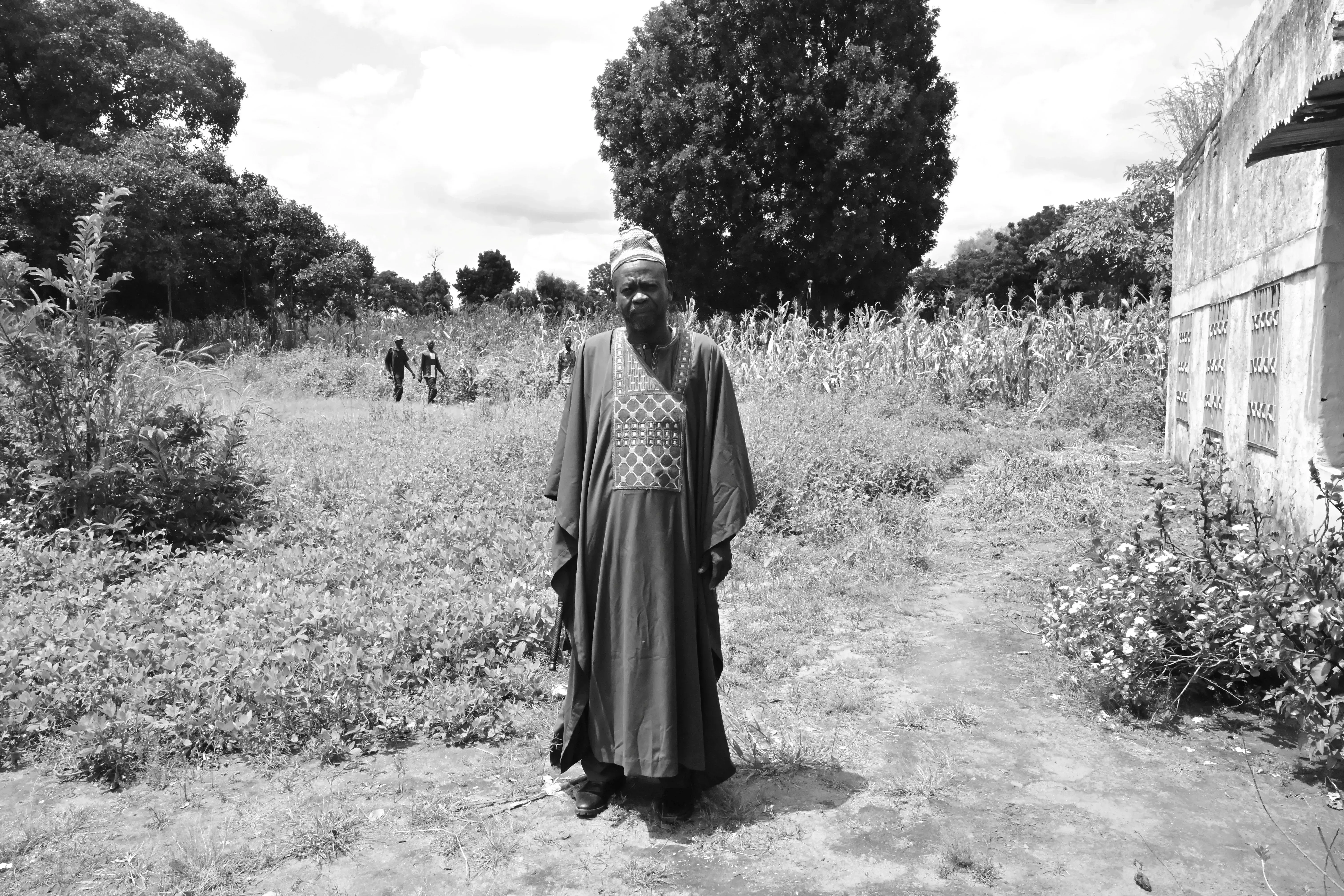
The bus entered Al-Rahad, a railway hub near a large river basin. It was stopped at another R.S.F. checkpoint, and troopers searched the travellers. Wanis had a Samsung A13 phone and some cash; the troopers confiscated both. “If they found something nice, they took it,” Wanis said. After collecting the loot, the troopers allowed the bus to leave town, but one warned the passengers, “If you go into a mouse’s hole, we’ll reach you. If you go to the ends of the earth, we’ll reach you. You just ran from death in Khartoum. But, even in the Nuba Mountains, you’ll find death.”
Intisar was miserable—everything she owned had been stolen. After a while, though, she saw the first Nuba peaks. “I saw my mountains, and I felt that it is not so important,” she said. “I cheered up and realized that the clothes were nothing.”
The bus stopped for the night in a Nuba village. It had been two days since Intisar, Wanis, and their children had eaten a proper meal. The villagers brought them porridge and water. The children were so traumatized that they could barely stomach food, but they were touched by the generosity.
The next morning, the bus continued further into the mountains, beyond areas controlled by the R.S.F. The passengers were now in territory held by the S.P.L.M.-N.—an offshoot of the rebel group that had formed in the eighties. (The original S.P.L.M. now governs South Sudan.) The S.P.L.M.-N.’s leader, Abdelaziz al-Hilu, still adheres to Garang’s vision of a multiethnic New Sudan.
Wanis was happy to be in an S.P.L.M.-N. stronghold. He had kept a secret from most of his friends and family: In 2005, while he and Intisar were starting a family in Khartoum, he had joined the S.P.L.M. At the time, the country was relaxing restrictions on freedom of expression. He studied a fifteen-point program, inspired by Garang’s thinking, that included plans to develop the country industrially and encourage good governance, and he taught the program to newer recruits. In 2011, the Army raided S.P.L.M. offices and arrested members. Wanis had been careful not to provide the S.P.L.M. with his full identity, so the police never targeted him. After the arrests, Wanis kept his head down and focussed on work and church, but he still believed in a New Sudan.
Even in the mountains, the R.S.F. remained an active threat to the Nuba. In late 2022, fighters from the group had attacked civilians near the mountain town of Kadugli. Jérôme Tubiana, the Doctors Without Borders adviser, told me, “The tribalization of the conflict in Sudan is even more obvious in the Nuba Mountains than in Darfur.” Noura, a tea seller in Kadugli, told me that racist Arab Sudanese had “abused Nuba people in the market,” adding, “When you worked, sometimes they didn’t even give you money. They just treated us like slaves.” She said that her employer, an Arab, had tried to slip poison into her food.
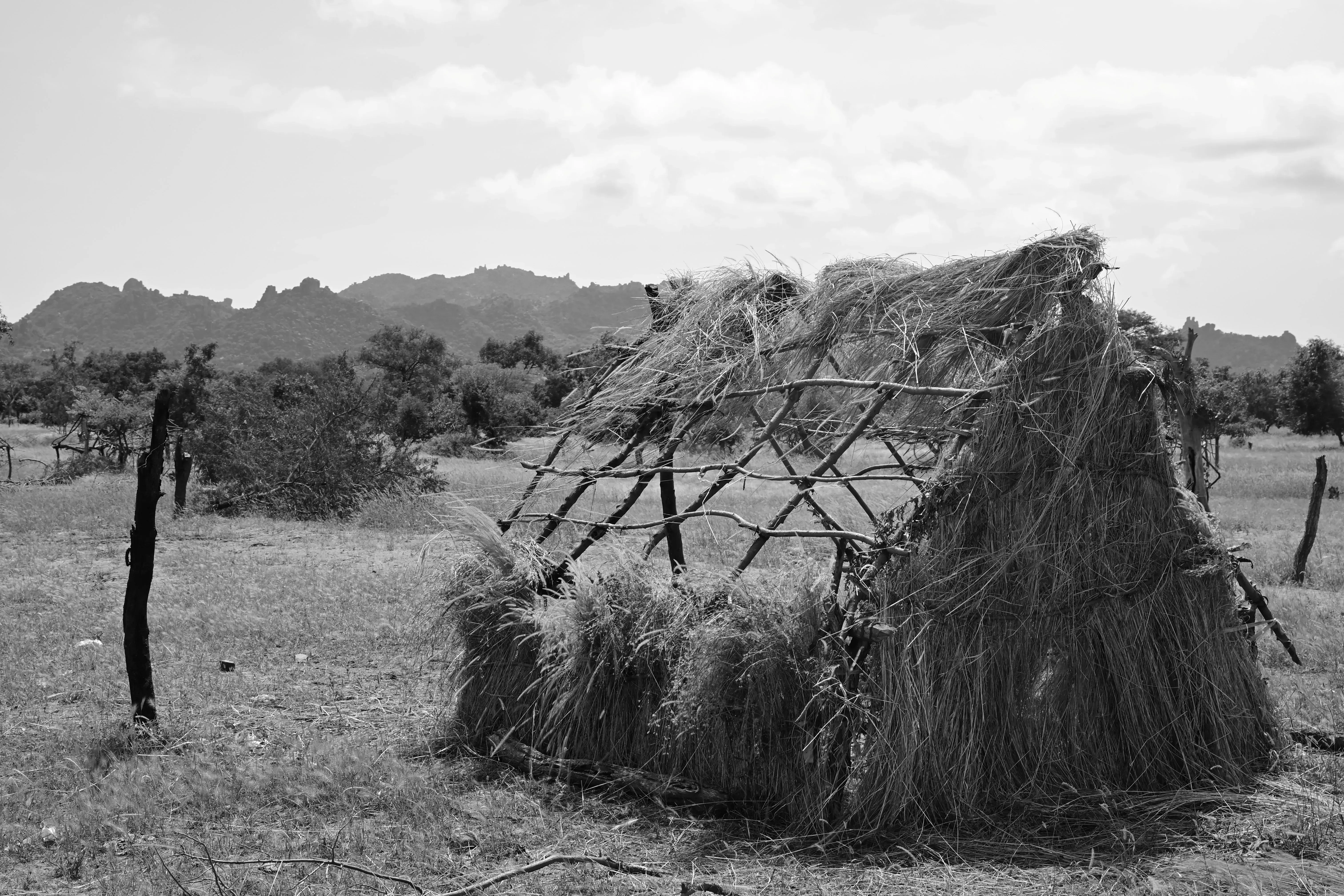
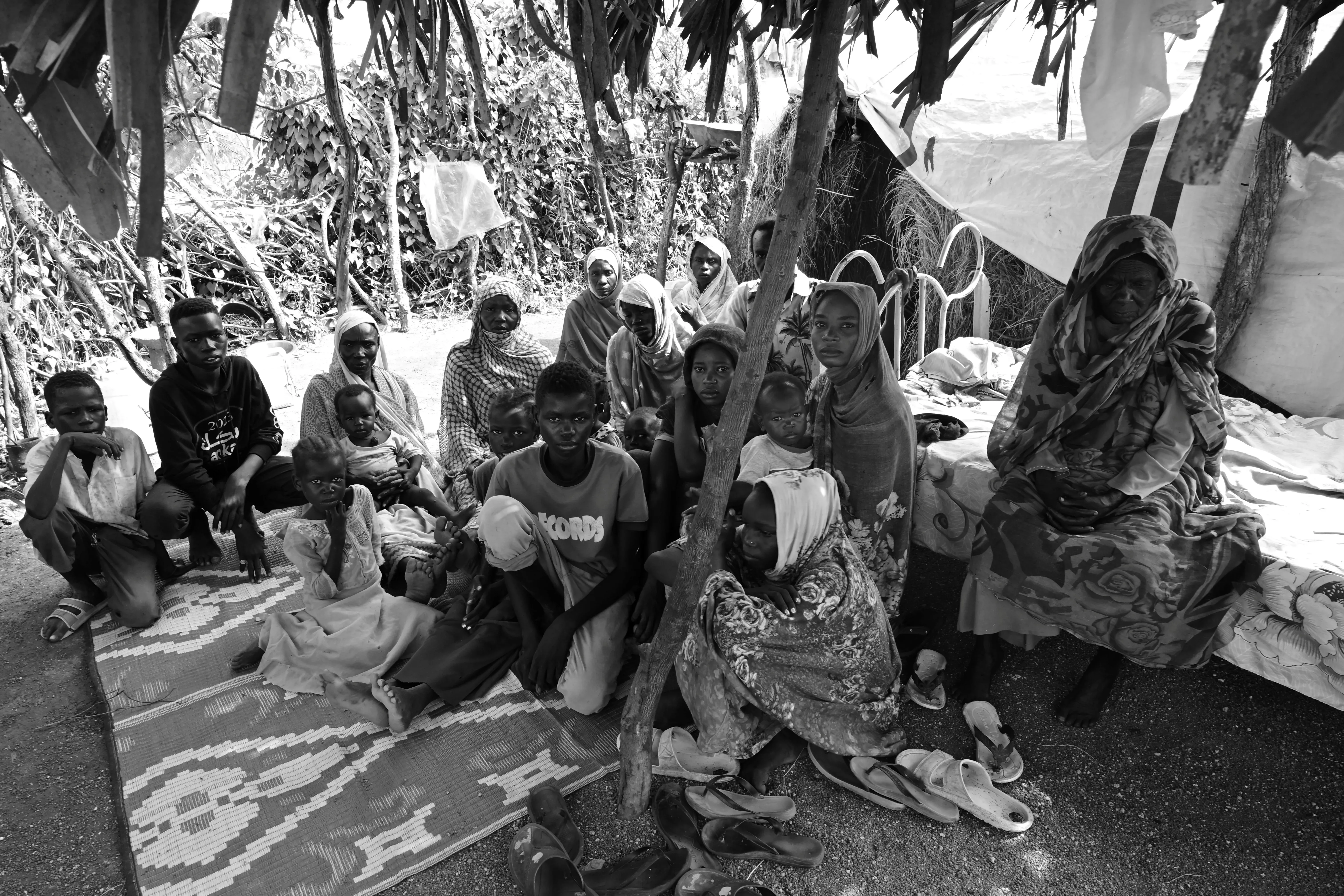
The bus dropped off Wanis and his family at a camp for displaced persons called Al-Hilu, for the S.P.L.M.-N. leader. It had only rudimentary provisions for sanitation and shelter. As he and Intisar settled in with their children, they were urged not to worry about material possessions. “The things that have been taken from you are not a big problem,” a representative of a local aid group told them. “The most important thing is your spirit.” But it was hard not to think of food. The fighting and the displacement caused by the civil war have led to mass starvation in Sudan. Between seven hundred thousand and a million displaced Sudanese have fled to the mountain region, perhaps doubling the population there. Feeding so many people with only locally grown crops is impossible. In Dilami County, which I visited with the Human Rights Watch researchers, an official said that twenty-eight thousand displaced persons were living in six camps. It was dangerous to venture outside them: The territory is being contested by government forces, the R.S.F., and the S.P.L.M.-N. (Making matters even more fraught, Abdelaziz al-Hilu, the S.P.L.M.-N. leader, recently made an uneasy tactical alliance with the R.S.F.)
Al-Hilu is just north of a mountain pocked with caves. Intisar told me that she had grown up in this area. When she was a child, her family had hidden out in the caves during government raids. Now she was back with Wanis and six of their seven children. (Their oldest, the nineteen-year-old Takwa, had travelled farther into rebel-held territory to look for a job.) Conditions were grim. Stick-thin children filled the air with moaning and crying; their bellies were swollen. Their parents scraped what little they could out of the earth.
Intisar and Wanis’s children had never been to the Nuba Mountains and knew little of their family’s roots, and at first they were scared of the local people. Southern rebels were known as anyanya, or “snake venom,” and children in Khartoum had gossiped that the anyanya were a savage mixture of animal and human. One of Intisar’s children said to her, “People told us that the anyanya have tails, but these people don’t have tails.”
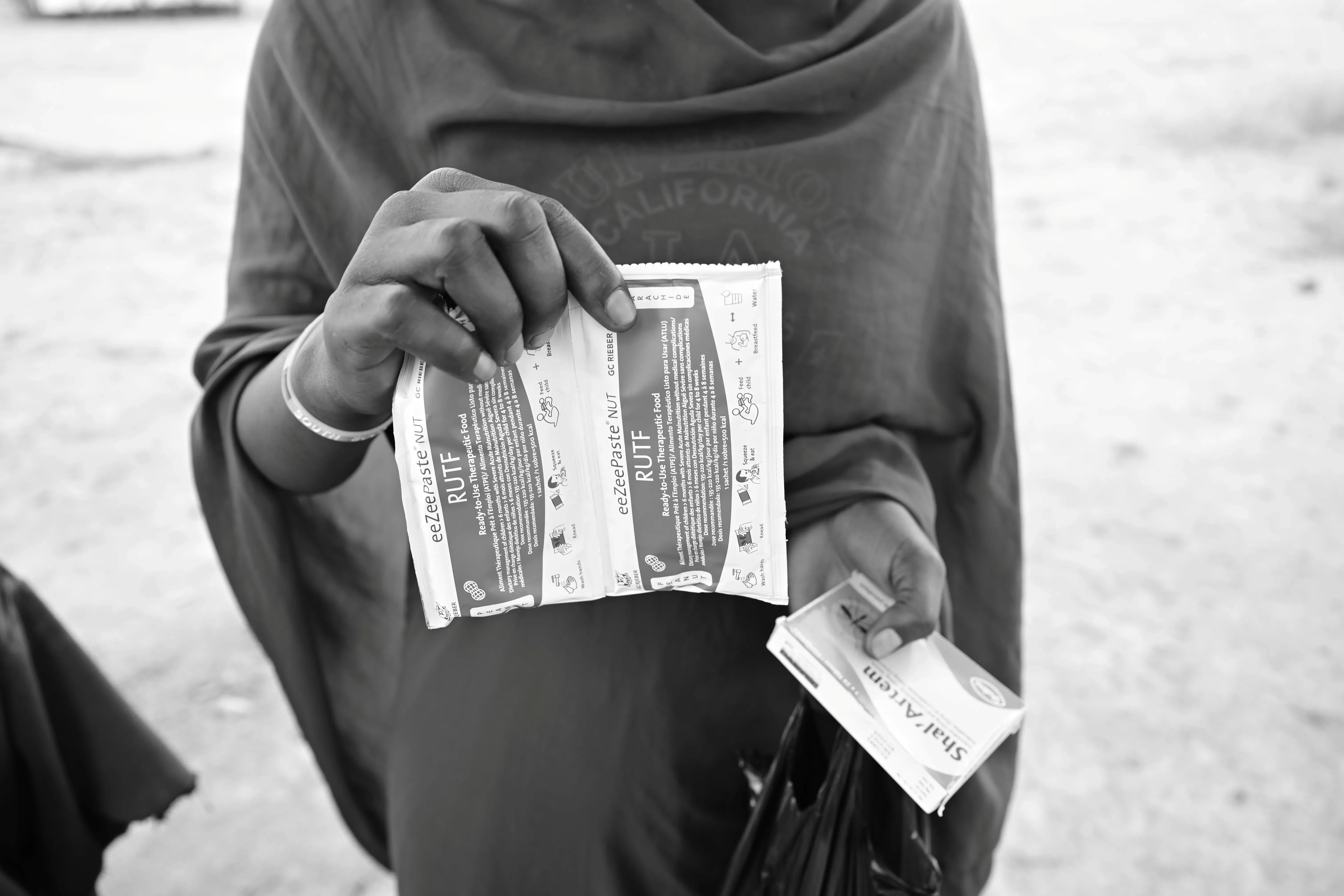
Wanis had become a camp representative who interfaced with relief organizations, and he was trying to negotiate more supplies of Plumpy’Nut, a peanut-based food that can stave off severe malnutrition in children. At the time, a major source of Plumpy’Nut was U.S.A.I.D., which the Trump Administration has since gutted. (The State Department spokesperson said that the Administration is reviewing its aid package to Sudan in order to make it more “effective, efficient, and aligned with U.S. interests,” and insisted that other donors must step in so that an “outsized burden will not continue to fall on American taxpayers.”) But little humanitarian aid can cross the front lines. Juma Idris Kuku, the regional director of the S.P.L.M.-N.’s humanitarian wing, told me that in September, 2024, more than four hundred people starved to death in territory controlled by the group. Near the town of Kauda, I visited the Mother of Mercy hospital, where an American surgeon, Tom Catena, has worked since 2008. “It’s been five to ten times our usual numbers of malnourished kids,” he said.
Other parts of Sudan may be even worse off. In August, 2024, the U.N. confirmed that Darfur’s Zamzam refugee camp—which has a population of half a million—had passed famine thresholds. Many experts believe it is only because of incomplete data that the U.N. has not declared a famine in virtually every region of Sudan. Each party in the conflict has restricted humanitarian aid. The U.N. has been largely ineffective at pressuring the government to allow aid into contested regions. A U.N. representative told me that “there is a weaponization of hunger and starvation,” adding that the organization could deliver aid only if safety was assured for humanitarian workers—and even then it needed the Sudanese government’s approval.
Although living in Al-Hilu was not easy, Wanis was grateful to be there. “I’m so very pleased to be home with my people, my community,” he said. At the same time, his children often had to subsist on boiled “leaves, beans, and grasses.” The camp didn’t even have a water pump. Fuel was absurdly expensive. Still, anything was better than returning to Khartoum. “I have organized myself to stay here,” he said. “My kids blame me for moving to the capital. They told me, ‘You have such a beautiful land, and you let us stay there?’ ”
When we met, Wanis was emaciated, his neatly pressed shirt hanging baggily over his frame. His plastic flip-flops were worn out. Nafisa, the schoolteacher, is also at the camp, and barely recognized him when he first arrived.
While at Al-Hilu, I met Nada, a woman in her thirties who was singing and skipping for the amusement of three children. She was the sister of Mudathir, the man whose wife had been kidnapped in Khartoum. Nada wore a long black robe and held her belly gently with her right hand.
She invited me to her hut, made of sticks lashed together with plastic sheeting. I asked about her escape from the capital, and she broke down while talking about her experience at an R.S.F. checkpoint. “They do bad things to you,” she said.
The next day, Mudathir, who was also at Al-Hilu, told me that armed men at the stop had raped her. Nine months later, in February, 2024, Nada had given birth to a boy, whom she named Kalu. Not long afterward, she sensed that she was carrying another child, and went to the doctor. She was told that the pregnancy was a phantom. “There is a problem in her head,” Mudathir said.
I asked Mudathir about his wife. He said that he still didn’t know if she was alive. “I just pray,” he said.
On another day, Wanis greeted me with a pained look and indicated that I should follow him. We trudged past long grass and skeletal huts and arrived at a small compound, where we heard sobbing. Inside, about a dozen people had gathered around a woman in a faded red-green-and-yellow veil. The woman’s eight-year-old son, Najim al-Din, had died shortly before dawn. The previous evening, he had been so starved that he could barely stand.
A man with a scruffy beard, wearing a Hawaiian shirt, approached me: Najim al-Din’s uncle Issam. The boy’s father, Issam said, had been killed when R.S.F. fighters raided his town, Habila, in January, 2024. The R.S.F. had lined up Nuba civilians and executed them. Some fifteen thousand people had since fled, including Issam, who had been shot in the hand by fighters. He showed me a finger with a chunk missing.
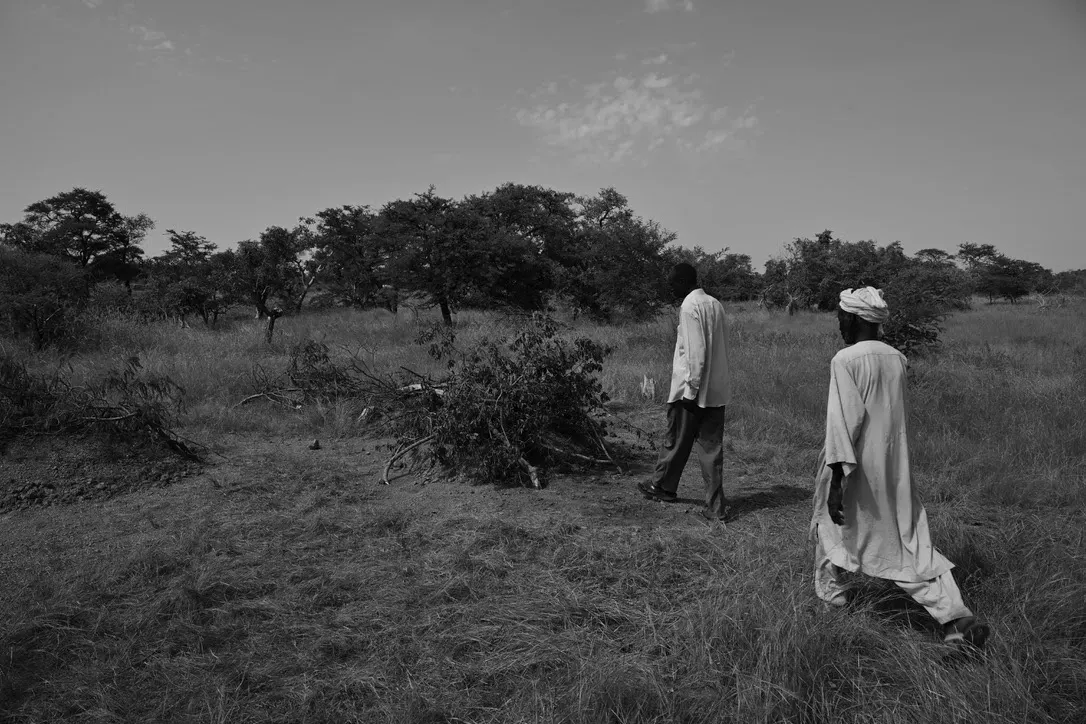
Wanis and I later walked to Najim al-Din’s grave, which was on a hillock surrounded by trees and grass. A man in a white robe named Adam joined us. He was also from Habila, and he knew Najim al-Din’s family. He had dug the boy’s grave. Adam said that Hemedti was the man most responsible for what the Nuba had endured.
Adam told us that he had begun digging at sunrise. Fresh branches had been placed atop the earth. Pink flowers blossomed on the stump of a nearby tree. In the background, the mountains rose over the swaying grass.
An earlier version of this article misstated the structure of the Sudanese government following the fall of Bashir.
Published in the print edition of the May 26, 2025, issue.