Story
 May 2, 2025
As They Rally Against Nation's Leader, Slovakians Consider What Type of Government They Want
Country:

William & Mary students embarked on reporting around the world during the 14th Sharp Writer-in...


Two hands hold up a sign: “We want to live in a free country!"
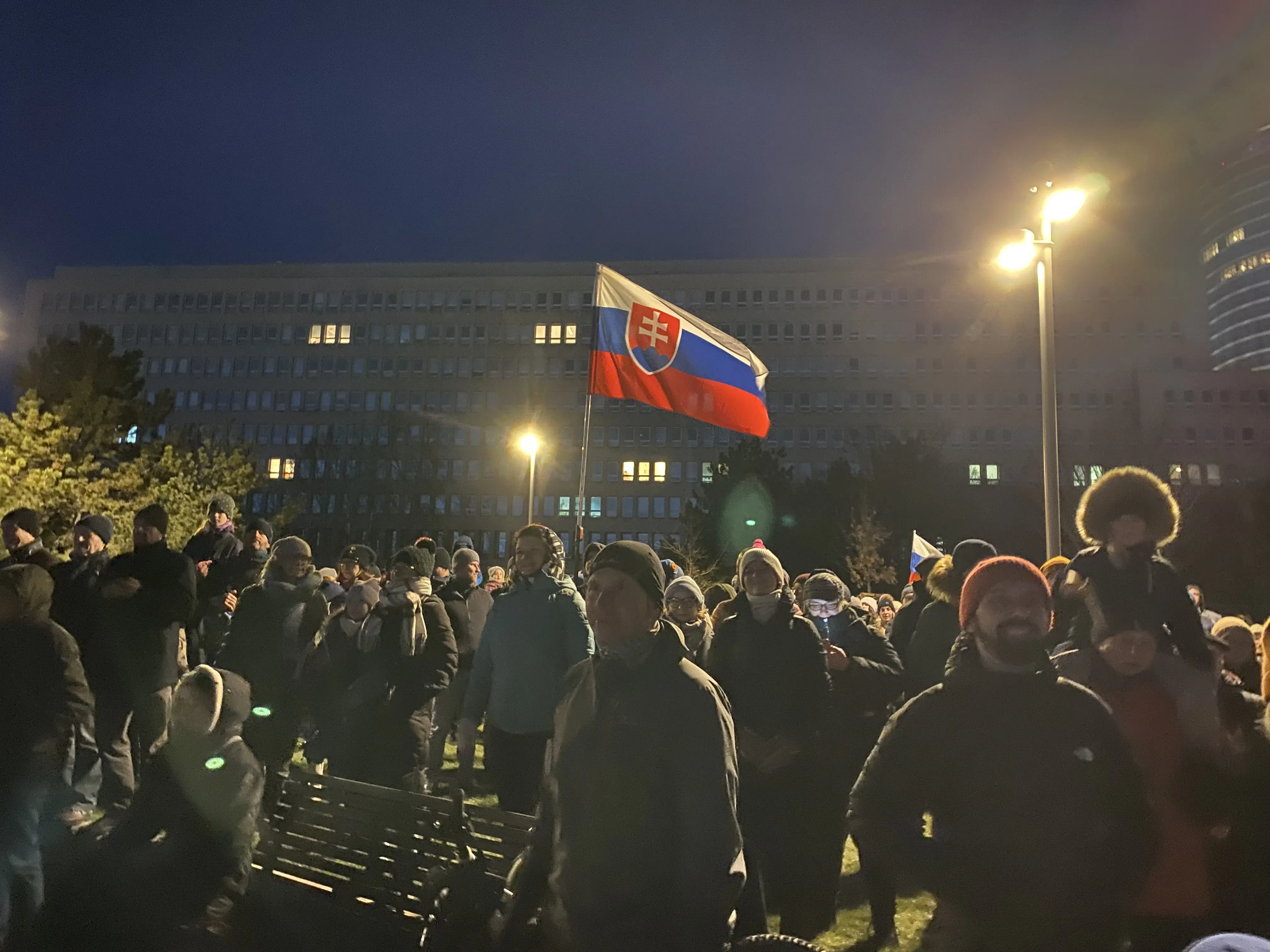
The evening of Friday, January 10, 2025, in Bratislava is chilly enough that people's breaths condensate as soon as they exhale. Even still, by tram and sidewalk, Slovaks make their way to Freedom Square, flooding the entrance paths as they file in. A stand is set near the front, with a sign above it reading “DEMOKRATI” ("Democracy"), and people stop to add their names to various petitions.

As a nonprofit journalism organization, we depend on your support to fund more than 170 reporting projects every year on critical global and local issues. Donate any amount today to become a Pulitzer Center Champion and receive exclusive benefits!
Wearing winter jackets, hats, and gloves, thousands gather, holding Slovak and EU flags. Signs are lifted above the crowd with slogans reading, “My Sme Europa” ("We are Europe") while people chant "Shame on the government." Young adults, older citizens, and families with small children all gather to voice their disagreement with the ruling party.
The protest, one in a series of demonstrations against the current government, is one act of growing public outrage in response to Prime Minister Robert Fico’s leadership. Specifically, protesters were demonstrating against Fico’s unannounced visit with Russian President Vladimir Putin in Moscow last December. However, many more tensions are boiling beneath the surface, including reduced accountability for corruption and the discrediting of journalists.
This is not Fico’s first time in office. He was prime minister from 2006 to 2010 and again from 2012 to 2018. He and his government stepped down after mass protests against the murder of investigative journalist Jan Kuciak and his fiance. Kuciak had been investigating connections between the Italian mafia and top politicians in Slovakia.
Soon after returning to power, parliament passed Criminal Code measures abolishing the special prosecutor's office and reducing the statute of limitations for numerous offenses. In response to the approval of these measures, Slovakians began protesting. The government’s actions and citizens' response have raised the question: What kind of government do the people of Slovakia want?
At the forefront of these debates for the political values of Slovakia are non-governmental organizations (NGOs) and journalists.
Near the Old Town, there’s a beige building near a park, and Dušan Ondrušek has been coming here for over three decades. A man with black, balding hair and a bushy beard with strands of gray, he founded the organization Partners for Democratic Change Slovakia (PDCS) in 1991, focusing on training and consulting in the field of community conflict reconciliation. His office is filled with books on all matters of politics, social science, and history.
"This government is violating democratic rules and is pushing the country in a non-democratic way,” Ondrušek says.
The sentiment is echoed by representatives of other NGOs, including GLOBSEC, which conducts research on contemporary issues for Central European countries.
Katarína Klingová, senior research fellow with the Centre for Democracy & Resilience at GLOBSEC, said laws being passed target specific actors and groups in society because they are critical of the government. "Additionally, police are failing to investigate corruption adequately, and the judiciary, meant to be a check on power, is under threat," Klingová said.
“This is not petty corruption,” she said. “We are talking about systematic manipulation of the rulings of the courts, which were manipulated to serve particular interests.”
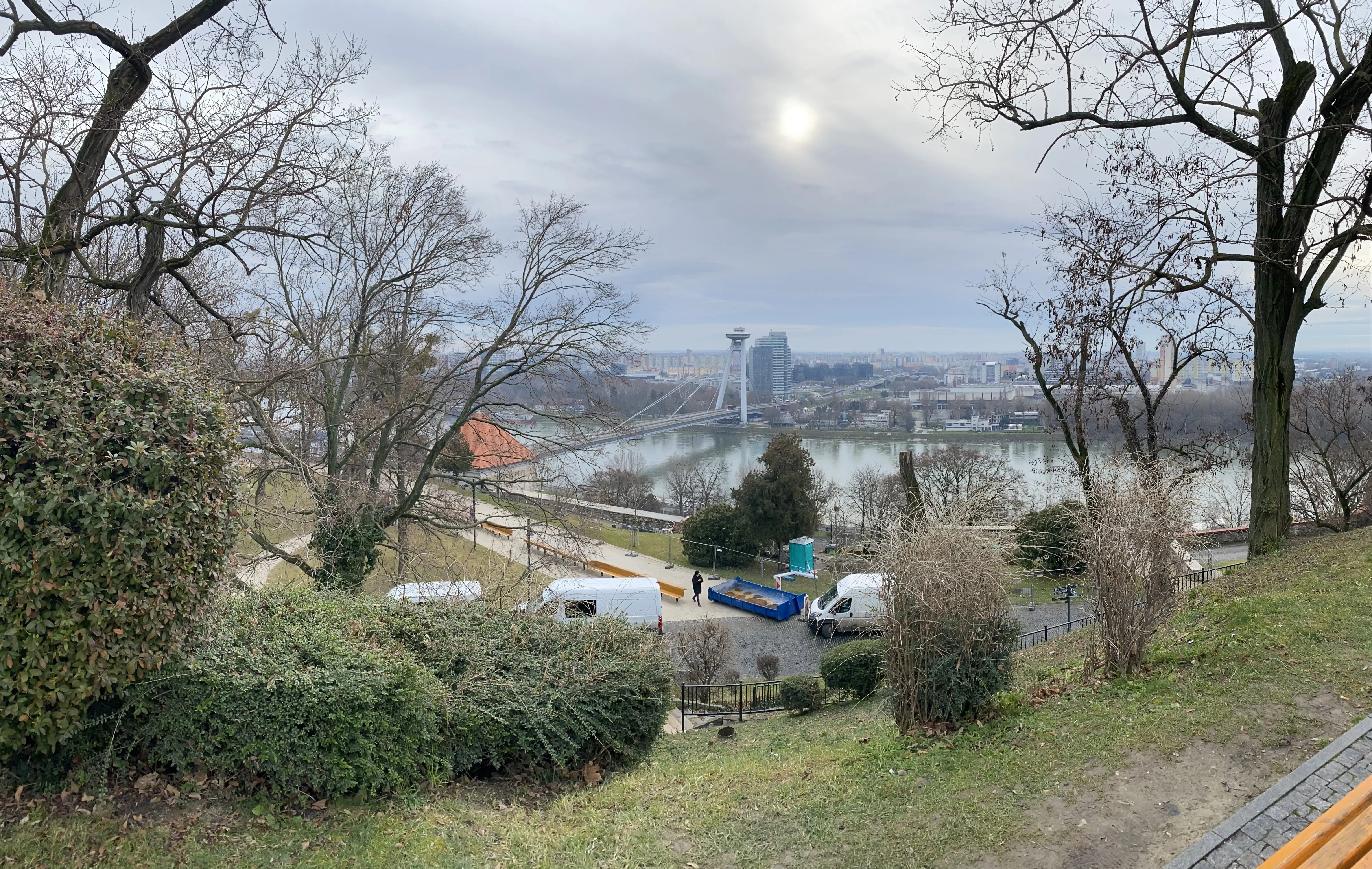
Klingová also said that, since the 2023 election, policymakers have ignored input from NGOs and academics. These groups research social issues, and not including their insight threatens to reduce the effectiveness of policies aiming to improve society, she says.
In 2024, Slovakia scored 49 out of 100 on the Corruption Perceptions Index by Transparency International, a global organization tracking corruption. This score was a five-point reduction from the previous year and was attributed directly to actions taken by the current government.
In its report labeling Slovakia a “country to watch,” Transparency International warned of policymakers bypassing standard legislative procedures, the undermining of independent institutions, and attacks on the media and NGOs—which have sparked a public backlash.
These political challenges are coupled with attacks on the media. Lukáš Diko, editor-in-chief of the Investigative Center of Jan Kuciak, focuses on investigative journalism to expose corruption in Slovakia. He mentioned how journalists have come under attack online, at times as the result of posts by politicians.
Additionally, recent legislation has banned excessive freedom of information requests from journalists. “We can see, with regard to the freedom of the press and freedom of speech, there are rising amounts of attacks against members of the press.”
But this is not the only time Slovakia has faced a challenge to its democracy.
In the 1990s, Vladimír Mečiar was elected prime minister of a newly independent Slovakia, which had been formed by the split of Czechoslovakia into two countries. He attacked those critical of his government, engaged in corruption, and targeted political opponents.
However, Mečiar failed to win a parliamentary majority in the 1998 elections. Through a massive get-out-the-vote campaign and grassroots organizing, the Slovak people prevented an overturning of their democratic government. And that memory is not lost in the country.
Groups across Slovakia have come together to make their voices heard and push back against what they see as anti-democratic measures.
Lukas Zorad, director of Partners for Democratic Change Slovakia, mentioned how his organization partnered with over 60 others to create the Platform for Democracy. They meet regularly to establish a system that enables faster responses to government actions and proactive efforts to protect democratic systems in Slovakia.
“There is a sense of solidarity between the organizations. If one is under attack, we try to help them and support them however we can,” he said.
This collective action also has been seen among psychologists, educators, and business professionals, all of whom have published their own open letters to the government with hundreds and even thousands of supporting signatures.
And the protests have continued. A few weeks after late January, Slovaks gathered again in the largest protests since 1989, the year demonstrations ultimately led to the end of Communism in the country.
The Fico administration has not responded to requests for comment.