Lesson Plan May 7, 2026
Health in the Shadows of Gold
Country:
Grades:

This lesson was created by Fanny Clonch, a French teacher in Chicago, Illinois, as part of the fall 2025 Pulitzer Center Teacher Fellowship program. It is designed for facilitation across approximately six 50-minute class periods.
For more lessons created by Pulitzer Center Teacher Fellows in this cohort, click here.
Creating and teaching this lesson reinforced the importance of intentional scaffolding and students' ownership of vocabulary. Starting with geography helped students contextualize the issue, and allowing them to build the lexicon increased engagements and confidence with the complex article.
Lesson Overview
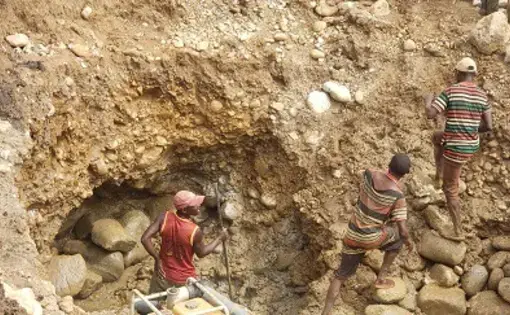
Students analyze a French news article on artisanal gold mining in Uganda and Burundi to explore the environmental and health impacts of gold mining and consider possible solutions.
Objectives
- Students will analyze French journalistic reporting on artisanal gold mining and its health impacts.
- Students will describe in French how the use of chemicals in the rivers affects urban residents’ well-being.
- Students will consider practical solutions for healthier cities in impacted communities.
Essential Questions
- How does artisanal gold mining affect health and quality of life?
- How can citizens and local governments act to protect community health?
- How are human experiences shaped by environmental change in communities?
Performance Task
(Summative Project Work)
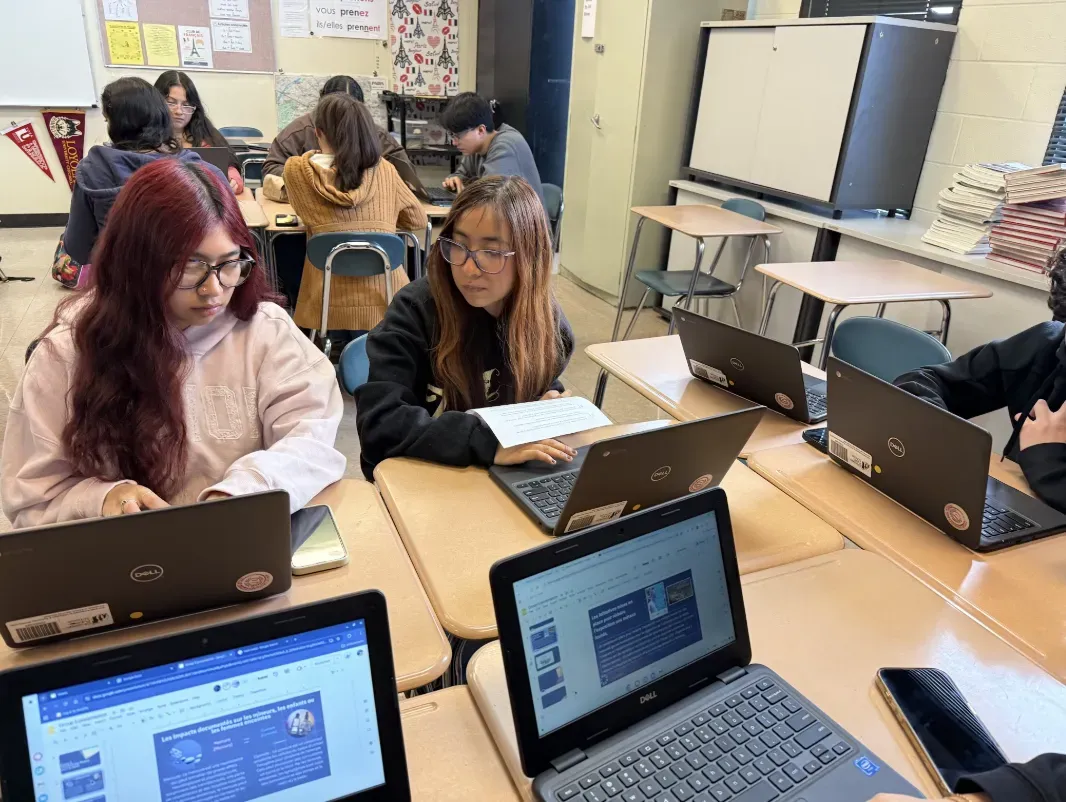
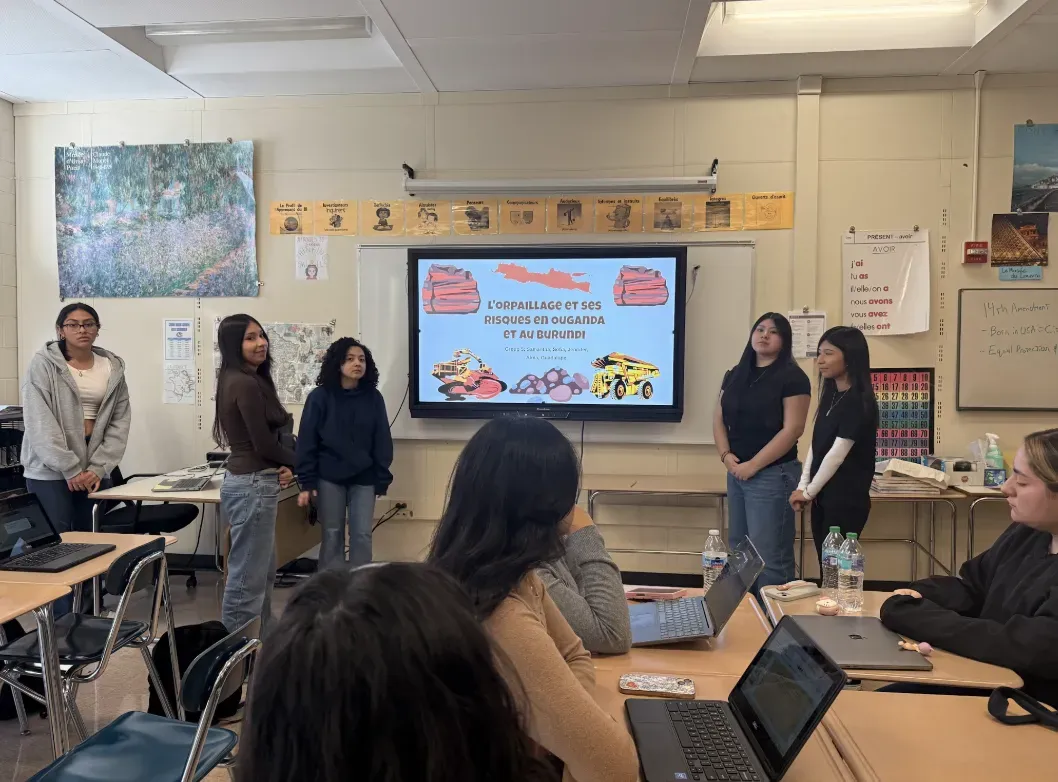
- In groups, students worked on a summative project culminating in an oral report (in French) titled « La santé de la planète et la santé des hommes : un équilibre fragile ».
The report included a power point presentation with written support and was required to have:
- At least one quote from the article
- At least one visual element (photo, graph, or map)
- A personal reflection connecting the issue to global or local health
The project required students to explain the issue, analyze its impacts, and explore realistic solutions.
- Health and Environmental Impact What are the health and environmental consequences of artisanal gold mining in the African Great Lakes region (Uganda, Burundi, DRC), and what solutions are proposed by NGOs, local governments, or international organizations?
- Quelles sont les conséquences sanitaires et environnementales de l’exploitation artisanale de l’or dans la région des Grands Lacs africains (Ouganda, Burundi, RDC), et quelles solutions sont proposées par les ONG, les gouvernements locaux ou les organisations internationales ?
- Safety and Protection Measures What safety or environmental protection measures are recommended by community members and organizations (e.g., Human Rights Watch, the UN, local NGOs) to limit hazards in artisanal mines in East Africa?
- Quelles mesures de sécurité ou de protection de l’environnement sont recommandées par les membres de la communauté et les organisations internationales (ex. Human Rights Watch, ONU, ONG locales) pour limiter les dangers dans les mines artisanales en Afrique de l’Est ?
- Comparative Analysis Compare the situation described in northwestern Uganda and Burundi with another country where artisanal mining causes political or social tensions (e.g., DRC, Burkina Faso).
- Comparez la situation décrite dans le nord-ouest de l’Ouganda et du Burundi avec un autre pays où l’exploitation minière artisanale provoque des tensions politiques ou sociales (ex. RDC, Burkina Faso,).
- Cross-Border Trade Identify another African country where cross-border trade in minerals (gold, coltan, diamonds, etc.) significantly influences official exports (e.g., DRC, Sudan, CAR/Central African Republic).
- Identifiez un autre pays africain où le commerce transfrontalier de minerais (or, coltan, diamants…) influence fortement les exportations officielles (ex. RDC, Soudan, RCA, République Centrafricaine).
- Scientific Research Task Conduct research on the environmental and health effects of heavy metals used in artisanal mining (mercury, cyanide, nitric acid, lead).
- Menez une recherche sur les effets environnementaux et sanitaires des métaux lourds utilisés dans l'exploitation minière artisanale (mercure, cyanure, acide nitrique, plomb).
Assessment
Formative
- Vocabulary quiz on environmental and health terms
- Comprehension questions (in-class discussion and exit ticket)
Summative: Oral Presentation
Students conducted a deep-dive investigation into one of the most complex issues in East Africa: Artisanal Gold Mining. While gold is a source of wealth for communities, its extraction comes at a high environmental and public health costs. For this project, students engaged as members of an International Committee supporting a regional investigation into how mining in the Great Lakes region, specifically Uganda, Burundi, and the DRC, is affecting the health of the people and the safety of the planet. Students considered the problems and potential solutions from the perspective of different communities. They analyzed how minerals move across borders, compared health impacts in different countries, and explained the science behind the chemicals used in the process. Their final findings were presented in a professional committee-style presentation.
- Groups: 5–6 students.
- Format: PowerPoint / Google Slides.
- Evidence: Use maps, data, and reports from organizations like Human Rights Watch or the UN.
- The Objective: Research and present the Human and Environmental Cost of Gold and its impact on health in the African Great Lakes Region.
- Presentations were scored based on how well they covered:
- The Impact: What are the specific health and nature-related consequences in Uganda, Burundi, and the DRC?
- The Solutions: What are community members, NGOs, and/or the UN doing to fix it? What are the "Safety Rules" for mines?
- The Comparison: Compare the situation in Uganda/Burundi to other countries in the region (Burkina Faso or the DRC).
- The Hidden Trade: How does smuggling (cross-border trade) affect the official economy of these nations?
- The Science: A dedicated section on the effects of Mercury, Cyanide, and/or Lead on the human body and the water supply.
Notes on Context & Content Advisory
This lesson is designed for intermediate to advanced IB French B learners. Students have prior experience reading authentic French news articles. Many are English learners, so scaffolding (vocabulary lists, sentence starters, visuals) is included. The lesson aims to connect language learning with global health and environmental justice.
This lesson was designed to take place over six 50-minute class periods. It includes warm-ups, discussion questions, activities, and a final performance task. Download below to read the complete lesson plan.
Lesson Resources
| Pulitzer Reporting | “Uganda-Burundi: Artisanal Gold Mining, a Health and Environment Threat (Ouganda-Burundi : Exploitation artisanale de l’or, une menace sanitaire et environnementale)” by Richard Drasimaku and Rénovat Ndabashinze |
International Baccalaureate Diploma program French B
Reading comprehension, written and oral expression, intercultural understanding
Sharing the Planet: Explore global challenges and responsibilities, including climate change, migration, access to resources, and social inequality
Experience: Explore personal experiences and the ways in which individuals and communities respond to life events such as health crises and natural disasters
For this lesson, designed for intermediate French learners, students analyzed Pulitzer Center reporting on extractive mining in Uganda and Burundi, exploring the environmental and health impacts of such labor. After processing their research, students created and shared oral presentations about the health and environmental impacts of mining as well as possible safety and protection measures for this dangerous work.