Pulitzer Center Update September 29, 2026
Apache Students Use Navajo Reporting To Explore Climate Impacts and Solutions in Indigenous Communities
Country:

Lesson Plans
From Global to Local
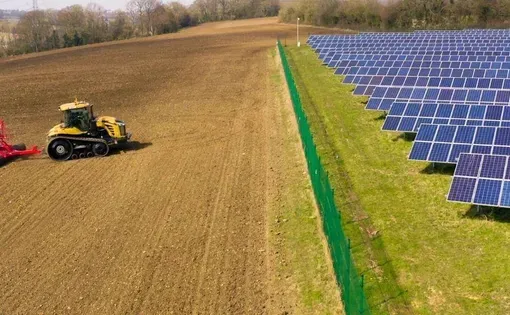
Students explore local and national news stories to examine how climate challenges and community-led solutions impact Arizona, and then develop action plans to address environmental issues in their...
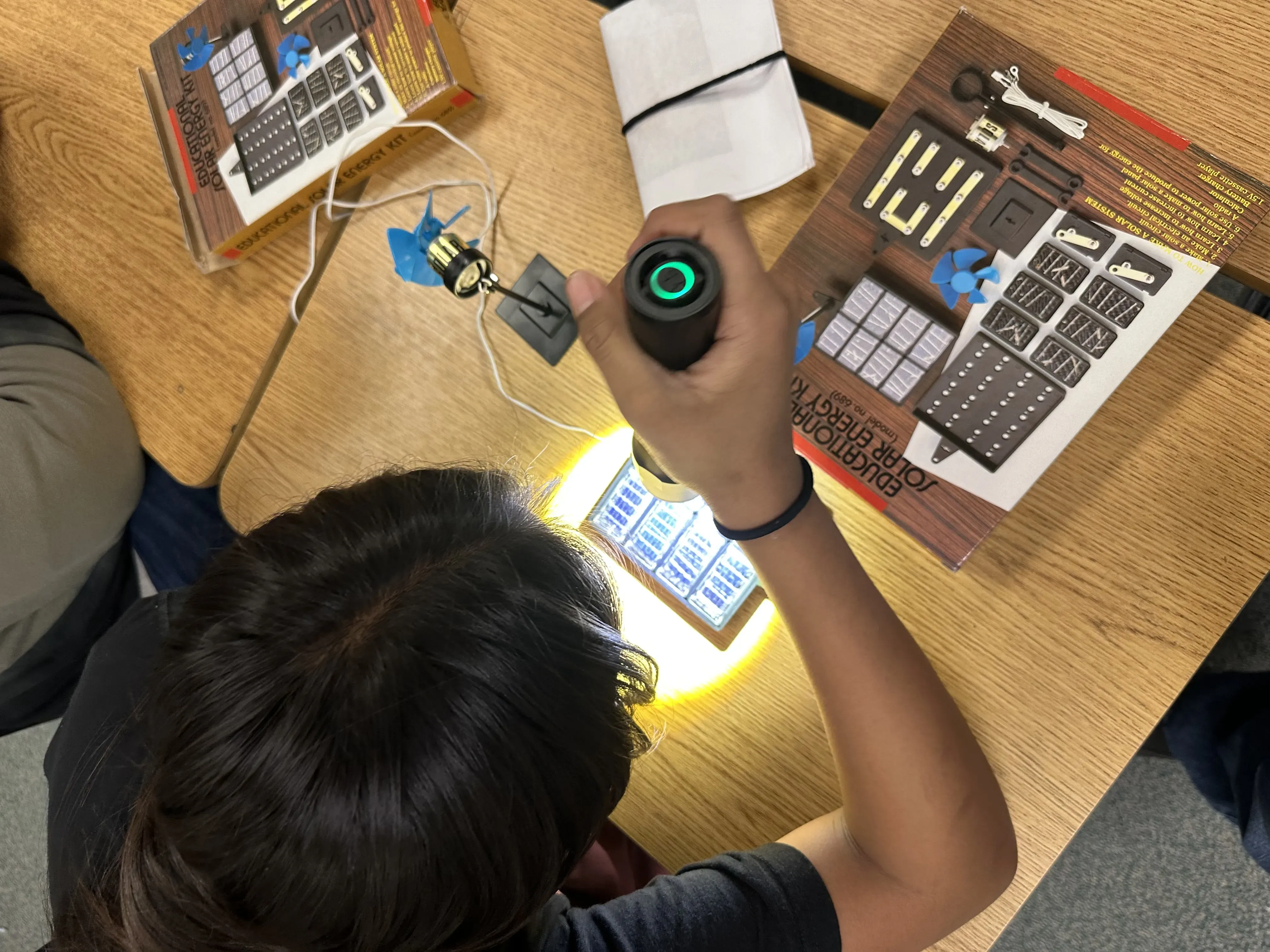
Andre Pineda is a science teacher at Canyon Day Jr. High School in Whiteriver, Arizona. Pineda created the lesson plan, "From Global to Local: Understanding and Responding to Climate Change in Arizona Native American Communities" as a part of the Spring 2025 Teacher Fellowship for alumni, “Global Issues, Local Contexts: News for Civic Knowledge and Engagement.” His lesson reached 120 students. At the conclusion of the fellowship, Pineda shared the following reflections on his experience developing and teaching the lesson.
How did you build this lesson with your community in mind?
As an educator in Whiteriver, Arizona—on the homelands of the White Mountain Apache Tribe—I’ve seen firsthand how making global issues locally relevant transforms learning. Our students are primarily Indigenous youth, deeply connected to their land, culture, and traditions. Many come from multigenerational families with a rich heritage of farming, water stewardship, and environmental knowledge passed down through oral history, storytelling, and hands-on practices. Yet, like many rural and tribal communities, we also face complex modern challenges—ranging from water scarcity and extreme weather to limited infrastructure and educational resources.
Understanding this intersection of cultural strength and environmental vulnerability shaped how I designed my climate change lessons. I knew that for my students, abstract global concepts would resonate only if we made them tangible and personal. Climate change isn’t a distant theory here; it’s visible in shrinking rivers, longer droughts, and shifting planting seasons—issues that directly affect family livelihoods, cultural practices, and community well-being.
Many of my students are visual and collaborative learners who thrive when lessons incorporate local stories, project-based learning, and opportunities for civic engagement. I prioritized activities where students could connect their lived experiences with scientific inquiry—whether analyzing satellite images of Arizona’s waterways or designing solar-powered solutions rooted in community needs.
It’s also important to know that Apache values emphasize balance, respect for nature, and collective responsibility. Integrating these cultural principles helped frame climate change not only as a scientific problem but as a stewardship opportunity. My students’ deep respect for their elders, environment, and traditions became a foundation for exploring solutions, reminding them that Indigenous communities have long been innovators and caretakers of the land.
What is the focus of your lesson plan, and why did you write this lesson for your community?
I wrote this lesson to help my students understand the global issue of climate change in a way that is relevant and meaningful to their lives. As Indigenous students living in Whiteriver, Arizona, they are already witnessing firsthand how climate change impacts their community—whether through the drying up of local rivers, droughts affecting agriculture, or the changes in water and food systems that are central to their way of life.
The focus of the lesson, "From Global to Local: Understanding and Responding to Climate Change in Arizona Native American Communities," is to bridge the gap between global climate science and local, community-based solutions. The lesson explores the causes and effects of climate change, particularly how it directly affects local environments like tribal lands, agriculture, and water resources. It also highlights the role of journalists in sharing stories that bring these issues to light and gives students the opportunity to critically analyze and engage with news coverage.
The value of this lesson lies in its ability to empower students. It connects their experiences with the broader global context, helping them understand that their voices matter in the fight against climate change. By learning about local sustainability solutions, such as solar energy and water conservation, students can envision themselves as leaders in their community's efforts to adapt and respond. The lesson encourages them to think critically, act civically, and take pride in the knowledge and traditions that shape their approach to environmental stewardship.
What did your students learn while engaging with this lesson?
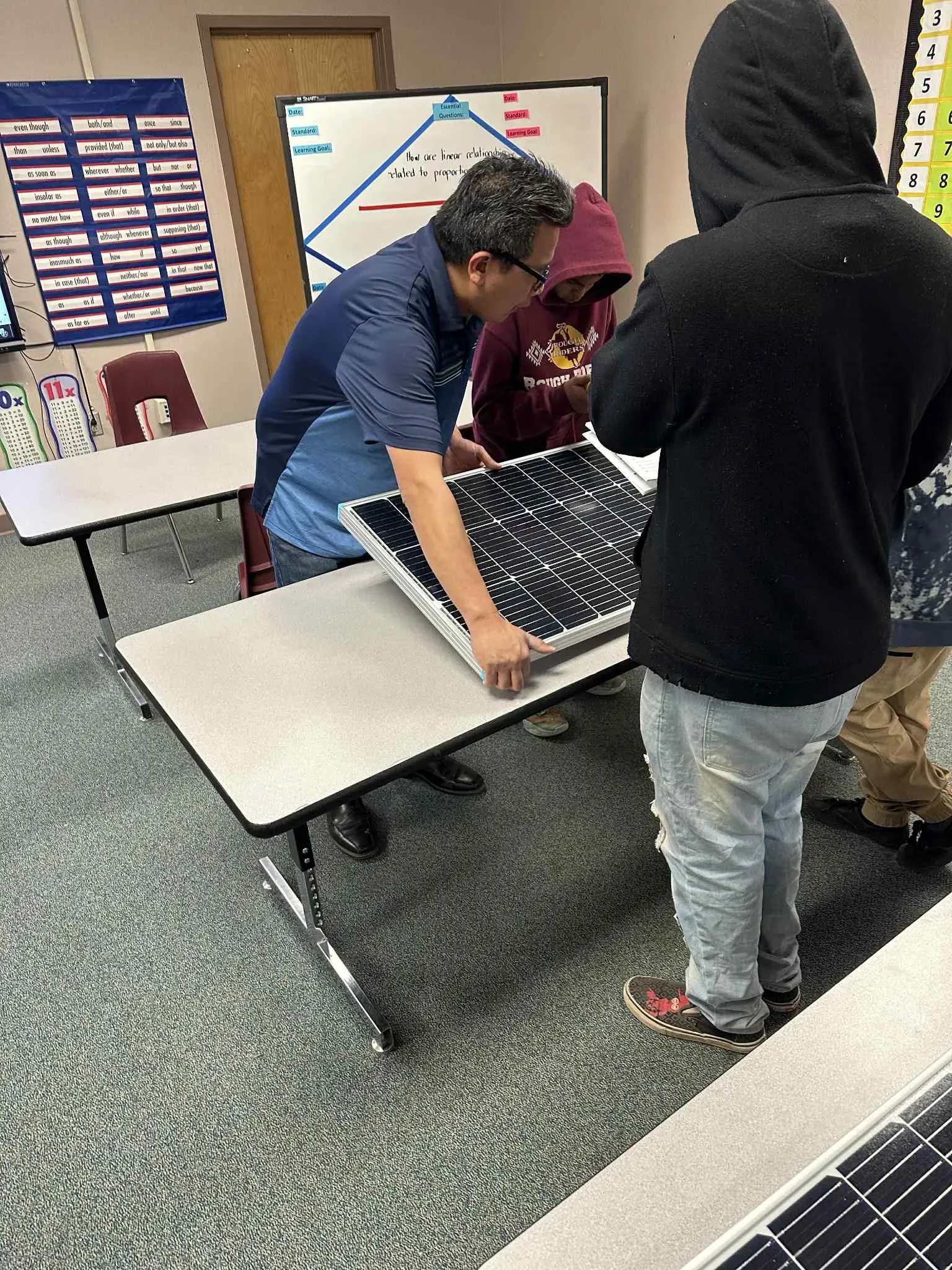
While engaging with the lesson on solar solutions and sustainable land use, my students developed a range of academic and real-world skills. Through critical reading of journalism articles such as “Sheep and Solar: A Perfect Match” and “The Future of Solar: Can Crops and Solar Panels Coexist?,” they practiced annotating complex texts, identifying central ideas, and evaluating claims. These skills were reinforced through structured peer-sharing, which allowed them to summarize, compare, and explain their findings to one another—building confidence in communication and collaborative learning.
Students also made deep content connections around the themes of climate change, energy equity, and the intersection of solar power with agriculture and Indigenous land stewardship. They learned about agrivoltaics, land conservation, and how renewable energy projects are being implemented in places like North Carolina and the Navajo Nation. One student, Ariah, noted during our discussion, “It makes sense now why the land matters so much—not just for tradition, but for our future. We can use it better if we’re careful.”
Their learning was demonstrated in several ways. In Venn diagrams comparing solar initiatives in Arizona and North Carolina, students highlighted key similarities and differences in land use, weather conditions, and cultural approaches to sustainability. Many created thoughtful and creative sketches of potential agrivoltaic designs suited for their own community, often including sheep, cornfields, or native plants coexisting with solar panels.
Perhaps most powerful was the shift in mindset. Students stopped seeing climate change as an abstract global problem and began to frame it as a challenge they could address locally. As student Rajon said during his presentation, “We don’t need to wait for someone else to fix it—we can start with what we have here.” That sense of agency and problem-solving is the heart of meaningful STEM education.
What did you learn by creating and teaching this lesson?
Designing and teaching this lesson reinforced for me the powerful impact of local relevance and cultural connection in STEM education. Working with students from rural and tribal communities in Arizona, I have seen how easily students can become disengaged when lessons feel abstract or disconnected from their daily lives. This experience affirmed that when the curriculum reflects students’ real-world challenges—such as drought, energy access, and land use—and when those lessons honor cultural perspectives, engagement grows into something deeper: curiosity, reflection, and meaningful action.
One of the most important insights I gained was the reminder not to underestimate students' capacity to engage with complex, real-world issues, especially when those issues are personal. When students explored topics like agrivoltaics, conservation, and solar projects led by tribal communities, they did more than learn facts—they connected emotionally and intellectually. Comparing national Pulitzer Center articles to Arizona-specific examples gave them a framework to analyze big ideas while rooting them in familiar contexts. Their responses were grounded in lived experience and often offered innovative, practical insights.
For instance, one student, Aaden, remarked, “I didn’t know solar could work with animals or farming. We should be doing this on our land.” His comment captured a major shift in thinking. Students were no longer simply absorbing information about climate solutions, they were envisioning their role in them.
For other educators looking to create similar experiences, I offer this advice. First, always connect the global to the local. Use national reporting like Pulitzer Center articles to introduce important ideas, but pair them with regional or tribal news to make those ideas real. Second, incorporate cultural knowledge into your science curriculum—don’t treat it as separate. Indigenous and community-based knowledge can greatly deepen students’ understanding of environmental and scientific topics.
Third, balance academic rigor with opportunities for creativity. Critical reading and writing activities challenge students to think deeply, while artistic projects like posters or sketches allow them to express solutions in culturally meaningful ways. Finally, make room for students’ voices. Peer-to-peer learning strategies, like the Jigsaw method, empower students to share what they’ve learned and recognize themselves as knowledge holders.
As my final thought, this experience reminded me that effective STEM education is not only about content knowledge. It’s about empowerment—helping students see themselves as capable of shaping their communities and their futures. As one student said in her final presentation, “This isn’t just a science lesson—it’s about what we can do next.” That kind of vision is what makes this work worthwhile.