By Leila Zak
20 | Durham, North Carolina
First-place young adult contest winner, Human Rights category
With lines from "The Future of the Border Is Even More Dystopian Than You Thought" by Lauren Markham, a Pulitzer Center-supported story
No quiero pensar en los muros con ojos
or the infrared cameras that train themselves
on bodies, warm with love and American dreams.
Con sus constelaciones de cariño, estos universos
humanos se impulsan por el compromiso familiar
and/or American nightmares (NAFTA, CIA-backed coups,
anything for capital on this side of the membrane).
El desierto se ha enfermado con tantas heridas, restos anónimos
which the country forgets but the land will remember
with us, neither prevented nor deterred.
When I think of border crossings,
no quiero pensar en los agentes, depredadores
driving women and men, all inalienable
people, into vans with tinted windows—
brutal portals to a system in which too many disappear.
Where is the sensor that will detect their heartbeats?
Where are the heat-sensing cameras that will tell us where they are?
I don’t want to think immediately to the shackling
of a young mother who thrashes to stay,
begging for deaf ears to listen, pidiéndoles a gritos que la dejen
cuidar de su hijo. Que no tendrá a nadie que lo acompañe,
nadie a quien pueda cantar y abrazar. But this violence is automated
so her strangled sobs, not songs, will occupy his mind for years.
También es su país. América is both of theirs.
When I think of border crossings,
I also think of the camaraderie that heaves in stride
with the migrant caravan, human and together
against this vast, mechanized force.
Comparten todo aunque no tengan casi nada:
su fuerza, oraciones,
lágrimas que tienen que conservarse,
stretchers fashioned from dead bark for fallen friends
they cannot leave alone.
I think of Álvaro Enciso’s crosses in the desert
granting dignity to disintegrated bodies, the rosaries
his careful hands place on once-unmarked graves, still unknown.
I think of the volunteers: students and teachers committed
to the search, the forensic investigation, new tech deployed
finally for good, toward the truth and its fierce telling.
When I think of border crossings,
I think of the neighborhood patrols, shoestring activists
at the front lines, luchando con coraje y compasión
that blaze from Chicago to Charlotte to Minneapolis
to ease the cold. In spite of the billions of dollars and
technological warheads spent on stopping our movement,
todavía logramos florecer.
Our care is also a border crossing;
nos permite sostenernos unos a otros
con actos humanos. It hisses through papers
we won’t let define us. It will melt these chains,
and when the surveilling metal posts fall,
sabremos que ardimos por ello.
We will know we grew our thousand roots,
proud and grateful, through these walls.
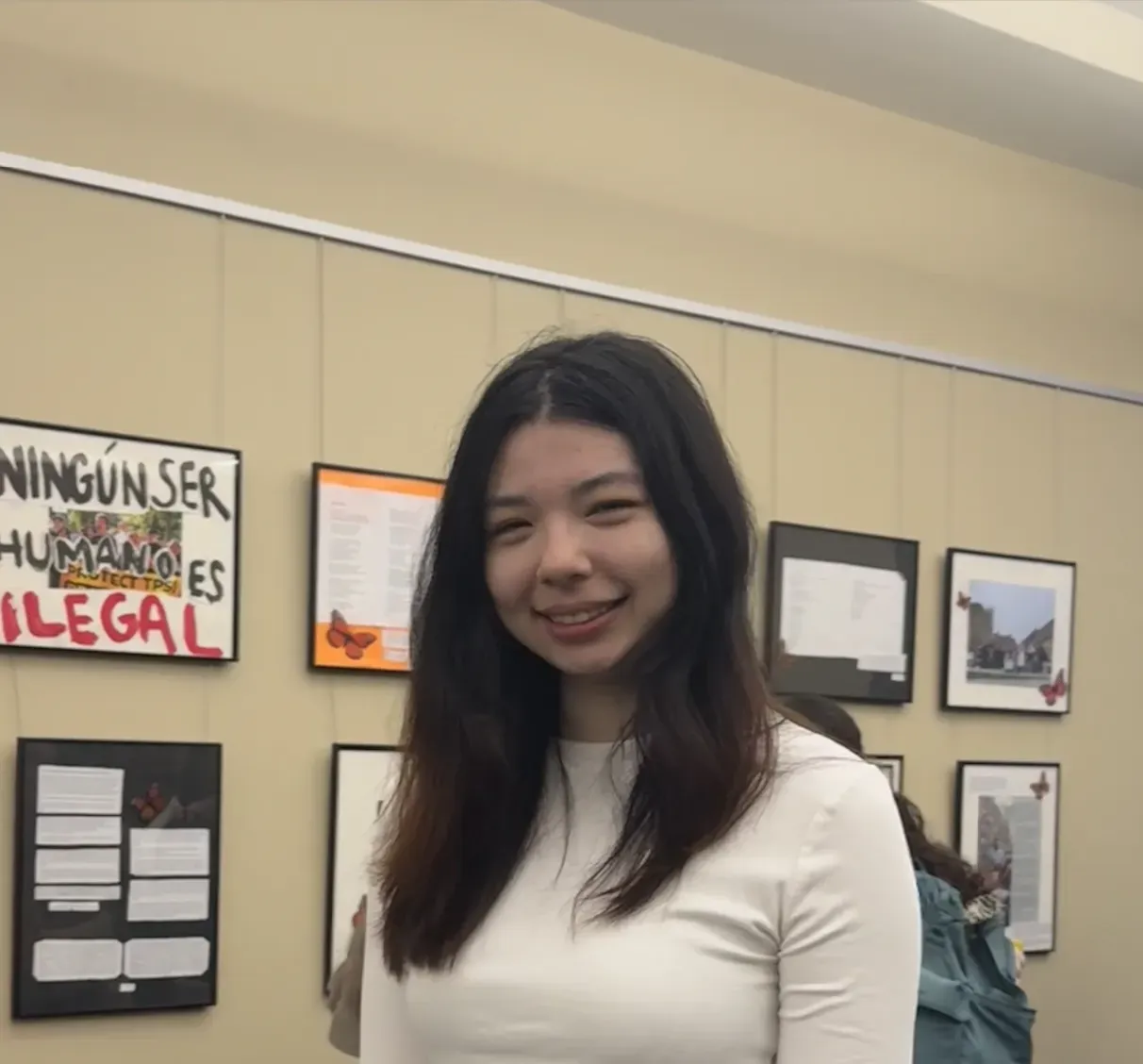
Leila Zak is a student activist at Duke University who writes and organizes with the intention of challenging borders, centering humanity, and building toward dignity and solidarity within and across communal lines. She was born in Chicago, Illinois and grew up in Hong Kong from ages 6–18 as the product of both migration and return. In honor of her own and other rich cultures, she speaks Mandarin, Spanish, and Cantonese, while also currently learning Persian. Leila turns to poetry, education, and community organizing as resources for repair and the documentation of everyday resistances (“border crossings”) people deploy against the direct and structural violences which prompt migration and dispossess migrating/Native people.
Read more winning entries from the 2026 Fighting Words Poetry Contest