Story September 22, 2026
Why We're Talking About Data Centers at Climate Week
Country:

As AI infrastructure expands, communities are being asked to absorb the environmental and economic costs, often without the information, platform, or regulatory tools to understand what’s happening. Journalism can help close the accountability gap.
"When AI comes for our land"
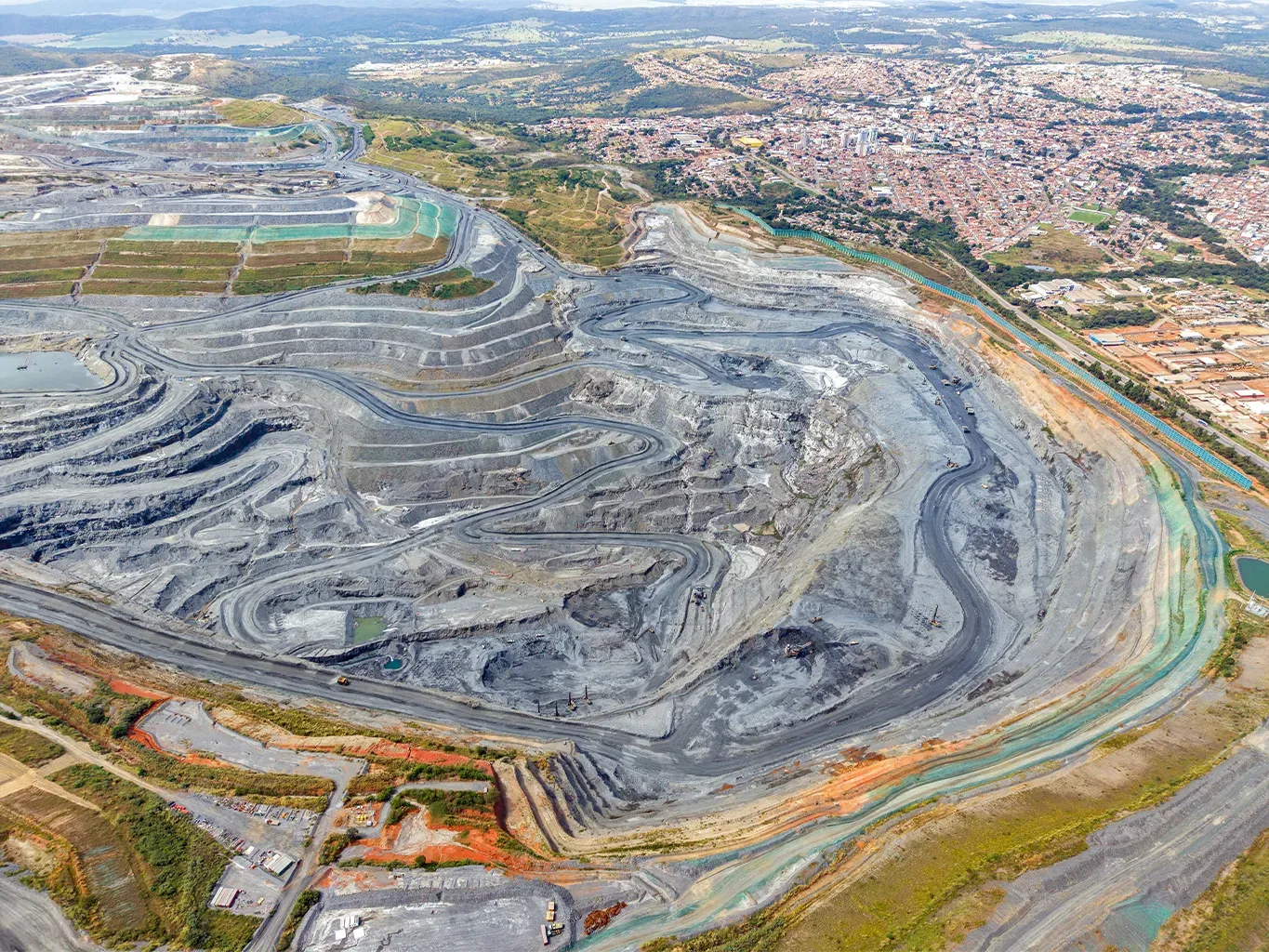
In September, a Center-supported story revealed a community blindsided by a proposal to build a behemoth data center, the largest in Brazil—eclipsing the total size of all other data centers in the country combined.
The 1-gigawatt data center proposed for Paracatu was unknown even to the mayor and city officials. They found out thanks to reporters.
Paracatu, a water-stressed town already overrun by mining, is just one example of the opaque planning processes, loopholes, and incentives that contribute to rapid development without much say from the people who will live closest to the consequences.
And the people planning this data center are far away from its potential consequences. Atlas Renewable Energy, owned by an arm of the global asset manager BlackRock, is leading the project. The entity already has solar energy farms in the municipality. Among the reasons listed by Atlas for choosing Paracatu is that the city has an abundant water supply.
“To say that there is plenty of water is controversial,” said Almir Paraca, a former Paracatu mayor. “We have many long-standing water conflicts in the municipality and the region. This is because the water allocation exceeds the flow capacity of the springs.”
It’s a climate story. It is also a story about power and governance.
Who gets to decide what is built in a community, sharing resources with that community? Who has access to the information needed to participate in those decisions? What companies and powerful actors are involved, and ultimately accountable for the local consequences?
AI is a climate story
The Pulitzer Center recently welcomed our fifth cohort of AI Fellows, and this year, we have a climate and environment reporter in the Network. Their reporting will join a growing body of Center-supported reporting examining the impact of these systems:
In Argentina, Argentina and AI: The Real Costs of Development examines plans for a proposed $25 billion AI data center in Patagonia, announced by OpenAI and local partner Sur Energy in 2025. The reporting by grantee Matías Di Santi for Chequeado examines the proposed project’s potential demands for energy and water, implications for local communities and labor, and regulatory gaps that could shape who benefits and who bears the risks.
Project
When AI Comes for Our Land


In Uruguay, Amenaza Roboto analyzed 25 years of satellite imagery to reveal that the heat island generated by an urban data center is visible from space. As Google plans to build an even larger data center, Tech Anxiety: How Uruguay Deploys AI Without a Clear Legal Framework, published in English, Spanish, and Portuguese, examines the lack of AI law, ethical safeguards, and oversight mechanisms in a country with historically strong national data governance strategies.
In Texas, The Next Texas Gold Rush: Data Centers and Their Impacts, a Center-supported project by the Texas Tribune, examined the rapid expansion of data centers with over $1 billion in tax breaks—one of the state’s costliest programs. There are more than 140 data centers under construction across the state, to add to the 300 already in operation. A separate analysis by the Tribune identified at least 248 planned data center projects in the state. Texas’ electric grid operator, Electric Reliability Council of Texas, has reported a massive increase in requests to connect “large electricity users” to the grid, totaling the equivalent of a third of all power generation in the United States.
Since launching our AI Accountability Network, the Pulitzer Center has encouraged the journalists we work with to understand artificial intelligence as intersecting with every beat, from health care to criminal justice to education. The environment is no exception, with data centers often at the forefront of this debate. The Center is currently working on a data center module for our AI Spotlight Series training curriculum for reporters, which has already reached live audiences and will be available online in 2027. We’ve also released a reporting guide for journalists, How To Investigate Data Centers’ Impacts.
Artificial intelligence is increasingly being understood as a climate story and an infrastructure story. The data centers that power AI models require vast amounts of energy. They also generate heat and require cooling, placing demands on water resources.

Toolkits and Tips
How To Investigate Data Centers’ Impacts

Journalism can give communities more power.
The reporting by the Texas Tribune caught lawmakers’ attention, prompted a commitment to review the exemption, and was later listed as a resource for lawmakers at a July Senate Finance Committee hearing, the first official step toward new legislation.
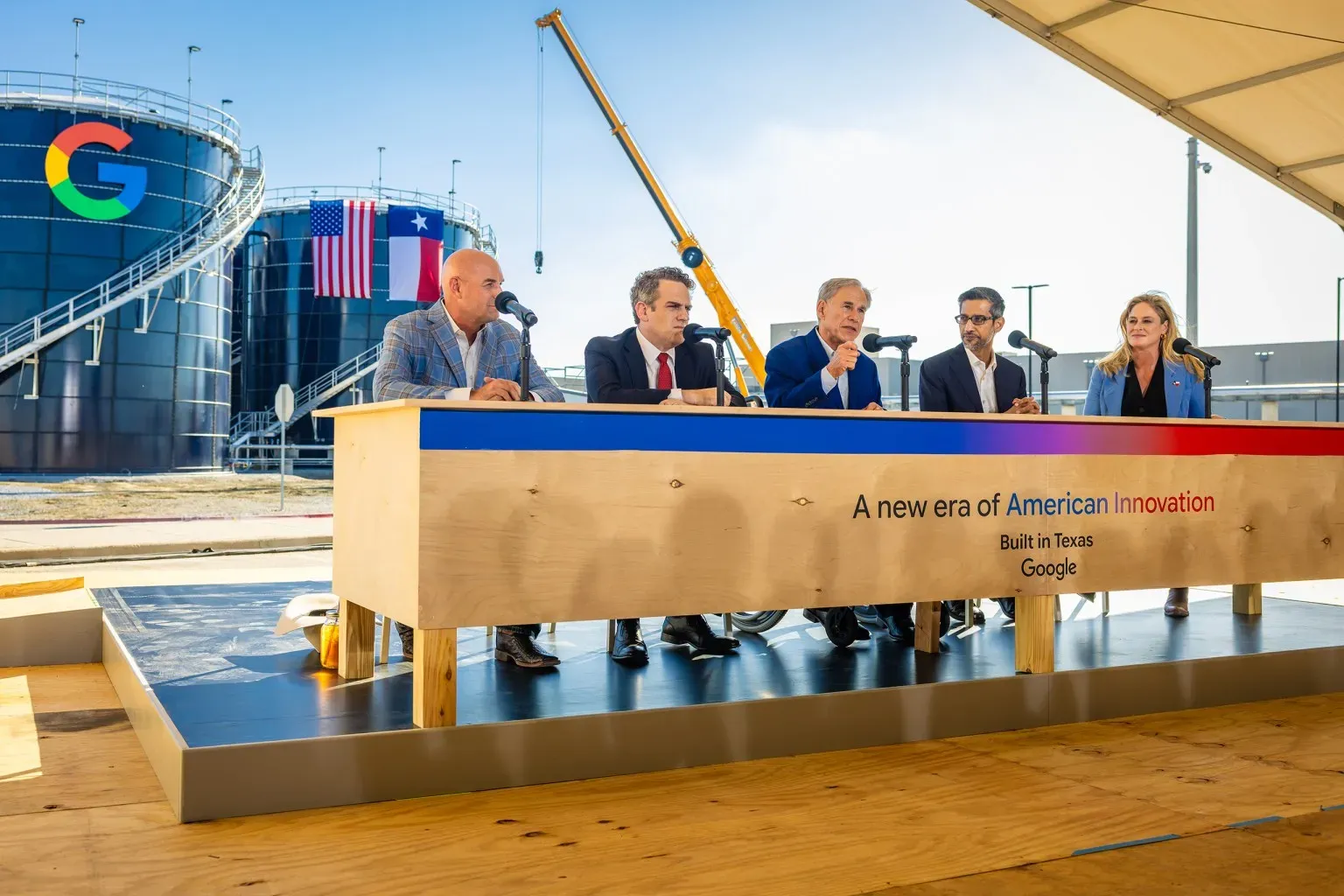
The Tribune also created a tool that enables Texans to find data centers near them.
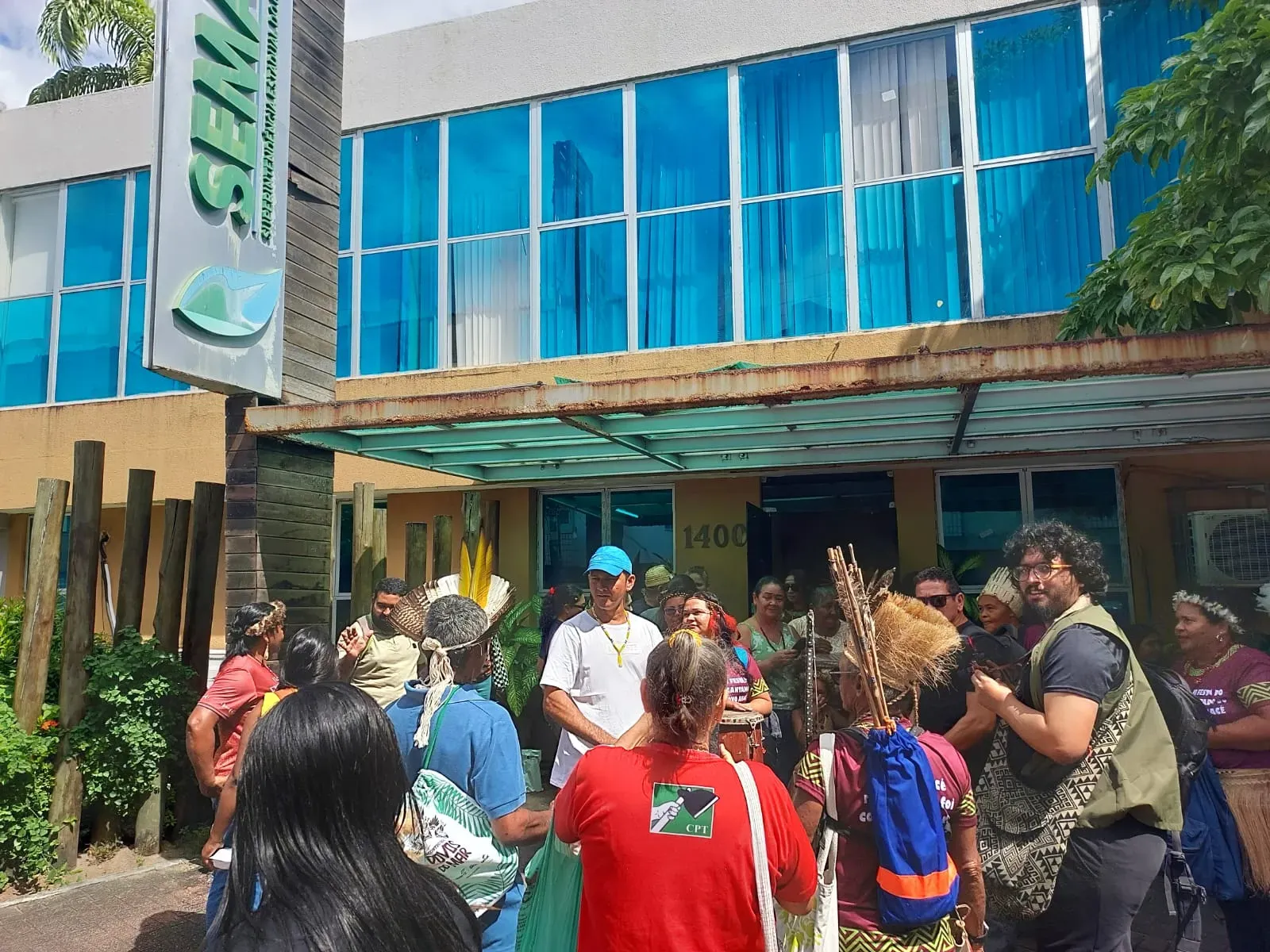
Communities are also responding directly. After learning about a data center being planned in Brazil by Casa dos Ventos and TikTok, the Anacé Indigenous community protested by occupying the Ceará state’s environmental headquarters, claiming the project was planned on their ancestral land. The Anacé were not informed about the development as it was being planned, only finding out through Center-supported reporting by the Intercept Brasil.
Students and young people are finding a voice, too. Inspired by the same reporting as the Anacé, Ria Goel, a winner of the Pulitzer Center’s Local Letters for Global Change student writing contest, wrote to lawmakers about the lack of transparency and environmental impacts of data center development:
Toolkits and Tips
Here’s How To Find Information About Data Centers in Texas


“Industrial secrecy worsens the problems as companies often withhold water usage data, leaving communities in the dark ... Excessive water consumption harms ecosystems and worsens food insecurity, making transparency and sustainable management increasingly urgent.”
Wrote first place winner Ria Goel in response to AI Fellow Lais Martins’ reporting project, From Destruction to Speculation
AI at Climate Week
As AI Fellow Pablo Jiménez said in a recent interview with the Pulitzer Center, the full environmental impacts of data centers have yet to be seen. That's why it's even more important to bring these conversations to the table during Climate Week.
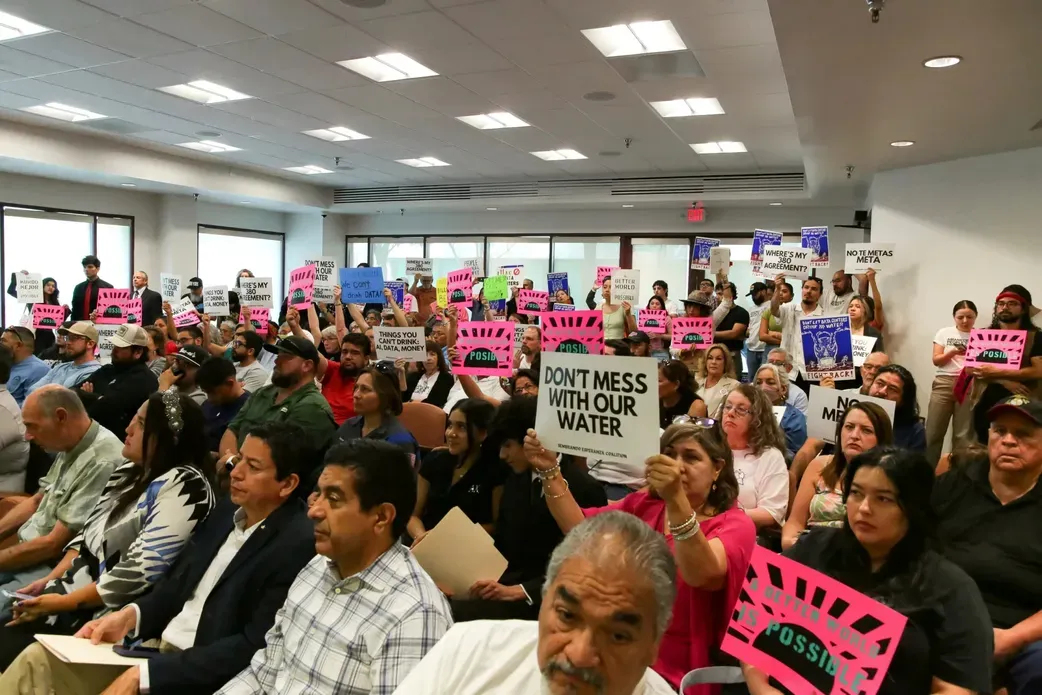
At one of our Climate Week events, co-organized by Retro Report and Data and Society, on-the-ground stakeholders, researchers, and a Pulitzer Center grantee discussed the realities of data center development in rural areas of Texas and Pennsylvania. Moderated by Kit R. Roane, senior producer at Retro Report, the panelists spoke about their experiences investigating the often opaque rollout.
Brian Crawford, Texas resident with the non-profit Protect the Paluxy Valley, became active after he saw signs announcing the development of a data center next to his property last year. "There must be a better way to go about this development," he lamented, as he noted how companies use a complex web of LLCs and corporate holdings to obscure planning.
"The people making our policies at the Capital [...] don't even know the projected power and water demand," said Alejandra Martinez, environmental reporter for The Texas Tribune and Pulitzer Center grantee. "Our state is really behind in terms of regulation for [data centers]."
Ginny Marcille-Kerslake, Pennsylvania resident and Senior Organizer at Food & Water Watch, made a somber point on the energy demands of AI data centers in Pennsylvania, which will require gas power plants. "There's really no place to put this to get around that aspect of it. In Pennsylvania that means gas," she said, noting the similarities between her state and Texas.
Maia Woluchem, program director of Data & Society’s Trustworthy Infrastructures program, expanded on one of the conclusions of her report on "AI boosters"—powerful proponents of data center development—who push AI as a natural conclusion to a long history of industrial development in Pennsylvania. Woluchem claims that the future is not inevitable: "Perhaps what's inevitable is that individuals, communities have always had power."
The everlasting, selfish want to be remembered,
To leave a path that will never be forgotten—
I ask a machine to hold my selfish requests,
My searches, my essays, my photos, my passwords,
Small proof that I was ever there.
I’d imagined it in a bubble, all floating somewhere,
Weightless and without consequence,
A cloud with no shadow, a mark with no impact.
But even digitally, memory needs a home.
Memory needs land
Memory needs wires
Memory needs security gates and cooling systems and water.
“But while real clouds give shade, these buildings give heat.”
I failed to understand the internet has a temperature.
It burns hot.
Every click transfers to physical locations,
A place with wildlife and workers,
A place with roads and clean air.
The silent killer that seems so forgiving,
The neglected center that reaps the nutrients from our soil.
Its seemingly light blue smoke causes us to forget
The everclear presence of its impact.
But it's there
Not with a changed name, not with negligence.
It moves to what we love,
Our communities, our loved ones, our bodies.
“No cooling system eliminates heat: It merely moves it outside.”
Outside is nothing.
Outside is where people live.
Outside is where children wait for buses,
Where old men sit on benches feeding geese,
Where someone’s backyard is trampled for the needs of the selfish.
So now, when I see my screen,
I remember the ground under it,
The lives lost,
The selfishness in doing so.
It's here humming,
Asking who must feel the heat.
"The Cloud Is Not in the Sky"
A poem by Shrey Sankhe, 12th grade
First-place young adult contest winner, Information and AI category
With lines from “Data Centers: The Heat Behind the Cloud” by Gabriel Farías and Miguel Dobrich, a Pulitzer Center-supported story