Story
 September 3, 2026
The Ukrainian Children Struggling To Survive Alone in Europe
Country:


This cross-border investigation reveals the hidden lives of unaccompanied and undocumented Ukrainian...

Every day begins and ends in the same way for Arsenii, 17: calling his mum back home in Kyiv. A year ago he moved from Ukraine to a school boarding house in Slovakia. One night he fell asleep before phoning. When he woke, his mobile was flooded with messages from the few adults his mum knew in the country: the dorm security guard and agent she paid to become his temporary legal guardian. “She woke up everybody,” he says, still with a sense of guilt. She had been trying, agonisingly, to account for her son from over 1,000km away.
Russia’s unprovoked full-scale invasion of Ukraine in February 2022 triggered Europe’s largest displacement of children since World War II. More than 1.8 million crossed into neighbouring countries in the first month – 90 per cent of them with their mothers or other female relatives. But as bombardments battered the country in the following four years, children continued to leave – only without their relatives.
A year-long investigation by The Telegraph has discovered thousands of Ukrainian children are living in Europe alone in the hope of a better life. Some have adapted to independent living, studying and learning the local language. Others have fallen into illegal work, experienced insecurity and discrimination. A few attempts end in tragedy.

As a nonprofit journalism organization, we depend on your support to fund more than 170 reporting projects every year on critical global and local issues. Donate any amount today to become a Pulitzer Center Champion and receive exclusive benefits!
The exact number of Ukrainian children who are now living alone in Europe is unclear. Data collected by EU statistical database Eurostat suggests the total cases since 2022 could be almost 23,500. It shows that 19,580 unaccompanied Ukrainian minors in European Union (EU) countries received EU Temporary Protection Status (TPS) between March 2022 and July 2026.
Non-EU countries offer parallel protection schemes. Eurostat data revealed that in the same time-frame, Liechtenstein, Norway and Switzerland granted their protection status to an additional 3,905 unaccompanied Ukrainian minors.
However, the data is incomplete. Only 20 out of 27 EU members declared their numbers. Among those missing are key Ukrainian refugee destination countries, such as Germany and Poland. Poland alone issued 42,332 temporary guardian orders to Ukrainian minors between 2022 and 2025, according to Polish Ministry of Justice data requested by The Telegraph.
In theory, any child granted TPS protection should have a locally appointed legal guardian to sign their papers. However, our investigation revealed loopholes in the system, leaving this category of children vulnerable to abandonment or poor guardianship arrangements.
Arsenii is among at least 1,024 Ukrainian children aged 14 to 16 who have evacuated to Slovak school boarding houses, according to a snapshot 2025 survey by the Slovak Children’s Commissioner. The real figure is likely to be thousands higher, as this research covered just over half of secondary schools in five of the country’s eight regions. It concluded some 5,000 Ukrainian minors in Slovakia have no responsible adult “close to them”, of whom around 1,000 have no legal representative at all.

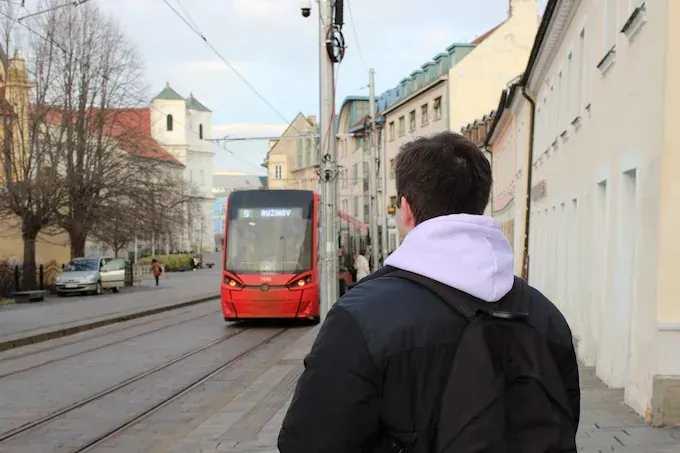
The softly-spoken boy attends a Slovak college and studies online after-hours with the Ukrainian school he attended before the war in a resort town in Kherson region, now under Russian occupation. This way he can graduate a year earlier than Slovak classmates and apply to university aged 17, as is normal in Ukraine.
“I had to grow up very fast,” Arsenii admits, taking a bite from a crescent-shaped pastry filled with poppy seeds in a cafe. He cooks his own meals in the shared dormitory kitchen and spends his weekend food shopping and doing laundry.
Arsenii can barely remember the name of the agency rep who acts as his temporary legal guardian. The company arranged his school place – and those of around 200 other Ukrainian pupils. If he has a problem, he messages the man on messaging platform Telegram and waits. “I prefer to call mum when I have any problems,” he says – a solution that has worked so far because nothing has gone seriously wrong.
But Arsenii carries profound trauma as he walks the city alone. As well as the missiles that threatened his home before he and his mother fled to Kyiv, Arsenii’s father died suddenly last year. “He wanted to protect the house [in Kherson],” Arsenii says, without betraying any emotion. When he began vomiting blood, doctors diagnosed liver failure. “Grandma said he was getting better,” he explains. But following a blood transfusion, he died. Neither Arsenii or his mum could travel into the occupied zone to attend his funeral.
Walking through Bratislava’s cobblestone streets, Arsenii greets another young boy with a smile. He is snapping photos for tourists with an old-fashioned camera. “He must have found a new job,” he says. “He’s alone here too, like most of the Ukrainian kids in my dorm.”
At least Arsenii can avoid taking informal work. He covers the €90 (£78) monthly fee for his shared bedroom by hosting a YouTube channel boasting more than 40,000 subscribers. His voice fills with pride as he describes how people from Kazakhstan to the Netherlands follow his explainers of folklore behind video games such as Minecraft. “Mum even joined me on one of the videos,” he beams.


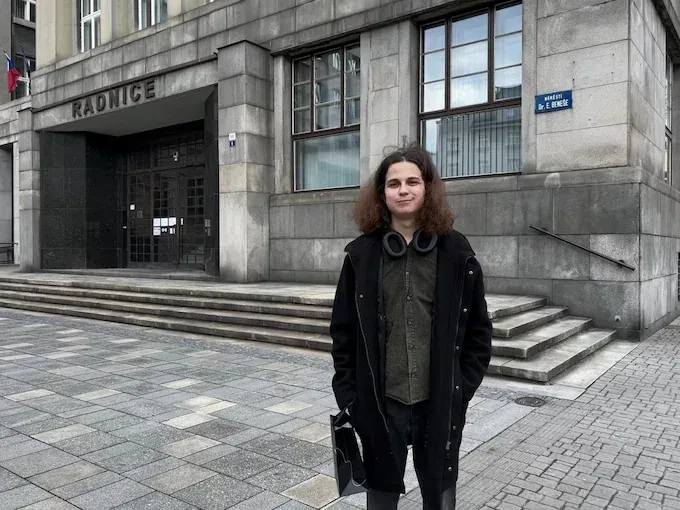
Two hundred kilometres north in Ostrava, Czechia, Herbert Myroshnychenko, 19, stands outside an intimidating, modernist building housing the local child protection services. Here he and his girlfriend Anastasiia Mykhailovska, 19, with whom he left Ukraine, collected their humanitarian subsidy when they first arrived. “I was nervous every week,” he says, pushing his thick, shoulder-length hair awkwardly behind his ears. Before the pair’s mothers dropped off the 17-year-olds in 2024, Herbert had previously left Ukraine only once, and Anastasiia never at all.
The pair registered as unaccompanied minors for TPS. Member states set their own laws regarding social benefits for those with the status. In Czechia, Herbert and Anastasija received 3,490 CZK (£124) each and 6,000 CZK (£213) towards rent a month. As they were too young to open bank accounts without an adult, a social worker handed them the cash until Herbert’s eighteenth birthday. At this point, she appointed him as Anastasiia’s temporary legal guardian until she turned 18 six months later, allowing Herbert to receive both of their allowances directly into his bank account and have authority to represent her in matters such as healthcare or education.
The couple met in 2022 when they fell into the same friendship group at school in Odesa. The port city comes under regular Russian assault, but their families stayed, believing the war would end soon. “After school, I understood it would be better for me to go somewhere in Europe – without the drones and missiles,” Herbert explains. The pair dreamed of studying psychology and saved €1,500 (£1,290) for rent.
At first, landlords turned them away: “A lot said they didn’t want Ukrainians in their flat,” Herbert admits. Then they failed to get a place at university. “The problem was the language,” says Herbert. As in many EU countries, Ukrainians can study for free in state universities, but only on local-language courses. Determinedly, the pair stayed, living frugally. They attended free, state-provided language lessons and by September 2025 began BA courses in computer science instead.
Herbert’s phone rings: his mum is calling, as she does every day travelling home from work at a laboratory. He believes she should stay in Ukraine to work, care for her elderly parents, and be near her husband. Herbert’s stepfather was called up to fight in December. “He is now 1km away from the frontline,” Herbert says flatly.
Before his stepfather was drafted, Herbert did not feel at risk of conscription. Now the threat is more real. Ukrainian males are now only allowed to cross the border until they turn 23 (increased from 18 years in August 2025) after which they must remain in Ukraine. The minimum age for mobilisation is 25.
Herbert doubts he will return to his country after the war. “Ukraine has to change its politics,” he says. He wants it to be less corrupt and more like Europe. “I’m very thankful the Czech Republic provides us with this life,” he says.


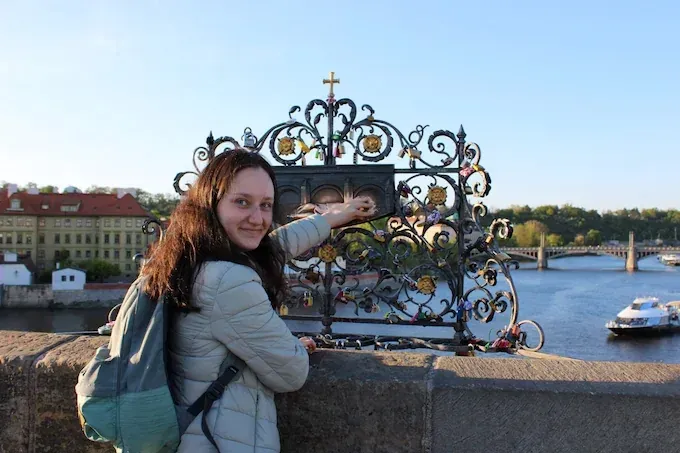
A five-hour drive westward, Mariia Yakymakha, 19, is seated on a bench looking at the Vltava River near the iconic Charles Bridge in the Czech capital Prague. The Ukrainian student says living alone has forced her to abandon any childish thoughts. “Here you have to take care of yourself, because no one else will do it for you,” she says wearily.
Aged 17, her mother brought her to the city from Kyiv, where she and her sister endured two years of aerial attacks. A Ukrainian acquaintance who lived in Prague signed Mariia’s temporary legal guardian paperwork, after which Mariia never saw the woman again. She moved into university accommodation and began a computer science degree. She felt abandoned. “No one ever checked on me,” she describes, adding that the dorm staff “just don’t care, as long as you pay the fees”.
Mariia says Ukrainian children have to be strong to succeed in Europe, her steely blue eyes signalling conviction. She gives the example of how one day, on her way out to lectures, the building receptionist told her another young Ukrainian girl had been bundled into an ambulance after drinking a cocktail of antidepressants and alcohol. “If they’re not prepared to handle everything by themselves, then they just won’t survive,” Mariia asserts.
In June 2025, the Czech authorities found some of its child protection services failed to recognise signs of potential exploitation among unaccompanied Ukrainian minors. In Prague, the investigation, seen by The Telegraph, identified cases of child prostitution among Ukrainian youths. Stanislav Křeček, Czech Ombudsperson at the time of the report’s publication, said Ukrainian children aged 15 to 18 had become “invisible” due to major legislative change in January 2024 that allowed them to apply for and renew their TPS without a legal adult representative.
Schengen Area rules allow non-EU citizens to visit EU countries for up to 90 days without a visa. This provides a hidden entry-point for lone Ukrainian children, The Telegraph found.
Head of Social Work at People in Need Vlasta Sachrová – a Czech NGO that supports unaccompanied Ukrainian minors – told The Telegraph that many adolescent Ukrainian boys overstay their visas as they are “fleeing mobilisation”. “They often live in collective accommodation and are employed through illegal labour brokers,” she says. “As long as companies pay and work is available, there are generally few complaints.”
But sometimes things go wrong. Last year a 15-year-old Ukrainian boy died at work after suffering fatal injuries when his arm got caught in industrial machinery, according to local media reports.
Mariia has avoided serious trouble and feels ready not only to support herself, but also her younger sibling. Come September, her 16-year-old sister will move to Prague, where Mariia will sign papers to become her temporary legal guardian. “It makes sense,” Mariia says resolutely.
Back in Bratislava, Herbert’s school friend Yulia*, 19, misses her home and parents intensely after two years in the city. “Odesa is such a wonderful place,” she enthuses from the small bedroom she shares with another Ukrainian student. “You cannot imagine how stressful it was for me to leave.”
Yulia’s family paid a student agency to enrol her in university, arrange legal documents, and act as a temporary guardian – like hundreds of children arriving in Slovakia every month, according to the Slovak Children’s Commissioner’s report. But not all such agents are legitimate businesses. The Telegraph heard dozens of examples where they failed to deliver agreed services. “It cost €2,000 euros,” Yulia says, about £1,723 – more than three times the average monthly Ukrainian salary. “I met this person only once when I was registering for my dorm,” Yulia says. “This Ukrainian woman brought a lot of children from Kyiv and Odesa.”
At the end of her first term, Yulia’s exam results were poor. According to the university rules, she lost her dormitory accommodation. Flat-hunting resulted in closed doors when landlords discovered her nationality. Her only option was to pay another Ukrainian woman, who she found on Telegram, to help her.
“There are a lot of Ukrainians making money from Ukrainians because of the war situation,” she says indignantly. “It is just awful.”
Yulia supports herself by working 20 hours a week in a clothes shop. She dropped out of her degree, but re-enrolled the following year. Thousands of Ukrainian children in Slovakia do not complete their studies. According to data obtained from the Slovak Ministry of Education by Alona Kurotová, former advisor to the Slovak Children’s Commissioner, almost 40 per cent of Ukrainian university students – just under 3,300 – were expelled in the 2025/26 academic year.
In March, Yulia became sick from the stress of exams, working and living alone, but could not afford medical help. On student visas, healthcare is paid-for, so she travelled 24-hours by bus back into the war zone to see a doctor in Ukraine. Even with TPS, in Slovakia under-18s need an adult to see a doctor, meaning Ukrainian children living alone cannot access health services.
This has led to some tragedies. One 17-year-old Ukrainian student overdosed on over-the-counter medication in 2025 after becoming depressed while living in a Slovak university dormitory.
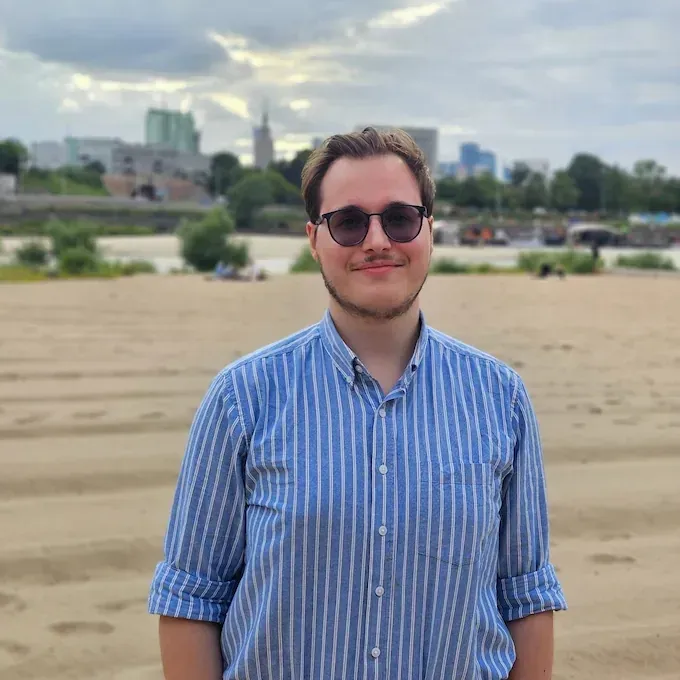
From an office in Warsaw, Bohdan Kontsur, 22, takes a break from answering immigration queries from Ukrainian refugees at Ukrainian House, one of the Polish capital’s main assistance-points. The smartly-dressed student works full-time alongside his studies. He had just begun a law degree at a Kyiv university, aged 17, when Russia invaded. But was “fortunate” to receive an Erasmus scholarship scheme that transferred him to Warsaw University.
“Moving to Poland was a way to get to a safe place and study in Europe,” he explains. Polish law requires every Ukrainian child who arrives without their parent or legal guardian to have a court-appointed responsible adult. Other EU member states consider family members such as grandparents or siblings as automatic legal guardians without issuing court orders. Somehow Bohdan slipped through the system and became trapped by bureaucracy. “I could not fill in an application to get a dormitory myself – I could barely sign the scholarship document,” he explained.
Bohdan circumnavigated the challenges, sending the dormitory paperwork back to Ukraine for his father to sign. He found a single bank that “turned a blind eye” to the fact he was underage and opened an account for him. But when Bohdan tried to apply for PESEL – an identification number required by non-EU citizens who spend longer than 30 days in Poland – the assistant turned him away without a guardian’s signature.
“I thought maybe to ask my dorm room-mate, who was 21, to be my temporary legal guardian,” Bohdan chuckles. Fortunately, his parents evacuated to Poland two months later when his father’s employer transferred his job to Gdańsk, more than 300 km north of Warsaw. Bohdan continued living alone, but at least had legal guardians in the same country. His father was allowed to leave as Ukrainian law exempts males with three children from military mobilisation.
Bohdan says he believes fighting for Ukraine is a duty. But he is currently looking for job opportunities in Europe after graduation. He speculates that conscription laws might extend beyond Ukraine’s borders in the future. “If I am in the situation where I am called upon, I will definitely, well…” he hesitates. “I’m not actively thinking of omitting service.”
International children’s legal NGO Kids In Need of Defense (KIND) told The Telegraph that together with partner organisations on the ground in Europe it had seen concerning evidence about Ukrainian children living alone since 2023. KIND recently published a report warning that economic hardship and insecure accommodation could leave Ukrainian children in Europe more dependent on adults who may seek to exploit them.
“We consistently meet children and young people who show extraordinary resilience – overcoming obstacles to pursue higher education and obtain vocational qualifications,” said Kirsty Thomson, KIND Europe regional director. “For children living without their family or other legal guardian, this is harder to achieve, and the evidence we hear from our frontline workers and partners shows they are at greater risk of trafficking and exploitation.”
As Arsenii boards a bus back to his dorm outside Bratislava, he says with quiet confidence that he will be fine. “I know if something happened to me, mum would find me,” he blushes. For him, as almost every unaccompanied Ukrainian child The Telegraph spoke to, family separation has been the price paid for safety.
*Names have been changed