Story
 July 17, 2026
Too Few Caribou, Too Many Bears: Bristol Bay Subsistence Hunters Favor State Bear Cull To Protect Food
Country:

Project
Alaska’s Predator Control Gamble
Wildlife officials credit a program for a caribou rebound, but critics call it reckless.

The state of Alaska’s cull of brown bears around the Mulchatna caribou herd north of Dillingham is not especially controversial among local subsistence hunters and advocates.
Last in a three-part series. This story was produced with support from the Pulitzer Center.
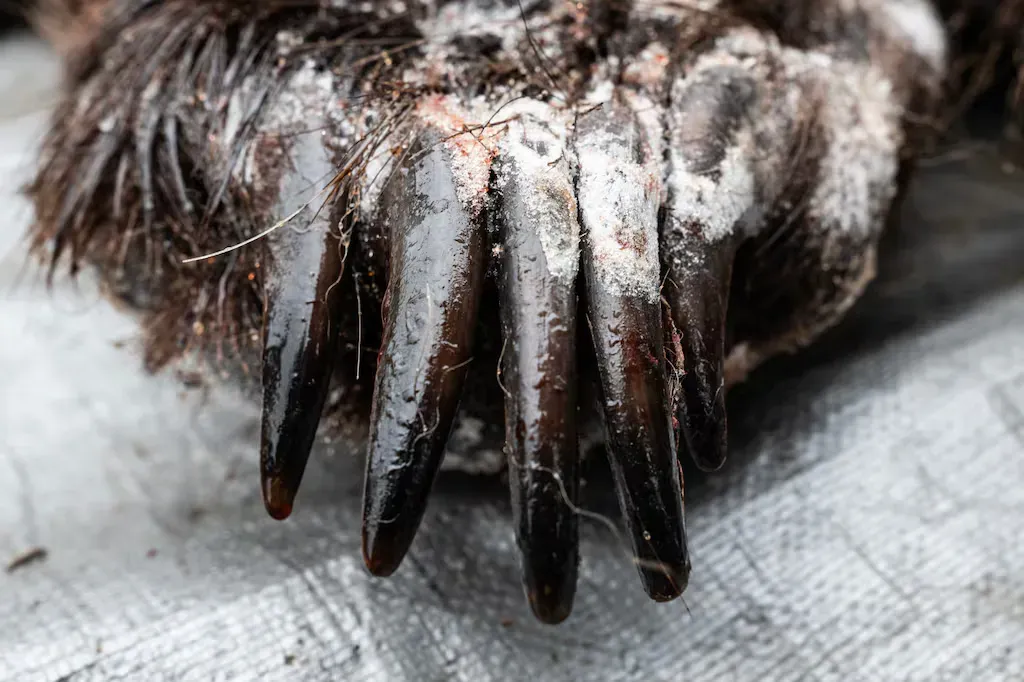
DILLINGHAM — Puttering around his yard, Frank Woods III pulled two black trash bags out of a chest freezer. Inside was a dead bear. Parts of it, at least: the claws and head in one bag, the rolled-up hide in another.
“It’s only getting worse and worse,” said Woods, 60, of brown bears in the area. “More human interactions.”
The state of Alaska is in year four of an unprecedented cull of brown bears around the Mulchatna caribou herd north of Dillingham. Hunting guides running businesses in the region, which depend on reliably being able to show clients to wild bears, have mixed feelings about the state’s approach, its impacts on the animal population and what it means for their livelihoods. But the program is not especially controversial among local subsistence hunters and advocates interviewed by the Daily News, who say there has always been a need to keep bears in check.
A lifelong subsistence hunter and leader in the region, Woods doesn’t go out for bears. This was just the second he’d ever shot. But lately, bears around town seem unbothered by hazing tools like firecrackers and even rubber bullets. So after this one came through the neighborhood where he and his kids live this spring, he ventured a full five minutes “out the road” with a rifle.
As a nonprofit journalism organization, we depend on your support to fund more than 170 reporting projects every year on critical global and local issues. Donate any amount today to become a Pulitzer Center Champion and receive exclusive benefits!
“Only reason I got this one (is) it was close to my house,” Woods said.
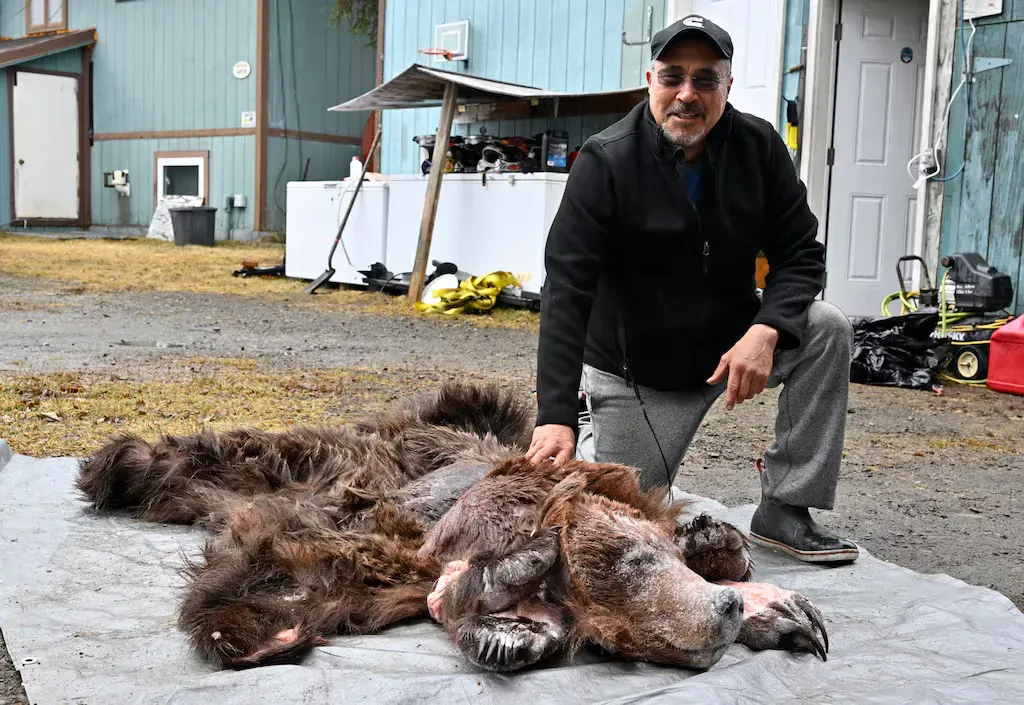
He’d salted the hide to draw blood from the flesh before sending it out for tanning. The more the pelt thawed atop a tarp in his yard, the more it started to stink.
For many people in the Bristol Bay region who live off the land, bears are a fact of rural life, like mosquitoes or snow. But they are a threat to residents’ lives and livelihoods with few options for managing the way people used to deal with them.
“It was just common knowledge that if the bears got close enough to the village, then you put them down. That way there’s no threat,” Woods said. “We didn’t have a bear problem growing up ‘cause all my elders, every bear they seen they shot because it got close to the village.”
Now, residents say, there are way too many bears, and it’s causing a lot of problems.
“Fish camps, lodges, residential cabins, everything gets rampaged,” Woods said. “We have to cull the population at some point.”
Bear heaven
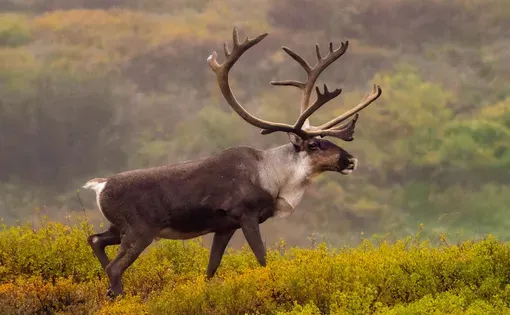
The state’s reason for going out for several weeks each spring with aircraft to shoot as many bears as they can find in the Mulchatna control area is to help the region’s main caribou herd. Though Bristol Bay is known primarily for salmon fishing, residents rely heavily on terrestrial game for food.
“Everybody’s subsistence profile is so diversified,” said Susan Jenkins-Brito, chair of the Nushagak Advisory Committee, the regional body that makes fish and game management recommendations to the state’s Board of Game.
Subsistence diets are fluid, changing based on animal availability and human adaptability. Like all caribou herds, the Mulchatna herd has boomed and busted. In 1965, state officials estimated it had 6,000 caribou, far fewer than the 16,276 reported from recent aerial surveys.
By the late 1990s, the herd had exploded, assessed at close to 200,000 animals, from which nearly 5,000 were harvested by sport and subsistence hunters. For locals, that meant years when the bag limit was five caribou a day per person. Then came the crash — driven, according to the state’s accounting, by a combination of disease and malnutrition. By 2021, the state estimate for Mulchatna caribou was 12,850, and they closed the herd to all hunting.
During a May interview, Jenkins-Brito explained that in the decades since the Mulchatna herd peaked, tundra vegetation has changed. The shrunken herd ranges farther north. Riverine corridors, warming from climate change, are getting bushier with more forage for moose, prey that was rarely seen in some parts of the region even a few decades ago.
“Most people are really banking on getting a moose, and less, these days, on getting caribou,” Jenkins-Brito said.
Among the changes, she said, have been “enormous population increases in bears and wolves” across the region.
The data on bear numbers in the region is partial and outdated. When state officials offer an estimate for how many bears are in the affected area, as they did in a presentation to the Board of Game last July, it is 2,800 brown bears. But that figure is based on extrapolation from two different surveys done on segments of land near the Mulchatna calving grounds. One was from the late 1990s. The more recent of the two studies finished in 2004.
The absence of comprehensive population data is at the heart of an ongoing lawsuit to stop the Mulchatna predator control program filed by the Alaska Wildlife Alliance and another advocacy group against the state Department of Fish and Game.
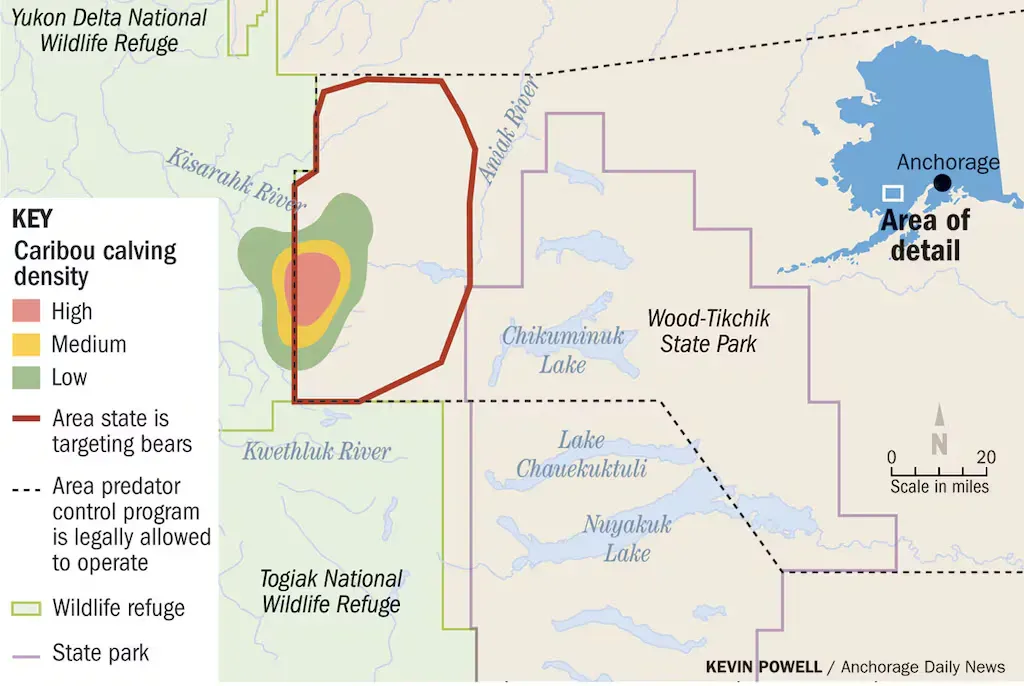
Critics allege the state can’t responsibly say it isn’t doing irreparable damage to Alaska’s brown bear population if it doesn’t even know how many there are within the control area. For its part, the state argues that most regions of Alaska don’t have the kinds of detailed bear estimates opponents are demanding, and that its predator removal is focused on such a small area that it will not negatively impact the larger brown bear population.
In interviews with residents of the Bristol Bay region, complaints abound about brown bears increasingly showing up at fish camps, landfills, residential subdivisions, hunting cabins, porches and salmon nets. People said plainly and unequivocally that they’ve encountered way more bears recently than they used to.
Jenkins-Brito herself was recently at home with her kids and black Labrador when a brown bear came up to a freezer on the porch, bashed off the padlock, and started devouring salmon they’d put away for winter. After debating whether or not to fetch a firearm, she loosed the Lab.
“The bear took off. But we still lost 20 fillets,” Jenkins-Brito said. “That’s a day’s work.”
The Nushagak Advisory Committee she chairs voted 14-1 in support of the state’s predator control program, primarily in the hope it will improve access to subsistence opportunities.
“People of our region still have to eat,” Jenkins-Brito said. “We’ve asked (Fish and Game) to prioritize subsistence management for food accessibility. We’re already in a system where food insecurity is huge. … A big component of prioritizing subsistence food availability is predator control, which is not a popular thing when you think outside of the state of Alaska.”
Others agree that maximizing opportunities for subsistence harvests should outweigh the sentiments of people who do not live in the region, let alone in close proximity and competition with the bears.
“Everybody knows, I speak my mind,” Chief Robin Samuelsen said in the Curyung Tribal Council boardroom in Dillingham.
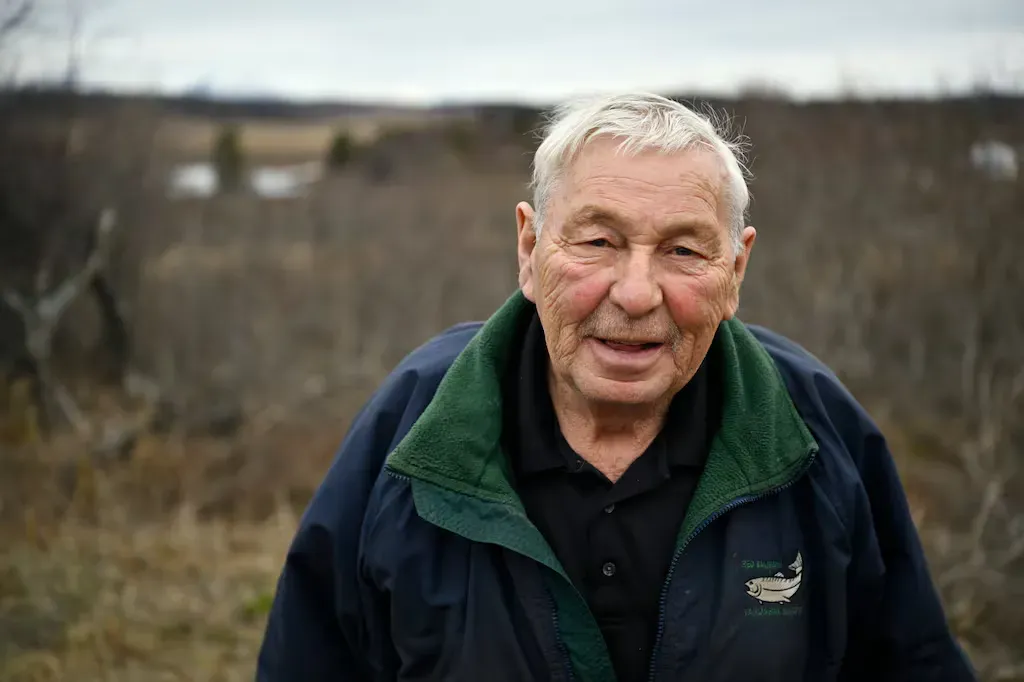
Samuelsen, 75, comes from a long line of salmon fishermen. In his family lineage — which goes back on his paternal side to his great-great-grandfather opening the region’s first cannery — commercial and subsistence interests are intertwined. People do both. Likewise, Samuelsen helped establish and lead the Bristol Bay Economic Development Corp., the region’s community development quota entity to convert commercial fishing into benefits and dividends for residents. But he grew up in a time when most people in Dillingham burned wood for fuel and ate practically no food they didn’t harvest themselves.
“My family’s been ‘subsistence-ing’ since before the first white man ever settled in Bristol Bay,” he said, seated comfortably in a worn boat jacket. “We ate black fish, we ate porcupine, we ate rabbit, moose, caribou, whatever we could find and whatever we could store on our porch.”
Back then, Samuelsen said, to keep brown bears from stealing salmon from setnets and fish racks, or attacking people, they were promptly shot.
“When the bears got in town, they were dead. They went to bear heaven. There was no ifs, ands or buts,” Samuelsen said.
People viewed bears as a problem, he said, and they handled those problems themselves. Carcasses were dragged into the woods for the blowflies to devour, he added. Samuelsen recalled elders telling tales with yaaruin, a Yup’ik storyknife, tracing it through the mud.
People viewed bears as a problem, he said, and they handled those problems themselves. Carcasses were dragged into the woods for the blowflies to devour, he added. Samuelsen recalled elders telling tales with yaaruin, a Yup’ik storyknife, tracing it through the mud.
Though Samuelsen’s family didn’t eat brown bear, the meat was “very popular to locals’ diets,” though only in the spring.
“Once they start eating fish, no good for eating,” he said.
Samuelsen emphasized the need for measures to suppress Bristol Bay’s brown bear population to improve residents’ chances at harvesting other animals for subsistence.
“I think the state control program is needed to rebuild the caribou herds,” he said.
Greatest of animals
Southwest Alaska has long had mixed attitudes toward bears, with records of respect, fear, reverence, animosity and ritual customs for them. As have most places where humans lived among bears.
A century ago, American anthropologist A. Irving Hallowell surveyed human-bear relations among Indigenous communities throughout Russia, Europe and North America. Hallowell found bears were uniquely revered among most of the communities that shared the same range.
Numerous Indigenous groups across the circumpolar north used familial terms for bears, such as “cousin,” “grandfather” and “old man.”
Demonstrating their peer status as a revered creature competing for many of the same resources, Hallowell cited the “bear song” of a Salish tribe in Western Canada, recited after a kill: “You died first, greatest of animals./ We will respect you, and treat you accordingly … May the lesser animals all follow you./ And die by our traps, snares and arrows.”
In other words, removing bears increased the odds of harvesting more animals farther down the food chain, not dissimilar from the aspiration of modern predator control programs.
Alaska anthropologist Ann Fienup-Riordan, documenting Yup’ik rules and rituals, wrote in her 1994 book “Boundaries and Passages”: “People living along the Yukon and Kuskokwim rivers considered bears potentially powerful allies.”
Yup’ik elders told her that once a bear was killed, young people used to be marked with its blood.
“Such an act both protected the children from bears and gave them the spirit of the bear to protect them in the future,” Fienup-Riordan wrote.
Hides were typically taken for clothing or sleeping pads, according to her research. A bear’s head was removed and placed on the tundra facing the sunrise.
But most of those practices existed only in oral tradition by the time a group of state researchers and wildlife personnel began trying to align state management objectives with Southwest Alaskans’ relationship to bears. In the early 1990s, federal and state officials liberalized rules around hunting bears, and in the process realized there was a dearth of basic data about the animals. Their efforts to research brown bears through practices like affixing radio collars bothered Yup’ik subsistence users, as did trophy hunters killing bears for sport. Still, wildlife managers learned in the process of implementing their research programs that subsistence users were regularly killing brown bears but not reporting it to state game officials.
“Bears are more often perceived as competitors for food and nuisances near villages and fish camps. Fear and disrespect have replaced reverence in many cases, and bears are one of the few large mammals that are wantonly shot and abandoned. This contemporary dichotomy results in social friction within villages and presents additional challenges to wildlife managers,” wrote the researchers in a 2001 paper published in the journal Ursus.
Fat bears and rare bears
Subsistence hunters are not the only Bristol Bay residents with opinions on bears.
Johanna Bouker, 86, spent her childhood in Dillingham, where her father, a pilot, helped establish what’s become the Brooks Camp, a hub for wildlife viewing and ecotourism in Katmai National Park and Preserve. Initially, the auspice for standing up austere accommodations near Brooks Falls was fishing. Now, it’s the bears. The waterfalls cause spawning salmon to pool in the Lower Brooks River, which brings out bears gorging on protein before denning.
Bouker moved back to Dillingham in the 1970s and has been there ever since. Speaking in her home, she explained that when working alongside her father in the camp every summer, there was a healthy appreciation and respect for the bears that would come close.
“Sure as heck I’m careful around ‘em. I’m scared to death of ‘em,” she said.

She still returns to Brooks every summer. Her reverence is less for the bears themselves than their integration within the complex natural environment. Bouker isn’t against taking animals on principle, and hopes caribou might benefit from intensive management. But she abhors the state’s aerial gunning approach for its cruelty and waste.
“I don’t want them to kill all the bears,” she said of the state cull. “I think that’s terrible.”
Some of Bouker’s concerns echo a second lawsuit over the predator control program recently decided in Alaska’s courts. In 2023, Anchorage attorney Michelle Bittner sued the state, arguing that the wolf removal program in Southwest Alaska violated her rights as an Alaskan by failing to consider the relationships of non-hunters to wild animals in its management decision.
“For people who are non-consumptive users of wildlife, watching and/or knowing (Alaska’s) animals are declining is devastating and concerning. These wild animals provide a connection to the land and are part of people’s longtime identity and experience as Alaskans,” Bittner’s complaint stated.
In the years after the state started culling bears en masse some hundred miles away in the Mulchatna control area, the population of brown bears showing up by the popular Brooks Falls viewing area appears “to be noticeably smaller,” according to Bittner’s filing.
In April, Superior Court Judge Dani Crosby ruled partially in Bittner’s favor, settling a number of technical motions that the concerns of non-consumptive wildlife users in Alaska have to be considered in intensive management policies. The ruling had the immediate effect of invalidating the state’s wolf control efforts in a large part of Southwest Alaska. But the decision could also open the door to more legal challenges by non-consumptive wildlife users opposed to the state’s predator control policies elsewhere in Alaska.
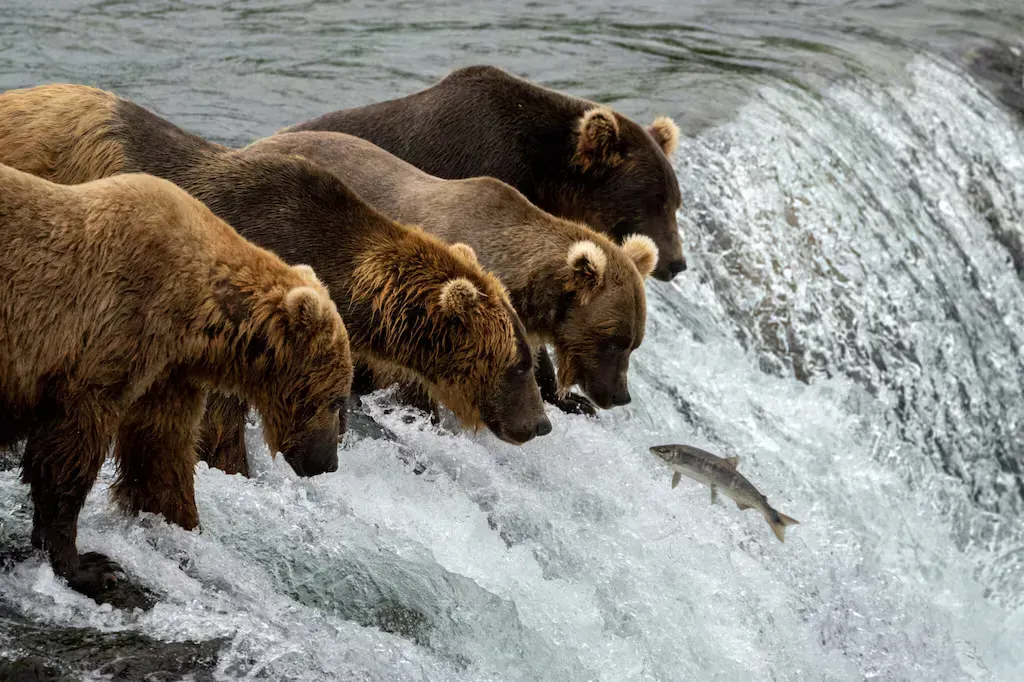
Brooks Falls, the viewing area cited in Bittner’s complaint, is also where the National Park Service has mounted video cameras that allow people around the world to watch wild grizzlies feast on salmon from the comfort of their screens. The Park Service scored a social media coup a few years ago when it began conducting its popular Fat Bear Week competition, a tournament-style bracket highlighting which of the river’s regular grizzlies had gained the most weight.
Whether the state’s bear control program over a hundred miles away is having an effect on the brown bears congregating around Brooks Falls or the McNeil River State Game Sanctuary, another popular and relatively close location for bear watching, is disputed. Bittner and others familiar with the refuges insist fewer bears are showing up. The Department of Fish and Game maintains there is no evidence the inland bears they target for removal are the same ones that gather at Brooks or McNeil each year.
Fish and Game Commissioner Doug Vincent-Lang said that when it comes to managing wildlife, there are inherent, unavoidable differences in values between constituencies.
“There are people that just want to view bears,” Vincent-Lang said in a May interview.
Neither he nor his deputies are out to eliminate brown bears from Alaska, he said. But many people lacking intimate familiarity with the species are blind to the hazards they bring, whether it’s to the availability of subsistence foods like fish and caribou, or to personal safety.
“We’re kind of in this unique situation with predators, where people value them on the landscape, but when public perception gets to the point where it’s affecting my safety or my food source, their opinions switch a little bit,” he said.
A similar point was raised by retired Fish and Game wildlife manager Charles Schwartz and his co-authors in a 2003 analysis of predator control programs in the 21st century, which concluded they are ultimately ineffective at restoring ungulate populations.
“Through history, human values toward large carnivores seem to be inversely proportional to carnivore abundance. Society tends to value them more when they become rare or endangered,” the researchers wrote in the journal Alces.
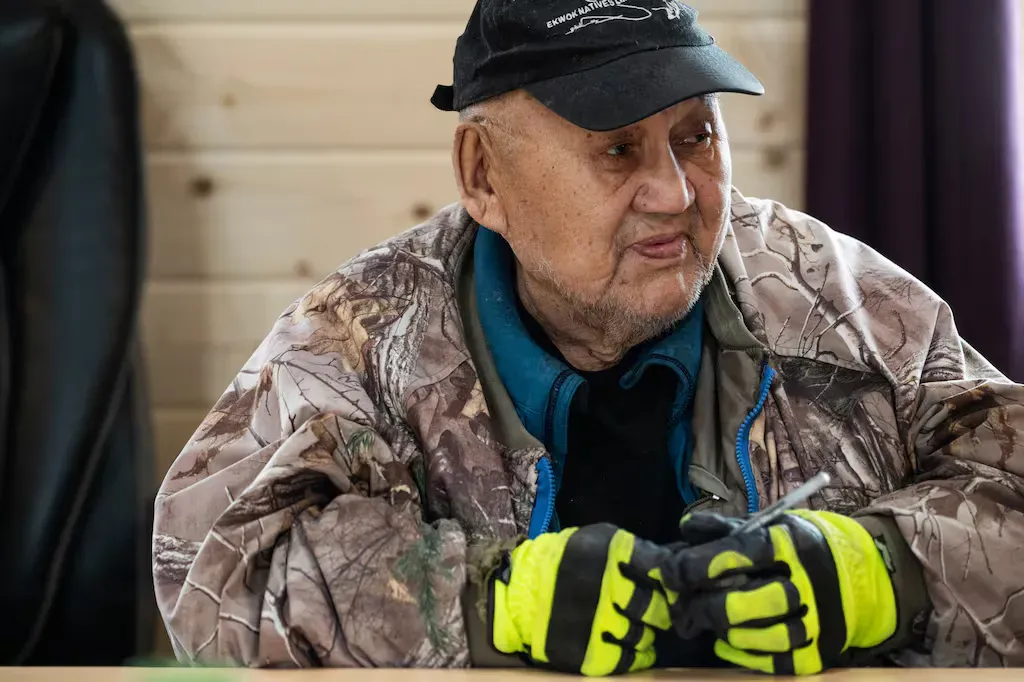
In a small community along the Nushagak River, about 40 miles upriver from Bristol Bay, Luki Akelkok Sr., 89, sat in his wheelchair after the Ekwok Village Council, of which he serves as president, finished a meeting this May.
Akelkok grew up at a time when young men’s primary work was hunting, fishing and providing for their community. His formal schooling ended at fifth grade, he said.
“(Then) trying to get food on the table. Moose and all kinds of game. We had to live off the land,” Akelkok said.
In those days, there were no outside sportsmen coming to the Nushagak to hunt brown bears. Over the years, as more trophy hunters came in looking for big caribou or moose, they would too often shoot bulls in rut, when the meat is so fouled by surging hormones as to be inedible.
“That’s a whole waste of meat,” Akelkok said disapprovingly.
There was not a conception of hunting a brown bear for sport back in the old days, he said. Families had dog teams that barked encroaching bears away from villages or subsistence camps.
“When they was a problem, we’d get rid of them,” Akelkok said matter-of-factly.
A fellow council member and hunter in his 30s pushed Akelkok’s wheelchair out of the tribal building, promising to stop by his house and drop off some recent meat made into soup the day before.