Story
 June 10, 2026
Texas Landowners Fight Massive Transmission Line Project at Austin Hearing
Country:


Project
Texas Energy Crossroads
President Trump is throwing his weight behind an expanded campaign of oil and gas drilling.


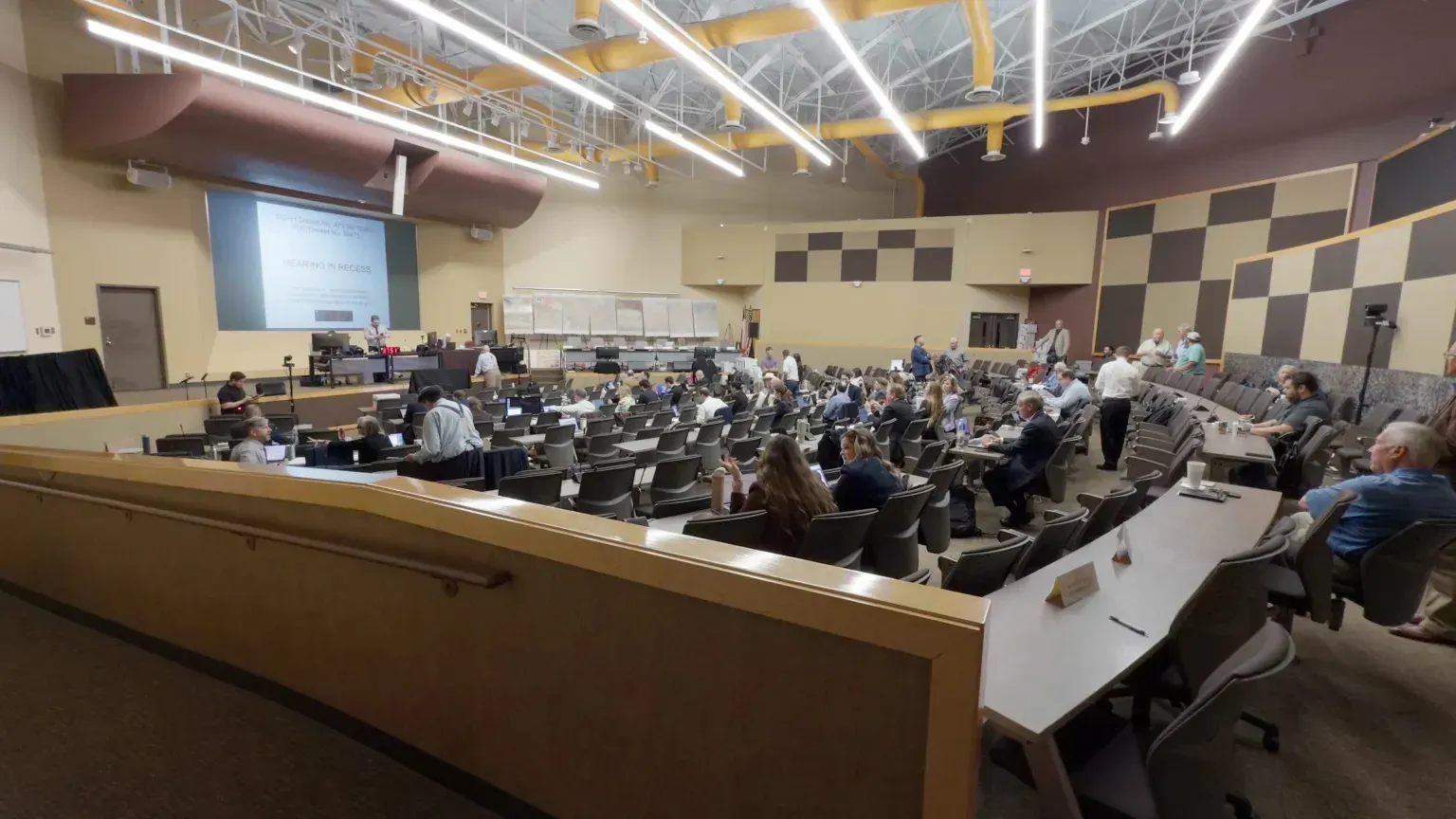
AUSTIN — Hundreds of Texas landowners gathered in Austin this week to challenge proposed transmission line routes tied to a major statewide power infrastructure project.
The Bell County East to Big Hill 765-kV transmission project, proposed by Oncor and the Lower Colorado River Authority, is designed to move power across Texas and strengthen the state grid as demand rises from population growth, data centers and industrial expansion.

As a nonprofit journalism organization, we depend on your support to fund more than 170 reporting projects every year on critical global and local issues. Donate any amount today to become a Pulitzer Center Champion and receive exclusive benefits!
This week, administrative judges are hearing testimony about those routes before eventually making recommendations to the PUC.
For Burnet County resident Jan Rose, the possibility of a transmission line crossing her property is overwhelming.
“It’s going to traverse our property, not along the property lines, but right through the middle, about 150 feet from our front door,” Rose said.
What is the Bell County East-to-Big Hill project?
Rose is one of hundreds of Texans participating in this week’s hearing, arguing why their land is not an appropriate location for future transmission infrastructure.
“We have 13 minutes to present this whole case (to the administrative judges),” Rose said.
The proposed project spans multiple counties across Texas and is part of a broader effort to expand the state’s electric transmission capacity.
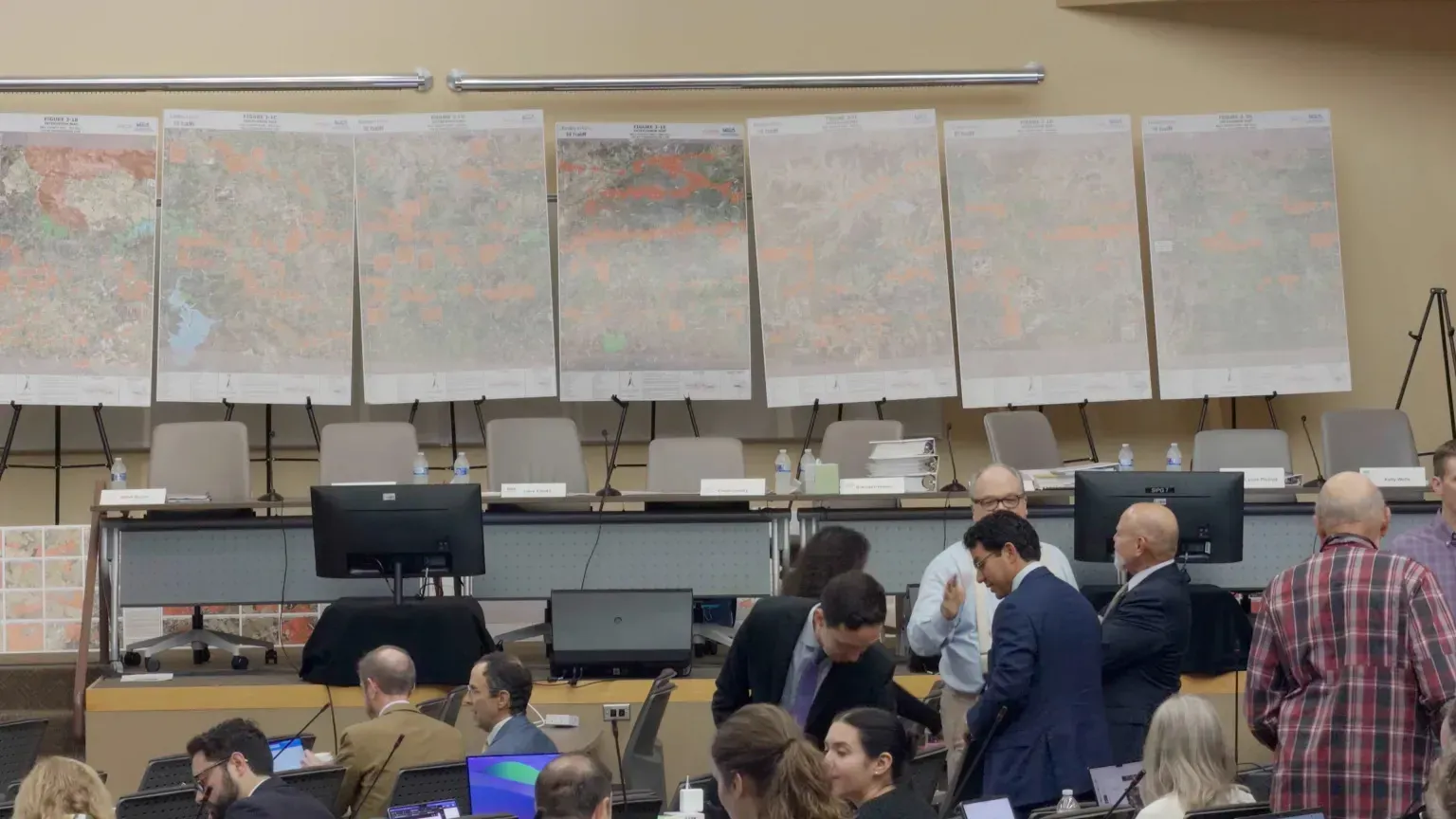
Oncor and LCRA argue they studied dozens of route options to reduce impacts to homes, landowners and environmentally sensitive areas.
Why Texas landowners oppose the transmission routes
Still, opponents argue the process pits neighbors against one another while forcing landowners to spend significant money trying to protect their property.
“All of these groups and all of these landowners are going to spend, I mean, collectively, millions of dollars easily, over this next week in legal fees,” said Mia Sarot, founder of the Hill Country Land and Legacy Alliance, an advocacy group representing landowners across Central Texas.
She also argued the state’s timeline for approving transmission projects compresses the process too aggressively.
How the PUC hearing process works
Under state law, the Public Utility Commission has 180 days from the initial filing to complete the transmission line approval process.
According to Sarot, landowners have exactly 30 days to intervene, followed by a speedy legal process with the State Office of Administrative Hearings, which spends about 2 months, and is followed by a roughly 90 day review period.
In the review period, the Administrative Law Judges overseeing the case will review the evidentiary record for roughly 60 days before presenting a Proposal for Decision. Finally, the PUC Commissioners will review the case for around another 35 days before issuing a final order.
“The decisions are made faster than they can really meaningfully have input because you have to understand the project,” Sarot said.
When Texas regulators could make a decision
Following the hearing, administrative judges are expected to send route recommendations to the PUC.
“It doesn’t mean that the PUC commissioners have to agree with what they do, and they can make a completely different decision,” Sarot said.
Another hearing later this month could further complicate the process. That proceeding will focus on whether additional route alternatives should have been included in the application.
If judges determine the proposed routes were insufficient, portions of the process could be revisited.
“We might then, you know, have to do this again, spend more money. That is very frustrating,” Sarot said.
For Jan Rose and her husband, Austin Rose, the hope is simple. “Our hope is that the PUC will slow this process down,” she said.
As part of the hearing process, Oncor and LCRA are expected to present witnesses discussing why specific routes were selected. Participants are given 13 minutes to cross-examine utility representatives and limited time to present their arguments.
The Public Utility Commission is expected to make a final decision later this year.