Story
 September 7, 2025
Sticks Against the Sea: As Oceans Rise, These Fishermen in West Africa Refuse To Wait
Country:

How the heating of the seas has forced fish to migrate from fishermen in Senegal
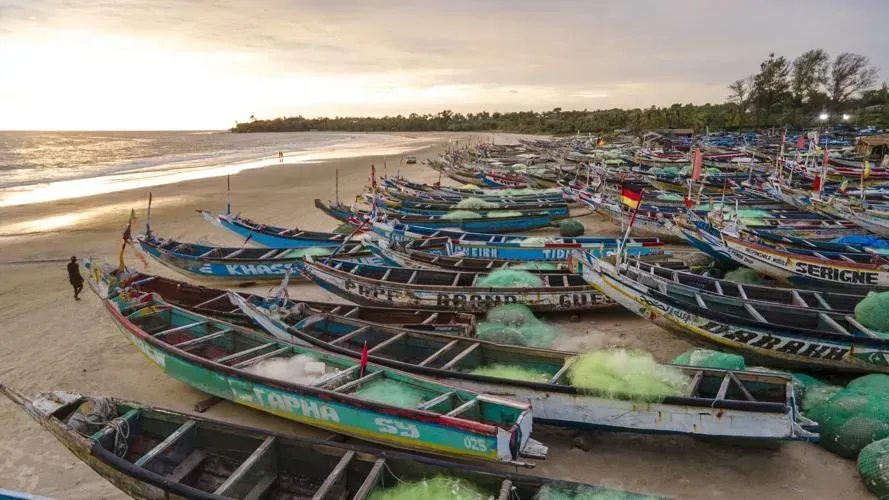
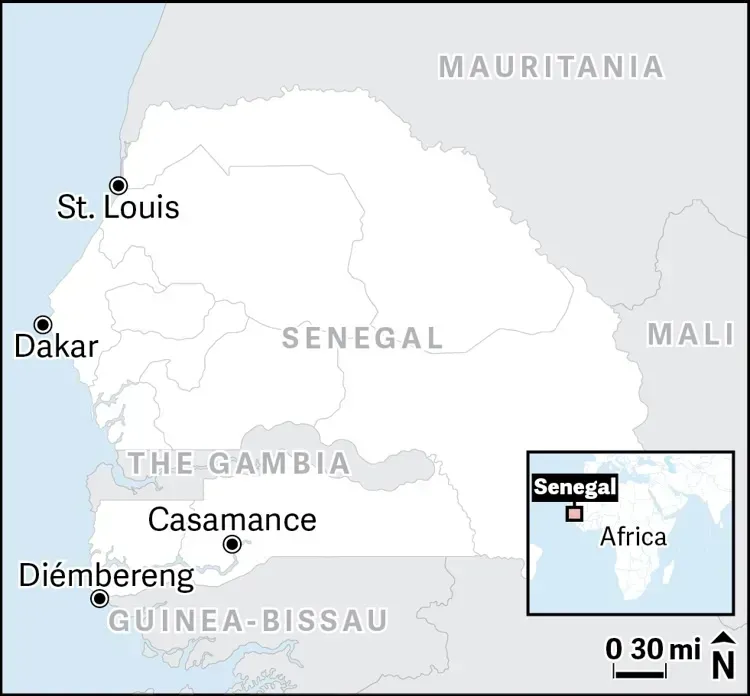
CASAMANCE, SENEGAL — On Senegal’s southern coast, where the Casamance River meets the Atlantic, fishermen are pushing back against the sea with whatever they have at hand, including sticks.
Rising seas caused by a rapidly warming climate have pushed waves into rice fields here and eaten into communities where fishermen keep their homes. West Africa, especially Senegal, is among the world’s most vulnerable areas to rising waters.
“In entire villages across the region, we’re losing several meters of shoreline every year,” said Bamol Sow, an oceanographer at the University of Ziguinchor in southern Senegal.

As a nonprofit journalism organization, we depend on your support to fund more than 170 reporting projects every year on critical global and local issues. Donate any amount today to become a Pulitzer Center Champion and receive exclusive benefits!
But several years ago, a university student here had an idea, community leader Laye Demba recalled.
“He saw the sea winning land, so he did what he could,” Demba said. “He took trunks and branches and planted them straight into the ground.”
With a few neighbors, they created a barrier.
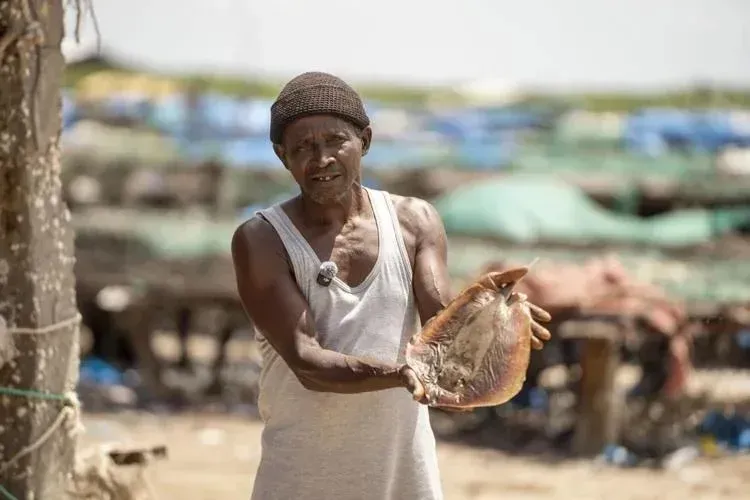
“Not to conquer the sea,” Dembe said, “but to slow its advance.”
The wooden wall seemed to hold. Soon after, nonprofit and conservation organizations began to take notice. Now, stick structures are going up along this badly fraying coast, defenses rooted in the determination to do something now instead of waiting for more costly plans.
What’s happening here is part of a larger and often desperate trend: Around the world, communities are turning to natural defenses to blunt the impacts of rising seas.
In South Carolina, where Charleston’s sea level has risen 7 inches since 2010, city officials have been working on plans for a new seawall around the city’s peninsula — a massive infrastructure project that at one point had a price tag upwards of $1 billion. In the meantime, conservation groups have championed living shorelines that use sand, marsh grasses and oyster shells to stabilize the Lowcountry’s fragile edges.
In Oregon, officials are using lines of stone and driftwood to mimic natural beaches. The wave movement self-adjusts the rocks, dissipating energy and reducing erosion without rigid structures.
And in southern Senegal, fishermen used sticks, though a question lingered after the seemingly delicate bulwarks went up:
Would they really be a match for the sea?
An inexpensive solution
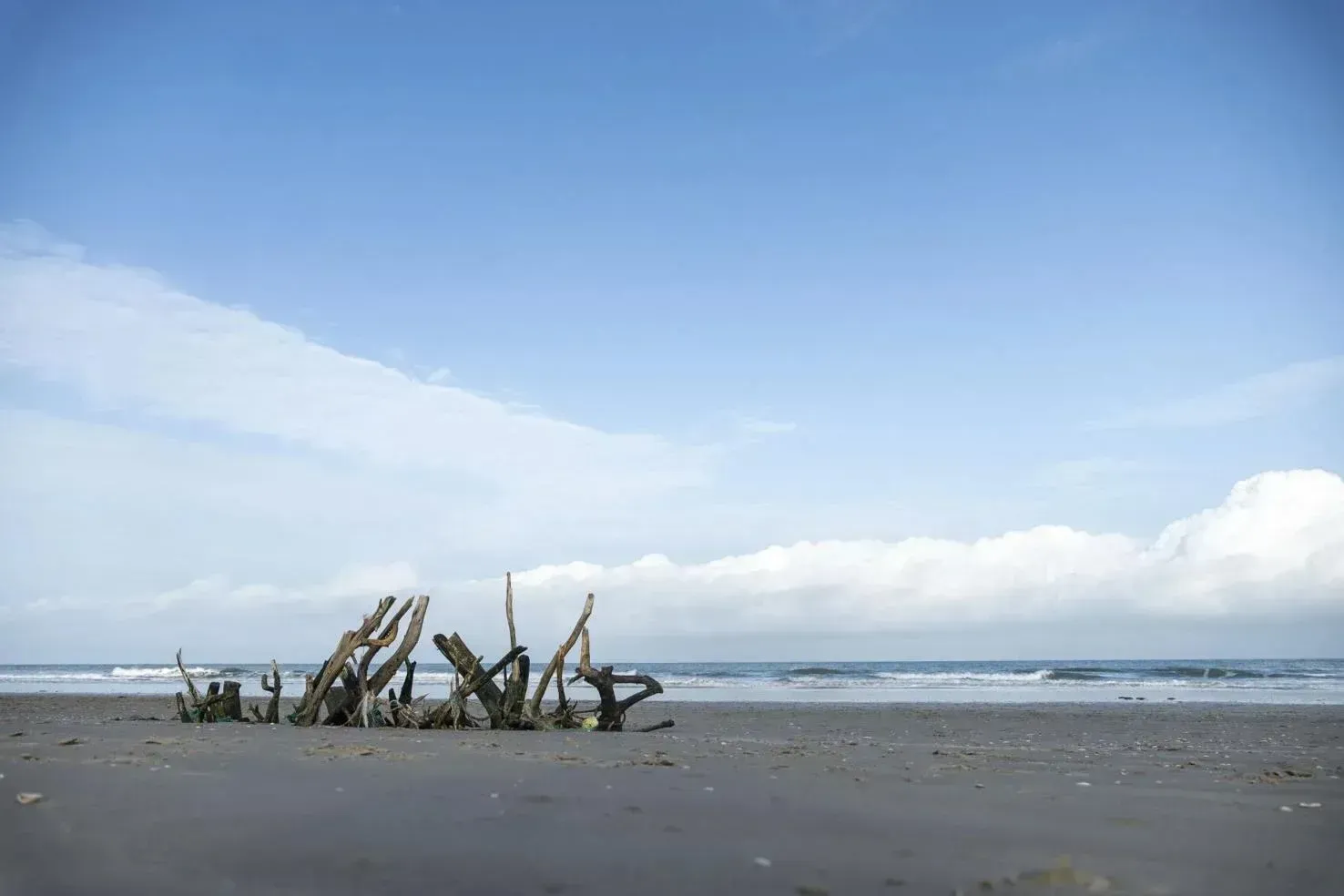
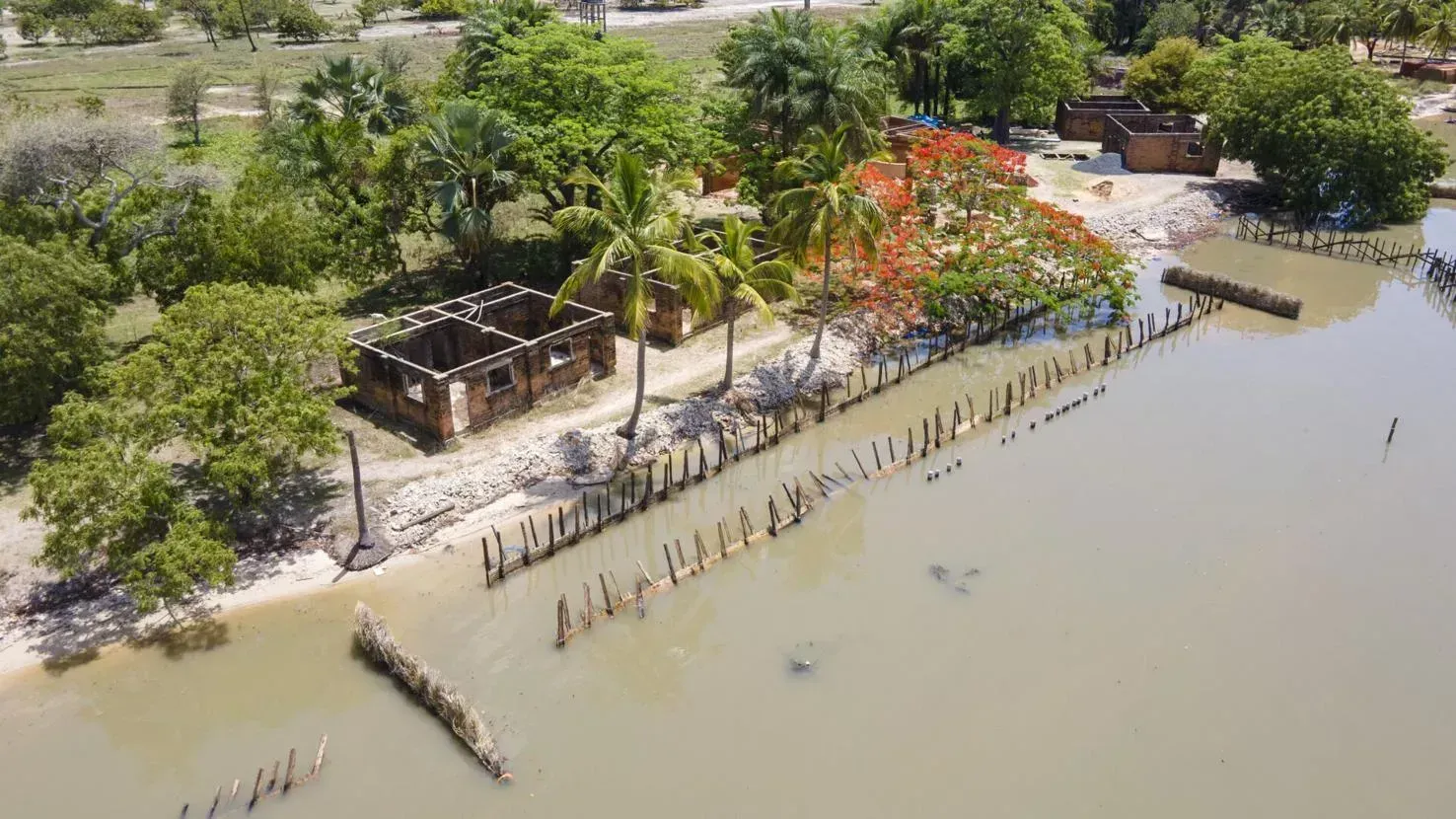
Building the stick walls looked deceptively simple. Villagers planted thick wooden stakes into the sand about a meter deep and lashed them together with nylon nets. Then they piled palm or coconut fronds against the structure. Fishermen, women fishmongers and children took part, hauling branches, tying nets, piling leaves. The result looked like driftwood tied together. But the mass of wood and nets had a purpose — they trapped sand carried by the tide, which gradually rebuilt the shoreline.
At a community here called Djembereng, just north of Senegal’s border with Guinea-Bissau, residents noticed sand starting to accumulate within a week of the wall’s installation, officials with Senegal’s Marine Protected Area program said.
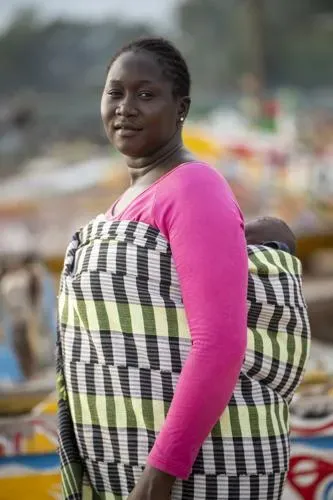
Col. Mamadou Sidibé, who oversaw the project, said the wall was a practical solution that used local and mostly natural materials. With proper monitoring and maintenance, the stick walls should be as effective as more expensive approaches, including rocky barriers, he said. A Canadian organization helped fund the stick project.
Several other regions in Senegal are experimenting with their own iterations.
In the Casamance river community of Pointe Saint-Georges, the stick barriers run in lines about 50 feet long and perpendicular to the shore. Village chief Pierre Dieme said the community has been fighting beach erosion for decades, along with the social impacts this creates.
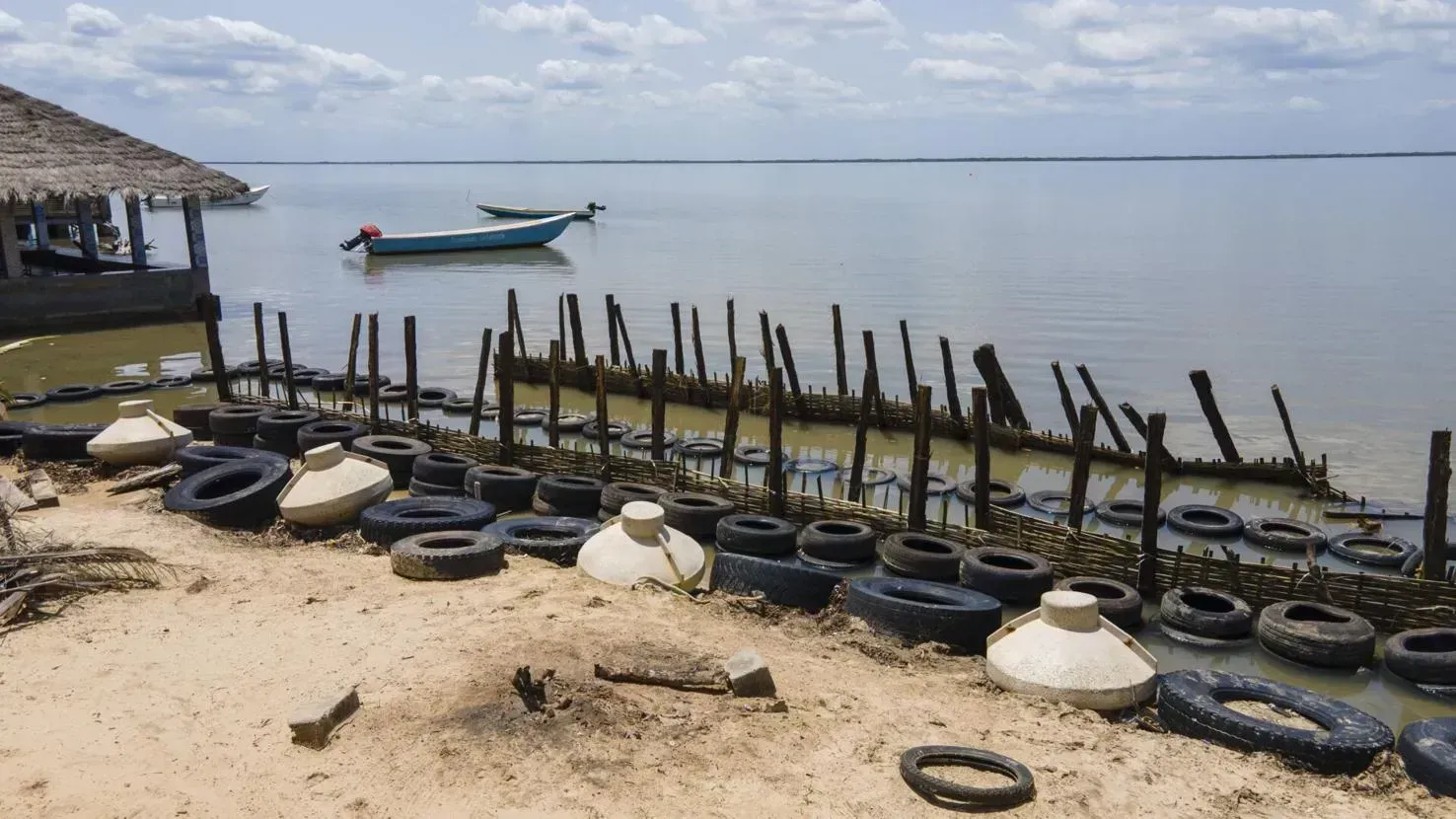
“I have seen local villagers leave, one by one, moving inland or to other cities north,” Dieme said. “Before knowing this technique, we used to just place tires along the shore, but soon the water would come and swallow them. Now (with the stick-and-net barriers) the sand builds up and keeps the water from advancing. It’s natural and reflects well our way of life.”
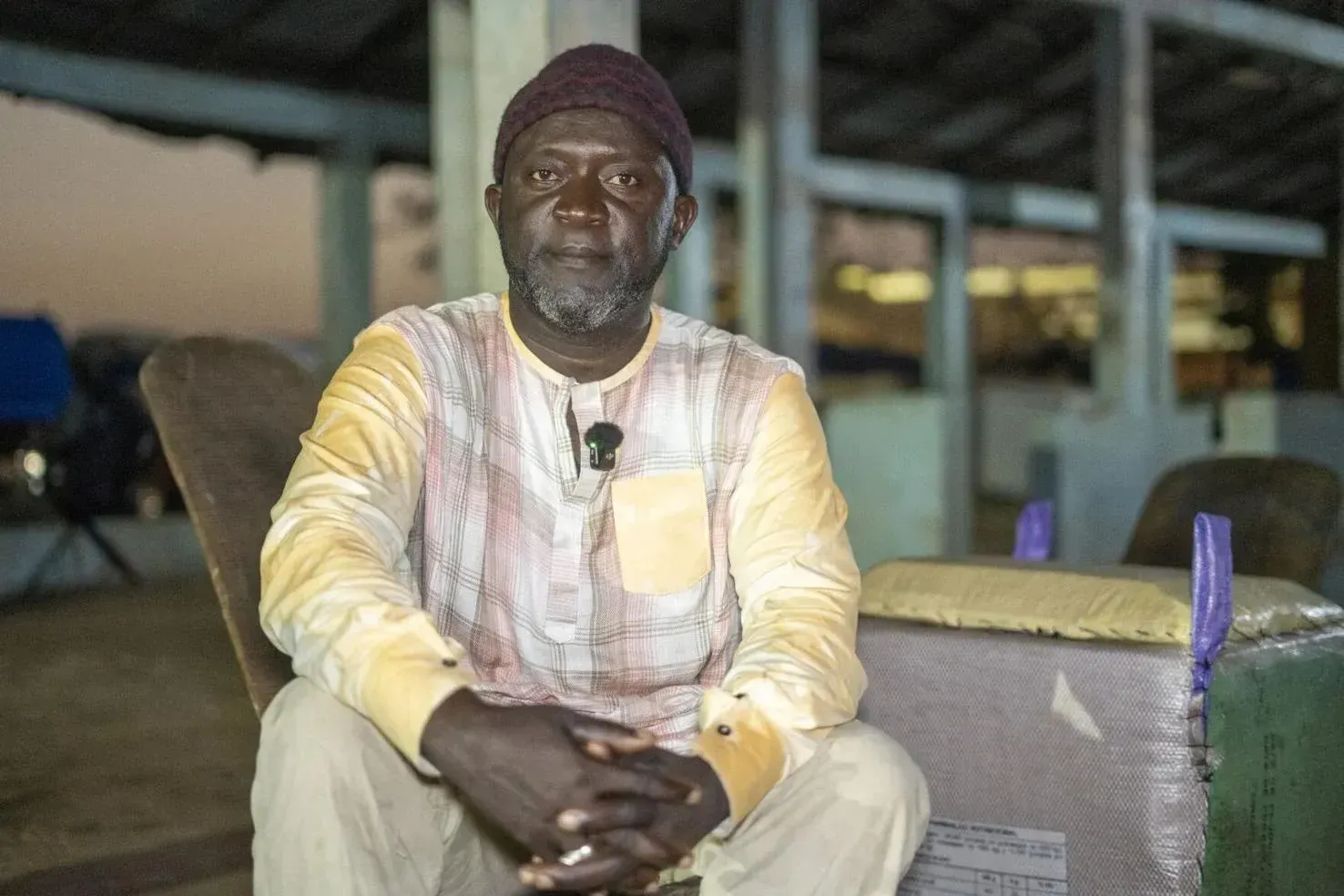
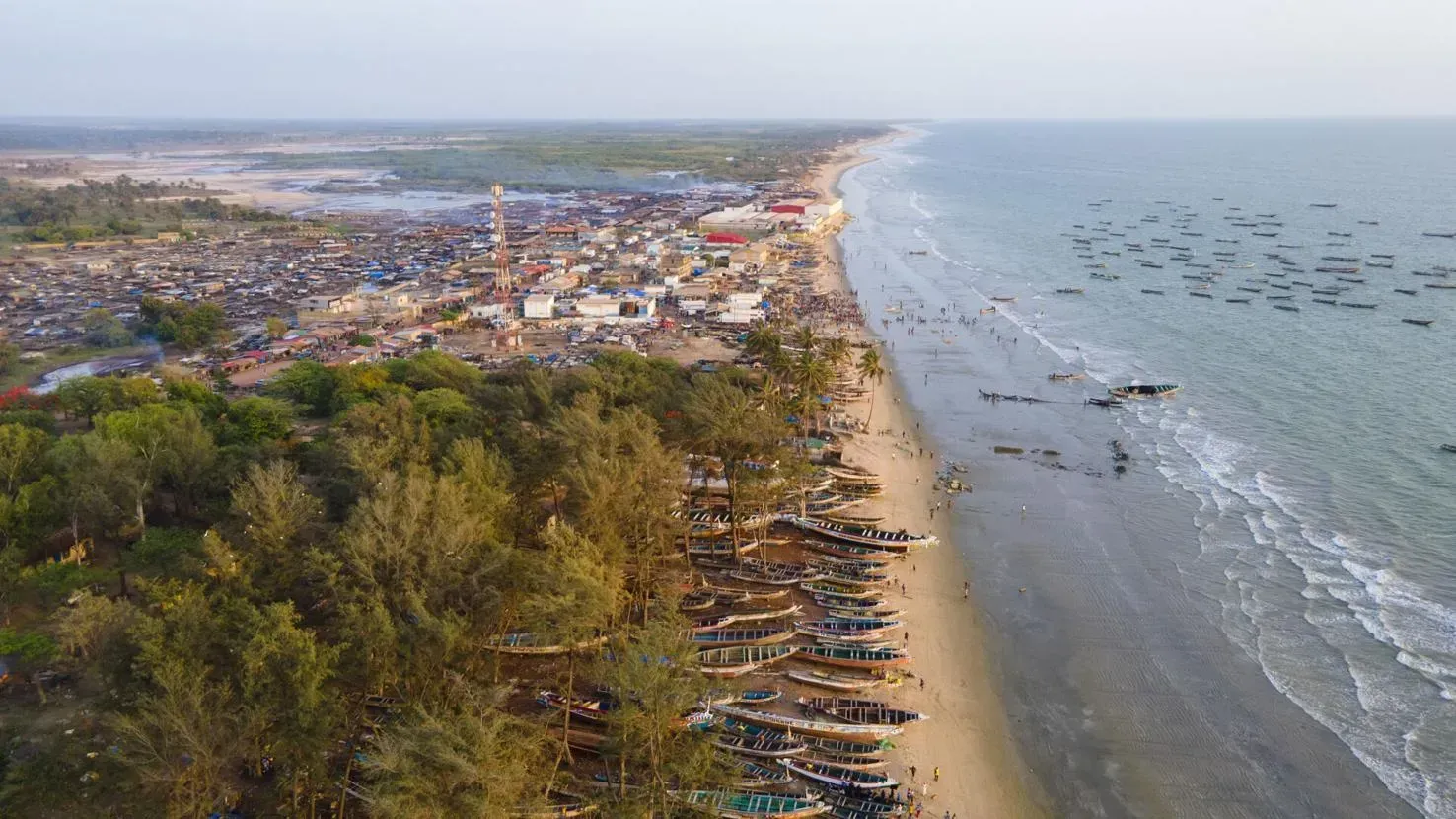
The wooden walls are appearing in village after village. Farther north, in Kafountine, a village near Senegal’s border with The Gambia, erosion has already forced the relocation of a military camp that once stood between the dock and the beach.
“If nothing is done, we risk seeing fishing activity die out here,” warned Alfousseyni Sagna, president of the local fishmongers.
Sagna has watched the accelerating erosion of Kafountine’s shoreline over three decades. In the 2000s, the walk to the beach might be 300 yards.
“There were even trees called héwar in Wolof (language), and baobabs” (the iconic and often massive barrel-shaped trees that grow in Africa), he said. “Fishermen set up huts where they cooked meals. Fishmongers had huts to weigh the daily catch. There were racks for drying processed fish, fish smoking ovens, about a hundred ovens. It all happened quickly. Today, the advance of the sea has increased here in Kafountine, and if nothing is done, we risk seeing all of this fishing activity die out.”
The huts and trees are now gone.
Catastrophic waves
The Senegalese coastline is no stranger to disaster. In 2018, waves struck the Senegal city of Saint-Louis, devastating homes and forcing families into relocation camps far from the sea. Some migrated to Mauritania, Mali or Morocco; others risked their lives on the dangerous route to Europe. And just last August, Senegal’s largest city, Dakar, saw massive breakers roll into its beach areas, decimating fishing communities there.
In Casamance today, those lessons loom large. The sea is advancing, and the people are retreating. For many young fishermen, migration feels like the only option. But for many elders, the choice is to fight back with sticks and anything else they can use. They check on the barriers every few months to make sure they’re still holding.
“We live with resources from the sea. We have nothing else. It’s our only livelihood,” said fish seller Mariama Diatta of Cap Skirring.
Echoes of the struggle in Casamance reached the United Nations Conference on the Ocean in Nice, France, this June, where governments debated a new High Seas Treaty, an international push to protect fisheries. For West African countries, the treaty represents a chance to address overfishing, migration pressures and coastal resilience.
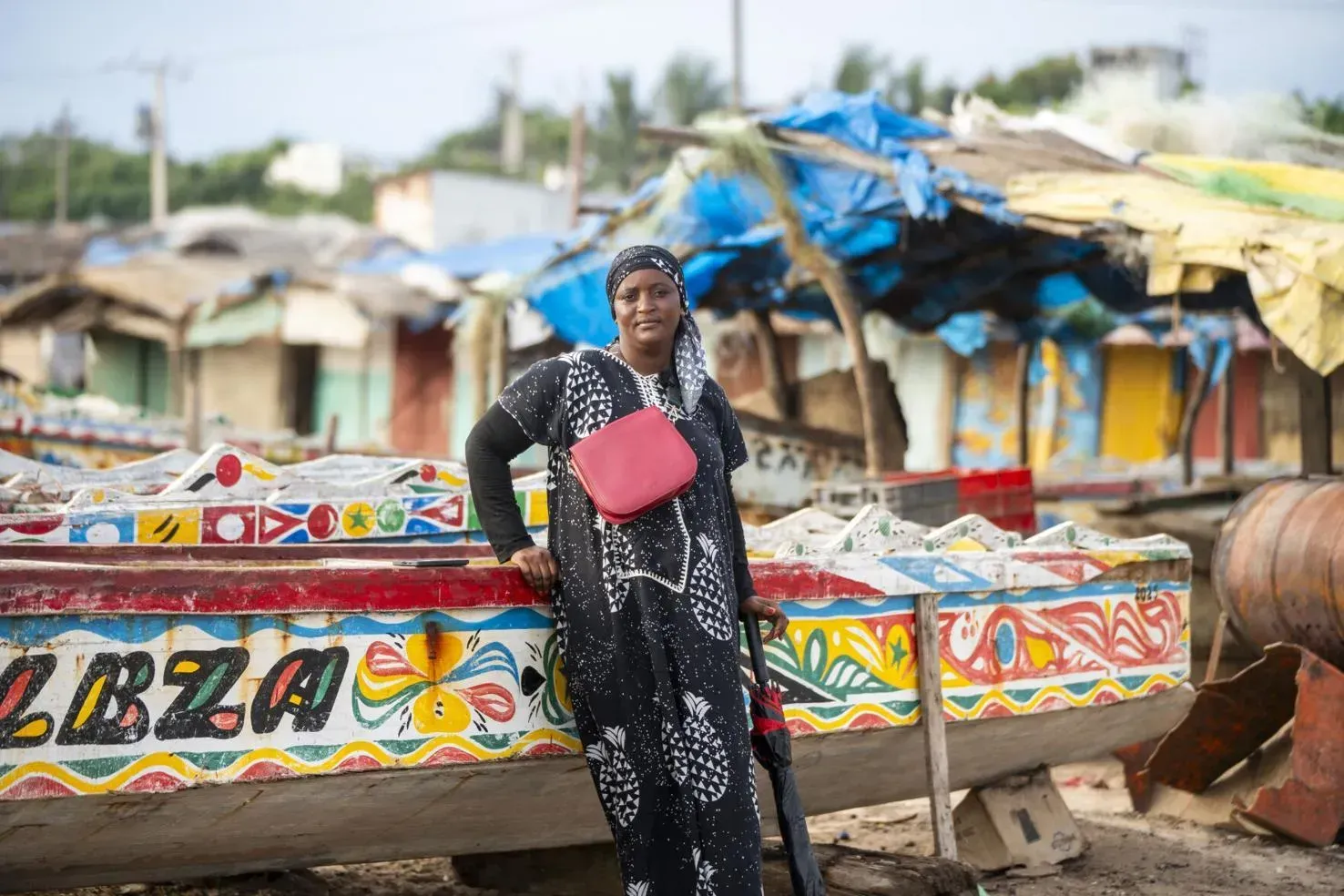
But in the villages along Senegal’s southern coast, those debates feel distant. The urgency is immediate. Families are watching their rice fields turn salty, their homes slip into the waves. And so, they plant sticks.
The barriers are imperfect. In some places, such as Djembereng, some piles are worn out from the battering swells. The remnants are mainly visible at low tide. The walls require maintenance, and that upkeep seems missing in many structures. Leaves look tattered and worn from the constant exposure to water and time. At Pointe Saint-Georges, piles of broken stick walls are partially submerged, sometimes supported with tires and sandbags.
Bamol Sow, the University of Ziguinchor oceanographer, said it’s unclear whether the stick walls work. Researchers need to test them in a scientifically rigorous way. More clear is that it takes “resilience, friendship and love to keep digging and planting those sticks to save their heritage,” he said. That persistence in the face of daunting challenges is itself a measure of success.