Story
 September 9, 2025
Residents of KwaZulu-Natal Heritage Site Decry Illegal Trawling and Plastic Pollution
Country:

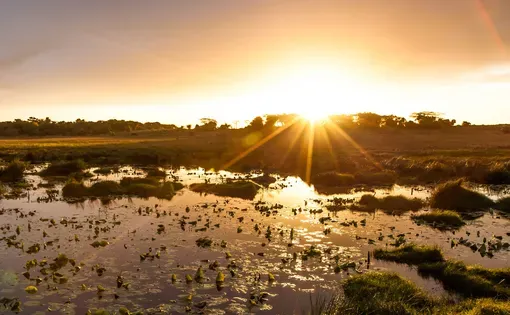
Poachers hiding just beyond the marine borders of the country are plundering marine areas.

Communities living in and around the iSimangaliso Wetland Park, a UNESCO World Heritage Site, are raising the alarm over rampant, unregulated fishing by large trawlers and a devastating tide of plastic pollution, which they say is destroying marine life and their centuries-old way of life.
Local residents of Kosi Bay report that while they are frequently targeted by law enforcement officials for their traditional fishing practices, large-scale illegal operations continue unchecked due to a perceived lack of resources and institutional will to stop them.
At the heart of the community’s concern are the iconic Tonga fish traps, a cultural cornerstone of Kosi Bay. The area consists of four interlinking lakes that flow into a sandy estuary before meeting the ocean. Each fish trap belongs to a specific family and is a legacy passed down through generations.

As a nonprofit journalism organization, we depend on your support to fund more than 170 reporting projects every year on critical global and local issues. Donate any amount today to become a Pulitzer Center Champion and receive exclusive benefits!
One local trap owner, explaining the historical and functional significance of the traps, stated, “It’s a beautiful zone… Kosi Bay it come from ancestors to generation. That fish trap they like a culture to Kosi Bay.” He detailed the sustainable design of the traps, which feature a guarding fence and a V-shaped funnel made of sticks that allows smaller fish to escape, ensuring the population’s longevity. “Once [the fish] is inside it can’t come out,” he explained, noting the system has been used since the time of his grandfather.
However, this sustainable practice is now under a dark cloud. The community identifies two critical threats: plastic pollution and illegal trawling.
A community member held up a piece of plastic, lamenting its impact on the ecosystem. “We’re killing the world, even the turtles… they killing a well turtles,” he said. He expressed fear that if nature is destroyed, “the children never see again.”
The more immediate threat, according to locals, comes from illegal trawling vessels originating from neighboring Mozambique. These ships allegedly anchor in international waters by day and move closer to shore under cover of darkness. “During the night time they coming close to the banks,” a resident said. The trawlers drag large nets across the ocean floor, devastating the marine habitat. “They broke the coral, everything they destroyed because they using a big net.”
This activity not only depletes fish stocks but also disrupts the natural migration of fish into the Kosi Bay lake system, threatening the entire local food chain and economy.
Frustration is mounting as community members say they have been excluded from stakeholder engagements. “You never talk with us,” one resident said, accusing authorities of avoiding dialogue and treating the community not as partners but as subjects. “They use it like a headmaster chief, not us, not a local community.”
Despite the challenges, there is a persistent hope that collaboration can lead to solutions. “If we work together, we can’t stop because together we solve issues,” a community member urged, specifically calling attention to pollution from Chinese vessels. “When you look all around there in the sea, you [see] Chinese writing. They throw the all lot of things in the water.”
It is clear that the threat extends beyond the fish trap owners. Recreational anglers and tourist establishments along the coast are also feeling the impact of the depleted fisheries and damaged marine environment, putting the region’s ecological health and economic stability at risk.