Story
 November 11, 2026
Reporter Learns To Persevere Amid Discomfort and Uncertainty
Country:

Project
Whose Kalaupapa?
Journalist Mia Anzalone explores the future and legacy of Kalaupapa, a peninsula on the northern...
I first heard of Kalaupapa when I was a kid at a small Catholic school on the windward side of O’ahu. We learned, as many local kids do, of the “separating sickness” that devastated the Native Hawaiian population. Because of my elementary school’s Catholic affiliation, we focused mainly on the work of St. Damien and St. Marianne Cope, two foreigners who devoted their lives tending to the Hansen’s Disease patients in the 19th century.
When I was about 7 years old, I remember attending the celebration of St. Damien’s canonization at the cathedral in downtown Honolulu. There was a sense of pride that a saint had performed his miracles in Hawaii, a feeling of gratitude, and a joyous reminder that, at some point, St. Damien had provided kindness and healing to the patients.
Kalaupapa lodges itself in the collective memory of Hawaii’s people. There’s a sacredness surrounding even the mention of the place, a tone of reverence that is normally engaged when one is discussing a loved one who has passed. When I first embarked on this reporting project, I told almost every person I saw back home that I’d be going to Kalaupapa. When it came up in conversation, voices softened, eyes became heavy, and dialogue slowed down.

As a nonprofit journalism organization, we depend on your support to fund more than 170 reporting projects every year on critical global and local issues. Donate any amount today to become a Pulitzer Center Champion and receive exclusive benefits!
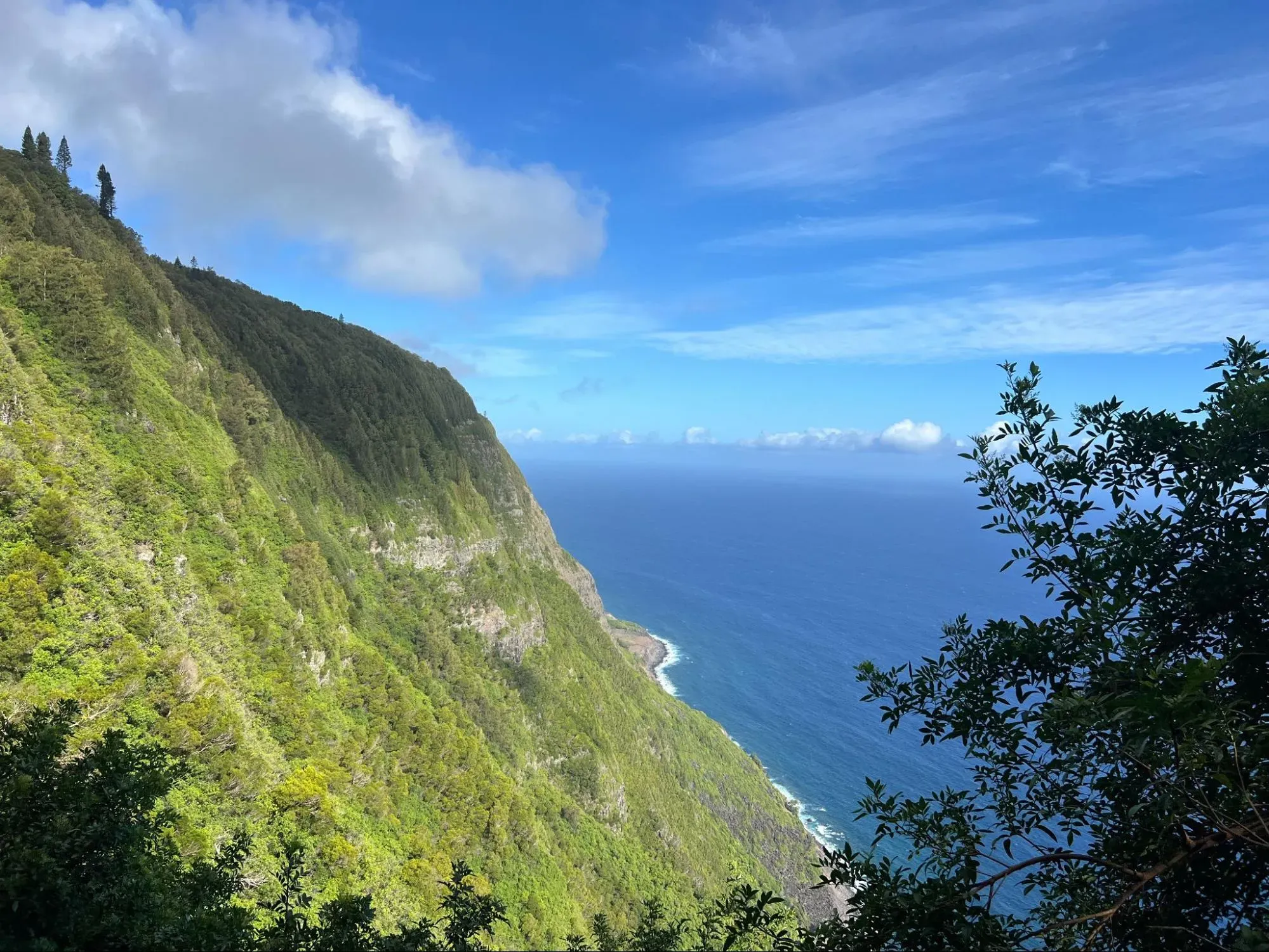
Most people in Hawaii who have been lucky enough to visit Kalaupapa love to share their experiences. Many of them sound the same: They arrive early to a small terminal at Honolulu’s airport, board a 10-seat propeller plane, and find themselves in a space that appears so untouched, one can see the sand underneath the skin of the ocean from the towering cliffs.
Every time, though, people who have visited Kalaupapa mentioned a feeling of spiritual change. Many felt in awe of not only the natural beauty, but the complexity of the place that is filled with grief and resilience, isolation, and togetherness.
In September, while living in New York City, I read an article about tours of Kalaupapa resuming after a years-long hiatus following the COVID-19 pandemic. I hadn’t been closely following the timeline of Kalaupapa’s tours, but I remembered the stir caused by Hawaii’s COVID isolation policies that re-traumatized many of Kalaupapa’s remaining Hansen’s Disease patients who still live on the historic settlement. I soon became interested in what would happen after these patients passed, what would remain, and what would change. But, perhaps most importantly, how would Kalaupapa’s future impact Hawaii right now?
Reporting about this topic has not been easy. Due to the nature of Kalaupapa—its isolation, its protection, and cultural sacredness—many of my sources were rightfully emotional and frustrated. Talking about a future where no more patients are left—all of whom are revered by Hawaii’s people—was uncomfortable for me. I kept asking myself, "How do I discuss a topic that imagines a time where all of Kalaupapa could change?" It’s one I’m still trying to answer.
However, through this reporting, I’ve realized that Kalaupapa is a story and a place that reveals itself on its own time. Building trust for this project has taken months, and is still an ongoing process. During my reporting, the debate surrounding Kaluapapa’s future became more imminent as more developments unfolded: Another patient died in May, Hawaii’s governor signed a bill that would determine the jurisdiction of Kalaupapa’s land, and questions of access and who gets a say in Kalauapapa’s future became more politicized and charged.
Keeping up with the story, following up with sources, and ensuring accuracy through it all has been one of the most challenging experiences of my career so far.
Through it all, I kept telling myself that this story is not done yet. One article about Kalaupapa does not capture the immense toll that state-sponsored isolation, imperialism, and colonization has had on Hawaiian people. One story will not capture the complexity that Hawaii’s people and Native Hawaiians feel toward the future of Kalauapapa. That story is ongoing. And as long as there are people to remember and steward Kalaupapa, that story will never have an ending.