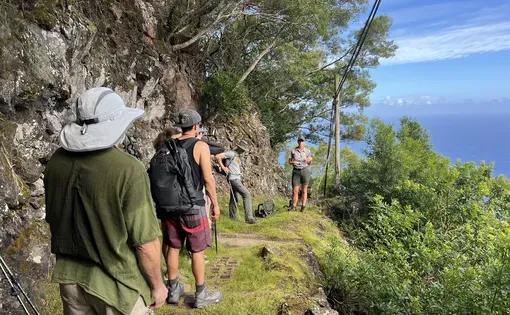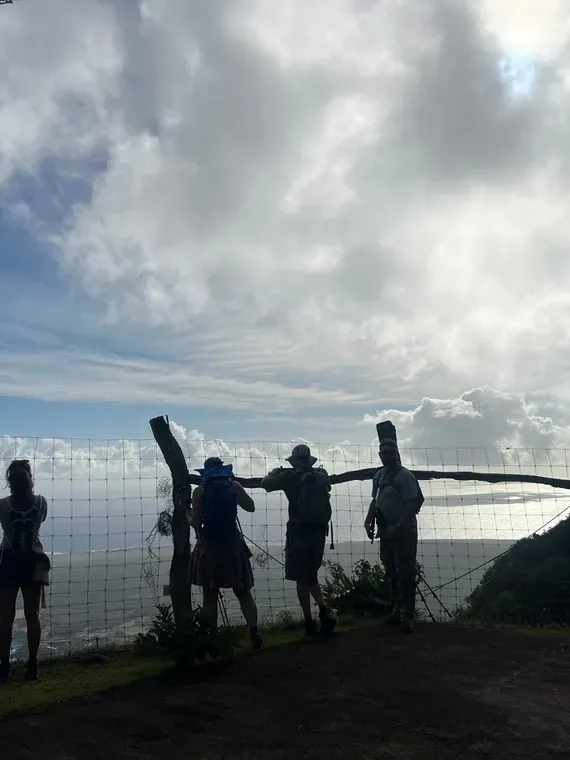

Journalist Mia Anzalone explores the future and legacy of Kalaupapa, a peninsula on the northern coast of Molokaʻi that once served as a “natural prison” for more than 8,000 mostly Native Hawaiians with Hansen’s Disease until 1969.
With only four patients remaining, including two who continue to live in the isolated settlement, the project centers around the emotional and logistical challenges of planning for an imminent future when no patients are left to protect the region. The more than 10,000 acres of Hawaiʻi land is managed and owned by a hodgepodge of state and federal agencies, furthering tensions that stem from U.S. imperialism in the 19th century. But what happens to Kalaupapa — the community, the history, and the land — rests in the lifespan of the remaining patients.
Through first-person experiences of the settlement, historical research, and interviews with descendants of patients and Molokaʻi residents, Anzalone’s work reveals that Kalaupapa’s future has often been determined by government agencies, with little input from Native Hawaiians, the surrounding community, and patients’ families. Her reporting sheds light on how Kalaupapa is stuck in a liminal state of preservation and preparation that perpetuates a painful history of exclusion.
Ultimately, Anzalone raises this central question: What does preservation really mean — and what is the cost of getting it wrong?