
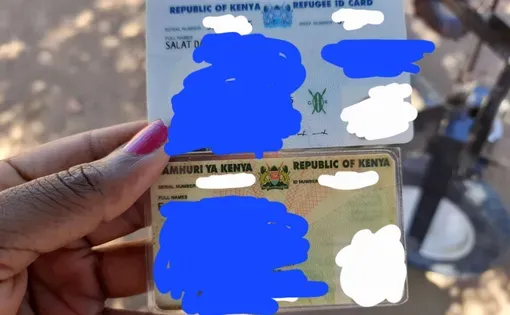
Some Kenya residents register as refugees to get what their government was not offering them.
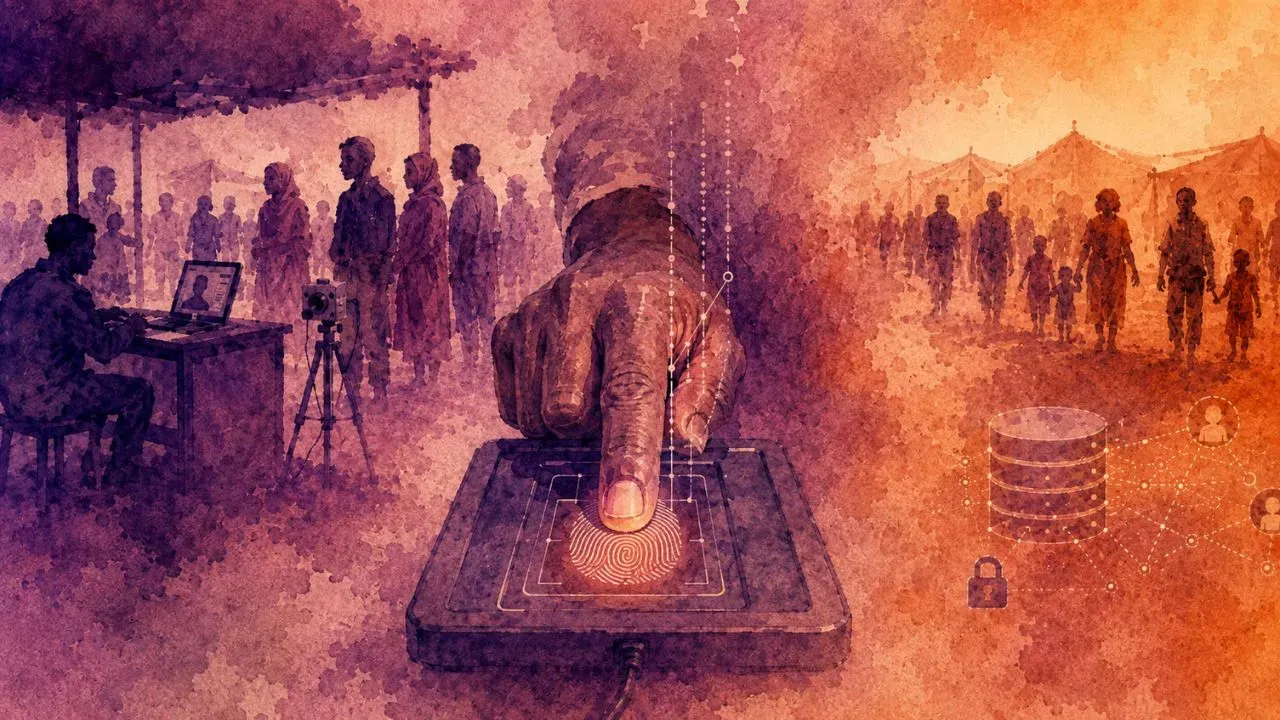
In this second part of the Project Profile investigation into the use of biometrics in the humanitarian sector, double-registered Kenyans speak of the hardships they endure in their daily lives.
The government’s Inua Jamii Programme provides cash transfers to support vulnerable persons, including the poor, orphans, the elderly, and persons with severe disabilities (PWDs). Double-registered persons told The Elephant that they don’t benefit from the programme.
Farah from Garissa County claims that, even though he is registered as a beneficiary for Inua Jamii, he doesn’t receive the money. He suspects that what he calls the “complications of being a double registered person” is the reason.
Adan Abdi Gase, who is 66 years old and from Garissa, said in 2024 that his ID, like that of Farrah, is only useful “when I am passing through police checkpoints (…). It serves no other important purpose. It feels like a decoration to me, similar to the PWD card” issued by the National Council for Persons with Disabilities in 2018.

As a nonprofit journalism organization, we depend on your support to fund more than 170 reporting projects every year on critical global and local issues. Donate any amount today to become a Pulitzer Center Champion and receive exclusive benefits!
Adan discovered he was a double-registered person in 2020 when he needed a birth certificate to apply for a passport. Yet, during the mass deregistration in 2019, officials at the Huduma Centre in Garissa had assured him that he was not in the Profile Global Registration System (proGres) of the United Nations High Commissioner for Refugees (UNHCR).
The father of eight registered as a refugee in 1992 and left the camp when the “iris scanning process” (biometric technology that analyses the unique patterns in an individual’s iris to verify their identity) was introduced in 2016 by the UNHCR. Adan is among those who claim to have left the camp after they were given an ultimatum by an official of the UNHCR to either forsake their refugee status or their Kenyan IDs.
“I simply request my rights as a Kenyan citizen. I don’t need anything related to the refugee system. I need my right to an ID,” Adan pleaded. He was issued an ID in August 2025.
For 10 years now, 66-year-old Alaso Shale Ibrahim has been the sole caretaker and guardian of a severely disabled 16-year-old boy. Her grandchild lies on a sack, drooling saliva that attracts flies. Alaso, a grandmother of 17 children, uses a piece of clothing to keep them away. It doesn’t seem to work. Without an ID, it is impossible for Alaso to seek help for her grandchild through the Persons with Severe Disabilities Cash Transfer Programme (PWSD-CT), which is part of the Inua Jamii Initiative. She left Dadaab in 2011 after registering as a refugee in 1992.
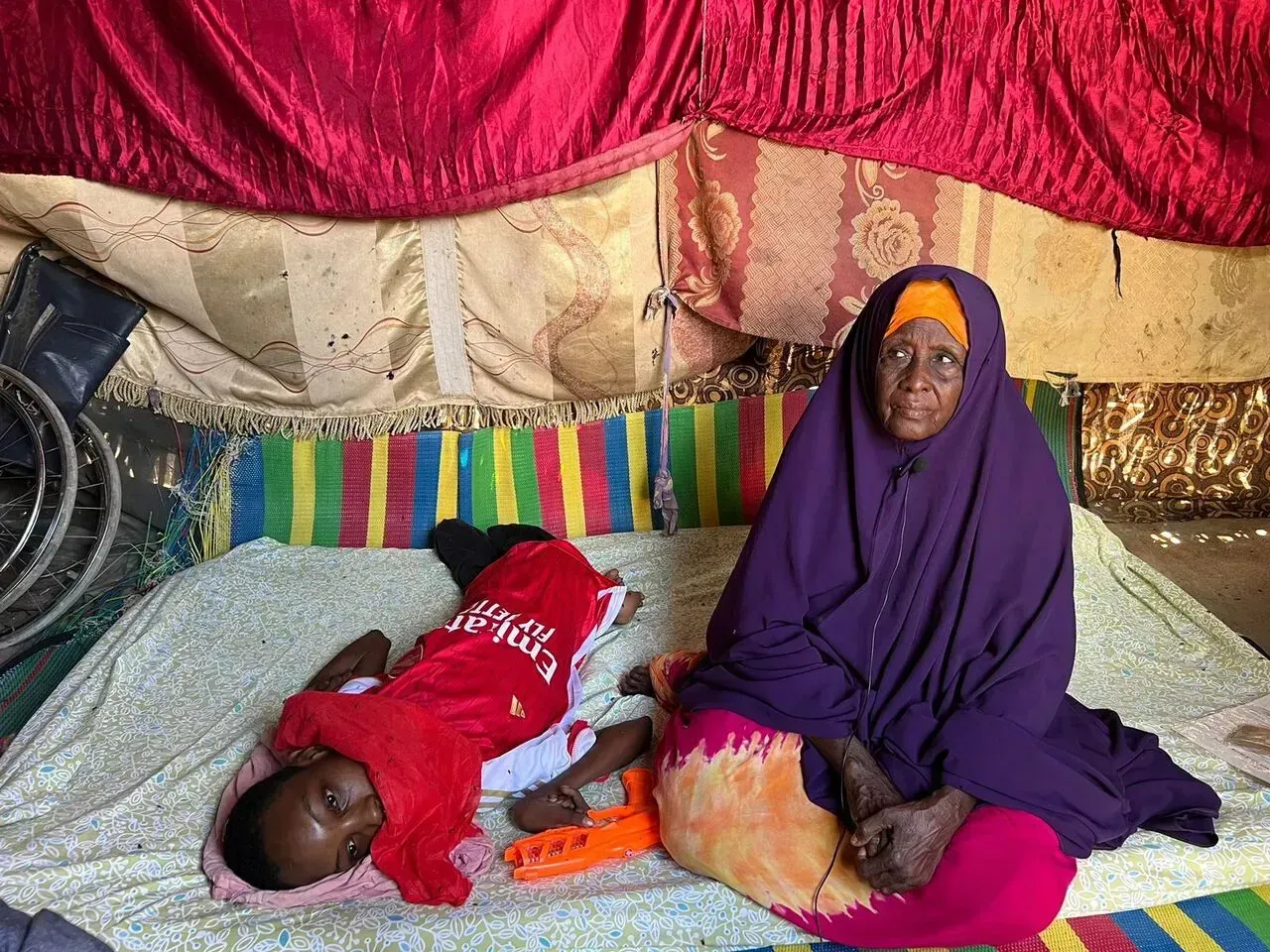
In January 2024, Alaso’s sister, whom she had left behind in Dadaab, fell gravely ill. Two days after Alaso arrived in Dadaab with other relatives, her sister died. After the burial, everybody returned to their homes except Alaso, who was left in the camp because she did not have an ID. Afraid of being arrested at a police checkpoint, Alaso was stranded in Dadaab for three months. A family member later paid bribes for her to be transported back home. Alaso eventually received her ID in 2025.
In Wajir County, villagers gathered beneath a large shrubby tree to shield themselves from the scorching sun. Three young men helped an old man onto a carpet. His name is Sugow Abdi Mohamed (now deceased).
The county, like Garissa County, is among eight drought-prone counties where the government provides cash transfers to the poorest households under the Hunger Safety Net Programme (HSNP), which is also part of the Inua Jamii initiative. The programme is implemented by the National Drought Management Authority.
But Sugow Abdi receives nothing.
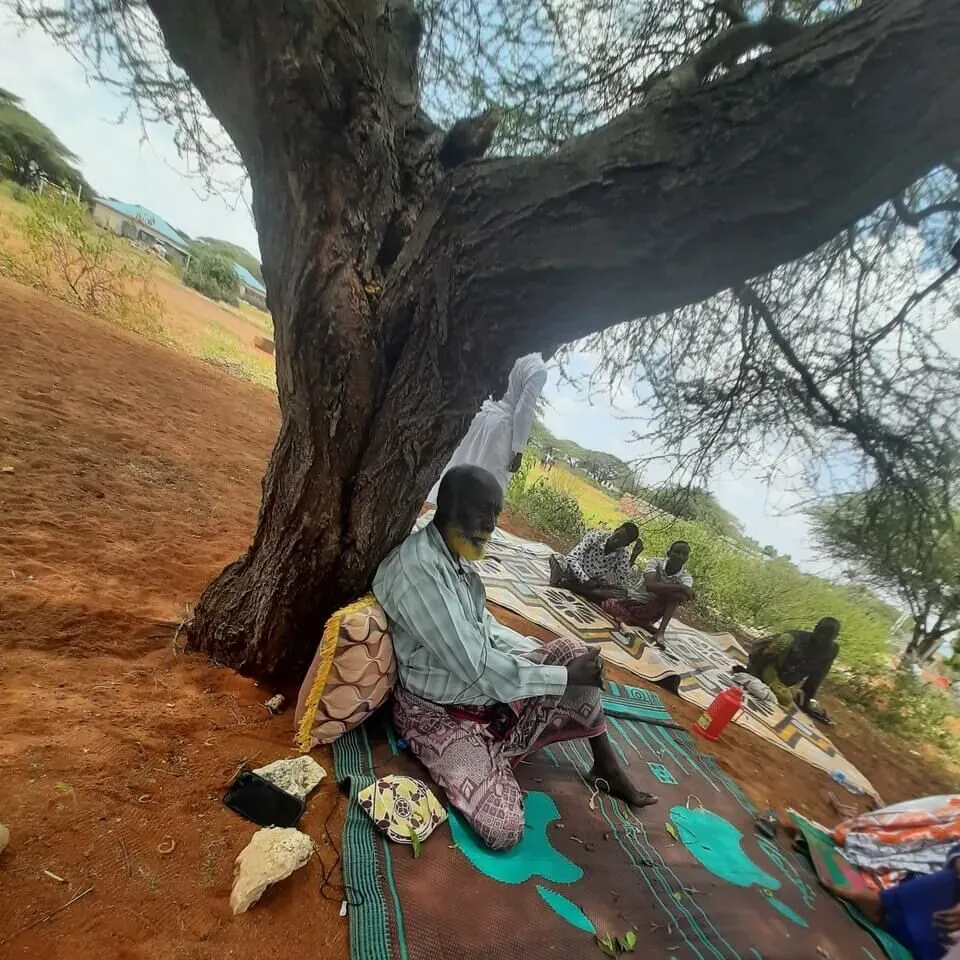
“He cannot see, he is disabled, he is old,” an elder said in 2024. “He is not registered as disabled, so he gets nothing. Without a national ID, he cannot access government support.”
The Elephant asked the Ministry of Interior and National Administration and the Ministry of Labour and Social Protection whether they had encountered instances of double-registered individuals applying for Inua Jamii assistance.
The publication also sought clarification on how such cases are identified and handled, the policies or procedures in place to resolve them, and the approximate number of affected individuals, if such data is available. However, neither ministry had responded by the time of publication.
Ali Noor was also determined to avoid arrest at any cost. Without an ID, it was a challenge to meet The Elephant for an interview. So he took a ride in an ambulance that was taking his brother to Nairobi for treatment (in the Somali community, first cousins consider themselves brothers). But the patient died on the way, and the destination changed to Dadaab, where he would be buried. Noor could not attend the funeral ceremony for fear of being detained at a police checkpoint along the way.
We picked Noor up at the Garissa Primary School grounds behind the Rubis Oil petrol station next to the National Drought Management Authority and drove down a dirt road, stopping at a black gate leading to the new offices of Haki na Sheria. When the guard opened the gate, and we started driving in, Noor jumped out of the moving car. He later told The Elephant he had feared that we were leading him to the police, even though his friend Masud was also in the car. Noor claimed he had been arrested many times around the area and also on the Madogo-Garissa-Modika-Dadaab road and that during some of the arrests, he was not taken directly to the police station; the police would drive around aimlessly, wasting his time, he said. Noor lost his father during the month of Ramadan in 2024, but he couldn’t attend the funeral for fear of being arrested.
“I’m feeling bitter. I am feeling so much stress. I am feeling a lot of pain,” he said in 2024.
In 2019, Noor had participated in a security vetting exercise, but he was not successful because, according to the Kenyan authorities, his fingerprints came up as “deformed fingers-DF” in the Kenyan database. He tried his luck again in 2023 and was eventually issued with an ID in 2025.
Being deprived of their right to freedom of movement is expressed by double-registered persons in court documents. “Now, stateless people live a life of no dignity and live like prisoners in their own country in fear of being harassed by the state authorities for lack of national identity cards,” a 2021 court document filed by double-registered persons states.
In 2021, three representatives of double-registered persons set out for Nairobi to meet with members of parliament to discuss ID issues. No sooner had they left Garissa than they were arrested at a police checkpoint and detained overnight. For hours, nobody knew of their whereabouts until lawyers and their area chiefs intervened, according to Masud and another double-registered person who was among the three that later filed a petition against the government and the UNHCR in 2021.
A World Food Programme employee told The Elephant that, because of their dark olive skin and distinctive physical features, Kenyan Somalis are often singled out by police during security operations. Buses travelling from Wajir or Garissa to Nairobi are often stopped and passengers made to alight. They are frisked and asked to produce their IDs. Those without are arrested and detained, with many forced to buy their freedom back. It is for this reason that double-registered women keep their IDs in their bras, afraid they wouldn’t be able to replace them if they were lost.
An ID is a matter of life and death, according to experts. Many have never been to Nairobi, their capital, because they have no IDs. “Nairobi to them is like going to America or Europe,” one expert said, “but without the visa, which in this case is an ID, it is near impossible.”
Police checkpoints are part of Kenya’s broader security strategy to control the movement of people and ensure national security. Wajir and Garissa remain the most patrolled areas of the country.
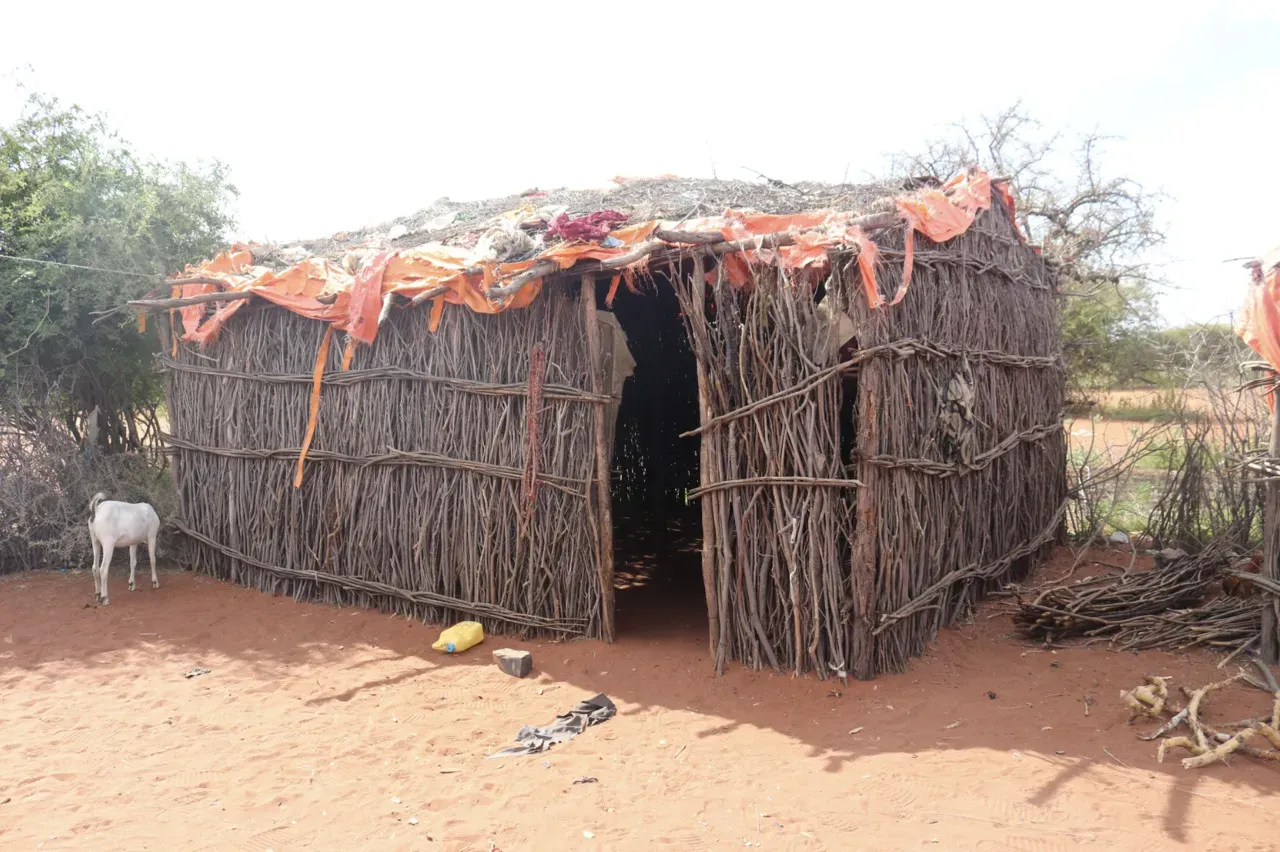
In Wajir, double-registered persons told The Elephant that they live in the bushes, afraid of police harassment and arrest. “Without an ID, you cannot live in Kenya; that’s why most people hide in the bush. We need our people to come out of the bush and come to town. Without an ID, you are nothing in this country,” a source said.
In 2021, Article 19 called for a biometrics ban, saying that individual human rights have almost been forgotten in the deployment of biometrics when “they should be at the heart of how biometric technologies are developed and used.”
Following a January 2025 court ruling on double registration that found the refusal by the government to deregister double-registered persons from the proGres database unconstitutional and an infringement of their rights, Human Rights Watch celebrated, stating that it was a “victory for Kenyans denied citizenship.”
“The registration system that left thousands of Kenyans stateless is a powerful example of how digital identity systems can cause real, tangible harm,” said Belkis Wille, Associate Director at Human Rights Watch, adding, “governments and organisations who are using such systems should take all precautions to ensure these systems are used to protect, not abrogate, rights.”
Story editing by Betty Guchu.