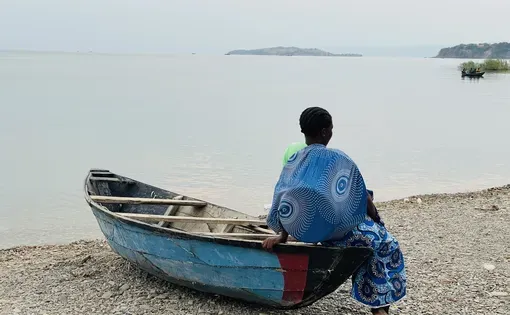
Along Zambia’s Lake Tanganyika, fish is more than food, it is a lifeline. For hundreds of women who...
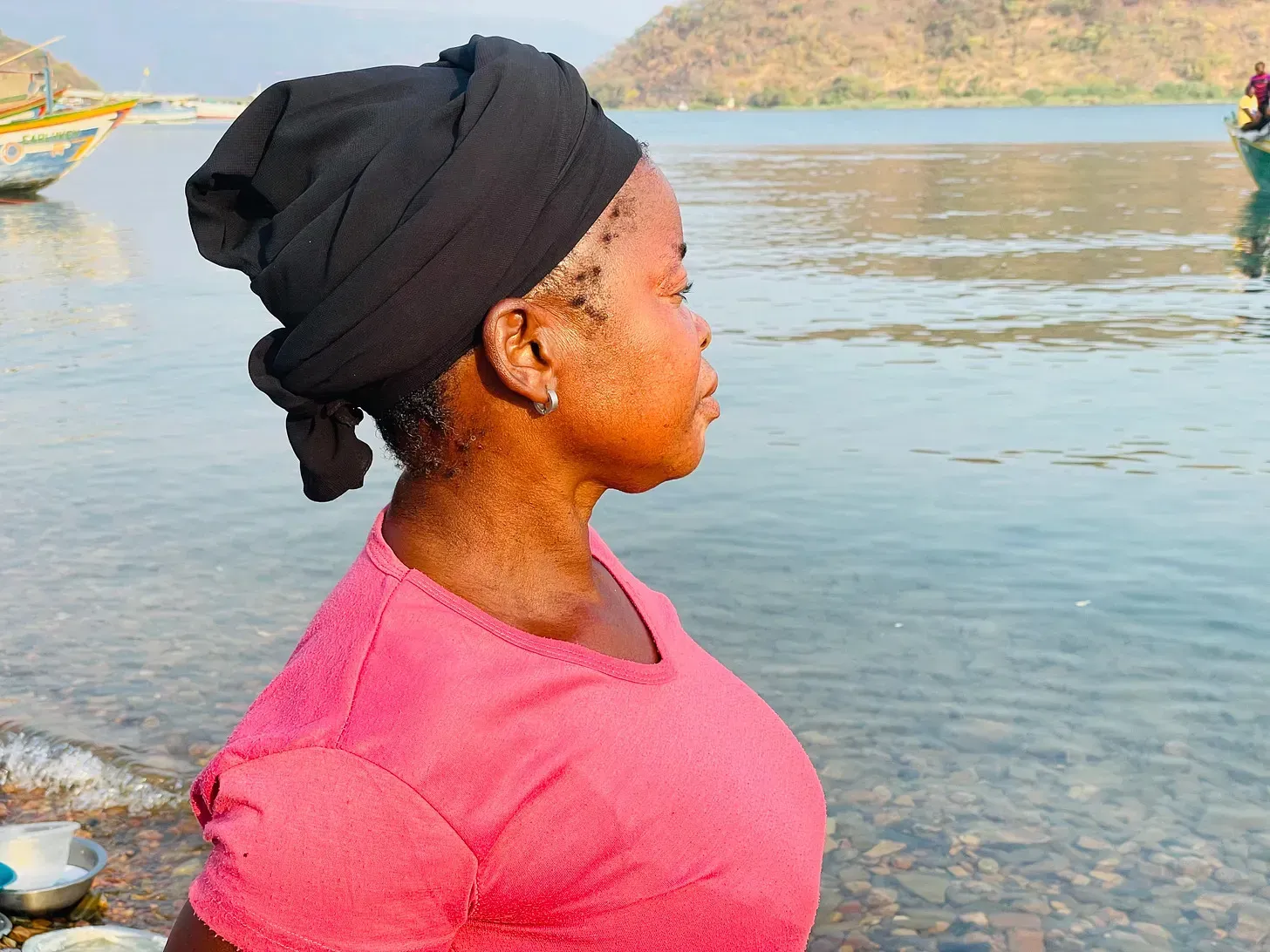
The Hidden Cost of Survival for Women on Zambia’s Lake Tanganyika
ZAMBIA—At 5 a.m., 45-year-old Martha Bwalya arrived at the Ngwenya landing site on Lake Tanganyika in Mpulungu, a fishing and port town in Zambia’s Northern Province near the border with Tanzania, with money in hand and an empty bucket, writes Annie Zulu.
The boats were beginning to return from a night of fishing. Around her, fishermen hauled their catch ashore as women crowded closer. Fish landed in buckets. Banknotes changed hands. Traders who had secured their supply began preparing for another day of business.
But Bwalya was still waiting. Hour after hour, boats arrived and fish was sold. She had the money to buy. Yet by midday, her bucket remained empty.



As a nonprofit journalism organization, we depend on your support to fund more than 170 reporting projects every year on critical global and local issues. Donate any amount today to become a Pulitzer Center Champion and receive exclusive benefits!
“I came to buy fish at 5 a.m. I haven’t managed to buy any because I don’t have anyone to buy from,” Bwalya said.
She was not asking for free fish. She had come prepared to pay. But, she said, having money did not guarantee that she would leave with fish
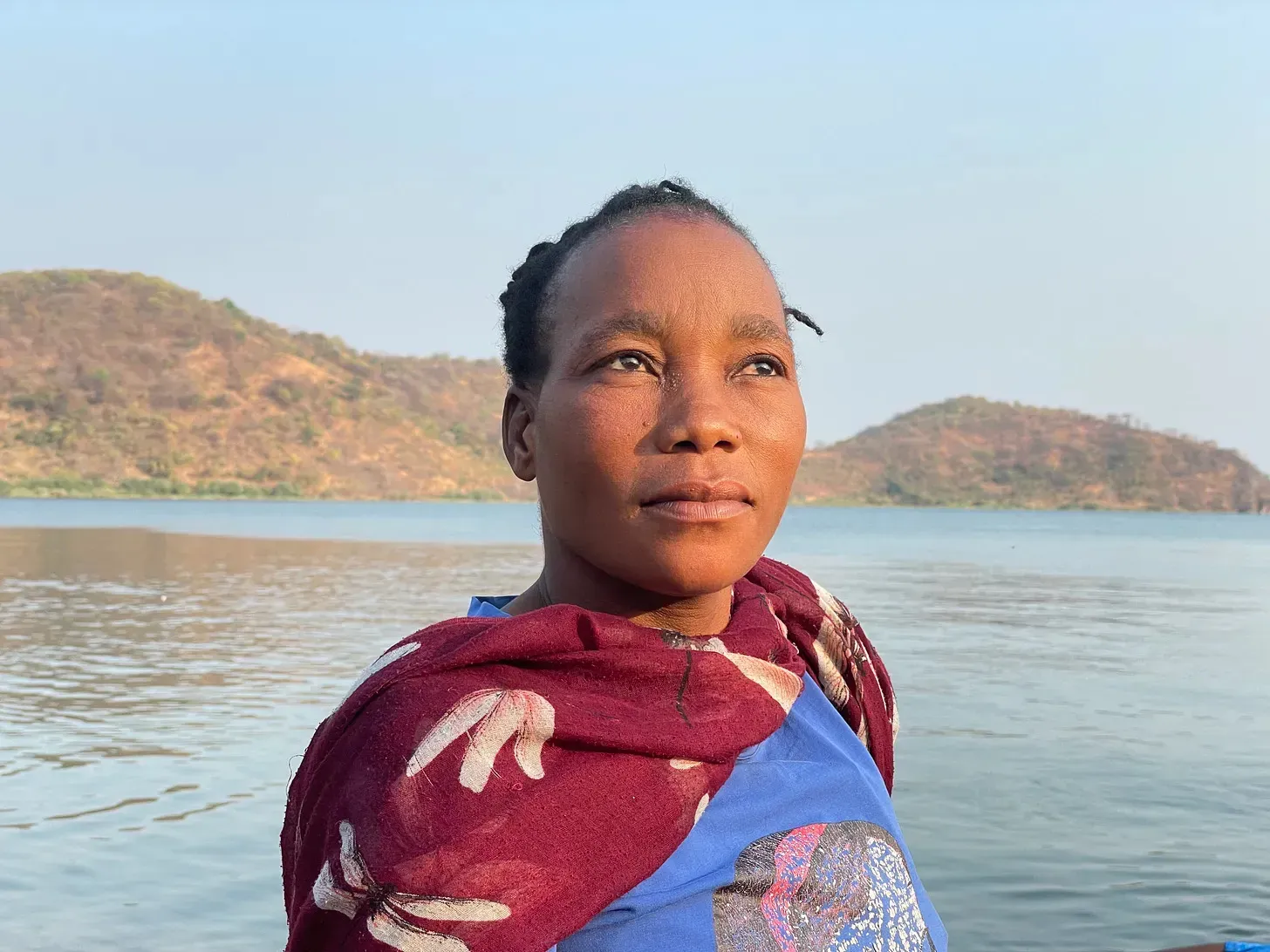
Nearby, 38-year-old Jane Chela had been waiting since 5:30 a.m. She, too, had money but no fish.
“When the fishermen come, they will get the fish and give it to someone they have an agreement with. I will just remain standing and watch,” Chela said.
Chela has six children. Fish trading helps sustain her household. When she fails to buy fish, she loses more than a business opportunity; she loses the income her family depends on.
“Going back home empty-handed without buying any fish is devastating because it means I won’t be able to do business. How, then, will I survive? I have children to feed,” she said.
Their accounts raised a basic question: How can a woman arrive at the lake with money to buy fish and still be unable to buy it?



Testing access to the catch
To examine that question, this investigation went beyond interviews.
This reporter approached the fish trade as an ordinary buyer at the Ngwenya landing site in Mpulungu District and in Nsumbu, Nsama District, without initially identifying herself as a journalist.
During reporting trips in May and July, 2026, this reporter carried K2,000 (an equivalent of $105) and made four attempts to buy fish, two at Ngwenya and two in Nsumbu.
On each occasion, fishermen refused to sell the fish she sought, saying it had already been secured or reserved for other buyers.
During the attempts, this reporter observed other women receiving fish while other prospective buyers with money remained waiting.
No fisherman directly asked this reporter for sex, and the reporting exercise did not establish that every case of preferential access involved a sexual arrangement.
However, the attempts showed that having money alone did not always guarantee access to fish.
Interviews conducted across fishing communities in Mpulungu and Nsumbu began to reveal what could lie behind some of those arrangements.
Beyond the women who agreed to speak on the record, this investigation interviewed a further 32 women anonymously. Of those, 26 said they were aware of sex-for-fish arrangements, while nine said they had personally experienced sexual demands. The interviews were not designed to measure the prevalence of the practice, but to understand how women experience and describe access to fish.
A women’s organisation described the practice as exploitation. Traditional leaders acknowledged being aware of it. Some fishermen denied that sex determines access to fish, while another acknowledged that sexual exchanges occur but described them as consensual.
A government fisheries official also acknowledged that sex-for-fish is practiced on the Zambian side of Lake Tanganyika, although he said his office had received no formal complaints.
Across interviews in both communities, one local phrase repeatedly emerged as women and community leaders explained how some of these relationships worked: “Pela Akakupela” loosely translated as “Give to the one who gives to you.”
Women and community leaders said the phrase can describe an arrangement in which access to fish depends on what a trader gives in return. The fish is not free. The women still pay for it.
But several women said money is sometimes not the only thing expected. Sometimes, they said, the other price is sex.
A lake that keeps families alive
Lake Tanganyika stretches across Zambia, Tanzania, Burundi and the Democratic Republic of Congo.
Along Zambia’s northern shoreline, generations of families have built their livelihoods around its waters. The lake provides food, income and employment. For many households, it is a means of survival.
A value-chain analysis conducted by FISH4ACP in collaboration with WorldFish estimated Zambia’s annual Lake Tanganyika small-pelagics production at about 28,000 tonnes and found that the sector provides nearly half of the jobs in the country’s fishing industry.
But women and men occupy very different positions within that economy. Women work mainly in processing and trading, while men dominate fishing.
The 2024 Frame Survey of Fisheries in Lake Tanganyika illustrates that divide. Of the 85,923 fishers recorded across the four countries sharing Lake Tanganyika, only 598, about 0.7 percent were women. The survey identified traditional gender roles, including perceptions of fishing as a male activity, among the reasons for women’s limited participation.
For 70-year-old Bupe Namwanza, fish trading has been her livelihood for more than 30 years. She is a widow. She supports grandchildren and cares for her elderly mother.
“If I don’t sell fish, my family won’t eat,” she said.
Charity Muziya, 55, has spent 23 years trading fish and supports nine grandchildren from the small profits she makes.
For women like Namwanza and Muziya, a bucket of fish can mean food on the table, household expenses paid and enough working capital to return to the market the following morning.
But before they can process fish, sell it or make a profit from it, they first have to find someone willing to sell it to them.
And according to women interviewed for this investigation, that is where Pela Akakupela enters the trade.
“Pela Akakupela”
Mary Chizu, secretary of the Mpulungu District Women’s Association (DWA), described Pela Akakupela as a familiar phrase within the fishing trade.
“What happens is that if I am a woman and I don’t have a sexual relationship with fishermen, then I will never do business,” Chizu said.
According to Chizu, some fishermen return from the lake already knowing which traders will receive their catch.
“When the fishermen come from catching fish, they will shout Pela Akakupela. They will select who is going to buy,” she said.
The women still pay for the fish. But Chizu said some may also be expected to maintain sexual relationships with fishermen to secure access.
“Using your own money, he will exploit you, allow you to buy fish,” she said.
For Chizu, the problem is rooted in who controls the commodity.
“The men have that capacity of going on the lake, catch fish. They are taking advantage of that,” she said.
Her account is consistent with vulnerabilities documented in research on Zambia’s Lake Tanganyika fish economy. FISH4ACP research has identified lack of capital and women’s dependence on access to fish among factors that can expose women to sex-for-fish transactions.
More recently, FISH4ACP reported that research in Zambian fishing villages along Lake Tanganyika found women and girls working in processing and trade struggling to obtain fish for their businesses. It said some resort to exchanging sex for fish to sustain their livelihoods, particularly when fish is scarce and competition is high.
The accounts gathered in this investigation suggest the issue extends beyond Mpulungu. Hours away by boat, in Nsumbu, women described similar experiences of having money to buy fish, but facing another price for access to the catch.
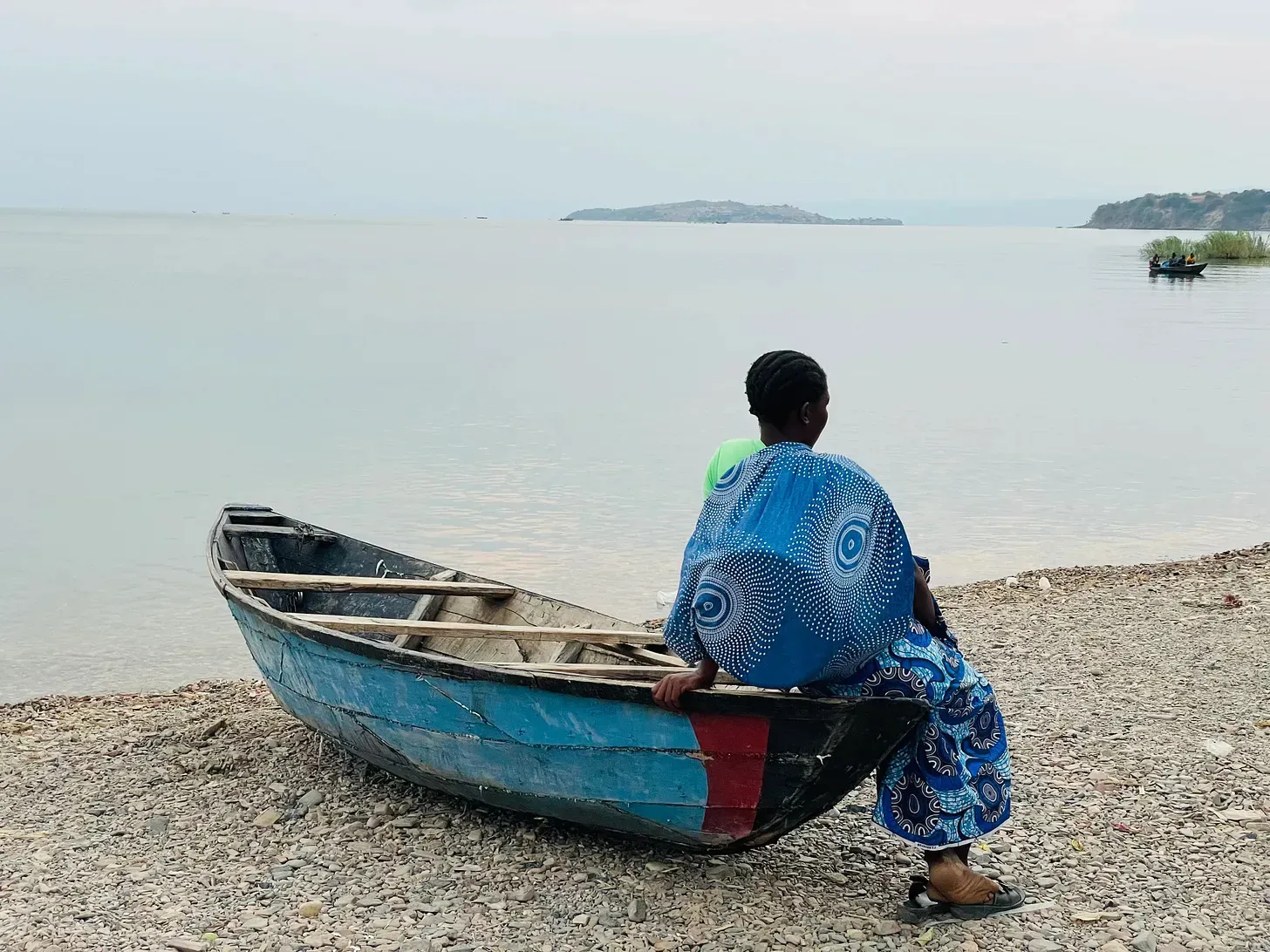
Different community, same lake, same phrase
The journey from Mpulungu to Nsumbu crosses hours of open water. The busy port gives way to fishing camps scattered along Lake Tanganyika’s shoreline.
Nsumbu is quieter than Mpulungu. But some of the accounts gathered there were strikingly familiar.
Beauty Musonda, 59, has traded fish for more than 20 years. Her biggest difficulty, she said, is not always raising enough money. It is finding somebody willing to sell fish to her.
“I can have money, but I will not have someone to sell me,” Musonda said.
She described standing at the landing site with money visibly raised in her hand.
“I can even raise my hand with money. They will get someone behind me and sell it to them and I will remain,” she said.
On the day she was interviewed, Musonda had not bought any fish. She also used the phrase Pela Akakupela.
“When they sleep with the woman, that’s when they will give her the fish. If you refuse, they will never sell you,” she said.
Musonda said some women have eventually left fish trading because of the difficulties they face obtaining stock.
Her account echoed what Martha, Jane and other women had described in Mpulungu: having money did not always guarantee access to fish.
A former fisherman explains the phrase
Albert Songwe, a village headman in Nsumbu who previously worked as a fisherman, offered an explicit explanation of Pela Akakupela.
“Give to the one who gives to you. That is what it means,” Songwe said.
Within the fish trade, he said, the exchange can mean a fisherman gives a woman access to fish and the woman gives him sex.
He described women and fishermen exchanging telephone numbers and establishing arrangements in which particular women receive fish.
“There are a lot of women fish traders but only few will buy the fish,” he said.
Songwe said such relationships have contributed to broken marriages and risks associated with sexually transmitted infections.
One young woman interviewed for this investigation said she had not merely heard about Pela Akakupela. She said she had lived it.
Jennifer, a pseudonym used to protect her identity, was 22 when she told her story. She entered the fish trade after leaving school at 17, looking for a way to support herself.
Instead, she said, she discovered that obtaining fish could require sexual relationships with men working on the lake or those who owned boats.
“I realized that I had to sleep with men that work on the lake or own boats for me to buy fish,” she said.
According to her account, an arrangement could begin with exchanging telephone numbers. The woman and fisherman would meet away from the landing site.
Afterwards, she said, the fisherman would make fish available to her.
“You exchange your body for sex,” she told this reporter.
For her, the trade eventually became unbearable. She walked away. Today, she is no longer selling fish. She decided to return to school, hoping education could provide another way to support herself and her child.
Her account was among the firsthand testimonies gathered during this investigation. But fishermen interviewed in Nsumbu offered another side of the story.
The fishermen respond
Chrispin Kabwe, 27, rejected the suggestion that sexual relationships determine access to fish. He offered another explanation for why some women receive preferential access.
Some women, he said, lend fishermen money. When fishermen return from the lake, those traders may receive fish first because of an existing financial arrangement.
Ketson Musonda, 33, also disputed the sex-for-fish allegations.
“That doesn’t happen here,” he said.
He described arrangements between fishermen and traders as depending on individual relationships.
George Sindazi, 34, gave a different response. He acknowledged that sexual exchanges can occur but described them as private and consensual.
“It’s normal for this to happen, it happens even in other sectors like mining. I have what she wants and she has what I want. When she allows me to have sex with her, that’s it,” he said.
Why women remain silent
Senior Chief Tafuna, a traditional ruler of the Lungu people of Mpulungu District, said he had never formally received a complaint from a woman about sex-for-fish. But he had heard about the practice.
Some women, he said, fear exposure, ridicule or damage to their reputations.
“They would rather not talk about it,” the chief said in an interview.
He also acknowledged what refusing can mean economically.
“I can assure you, the women who don’t give in struggle to buy fish,” he said.
No formal complaints, but an official acknowledges the practice
Mpundu Ngandwe, the District Fisheries and Livestock Coordinator in Mpulungu, said his office had received no formal complaints about sex-for-fish. But he acknowledged that the practice exists.
“Sex for fish is something that is silently being practised along the line of trade in fish and people don’t come out to say that this is what is happening,” Ngandwe said.
He said the practice had existed for years. Ngandwe also described how a fisherman can enter an arrangement with a particular trader and reserve his catch for her.
“If they have made an agreement, that fisherman will not sell fish to anyone. Even if some women have money, even more money, they will not sell to you. There is a cartel. That arrangement is also blocking people from buying,” Ngandwe said.
A request for comment was sent to the Ministry of Fisheries and Livestock through its Public Relations Office, outlining the findings of this investigation and seeking the ministry’s response. Despite several follow-ups, no response was received by the time of publication.
Trying to change the system
There are efforts underway to reduce women’s vulnerability in the fish trade.
FISH4ACP, an initiative of the Organisation of African, Caribbean and Pacific States, implemented by the Food and Agriculture Organization of the United Nations (FAO) and funded by the European Union and Germany’s Federal Ministry for Economic Cooperation and Development, is working with fishing communities around Lake Tanganyika in Zambia to strengthen the fish value chain and improve livelihoods.
According to Masiliso Phiri, the National Coordinator for FISH4ACP, more than 20 women’s groups have been established across fishing communities around Lake Tanganyika. Some have received support, including solar-powered cold rooms and solar dryers, to help women preserve, process and add value to their fish.
“We want to see women becoming economically empowered and less dependent on others for their livelihoods. By supporting them with skills, equipment and alternative sources of income, we are helping to create opportunities for them to earn a living and strengthen their position within the fish value chain,” Phiri said.
The programme also supports savings groups and alternative livelihood activities, such as horticulture, aimed at helping women diversify their sources of income and reduce their economic vulnerability.
Phiri said more than 30 peer educators have been trained to raise awareness in their communities, alongside sensitisation activities in fishing communities.
Joel Katailo, a peer educator working under FISH4ACP, said poverty contributes to women’s vulnerability. But having money, he said, does not necessarily protect women from sexual demands.
He said some fishermen initially resisted discussions about the practice when community education began, fearing they would be labelled as perpetrators. Peer educators, however, continued engaging them and discussing the practice’s health and social consequences.
This investigation could not establish how many complaints have been investigated, how many women have been protected from sexual demands, or whether the practice has declined.
The findings also raise a broader question: if the practice is known, but women are reluctant to report it, how is it being identified, investigated and prevented?
Before sunrise the next day, women will again gather along Lake Tanganyika’s shoreline. Boats will return. Fish will be unloaded. Traders will arrive carrying money.
And the question remains: if women have the money to buy fish, why can access to that fish still come at a cost beyond money?
 View this story on MakanDay