

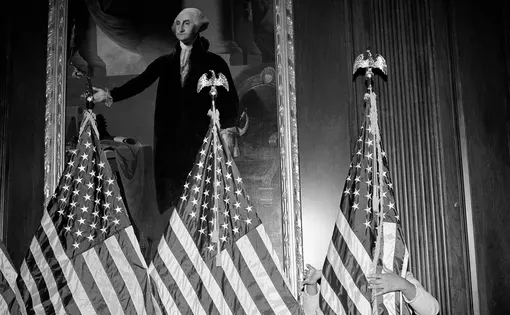
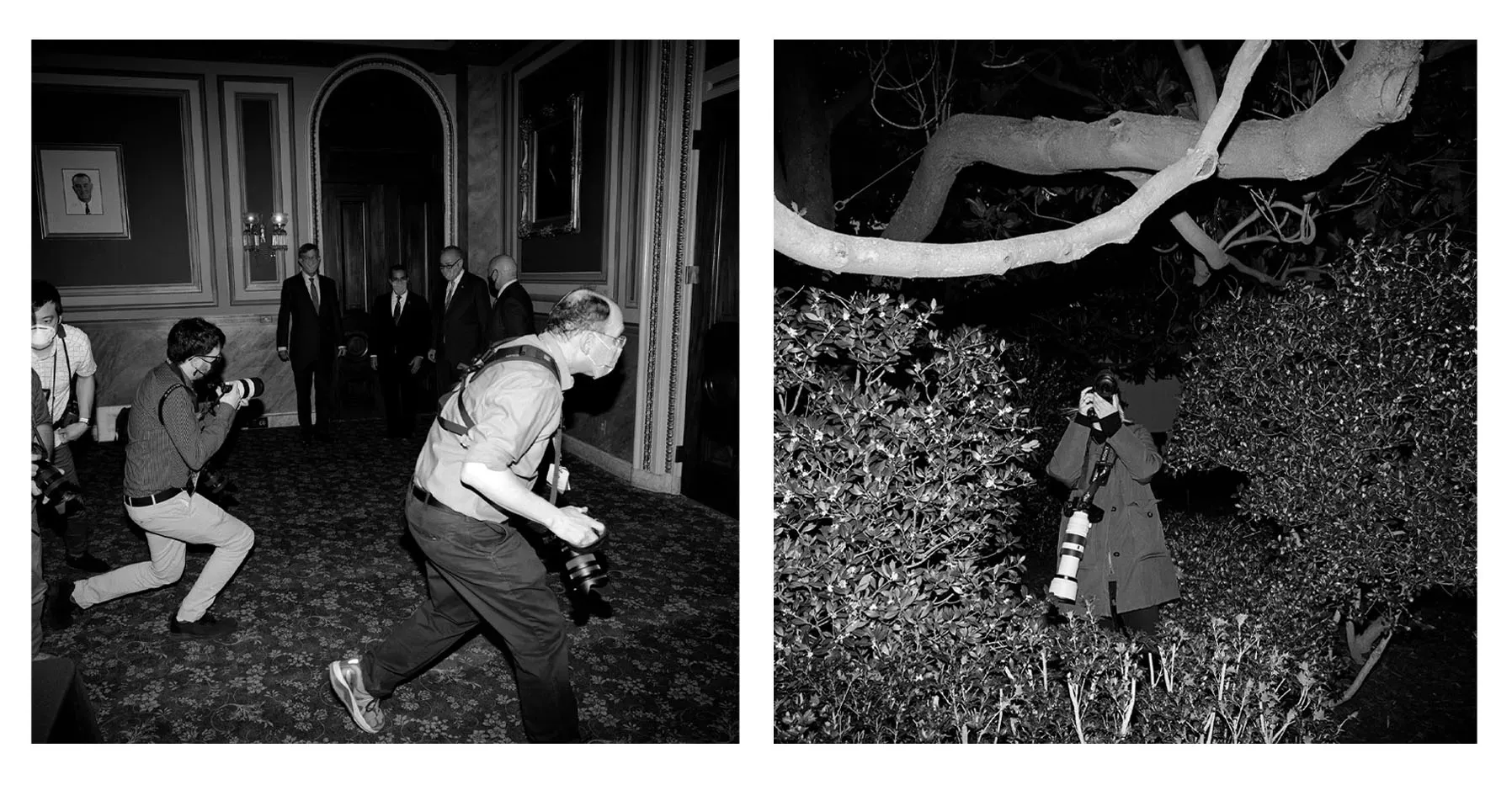
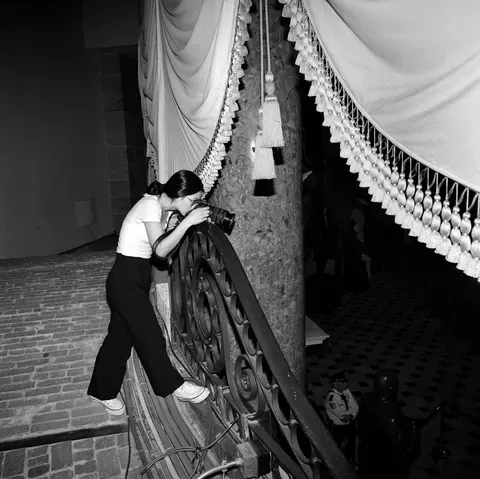
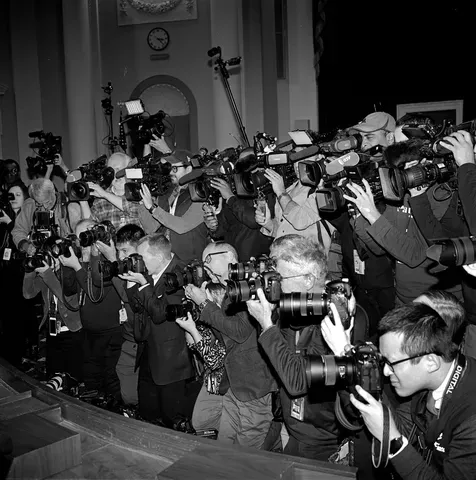
WASHINGTON, DC — One of my favorite photographers on Capitol Hill, the Associated Press’s Scott Applewhite, likes to say that most political photography is “takeoff and landing,” meaning we mostly only get to capture politicians coming and going. We’re barred from most rooms they enter, except at press conferences and hearings. Classified hearings are takeoff and landing: They walk in, we get walking photos; they exit, we get walking photos. Sometimes they stop to talk to reporters and we photograph that. Visually, it’s not breaking news, but it preserves a moment that represents a larger story. There are also “sprays”—thirty-second photo ops, like a reverse takeoff and landing, in and out.
Some photographers work explicitly for the government. The first official White House photographer was Cecil Stoughton—the only photographer on Air Force One when Lyndon Johnson was sworn in as president, hours after President Kennedy’s assassination. Stoughton’s image of the moment is proof that documentary photography is essential to the narrative of government. Fast forward to 2013, when the White House press corps protested that access to President Obama was too restricted. It will always be arguable whether official White House photography is visual propaganda or vital to the historical record.

Something I think about as I work is lighting. Before high ISO settings in digital cameras allowed for more precise light exposure, photographers relied on flash. In the mid-1800s, they used electric sparks, magnesium ribbons, and flash powder, followed by flash bulbs and, by the mid-twentieth century, electronic flashes, variations of which are now built into many phones. The Johnson photo is lit with flash; its sharp detail and distinct shadows shape the aesthetics. These days, flash is extraneous: High ISO settings mean that still cameras don’t need it for accurate exposure. Most press conferences are set up with lighting for television anyway, which for me raises a question: If I’m photographing what is basically a television set, arranged by the government according to its specifications, is that reality or a construction?