Story
 September 16, 2025
Turning the Camera on Ourselves: The Students Reporting on Protests at Columbia University
Country:

Project
Dispatches From the Encampment
Student journalists were forced to rise to the challenge as the Gaza Solidarity Encampment unfolded.

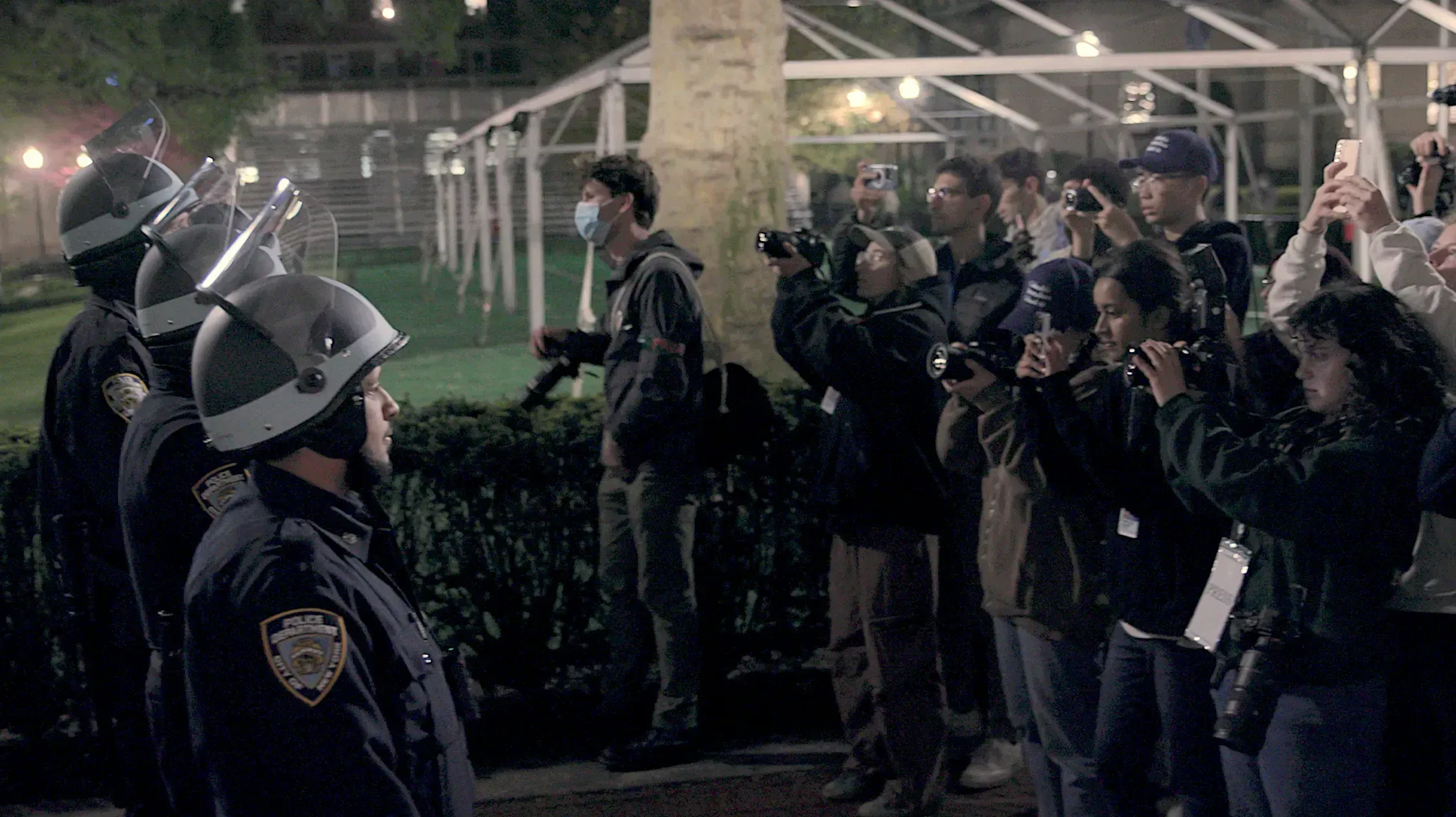
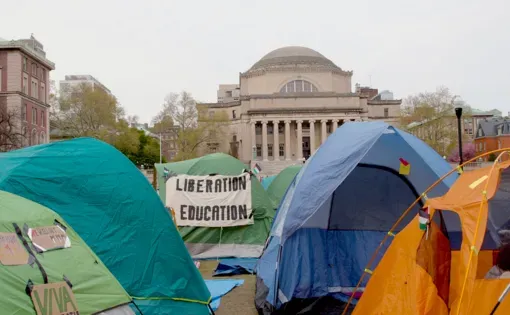
I was hot and sweaty, and running on very little sleep from 12 days of relentless reporting as I entered the Gaza Solidarity Encampment with my hefty camera slung over my shoulder. It was April 2024, and Columbia University’s campus, in New York, had come to a standstill because of the pro-Palestinian protests that had taken over the school’s South Lawn. As the death toll in Gaza grew, protesters demanded that the university divest from its financial ties to Israel.
As I entered the camp for what felt like the 100th time, a male reporter from one of the legacy broadcast companies standing outside the camp yelled, “Hey! You! Why do you get to go inside?”
I was startled and noticed countless reporters with shiny press badges around their necks were staring at me—I wondered if they couldn’t believe that a student journalist had more access to a story than they did. I propped up my camera to start filming. The student activists had decided to limit who could enter the camp due to security concerns. This also pertained to the media. Activists said journalists had filmed and photographed the camp's residents without their consent.
Since the encampment at Columbia University made headlines around the world, journalists from major national and international outlets had swarmed the campus. But student reporters had been there since the same protesters organized their first protest at the start of the academic year. I had heard back in October that these students had suffered abuse, harassment, and doxxing. I pitched the idea of making a documentary answering the question: “Why were they willing to risk so much for this cause?”
I started going to their walkouts, art builds, and teach-ins. All hours of the day, I filmed protests, even those under the pouring rain, where the names of men, women, and children killed in Gaza were recited for hours.
I spoke to many sources in the course of this reporting, but no one wanted to appear on camera to talk about the protests or what they had gone through—everyone was scared about what would happen to them if they were caught on camera. They feared they might lose out on internships if future employers found out about their activism, or that their parents might lose their jobs. Many of them had already received death threats.
So when April 2024 arrived, and the students set up bright green tents on the school’s main lawn, I knew from my sources that this was an escalation—a culmination of the anger and disillusionment the students had felt for the past six months. They knew me and the other student journalists who had been covering their protests since the beginning—journalists from the undergraduate student newspaper, the Columbia Daily Spectator, and WKCR, the student radio station. They trusted we would tell their story with nuance and context, and they were finally ready to appear on camera.
When I first came to Columbia University to study documentary filmmaking, I didn’t understand why my professors spoke so much about “access.” I thought that was obvious—you need to find someone willing to open up in front of a rolling camera. But after following the student activists for six months, I realized that sometimes getting access takes a little longer than you’d hope. I learned that “access” actually means “trust” in real-people speak.
Trust is all a journalist can hope for, and it is what we should all work toward. Without this access, I would have never been able to make my first documentary, Dispatches From the Encampment, the story of the student journalists reporting on the protests that sparked a global movement.
The film grapples with power, identity, and the weight of institutional crackdown, at a time when young reporters need to stand at the forefront of journalism, providing critical thought at a time when it is needed the most.
Though the film is still in production, we’re already ideating how it can live beyond the screen, as a tool for dialogue, education, and civic engagement. We want to collaborate with educators, human rights advocates, and First Amendment lawyers to build impact programming: classroom resources, screenings with student journalists, and guided conversations that spark solutions to the problems facing young people in the United States and beyond.
Our hope is that Dispatches becomes a starting point for the hard, essential conversations of our generation.